
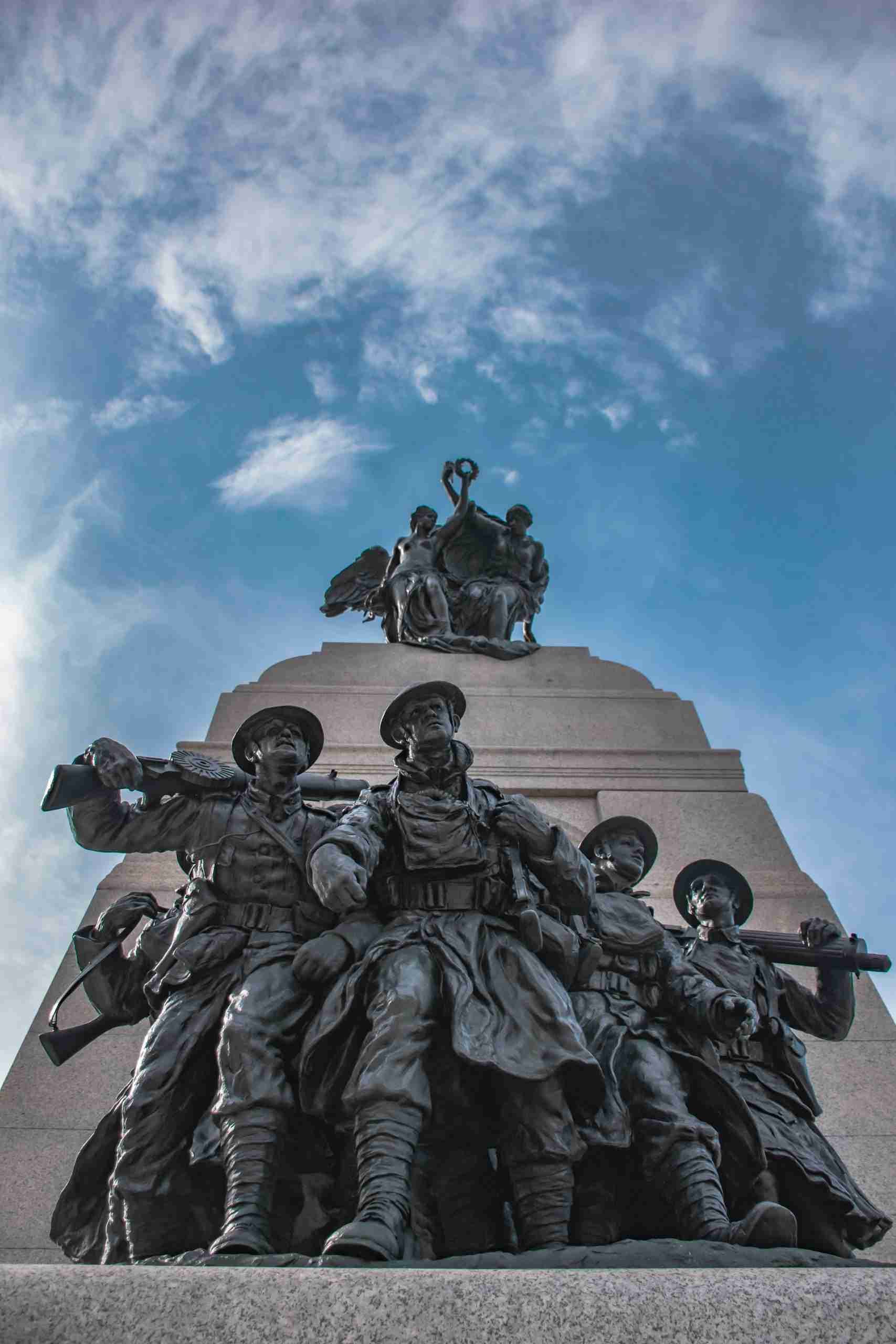
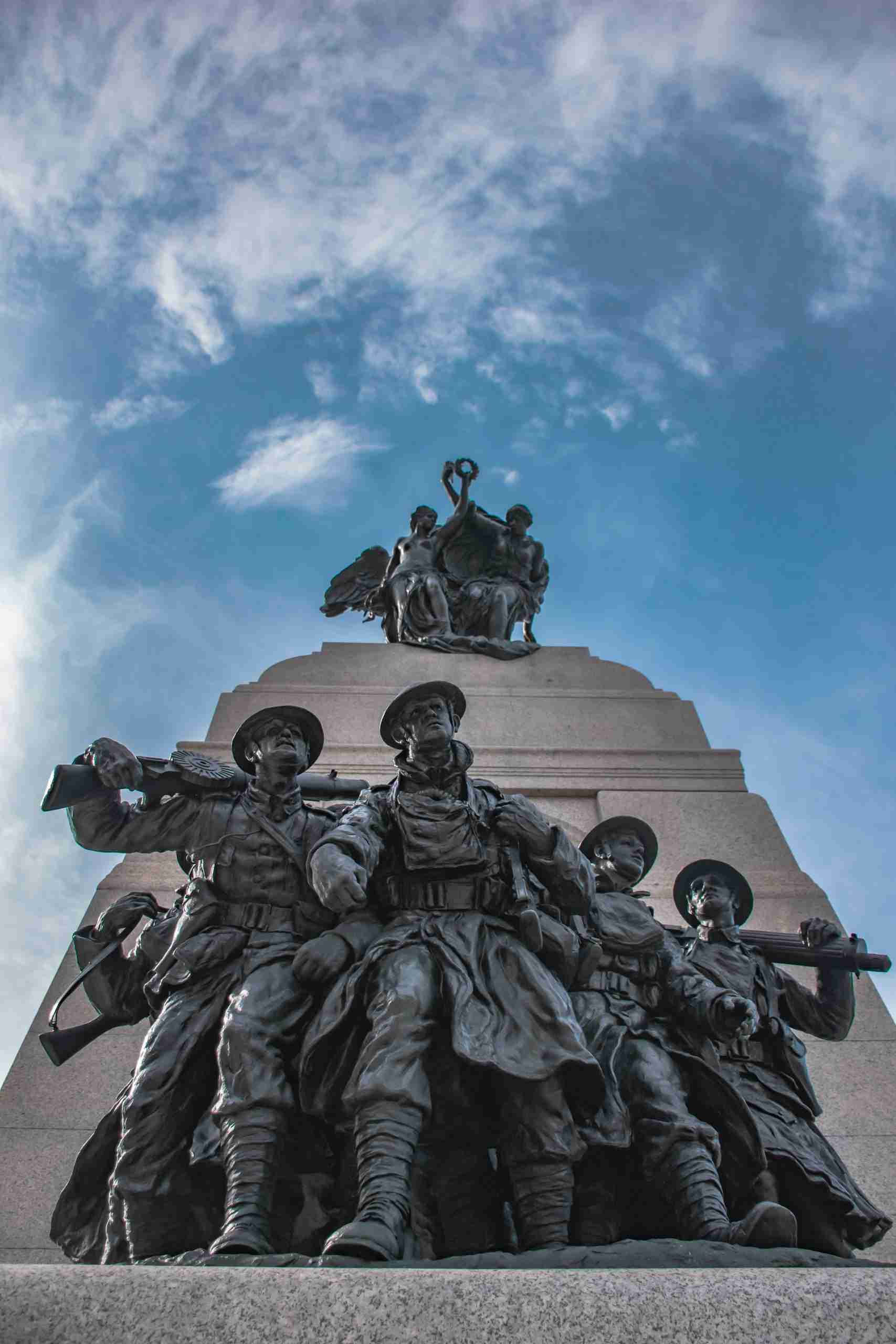
Standing at the symbolic heart of Canada's capital, the National War Memorial in Ottawa is one of the most powerful and visually arresting landmarks in the country. Towering in granite and bronze at the intersection of Elgin and Wellington Streets, just steps from Parliament Hill and the Rideau Canal, this imposing arch commemorates the sacrifice of Canadian forces in conflicts from World War I through to modern-day peacekeeping. For photographers, the site offers compelling lines, historical narrative, and changing seasonal light that can be approached from many creative angles—whether you're chasing architectural symmetry, emotional storytelling, or dramatic urban context.
Best Photography Opportunities
• Frontal Symmetry at Golden Hour
: The most iconic view of the memorial is from directly in front, looking west toward Parliament Hill. From this angle, the towering granite arch frames the bronze figures of soldiers moving forward in motion, with the flame of the Tomb of the Unknown Soldier at its base. Golden hour light from the east in the early morning bathes the structure in warm tones and casts soft shadows that emphasize the sculpture's detail. A wide-angle lens allows you to capture the monument in full while including the surrounding ceremonial space.
• Details in the Bronze Sculptures
: The grouping of 22 bronze figures beneath the arch offers rich opportunities for close-up work. Each face, hand, and uniform is rendered with high realism and emotion—ideal for capturing expressive detail, especially under side light. Use a longer lens to isolate individuals or shoot low and close for perspective distortion that amplifies the movement and energy of the forward march.
• Reflections and Moody Atmosphere at Night
: At night, the memorial is illuminated by ground lights that cast a dramatic glow over the stone and bronze. Reflections from nearby wet pavement or pooled water after rain can add additional visual drama. Blue hour offers an especially strong backdrop as the lights of downtown Ottawa begin to shimmer, and the sky deepens into rich cobalt tones behind the monument.
• The Tomb of the Unknown Soldier
: In front of the arch lies the solemn Tomb of the Unknown Soldier, marked with flowers and often guarded by sentries during ceremonial times. This low, symbolic structure is ideal for framing subtle, emotionally resonant compositions, particularly with shallow depth of field or a focus on visitor interaction. Capturing the flame in low light adds intensity and reverence to your images.
• Parliament Hill and Urban Context
: From various angles, the War Memorial can be framed with the Peace Tower or East Block in the distance, linking the themes of sacrifice and governance. These contextual compositions are strongest in early morning when the area is less crowded, or during special national events when flags, wreaths, and ceremonial guards add additional visual and narrative layers.
Best Time to Visit
The National War Memorial is photogenic year-round, though each season brings a distinct mood. Autumn is particularly powerful, as falling leaves and cool, diffused light bring out the texture in both stone and bronze. Early morning light from the east creates long shadows and brings a quiet dignity to the scene, while sunset casts warm tones against the west-facing side of the arch.
Winter transforms the site into a stark, high-contrast setting with snow clinging to stone crevices and steam rising from the Tomb of the Unknown Soldier's eternal flame. Spring and summer offer softer vegetation, and visitors often bring color and motion to the space, useful for documentary or environmental portraiture.
For night photography, blue hour (20–30 minutes after sunset) is ideal for balancing artificial lighting with ambient sky color. Early morning visits offer the best opportunity for clean compositions without pedestrians and ideal golden light.
How to Get There
The National War Memorial is located in Confederation Square, at the intersection of Elgin and Wellington Streets in downtown Ottawa. It is easily accessible by foot from nearby attractions such as Parliament Hill, the ByWard Market, and the Rideau Centre. If arriving by transit, the O-Train Confederation Line stops at Rideau Station, just a short walk away.
Street parking downtown is limited and metered, but several underground parking garages are located nearby, including those at the Rideau Centre and the National Arts Centre. The site is flat and fully accessible, with wide paved paths suitable for tripods and equipment carts.
Photography is allowed year-round, though visitors are encouraged to respect the space—especially during commemorative events or when the memorial is in use for official ceremonies. Drones are not permitted due to the site's proximity to federal buildings and airspace restrictions.
Exploring the Surrounding Area
The area surrounding the National War Memorial offers a wealth of additional compositional opportunities. To the west, Parliament Hill rises above the skyline and can be framed behind the memorial for layered shots. The nearby Chateau Laurier hotel and Rideau Canal locks provide romantic, historic contrasts to the austerity of the monument.
Elgin Street to the south includes several public art pieces, trees, and architectural elements that can be used to frame or contextualize wider urban scenes. During special dates—such as Remembrance Day or Canada Day—the entire area comes alive with flags, poppies, and ceremonial detail, offering a unique chance to document national sentiment and public expression.
The lines of the plaza, the symmetry of the arch, and the emotional weight of the sculpture make it an excellent location not only for static shots but also for dynamic storytelling. Whether you're shooting handheld in street-style spontaneity or setting up a tripod for precision, the space invites reverence and creative intent in equal measure.
Nearby Photography Locations
• Parliament Hill
: Just a short walk away, the Centre Block, Peace Tower, and surrounding gardens offer grand architecture and formal symmetry. Sunrise and sunset are ideal for light on the façade, while blue hour highlights the tower's illuminated clock.
• Chateau Laurier and Rideau Canal Locks
: Southeast of the memorial, the fairytale silhouette of the Chateau Laurier and the cascading locks of the Rideau Canal make for strong architectural and landscape compositions—especially in winter or at dusk.
: This elevated green space offers panoramic views over the Ottawa River and Parliament, with well-kept paths, benches, and flowerbeds that frame historic architecture beautifully in spring and summer.
: Directly adjacent to the memorial, this open public space features sculpture, tree-lined walkways, and seasonal events like Winterlude that add vibrancy to urban scenes.
: For a more lively, urban contrast, the nearby market area is filled with colorful storefronts, murals, and streetscapes ideal for handheld walkabouts and documentary work.
The National War Memorial is more than a monument—it's a space that carries visual weight and emotional resonance. For photographers, it offers not just striking forms and well-balanced lines, but the opportunity to engage deeply with themes of memory, light, and the passage of time. Whether you're visiting at dawn, dusk, or in the hush of falling snow, the memorial stands ready to be captured with the same dignity it was built to embody.
Comments
Loading comments…