
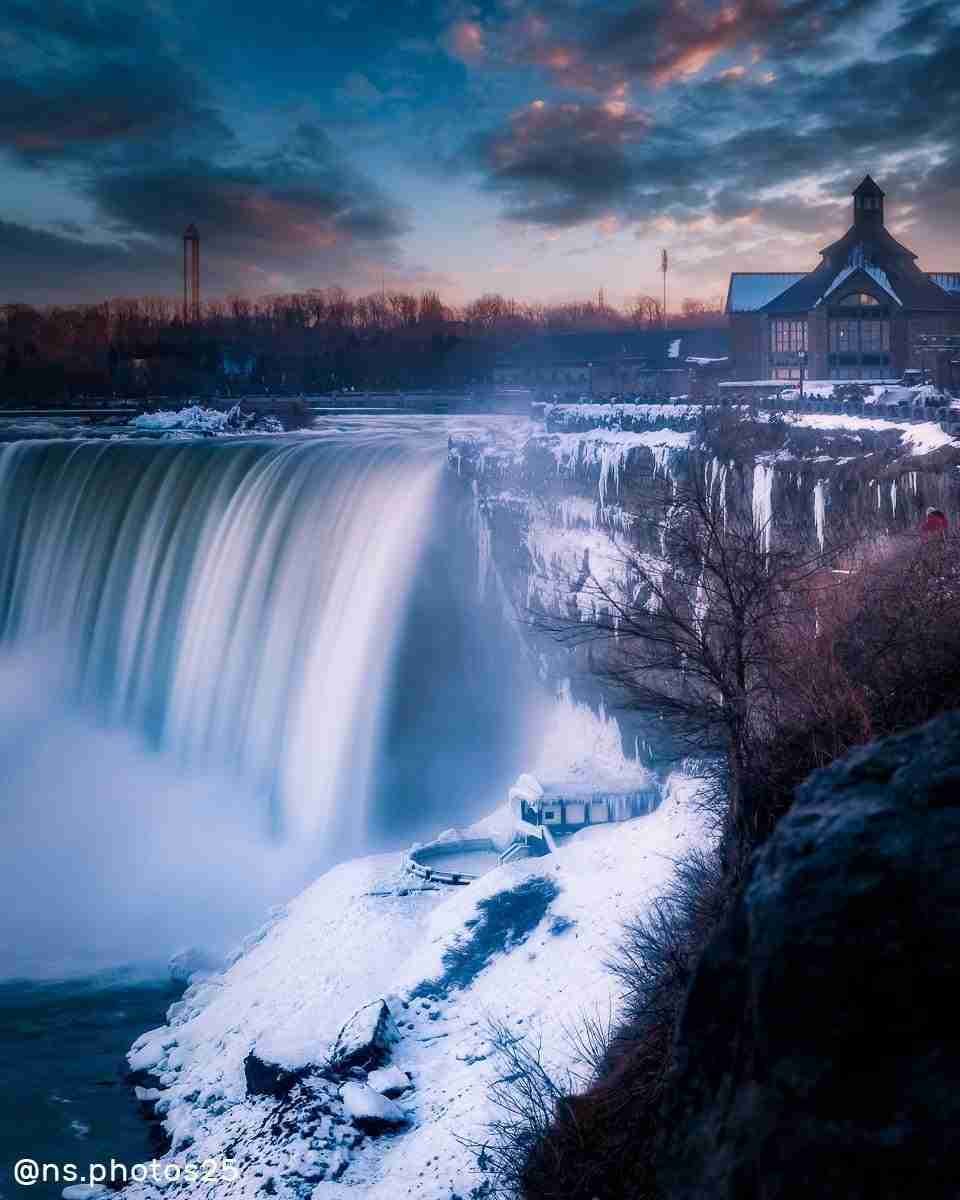
Few natural landmarks offer the raw spectacle and visual drama of Niagara Falls, and the Canadian side provides the most commanding photographic vantage points of them all. From the sweeping curve of Horseshoe Falls to the distant view of the American Falls across the gorge, Ontario's side of the falls delivers a full-sensory photography experience. With dynamic weather, ever-changing light, and endless perspectives—from up-close mist to distant skyline silhouettes—Niagara Falls is a must-shoot destination for photographers drawn to motion, power, and atmosphere. Whether you're after iconic postcard images or experimental long exposures, the Ontario side gives you the widest and most versatile canvas to work with.
Best Photography Opportunities
• Horseshoe Falls from Table Rock Centre
: The closest and most dramatic view of Horseshoe Falls is from the railings near Table Rock Centre. Here, the water barrels over the crest just meters away, and the sheer power of the falls dominates every composition. Using a wide-angle lens allows you to capture the curve of the falls, the mist rising into the sky, and the river's velocity all in one shot. Be prepared to protect your gear from moisture, especially when wind direction changes.
• American Falls and Bridal Veil Falls from Queen Victoria Park
: Further down the promenade, Queen Victoria Park offers a classic, frontal view of the American Falls, with the Bridal Veil Falls visible to the right. This location is especially photogenic at sunrise, when soft side light warms the mist and cliffs. Telephoto lenses are useful here to compress the falls, highlight rock textures, and isolate rainbow arcs forming in the spray on sunny mornings.
• Nighttime Long Exposures with Illumination
: After sunset, Niagara Falls becomes a light show. The falls are lit with color-changing LEDs, which can be used creatively in long exposures to turn the cascading water into soft, glowing sheets of light. Blue hour is especially effective for balancing ambient sky with the artificial lights. Bring a sturdy tripod and ND filters to experiment with shutter speeds that stretch water and mist into ethereal ribbons of color.
• Panoramic Views from Skylon Tower
: For an elevated perspective, the Skylon Tower's observation deck provides a full panorama of Horseshoe Falls, the American Falls, and the Niagara River gorge. This high vantage point is perfect for shooting wide-format cityscapes or time-lapses of the mist drifting downstream. It's also a strong location for sunset compositions, as the golden light sweeps across the entire falls complex.
• Rainbow and Mist Studies
: The constant collision of water and air produces near-constant mist—ideal for backlit rainbow photography on sunny days. Rainbows often form mid-morning or late afternoon, depending on the angle of the sun. Framing the arc as it curves through the mist adds emotion and layering to your shot. For a minimalist approach, isolate a portion of the rainbow through the spray with a telephoto lens and high shutter speed.
Best Time to Visit
Niagara Falls is photogenic year-round, but conditions change dramatically with the seasons. Spring brings high water volume and crisp visibility, making it ideal for powerful, clear shots with fresh greenery along the gorge. Summer draws the biggest crowds but also offers warm sunsets, vibrant foliage, and mist rainbows that appear like clockwork on sunny afternoons. Fall adds color to the surrounding trees and a golden hue to the light, with cooler temperatures reducing haze and improving clarity.
Winter transforms the scene into something surreal. Ice forms along the cliff edges, railings, and trees, giving the falls an entirely new texture and visual rhythm. Early mornings in winter often deliver misty atmospheres with sunbursts and soft frost covering the foreground. Regardless of season, the best light occurs early and late in the day. Sunrise tends to be quieter and less crowded, while sunset bathes the falls in warm backlight and transitions seamlessly into nighttime illumination.
How to Get There
Niagara Falls is approximately 90 minutes from Toronto by car, with easy access via the QEW highway. From downtown Niagara Falls, the best viewing areas along the Ontario side are walkable, with a paved promenade stretching from the Horseshoe Falls at Table Rock to the Rainbow Bridge and beyond. Paid parking is available at Table Rock Centre, Clifton Hill, and Fallsview Casino, all within easy reach of major viewing areas.
Public transit and WEGO shuttle buses serve the entire falls corridor, making it easy to move between sites without a car. For photographers planning longer sessions, it's worth staying nearby, as early and late light are key to avoiding both harsh sun and heavy tourist traffic. Most viewing platforms are open 24 hours, and no photography permits are required for personal or non-commercial use. Drones are not permitted in the immediate vicinity of the falls.
Exploring the Surrounding Area
While the falls themselves are the main attraction, there's a surprising diversity of photography options within walking distance. The Niagara Parkway provides views of the Niagara River, floral gardens, and peaceful riverbank scenes that offer calm contrast to the thundering water. Behind the falls, the Journey Behind the Falls tunnels provide unique close-up views of the water's backside—perfect for dramatic framing and backlit mist studies. Clifton Hill, with its bright signs and vintage tourist vibe, provides an entirely different subject for urban or street-style photography. A short drive north leads to the Whirlpool Rapids and the floral clock, while further afield, Niagara-on-the-Lake offers vineyard landscapes and historic charm.
Nearby Photography Locations
: Just a few kilometers north of the falls, this area features forested hiking trails and views over the Niagara Whirlpool. Ideal for capturing the power of the river from high above, or photographing mossy boulders and woodland light below.
: This aerial cable car provides a mid-air view of the river's deep bend and swirling whirlpool below. It's a unique vantage point for abstract water compositions and high-angle motion studies.
: A quieter natural space just south of the falls, these small islands and footbridges offer tranquil waterscapes, waterfowl, and lush reflections. Perfect for peaceful, early morning landscape shots away from the main crowds.
: Located at the mouth of the Niagara River, this historic town features well-preserved architecture, charming streetscapes, and lakefront views across to the U.S. shoreline. Great for architectural details and soft, golden hour light.
• Brock's Monument at Queenston Heights
: Set on a high bluff north of the falls, this monument and park offer panoramic views of the Niagara River and rich autumn foliage. The site is best visited in fall for both aerial and ground-level compositions.
Photographing Niagara Falls from the Ontario side is an immersive experience that demands attention not just to scale, but to detail—mist, motion, and mood. It's a location where nature's power meets human perspective, and where every hour brings a new interplay of light and water. Whether you're shooting wide from the promenade or up close through the veil of spray, the falls reward patience, preparation, and a willingness to embrace the elements.
Comments
Loading comments…