
Standing directly across from the National Gallery and just steps from Parliament Hill, Ottawa's Notre-Dame Cathedral Basilica is a masterpiece of Gothic Revival architecture and one of the most photogenic ecclesiastical structures in the capital. With its twin silver spires, detailed stone carvings, and luminous blue interior, the basilica offers both grandeur and intimacy for photographers interested in architectural and sacred space photography. As the oldest and largest church in Ottawa, it's a visual anchor in the city's historic district.
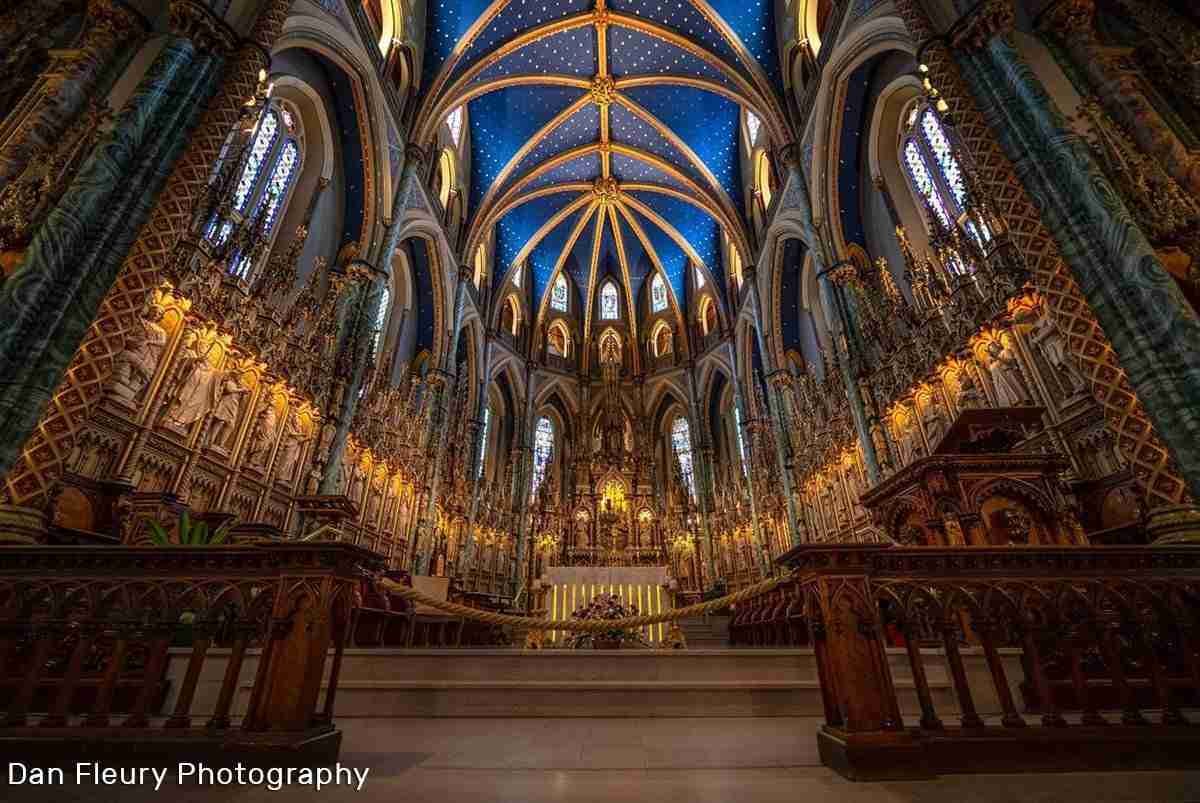
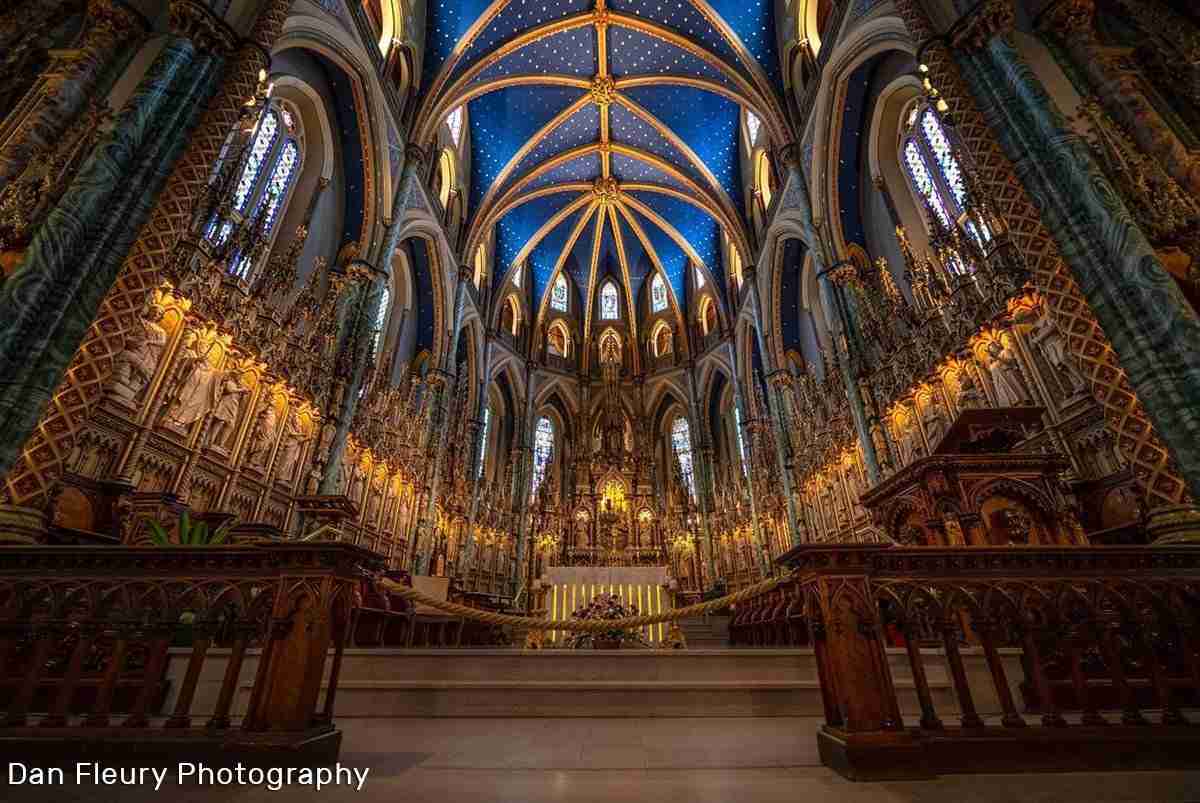
The basilica's exterior, with its balanced symmetry and soaring towers, makes for compelling compositions in all seasons. Inside, gold detailing, pointed arches, and a vaulted painted ceiling create a dramatic and peaceful environment where light streams softly through stained glass, revealing the craftsmanship and spiritual character of the space.
Best Photography Opportunities
• Front Façade and Twin Spires
The main entrance is a classic example of Gothic balance, flanked by twin towers capped in shimmering tin. Photograph it from across Sussex Drive to capture the full structure, especially during golden hour when the façade is bathed in warm light. A wide-angle lens allows you to include the full height and nearby context, including seasonal trees or urban activity for scale. Foggy mornings or dusk add atmosphere and drama to your compositions.
• Interior Nave and Vaulted Ceiling
Once inside, the basilica's central nave presents a long, symmetrical axis perfect for vanishing point compositions. Look up to capture the painted ceiling adorned with stars and gold-trimmed ribs. The rich blue tones and vertical emphasis draw the eye upward, reinforcing the space's spiritual presence. A tripod is often not allowed, so use a fast lens and higher ISO to shoot handheld in the low light.
• Stained Glass and Ambient Light
The stained-glass windows lining both sides of the basilica depict saints and biblical scenes with intricate detail. They cast beautifully colored light across the stone columns and pews, especially in the late afternoon. Use a telephoto lens to isolate sections of the glass, or include the play of light across architectural elements for more abstract, ethereal compositions.
• Altar and Decorative Detail
The altar is framed by soaring columns, rich woodwork, and gold embellishments that reflect light softly. Move around the perimeter of the space to find more dramatic angles where lines converge and detail unfolds. Look for sculptural elements—angels, carvings, or candlelit niches—to use in layered compositions that emphasize depth and sacred symbolism.
• Exterior Detail and Contextual Scenes
Beyond the grand views, take time to explore the stone carvings, doors, and ironwork up close. The basilica's relationship with nearby landmarks—the National Gallery, Major's Hill Park, and Parliament—can be used for environmental compositions. Position the cathedral within reflections, framed by blossoms or snowfall, or lit by evening streetlamps to place it in dialogue with its surroundings.
Best Time to Visit
Notre-Dame Cathedral Basilica can be photographed year-round, with each season offering a distinct mood and palette. Golden hour light plays beautifully across the limestone exterior and is especially dramatic in fall when nearby trees add vibrant color to the scene. During this season, the contrast between the autumn foliage and the pale grey stone of the cathedral enhances both landscape and architectural shots. Snowfall in winter softens the surroundings and provides strong contrast for monochrome or minimalist compositions, particularly when paired with low sun angles or streetlamp illumination at dusk.
Inside, the best time for light is late afternoon, when sun filters through the stained glass and casts colorful patterns across the nave and floors. These moments of natural illumination are fleeting and dynamic—ideal for handheld shooting with fast lenses. Weekday mornings are ideal for quiet, unobstructed shooting and for taking the time to explore intricate architectural details without foot traffic. During special religious holidays or cultural events, the cathedral may be lit more dramatically or feature seasonal décor, creating different moods worth capturing.
Plan to visit multiple times—early morning for clean exterior shots, afternoon for interior light play, and evening for long exposures of the lit façade. Night photography outside the cathedral is especially compelling after blue hour when the silver spires and main entrance are illuminated against the dark sky. The changing skies and street activity around the cathedral also offer a narrative element for more documentary-style images.
How to Get There
The cathedral is located at 385 Sussex Drive in downtown Ottawa, directly across from the National Gallery of Canada. It's easily accessible by foot from the ByWard Market, Parliament Hill, or Major's Hill Park. The Rideau LRT station is the nearest transit stop, a 10-minute walk away.
Limited street parking is available nearby, along with paid lots on Dalhousie or Parent Avenue. The entrance is on Sussex Drive, and the site is wheelchair accessible. Photography is permitted, though tripods are generally not allowed without prior arrangement, and discretion is encouraged during any services or ceremonies.
Recommended Gear and Shooting Tips
A wide-angle lens (16–35mm) is essential for capturing the full height and symmetry of both the exterior façade and interior nave. Inside, use it to emphasize the verticality of columns and ceiling ribs or to highlight the sweeping geometry of the altar. A fast prime lens (35mm or 50mm f/1.4–f/1.8) is excellent for handheld shooting in low light, especially when tripods are not permitted. The fast aperture allows you to maintain sharpness without raising ISO excessively, preserving image quality in delicate lighting.
A 70–200mm lens can help isolate stained glass scenes, architectural carvings, or tight ornamental details on both the interior and exterior. These telephoto shots benefit from soft ambient light or the rich shadows found in the vaulted ceiling corners and side chapels. For stained glass, try spot metering on the window highlights to maintain color fidelity and detail.
Tripods are generally not allowed indoors unless arranged in advance, so plan accordingly. Use in-body or lens stabilization when available, and shoot bursts at lower shutter speeds for the best chance of sharp images. If bracketing exposures for HDR, use a steady stance and align shots in post-processing.
Shoot in RAW to manage the dynamic lighting indoors and balance highlights from windows with shadowy recesses. Use white balance presets for tungsten or mixed lighting, or correct in post for accurate interior tones. A small, unobtrusive camera setup is best inside—mirrorless systems or compact DSLRs help you stay agile and discreet.
Outside, use a tripod for night photography and long exposures. A polarizing filter can help deepen blue skies during daytime or reduce reflections on surrounding windows and surfaces. Don't forget a lens cloth in colder months, as condensation and snow can affect your gear quickly.
Take time to explore unconventional angles—look up into arches, shoot from kneeling positions for foreground pew detail, or frame the structure through doorways and architectural features for creative storytelling.
Nearby Photography Locations
• National Gallery of Canada
Just across Sussex Drive, this modernist structure offers sharp architectural lines, glass geometry, and rooftop views of Parliament and the Ottawa River. The spider sculpture "Maman" in front of the gallery is a dramatic focal point in its own right.
A short walk south, this landscaped park offers elevated views of the Ottawa River, Parliament, and downtown skylines. Ideal for golden hour and blue hour cityscape photography.
• ByWard Market
Bustling and colorful, the nearby market offers a completely different pace and palette for photography. Street scenes, murals, vendors, and crowds provide documentary and candid photography opportunities.
• Parliament Hill
Just ten minutes away by foot, Parliament Hill offers grand government architecture and skyline views over the river. Sunsets here are exceptional, and evening illuminations offer long-exposure potential.
Located just north of the cathedral, the mint is a stately stone building with classical lines and manicured grounds—great for architectural context and detail-focused compositions.
Comments
Loading comments…