
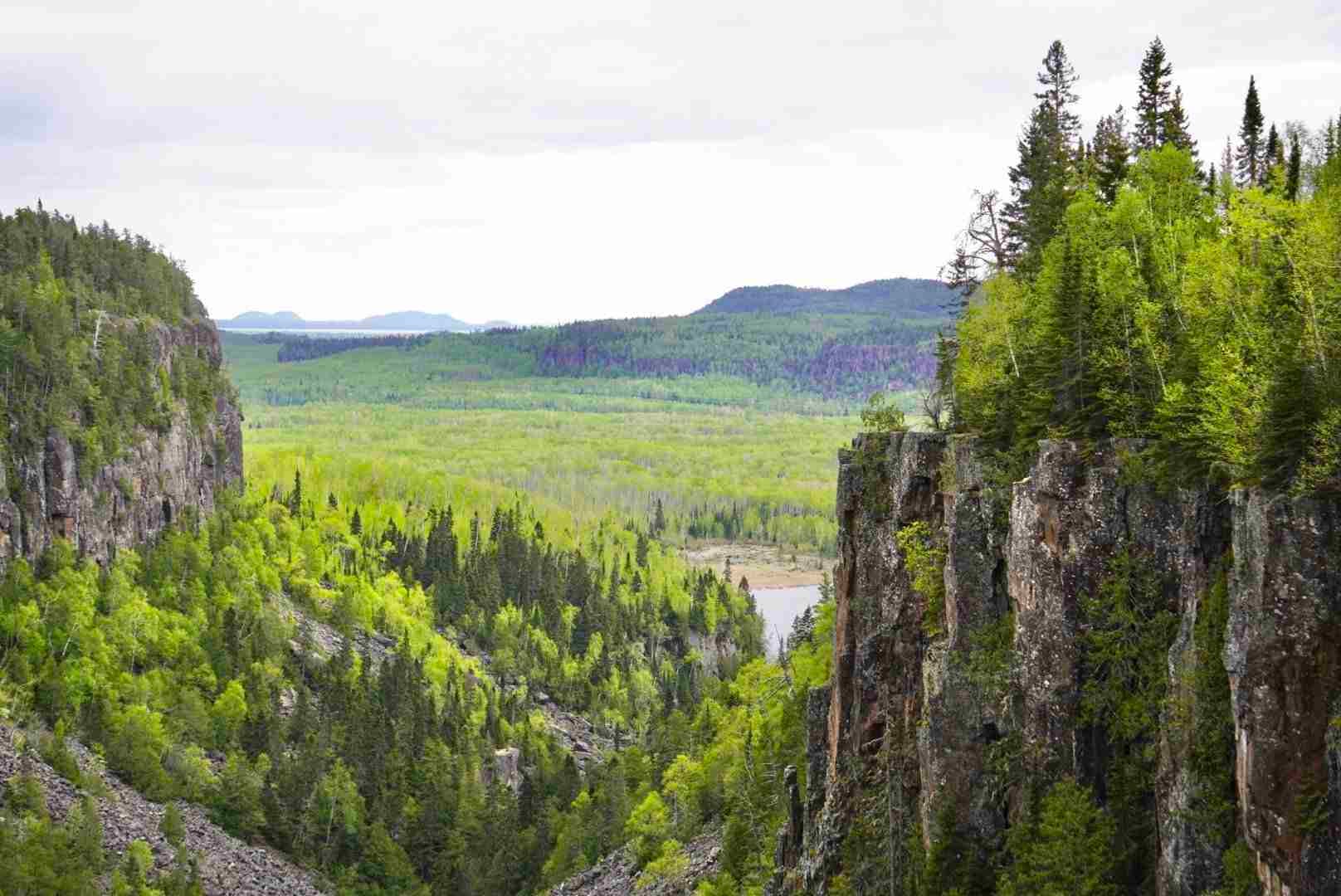
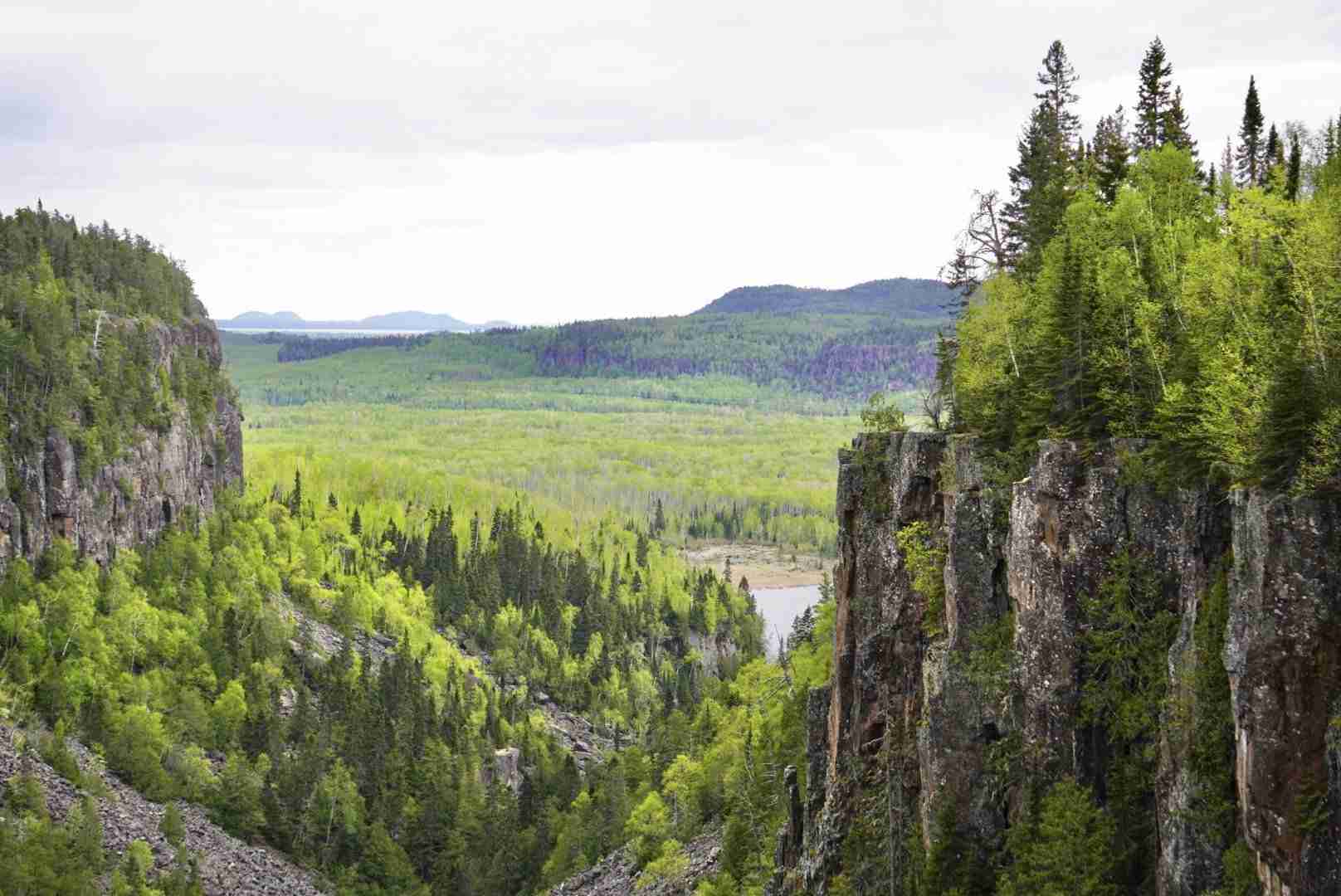
Carved into the rugged landscape of northern Ontario, Ouimet Canyon Provincial Park presents photographers with one of the province's most awe-inspiring natural wonders. This dramatic gorge stretches nearly two kilometers long, with cliffs rising over 100 meters (330 feet) above the canyon floor. Unlike many deep canyons, Ouimet Canyon is easily accessible and offers safe, maintained viewing platforms that allow photographers to capture the immense scale of the gorge without needing technical climbing or hiking gear. The steep cliffs, lush forest surroundings, and rare Arctic-alpine plants thriving on the canyon floor create a unique visual experience. For landscape photographers seeking grand vistas, dramatic perspectives, and subtle natural detail, Ouimet Canyon is a must-visit location in Ontario's north.
Best Photography Opportunities
• Grand vistas from the viewing platforms
: The two main observation decks offer sweeping, unobstructed views across the canyon's yawning expanse. Using a wide-angle lens allows you to capture the entire breadth of the gorge and the rugged details of the canyon floor below. Early morning or late afternoon light helps carve out the textures of the canyon walls, emphasizing their ruggedness and depth. Including a portion of the wooden platform's railings can provide a sense of scale and human connection to the immense landscape. Take time to shoot from both platforms as each offers a slightly different perspective, and cloud movement often changes the look of the canyon dramatically over short periods.
• Vertical cliff compositions emphasizing scale
: For dramatic impact, move closer to the edge (behind the safety fences) and shoot vertically downward to showcase the sheer drop into the canyon. A mid-range zoom lens can frame the textured cliff edges plunging into the lush greens below. This perspective often works best in softer light, where side illumination enhances the rugged stone surfaces and hints at the vast depth without harsh shadows. Adding a human subject standing near the edge (safely) can create a powerful storytelling image that emphasizes the immensity of the landscape and the insignificance of human scale.
• Framing through trees and foreground foliage
: Portions of the trail leading between the two observation decks offer opportunities to use tree branches, wildflowers, or rocky outcrops as natural frames for the canyon beyond. Using these elements in the foreground adds depth and complexity to your compositions. In autumn, the flaming reds and yellows of northern hardwoods make especially vibrant frames against the cool grays and greens of the canyon walls. Changing your position slightly left or right can significantly alter how the natural frames align, so move carefully and experiment with compositions.
• Abstracts and cliff textures
: The exposed stone faces of Ouimet Canyon are rich with lichen, fractures, and color variations that reward closer study. Using a telephoto lens, photographers can isolate interesting sections of rock patterns, cracks, or trees clinging precariously to cliff faces. These abstracts transform the grand canyon into intimate, painterly compositions that highlight nature's resilience and the forces of geological time. Look especially for areas where moss or vegetation creates color contrasts against the gray stone for added visual interest.
• Seasonal landscape transformations
: Each season reveals a different personality of the canyon. In spring, fresh green foliage fills the canyon floor, while summer brings full canopies and bright skies. Autumn is a standout, with brilliant foliage carpeting the surrounding woods and canyon edges, creating rich color gradients across the landscape. Winter, though less accessible, cloaks the cliffs in snow and ice, offering stark, minimalist compositions of white draped across rugged gray stone. Fog and mist are also more common in cooler seasons, lending an ethereal, mystical quality to wide and medium compositions alike.
Best Time to Visit
Ouimet Canyon Provincial Park is generally open from late spring through early autumn, with the best access and conditions from May to October. Summer provides the fullest greenery and easiest access, with long daylight hours for exploring different lighting conditions. Mornings are ideal for catching mist rising from the canyon floor, creating soft, atmospheric effects, while afternoons highlight the contours and ridges through side lighting.
Autumn is especially spectacular, typically peaking in late September to early October when the forests explode into vibrant color. During this time, the contrast between the bright foliage and the muted stone makes for breathtaking landscape images.
Overcast days are excellent for canyon photography because they soften the harsh shadows that can otherwise obscure details in the gorge. Visiting early or late in the day offers the best light for both broad vistas and textural studies, while mid-afternoon can be harsh due to the direct angle of sunlight into the canyon.
Winter access is unofficial and limited, but for those prepared for snowy, icy conditions, the canyon becomes a wonderland of stark contrasts and frozen beauty. Always check current park information, as trails and platforms may close seasonally.
How to Get There
Ouimet Canyon Provincial Park is located about 60 kilometers northeast of Thunder Bay, Ontario. From Thunder Bay, take Highway 11/17 east toward Dorion, then follow Ouimet Canyon Road north to the park entrance. Signage is clear from the highway, and the turnoff is well-marked.
Once inside the park, a short, accessible trail leads from the parking lot to the two main viewing platforms. The trail is wide and relatively flat, making it suitable for visitors of all abilities. There is no hiking into the canyon itself to protect the delicate Arctic-alpine ecosystem at its base.
There is a small entrance fee collected during the operating season, and basic facilities, including parking and restrooms, are available. Visit early in the day if you prefer quiet, uncrowded conditions, especially during peak fall color season.
Recommended Gear and Shooting Tips
A wide-angle lens (16–35mm) is crucial for capturing the full scope of the canyon's vastness from the viewing platforms. A mid-range zoom (24–70mm) is versatile for framing the cliffs, forests, and mid-distance details, while a telephoto lens (70–200mm or longer) allows you to pick out textures, tree clusters, or abstract patterns on the stone.
A sturdy tripod is recommended, particularly for early morning, late evening, or long-exposure shots during misty conditions. A polarizing filter can deepen the blue of the sky, reduce glare from wet rock surfaces, and enhance foliage colors, especially in autumn.
Carefully compose your shots to include foreground interest like grasses, boulders, or fencing for a stronger sense of depth. Experiment with both horizontal and vertical orientations to maximize the feeling of scale and height. Patience is rewarded here—waiting for shifting clouds, mist, or changing light can dramatically alter the mood and reveal hidden facets of the canyon's character.
Nearby Photography Locations
: Just a short drive from Ouimet Canyon, Eagle Canyon Adventures features Canada's longest suspension bridge and zipline over another dramatic gorge. It's an excellent location for adventurous landscape compositions and capturing thrilling human interactions with the dramatic terrain.
: About an hour's drive south, this stunning park offers rugged hiking trails, towering cliffs, and sweeping views over Lake Superior. It's ideal for expansive coastal landscapes, forest scenes, and dramatic sunset shots from locations like the Top of the Giant trail.
: Located along Highway 11/17, this open-pit amethyst mine offers colorful, textured close-up opportunities for those interested in geology-themed photography. The gleaming crystals and rugged mining landscapes provide an entirely different visual contrast to the canyon scenes.
: Both located near the main highway en route to Thunder Bay, these sites offer beautiful lakeside vistas, sweeping views of Lake Superior, and a historic tribute site with strong emotional storytelling potential for documentary-style work.
: Return to the city to explore the newly revitalized Prince Arthur's Landing, featuring marina scenes, historic grain elevators, and wide open lake views. It's an ideal place for sunset cityscape photography and capturing the dynamic interaction of industry, water, and sky.
Ouimet Canyon Provincial Park stands as a breathtaking intersection of natural wonder, geological drama, and northern tranquility. For photographers, it offers the perfect setting to create images that capture the immense scale of the land and the quiet power of untouched wilderness. Whether chasing misty mornings, fiery fall colors, or abstract stone textures, every visit to this extraordinary canyon reveals something new to discover.
Comments
Loading comments…