
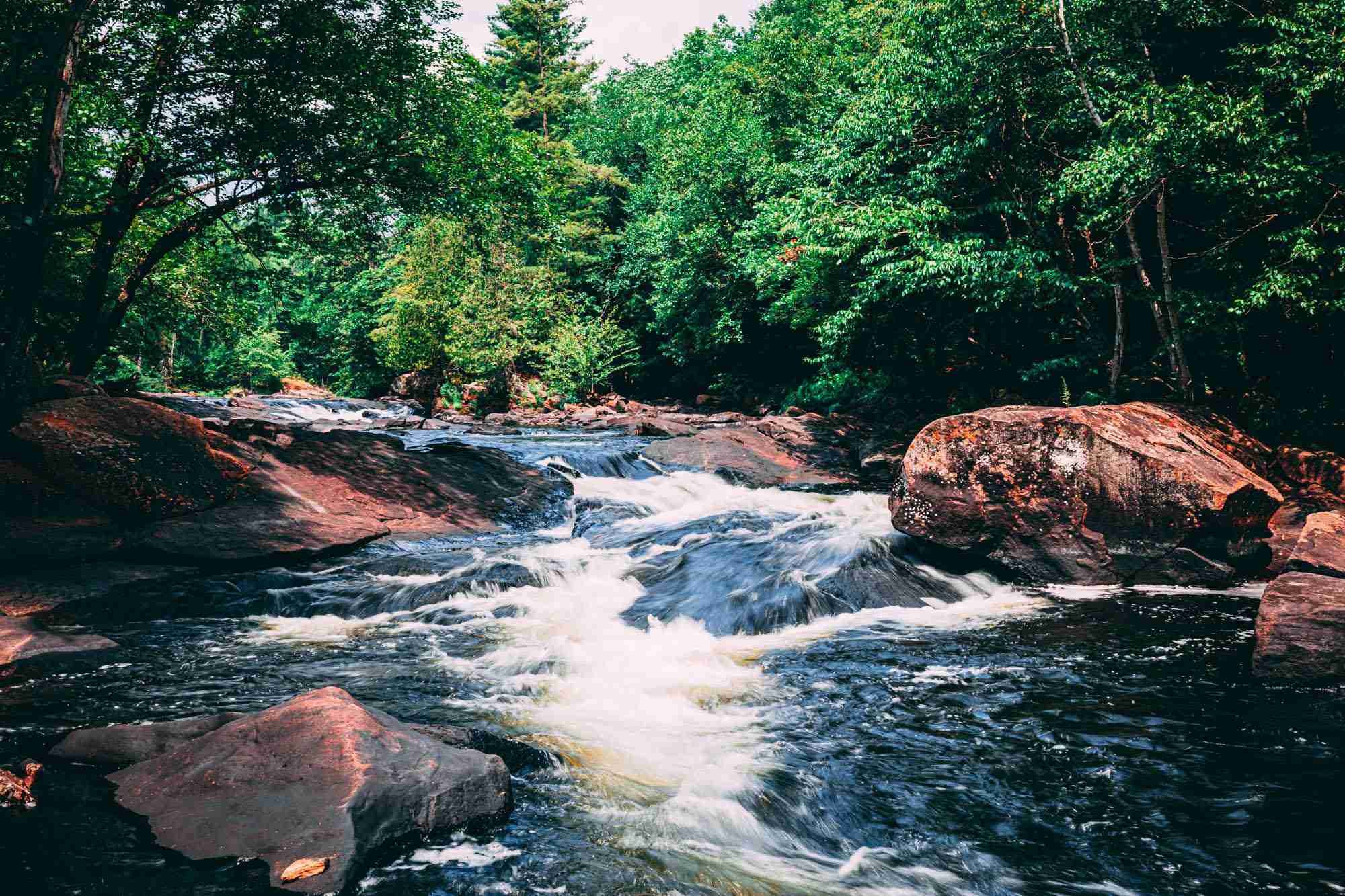
Nestled between Dwight and Algonquin Park along the Oxtongue River, Oxtongue Rapids is a compact but stunning stretch of whitewater framed by rugged granite, mature forest, and the dynamic textures of flowing water. Less known than nearby Ragged Falls, the rapids offer a more intimate and less crowded experience for photographers looking to explore the layered relationship between water and rock in the Canadian Shield. The trail that follows the river grants easy access to a variety of shooting angles, from river-level compositions to elevated overlooks.
This is a location where form and movement collide—the rock here is raw and sculptural, the water fast and unpredictable, and the forest that encroaches on both sides provides a lush green backdrop that turns golden in the fall. It's a rewarding place for photographers interested in long exposures, leading lines, and capturing the interplay between geology and light.
Best Photography Opportunities
• Wide Rapids View with Granite Shoreline
The primary overlook area offers an excellent angle on the river as it breaks over the granite shelves. Use a wide-angle lens to capture the dynamic lines of water flow snaking between rock formations, framed by the treeline on both sides. Long exposures of 1–5 seconds smooth the whitewater into soft ribbons that contrast beautifully against the angular forms of the stone. Shoot during golden hour to catch soft light skimming across the granite surfaces and adding depth to the scene.
• Abstract Details in Rock and Flow
The rocks at Oxtongue Rapids are covered in lichen, fissures, and water-worn textures that make for compelling abstract or macro photography. Use a telephoto or macro lens to isolate patches where moss meets water, or where shadows from trees fall sharply across the cracks. In bright light, a polarizer will help control glare and deepen color saturation, especially in the wet stone and green reflections from the forest.
• Elevated Views and Leading Lines
The trail system offers several spots where you can climb above the rapids for a more top-down perspective. These higher viewpoints allow you to incorporate the path of the river as a strong leading line into your composition, especially effective in the autumn when the canopy adds a vibrant overhead glow. These perspectives work well with vertical compositions that follow the river downstream through a layered frame of stone and foliage.
• Seasonal Foliage and Color Framing
In autumn, the surrounding maple and birch trees erupt in orange, yellow, and red, providing a spectacular frame for the rushing water. Use overhanging branches or reflections in pools to bring seasonal color into your shots. In spring, the river is at its most dramatic, surging with snowmelt and often throwing mist over the rocks—an ideal time for dramatic monochrome compositions or moody long exposures.
• Downstream Pools and Reflections
As the rapids settle, quieter pools form along the river's edge. These spots offer calm reflections of the sky and trees, contrasting with the energy of the rapids upstream. Use these for wide compositions with soft light and mirror-like surfaces, or isolate leaves and rocks for quiet, minimalist images. These pools are also great locations for portraiture or human-scale subjects against the powerful landscape.
Best Time to Visit
Spring is the most dynamic time to shoot the rapids, with strong water flow from snowmelt transforming the river into a force of motion. The current is fast, and the textures in the water are more dramatic, making it ideal for long exposure work. Summer brings easier footing and bright foliage, but can also mean more visitors—early morning or late evening helps avoid crowds.
Autumn is especially rewarding, with the surrounding hardwoods framing the river in vivid color. Overcast fall days are excellent for even lighting and rich, saturated tones. Winter access can be limited, but the snow-covered granite and frozen river edges create striking, minimalist compositions for those willing to brave the cold.
Golden hour light is best for catching the contrast between the warm-toned rock and cool-toned water. Midday light can be harsh, but using a polarizer helps manage glare and reflections. Cloudy days are excellent for texture and long exposures without blown highlights.
How to Get There
Oxtongue Rapids is located just south of Highway 60 between Dwight and Algonquin Provincial Park in Ontario. From Highway 60, take Oxtongue Rapids Park Road, which leads directly to a small parking area and trailhead. The rapids are only a short walk from the parking lot—roughly 300 to 500 metres—along a clearly marked and relatively flat trail.
There are no formal facilities at the site, so bring water and gear with you, and be prepared for uneven footing on the granite near the water. Exercise caution if approaching the river's edge, especially during high flow periods or after rain, as the rocks can be very slippery. The area is part of the Oxtongue River-Ragged Falls Provincial Park system, though less regulated than the main falls.
Recommended Gear and Shooting Tips
Bring a wide-angle lens for capturing full scenes of the rapids and riverbed, ideally something in the 16–35mm range. A 24–70mm zoom works well for both broader views and tighter compositions along the rocks. A telephoto lens (70–200mm) is useful for isolating specific curves of the water or interesting patterns in the stone.
A tripod is essential for long exposure work, especially when smoothing the rapids or working in low light. A circular polarizer helps reduce glare on the water and wet rock surfaces while enhancing foliage contrast. A 6- or 10-stop ND filter will allow for slower shutter speeds even in daylight.
Wear sturdy hiking shoes with good grip, as the rocks along the river are uneven and can be slick. Bring a microfiber cloth to keep lenses clear of mist or water spray, especially if you're shooting close to the rapids during high flow. If visiting in shoulder seasons, dress in layers and be ready for quickly changing light and weather.
Nearby Photography Locations
Just minutes away on Highway 60, Ragged Falls is a more dramatic and vertical cascade with an easy hiking trail and excellent overlook points. Ideal for classic waterfall compositions and long exposures with layered forest in the background.
Near the town of Dwight, this small but scenic lookout offers wide views over Oxtongue Lake, especially vibrant in autumn. Great for sunrise and reflective lake photography.
A short drive east, Algonquin offers trails like Whiskey Rapids and Hardwood Lookout, which feature forest, rivers, and elevated viewpoints perfect for immersive landscape storytelling.
• Dwight Bay and Beach Area
Located just west of the rapids, the shoreline of Dwight Bay offers soft light, docks, and sandy beaches. Excellent for morning reflections and minimalist shoreline scenes, particularly in spring and late summer.
While not a traditional photo location, this nearby local bakery is beloved by traveling photographers—and a great stop for candid shots, detail photography, or a warm-up between outings during colder seasons.
Oxtongue Rapids delivers a more intimate and raw experience than many of Ontario's better-known waterfalls. With its sculpted granite, shifting currents, and surrounding forest canopy, it's a location that rewards careful composition and quiet observation—ideal for photographers who want to capture the subtle power and texture of the northern landscape.
Comments
Loading comments…