
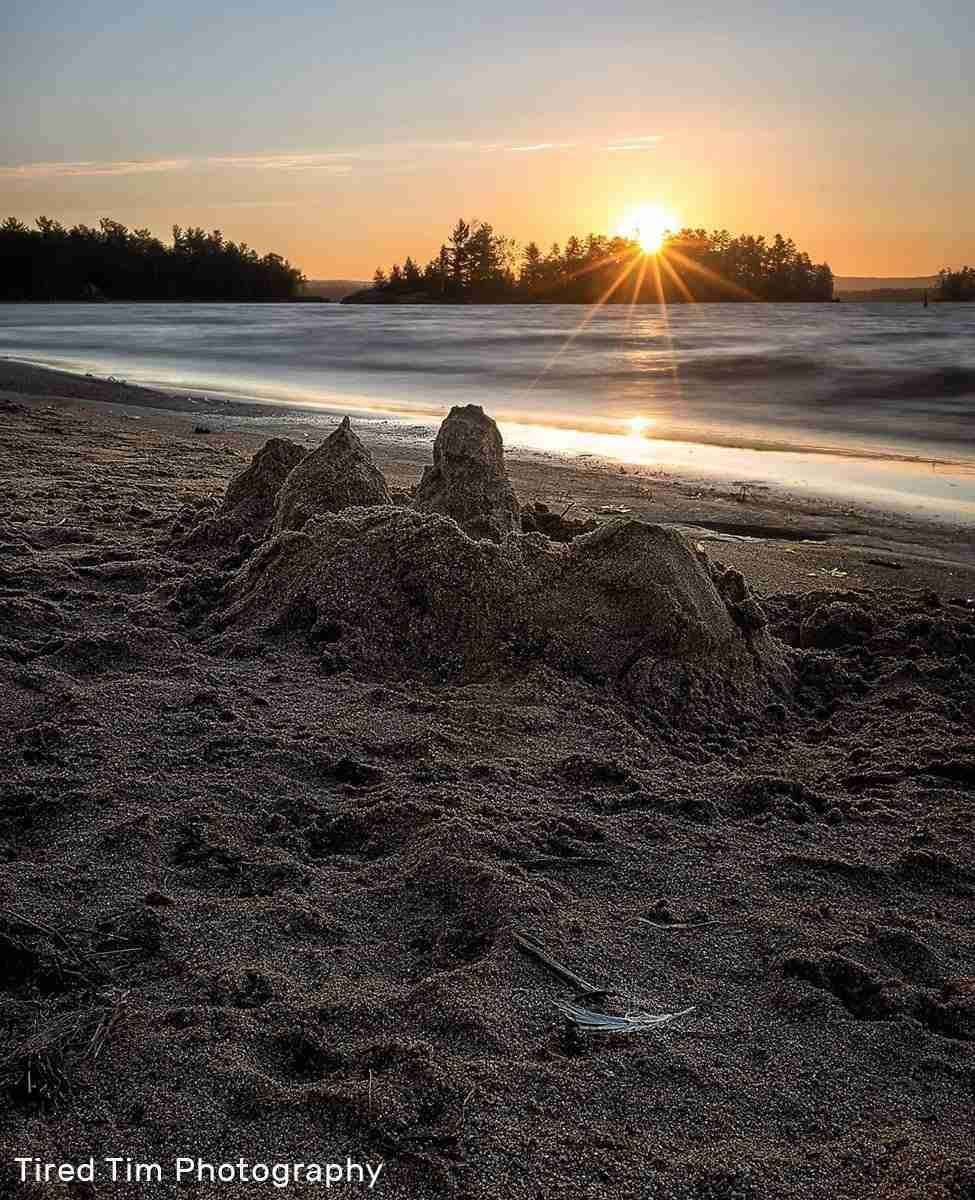
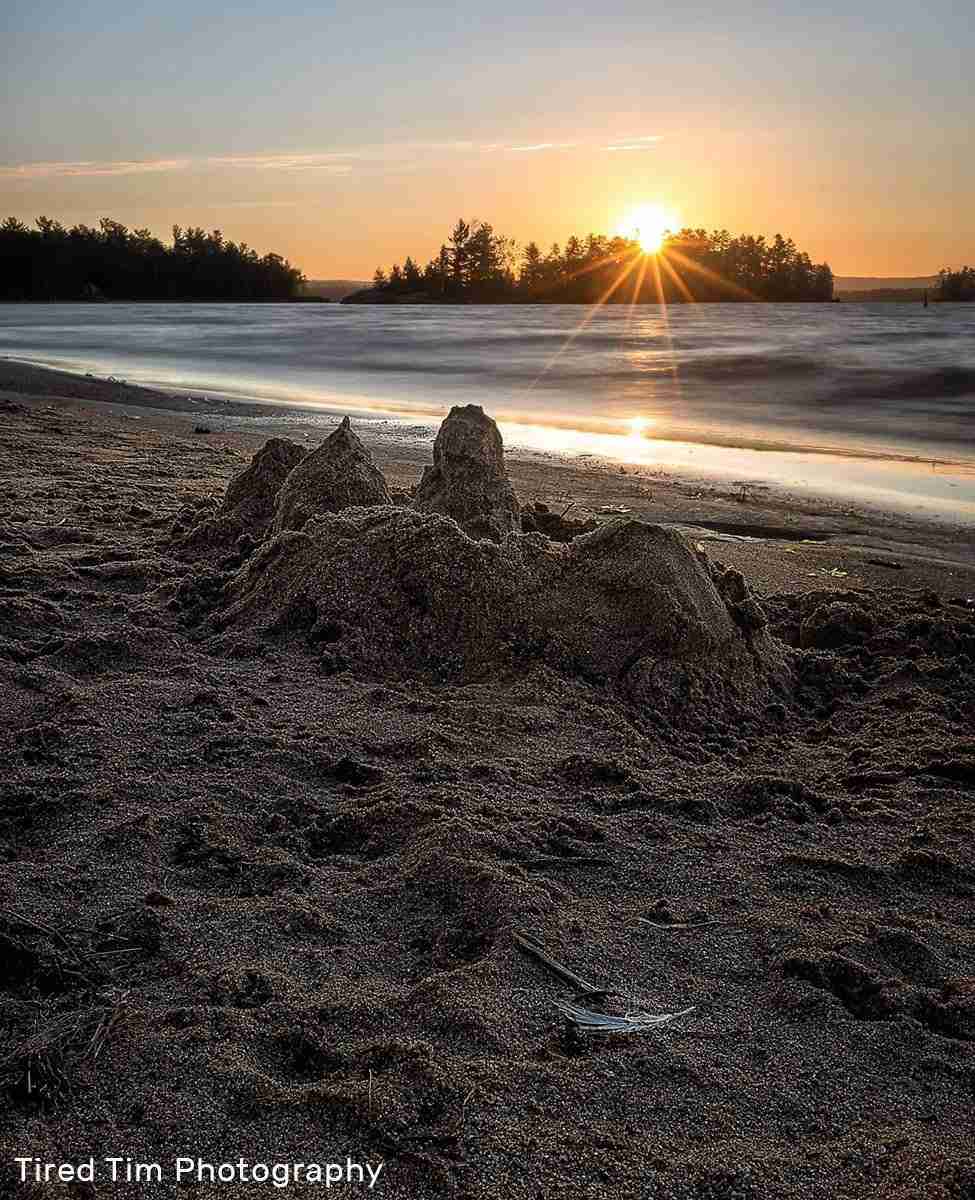
Where the Petawawa and Ottawa Rivers converge, Petawawa Point Beach stretches out in a soft crescent of golden sand, surrounded by calm water and expansive sky. This scenic public beach in northeastern Ontario offers more than just a place to swim—it's a quiet, open space where the landscape unfolds in every direction, making it a compelling location for sunrise photography and riverscape work. With its gently curving shoreline, scattered driftwood, and distant tree-lined banks, Petawawa Point rewards those who arrive early and linger with the changing light. The river confluence brings constant, subtle movement to the water, making for dynamic reflections, shifting textures, and a serene mood that invites both wide and intimate compositions.
Best Photography Opportunities
• Sunrise Over the Ottawa River
: The beach's southeast-facing position makes it ideal for sunrise sessions. As the first light of day breaks over the Ottawa River, it casts long, golden reflections across the water and sand. On calm mornings, the mirrored surface picks up rich gradients of pink, orange, and soft purple, especially in the moments just before and after the sun clears the horizon. Use a wide-angle lens to include the curvature of the beach in the foreground, or frame tighter with long lenses to catch light slicing through low mist across the river.
• River Confluence Reflections
: Where the two rivers meet, water movement becomes subtly layered. The Petawawa River's cooler, faster flow blends into the broader, slower Ottawa, often creating textural patterns that photograph beautifully in soft light. This intersection point is ideal for capturing reflections of cloud layers, forest lines, or soft morning sky. Try composing from a slightly elevated spot near the shoreline to emphasize the contrast in flow or clarity between the two rivers.
• Driftwood and Natural Foregrounds
: The beach often hosts scattered pieces of driftwood and smooth river stones that make excellent foreground anchors. Pair them with reflections or cloud formations to create balanced frames. Early morning side light is perfect for casting soft shadows that bring out the texture and grain of the wood. These elements also lend themselves well to monochrome conversions when the sky is overcast or subdued.
• Minimalist Long Exposures
: Calm mornings provide the best conditions for long exposure photography. Use ND filters to smooth the water surface and capture the movement of low clouds, birds, or soft river current. The beach's clean lines and uncluttered horizon make it ideal for minimalist compositions, especially when paired with subtle gradients in sky and water. Include a single element—like a tree stump, a dock post, or a lone swimmer—for a touch of narrative within the negative space.
• Silhouettes and Human Scale
: The wide-open space and low-angle light make Petawawa Point an excellent place to capture silhouettes, particularly of people walking the beach or standing at the water's edge. Use the sun rising behind your subject to create strong shapes against warm light. This approach is especially effective for conveying a sense of solitude and scale within the expansive riverscape.
Best Time to Visit
Petawawa Point Beach is most photogenic at sunrise, particularly from late spring through early autumn when the sun rises over the river and the water is at its most tranquil. The months of May through October offer the best light angles, clearer skies, and temperate conditions for early morning sessions. Arriving 30–45 minutes before official sunrise gives you time to explore compositions in the blue hour and capture the subtle tones that precede full daylight.
Late summer and early autumn can bring low morning fog or mist where the rivers meet—perfect for moody, atmospheric frames. Autumn color along the distant shoreline enhances the warm light and adds visual depth, while early spring brings flooded shallows and unique foreground textures.
The beach is busiest during mid-day in summer, but early mornings remain quiet and peaceful, especially on weekdays. Winter visits are possible, though the beach is not maintained for access in snowy conditions. When accessible, ice along the river edge and a frozen landscape can offer striking black-and-white potential, but extreme caution is advised near open or unstable water.
How to Get There
Petawawa Point Beach is located just south of the town center in Petawawa, Ontario, where the Petawawa River flows into the Ottawa River. From Highway 17, exit onto Petawawa Boulevard and follow it south toward Victoria Street. Continue to Civic Centre Road and follow signs to Petawawa Point, which leads directly to the beach and adjacent public park.
There is free parking available on-site with spaces close to the sand, making early morning gear transport simple and efficient. The area includes washrooms, picnic areas, and public access points to both rivers, making it comfortable for extended shoots. The beach itself is flat and accessible, with plenty of open space to set up a tripod or explore different compositions on foot.
No entrance fees or permits are required for casual photography, and the park is open year-round, though amenities may be limited outside the summer season. Arrive early for sunrise and bring a headlamp or flashlight if you plan to scout in pre-dawn conditions.
Exploring the Site and Its Surroundings
The point itself is compact, but the convergence of rivers and open shoreline provides excellent variety within a small radius. Wander along the beach to find curved sections of sand, lines of washed-up stone, and shifting tree reflections in the shallow water. Slight elevation changes near the grassy edges offer alternate framing angles over the river.
Inland, a short walk from the beach reveals more natural textures—birch and pine trees, open grassy clearings, and riverside paths. These are excellent for morning light filtering through leaves or for environmental portraits with soft backdrops. Wildlife is minimal but not absent—gulls, herons, and the occasional deer may appear in quiet moments.
On calm days, the Ottawa River opens up to the east like a silver road, ideal for minimalist framing or shooting light transitions as the sun continues to rise. The entire area encourages a gentle pace and an eye for simplicity, making it an ideal space for refining technique and exploring variations of light and form.
Nearby Photography Locations
: Just north of the beach, this quiet park features boardwalk trails through wetlands and forested ravines. It's excellent for bird photography and tranquil woodland scenes, particularly during spring bloom or fall color.
: Located a short drive east, Pembroke's downtown waterfront offers more urban lakefront textures, docks, and marina reflections. The boardwalk is great for golden hour compositions and long exposure sunset shots over the river.
• Ottawa River Lookout (Garrison Petawawa)
: If you have base access or are visiting during public events, the military base offers commanding views of the Ottawa River from elevated terrain. Great for wide landscapes and contextual shots of the river's scale.
: This multi-use rail trail runs west from town and provides open views of farmland, forest, and water crossings. It's particularly photogenic in autumn or winter, when soft light plays across the fields and trestles.
: About an hour upriver, this dramatic section of the Ottawa River includes rocky outcrops, churning water, and quiet forest access—ideal for rugged, remote-feeling compositions.
Petawawa Point Beach offers a kind of photographic quietude that's hard to find—wide water, golden skies, and a simple natural structure that welcomes creative freedom. For those willing to rise early and watch the light unfold over river and sand, this peaceful Ontario beach delivers subtle drama and timeless images with every new dawn.
Comments
Loading comments…