
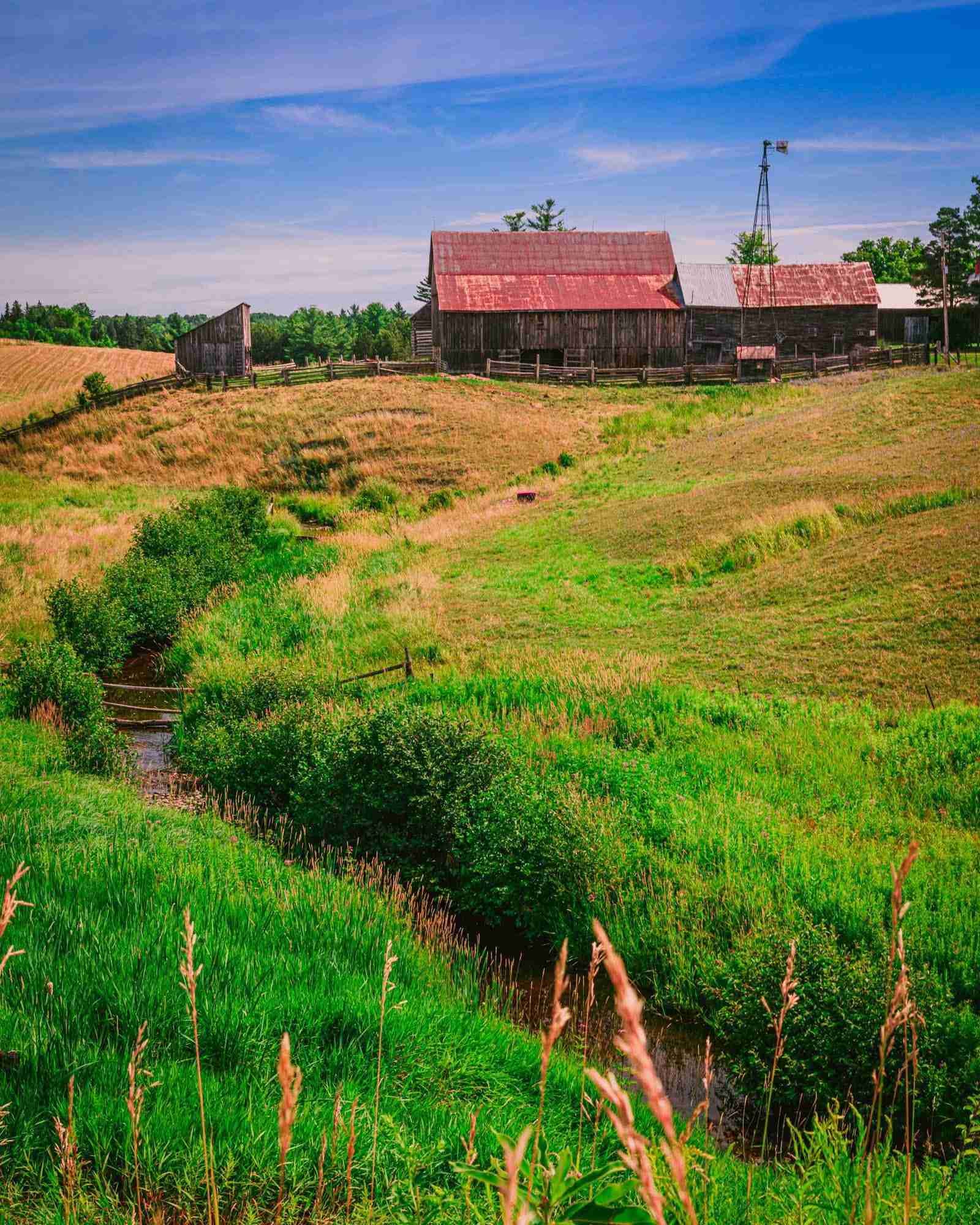
Just outside the town of Renfrew, a series of picturesque old barns nestled into the folds of rolling farmland provide one of the Ottawa Valley's more understated yet rewarding rural photography locations. Sitting peacefully beside a gentle creek and backed by tree-lined ridges, the barns along Burnstown Road evoke the quiet rhythm of working farm life. While still in active use, the site offers clear roadside vantage points for photographers looking to capture authentic rural scenes without intruding on private land.
This is classic Eastern Ontario farmland—weathered wood, long fence lines, and gently undulating pasture that catches the light beautifully in every season. The barns, though simple in structure, are rich with texture and historical presence, providing ample opportunity for landscape framing, compositional layering, and detail study.
Best Photography Opportunities
• Wide Landscape Compositions with Barns and Hills
From the side of Burnstown Road, you can compose sweeping horizontal frames that include the full layout of the barns, the rolling fields, and the soft rise of hills in the distance. This view captures the geometry of farmland, especially when the crops are cut in rows or when the pastures have varying shades of green or gold. Experiment with foreground interest—fence posts, long grass, or even a gravel pull-off—to lead the eye into the composition and enhance the sense of space. During golden hour, the entire scene glows, bringing out the warm tones in the wood and deepening the shadows across the field.
• Creekside Framing and Reflections
The small creek that runs alongside the farm offers additional depth to the composition. When the water is still, it reflects sky, tree canopy, and the side of the barn—ideal for creating symmetry or visual balance in your frame. After rainfall, or in spring runoff, the creek runs faster and adds motion to the frame, making it an excellent spot for experimenting with slower shutter speeds. Look for pools of still water that can reflect dramatic skies or the red roof of the barn in vibrant contrast to surrounding greens or snow.
• Architectural Texture and Agricultural Detail
While you won't be entering the property, a zoom or telephoto lens allows you to isolate sections of the barn architecture—corrugated roofs, vertical plank siding, or open loft doors. These small vignettes offer timeless compositions, rich with character and the wear of decades of use. Look for subtle cues of farm activity—weathered ropes, buckets, tool racks, or hay stacked just inside an open door. On cloudy days, the even light brings out every ridge and knot in the wood grain, making this a great time for black-and-white conversions.
• Seasonal Atmosphere Across the Landscape
Each season brings something different to this scene. Spring delivers soft greens and rising mist above the creek, while summer adds full pastures and deep blue skies. Autumn transforms the trees in the distance into a backdrop of warm tones, and winter flattens the landscape into a soft, minimalist palette. Returning to this site across the seasons allows you to document the working life of the farm and the evolving colors and light of the countryside. Snow on rooftops or morning fog wrapping the barns in a silvery veil completely changes the mood and storytelling potential of your shots.
• Moody Skies and Storm-Light Opportunities
Because of its open surroundings and subtle elevation, the area is excellent for dramatic sky photography. Clouds building over the hills or filtered light cutting through passing storms can create powerful atmospheres behind the farm structures. Keep an eye out for sudden shifts in light—rays breaking through cloud cover or dark storm banks rolling in from the west—as these elements add tension and scale to an otherwise calm rural scene. Try bracketing exposures or blending frames in post to balance the brightness of dramatic skies with the more shaded barn structures.
Best Time to Visit
Late afternoon into golden hour provides the best directional light on the barns and surrounding hills, particularly if you're shooting from the road's eastern edge. The western light catches the wood siding and the tops of the fence posts, casting long shadows that enhance the sense of depth across the fields.
Autumn is the most visually rich season here, with the backdrop of color from hardwood trees and golden pastures. Early spring brings morning fog and soft contrast, while summer offers bright greens and blue-sky reflections in the creek. Winter strips the scene down to its essentials—perfect for monochrome or minimalist photography that emphasizes shape, texture, and tone.
The road sees light traffic, so you'll have time to set up shots carefully. Mornings and late weekdays are best for quiet conditions. Always remain roadside or on the shoulder, and bring a longer lens if you'd like to capture tighter details without crossing onto private property.
How to Get There
The barns are located just outside Renfrew, Ontario, along Burnstown Road (County Road 20), between the town and the hamlet of Burnstown. From Renfrew, head north on Raglan Street South, which becomes Burnstown Road after you cross the Bonnechere River. After about 5 to 10 minutes of driving, watch for the fields to open up and the barns to appear on your left.
There is no designated parking, but several gravel shoulders and farm access points allow for safe, temporary pull-offs. Be mindful of farm equipment or local traffic and avoid blocking any entrances. You'll have a clear view of the barns and creek from multiple road-level locations without needing to step onto private land.
Recommended Gear and Shooting Tips
A wide-angle lens (16–35mm) is ideal for full-farm compositions, especially when including sky and landscape elements. A mid-range zoom (24–70mm) gives flexibility for tighter compositions and framing with foreground elements like fences or creek banks. A telephoto lens (70–200mm) is recommended for isolating barn details or compressing layers of pasture, building, and treeline.
A circular polarizer will help bring out sky contrast, reduce reflections in the creek, and saturate greens in the fields. A tripod is essential for low-light or long-exposure creek work, especially early or late in the day. Consider bracketing exposures if shooting against the sun or under mixed lighting conditions.
Move slowly along the road to test different angles—small shifts in elevation or distance can dramatically change the composition. Frame with natural elements like grasses, branches, or wildflowers to add depth, and revisit the site in multiple seasons to build a strong rural documentary set.
Nearby Photography Locations
• Burnstown Bridge and Madawaska River
Just up the road, the charming steel truss bridge over the Madawaska River offers great reflections, layered riverbank compositions, and wide landscape shots. In autumn, the riverbanks explode with color, making it ideal for both long exposure and handheld scenic work. The bridge itself also makes a compelling subject, especially when framed from the riverside trail or through seasonal foliage.
• Renfrew Railway Trestle and Industrial Ruins
In Renfrew itself, the disused railway trestle and adjacent stone ruins offer striking textures and framing opportunities. Ideal for urban decay photography with strong lines and heritage context. Visit near sunset to capture light filtering through broken windows and across the tracks, adding drama to the scene.
• The Log Barn in White Lake
A beautifully preserved log barn near the community of White Lake, surrounded by pines and open fields. This site offers a clean rural silhouette and symmetrical wooden textures, especially photogenic in late summer and early fall. Look for golden hour light catching the log seams and casting long shadows on the field.
• Calabogie Peaks Lookouts
Further west, Calabogie offers elevated views across lakes and forests, excellent for sunrise and wide-angle landscape work. Try the lookouts near the ski hill or Eagle's Nest for views that capture rolling terrain and shifting light layers. Fall color here is especially vivid, with a full canopy stretching toward the horizon.
• Hydro Cut Trail and Rolling Backroads
This trail system and surrounding rural routes north of Renfrew offer gravel roads, hardwood stands, and glimpses of farm life. Great for slow, meditative drives with the camera out the window, capturing vernacular details and overlooked beauty. Barns, fence lines, and antique mailboxes all provide documentary-style subjects in beautiful natural light.
The Burnstown Road farm barns may be modest, but they embody the quiet dignity of Ontario's working countryside. From morning mist to golden pasture light, they offer a visual dialogue between landscape and labour—perfect for photographers drawn to authenticity, texture, and the enduring presence of heritage in everyday scenes.
Comments
Loading comments…