
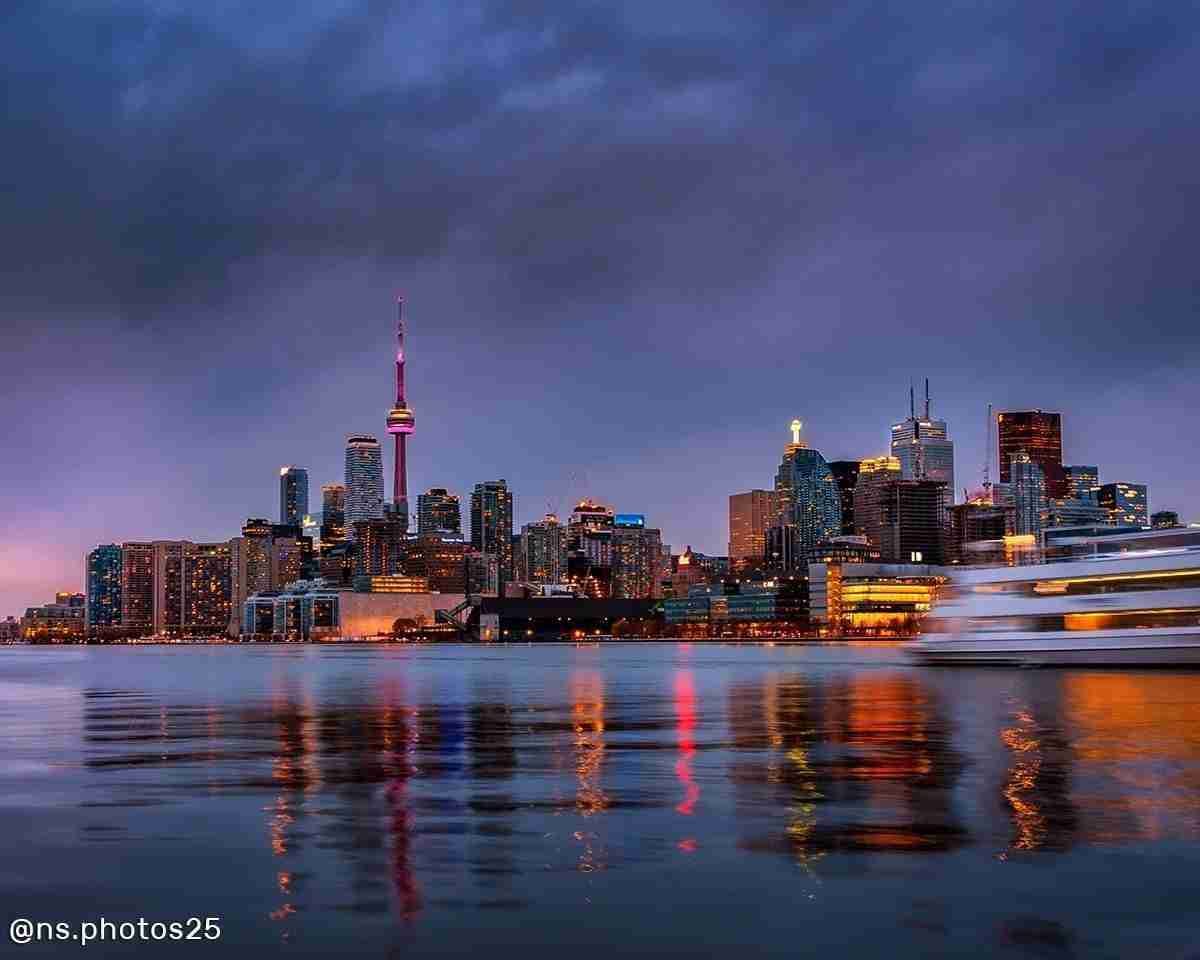
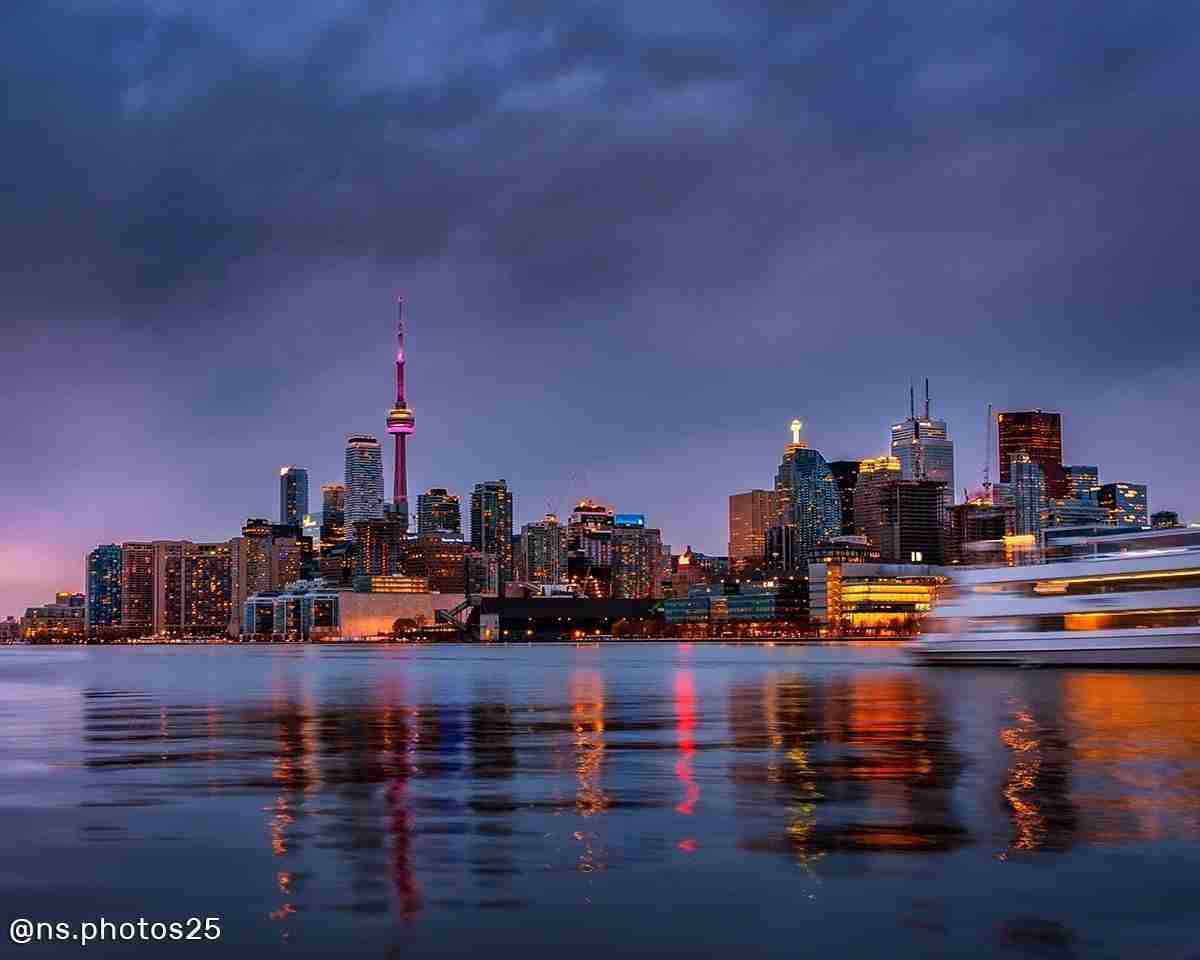
Set across the inner harbor from downtown Toronto, Polson Pier offers one of the most iconic and photogenic skyline views in the entire city. Framed by the calm waters of Toronto Bay and aligned directly with the CN Tower and surrounding high-rises, this location has become a favorite for both locals and visiting photographers alike. It's particularly striking at night, when the city's lights ripple across the water, and long exposures transform the harbor into a mirror of glowing color and urban geometry. Whether you're aiming for cityscape symmetry, moody twilight shots, or skyline reflections beneath stormy skies, Polson Pier delivers a postcard-perfect perspective with minimal effort.
Best Photography Opportunities
• Skyline Panoramas at Sunset and Blue Hour
: The unobstructed west-facing view from Polson Pier captures Toronto's skyline in its entirety, with the CN Tower prominently anchoring the frame. At sunset, the buildings glow with golden highlights, and during blue hour, the city lights begin to shimmer as the sky transitions into deeper tones. Using a wide-angle or panoramic technique, you can frame the entire skyline from the Rogers Centre to the outer towers of the financial district. Including the harbor in the foreground enhances the balance between water, light, and vertical structures.
• Night Photography and Light Trails
: As darkness falls, Polson Pier becomes a canvas for night photography. Long exposures reveal soft reflections in the water, and the ambient glow of the skyline creates a luminous backdrop. This is an ideal location for experimenting with ND filters and exposures ranging from 10 seconds to several minutes, depending on light conditions and weather. Occasional boats or aircraft add motion trails to the scene, giving urban energy to an otherwise still composition.
• Reflections and Water Texture
: On calm nights, the harbor mirrors the skyline with near-perfect symmetry, allowing for layered compositions that double the visual interest. Slight ripples in the water introduce painterly textures that change subtly throughout the evening. Shooting from different points along the pier or incorporating shoreline elements—like rocks or driftwood—helps break up the reflection and add depth to the image. Golden hour reflections are warmer and more subdued, while twilight and nighttime bring more saturated colors and contrast.
• Stormy Skies and Weather Drama
: Polson Pier is a strong location even on overcast or stormy days, when brooding skies and moody light create dramatic contrast against the clean lines of the skyline. Fast-moving clouds at dusk pair beautifully with long exposures, resulting in streaked skies that seem to pull the viewer's eye toward the tower. These conditions are particularly effective in black and white, emphasizing texture and architectural form over color.
• Minimalist and Symmetrical Compositions
: The clean visual symmetry of the skyline across the water makes this a perfect spot for minimalist compositions. Centering the CN Tower and balancing the frame on either side allows for simple, powerful images, especially when reflected light stretches across a glassy bay. Shooting vertically with a wide-angle lens also creates bold compositions that emphasize the tower's height against a glowing skyline.
Best Time to Visit
Polson Pier is photogenic at virtually any time of day, but its full potential comes alive from golden hour through to late evening. Sunset typically casts soft side-light across the buildings, enhancing their form and warming the glass façades, while reflections deepen in the calm waters of the bay. Blue hour—approximately 20 to 45 minutes after sunset—is when the city lights begin to glow while the sky retains a soft indigo hue, ideal for balanced exposures and long-exposure work. During this window, the contrast between natural and artificial light creates a cinematic mood that's perfect for skyline compositions.
Nighttime offers even more photographic possibilities. The cityscape lights remain vibrant well into the night, and on calm evenings, reflections become sharper and more colorful, with reds, yellows, and blues dancing across the harbor surface. If you're shooting on a humid summer night, atmospheric haze can soften the scene for a dreamlike effect, while winter brings crisp, clean air and often more dramatic contrast, especially after snow. Weeknights tend to be quieter, giving photographers more freedom to set up and experiment without interruption.
Early mornings are less frequented but still worth considering. While the skyline is backlit at sunrise, the soft ambient light and occasional mist across the harbor can create a peaceful, pastel-toned atmosphere that works well for minimalist compositions. Visiting Polson Pier just before dawn also provides a quiet, reflective experience before the city fully awakens, with subtle, ambient light that can give the skyline a ghostly, pre-dawn glow.
How to Get There
Polson Pier is located in Toronto's Port Lands district, just southeast of downtown. From central Toronto, follow Lake Shore Boulevard East and turn onto Cherry Street, then continue south until you reach Polson Street. Follow Polson Street west to the end—there is a small parking lot near the Rebel nightclub and entertainment complex, which provides convenient access to the pier. Public transit options include the Cherry Street bus or a short cab ride from Union Station. The area is accessible at all hours and free to enter, though visiting after dark requires caution, as the industrial surroundings can be quiet. Tripods are welcome, and there are no permits required for personal or non-commercial photography.
Exploring Polson Pier and the Surrounding Area
Beyond the classic skyline view, the Port Lands area offers other photographic opportunities with a gritty, urban-industrial edge. Old silos, warehouses, and abandoned lots nearby create a textured contrast to the clean skyline, perfect for black-and-white or detail-oriented shooting. The nearby Cherry Street bridge adds a secondary focal point, especially when framed with industrial piping or waterfront infrastructure. Just to the east, Tommy Thompson Park extends into Lake Ontario and offers natural landscapes, birdlife, and sunset views with a more environmental tone. If you're looking for diversity, you can pair your cityscapes at Polson Pier with street or documentary work around the working harbor, all within walking distance.
Nearby Photography Locations
: For a more natural setting with a skyline backdrop, take a short ferry ride to the islands. Centre Island and Ward's Island both offer alternate skyline perspectives, particularly appealing during sunrise when light reflects off the buildings.
: Located northeast of downtown, this elevated park gives a wide, layered view of the city skyline with green space in the foreground. It's an ideal location for sunrise or blue hour with a telephoto lens.
• Harbourfront Centre
: A central spot on Toronto's waterfront with boardwalks, marinas, and occasional public art installations. Great for street photography and skyline shots with boats and reflections in the foreground.
: Situated west of the core, these parklands offer clean views of the skyline over the lake, with winding paths and rocky beaches for varied compositions. Best during sunset when the city glows across the water.
: Just a few minutes east of Polson Pier, this sandy beach faces south and offers expansive sky views with sailboats, beach grasses, and the occasional skyline glimpse. It's a quiet place for golden hour or minimalist shoreline work.
Polson Pier is more than just a skyline photo spot—it's a front-row seat to the shifting moods and reflections of Toronto itself. The combination of water, light, and architecture creates endless opportunities for both beginners and seasoned photographers to produce impactful, atmospheric work. Whether you're chasing pastel reflections, luminous nightscapes, or the perfect moment of calm before the city stirs awake, Polson Pier delivers every time with elegance and clarity.
Comments
Loading comments…