
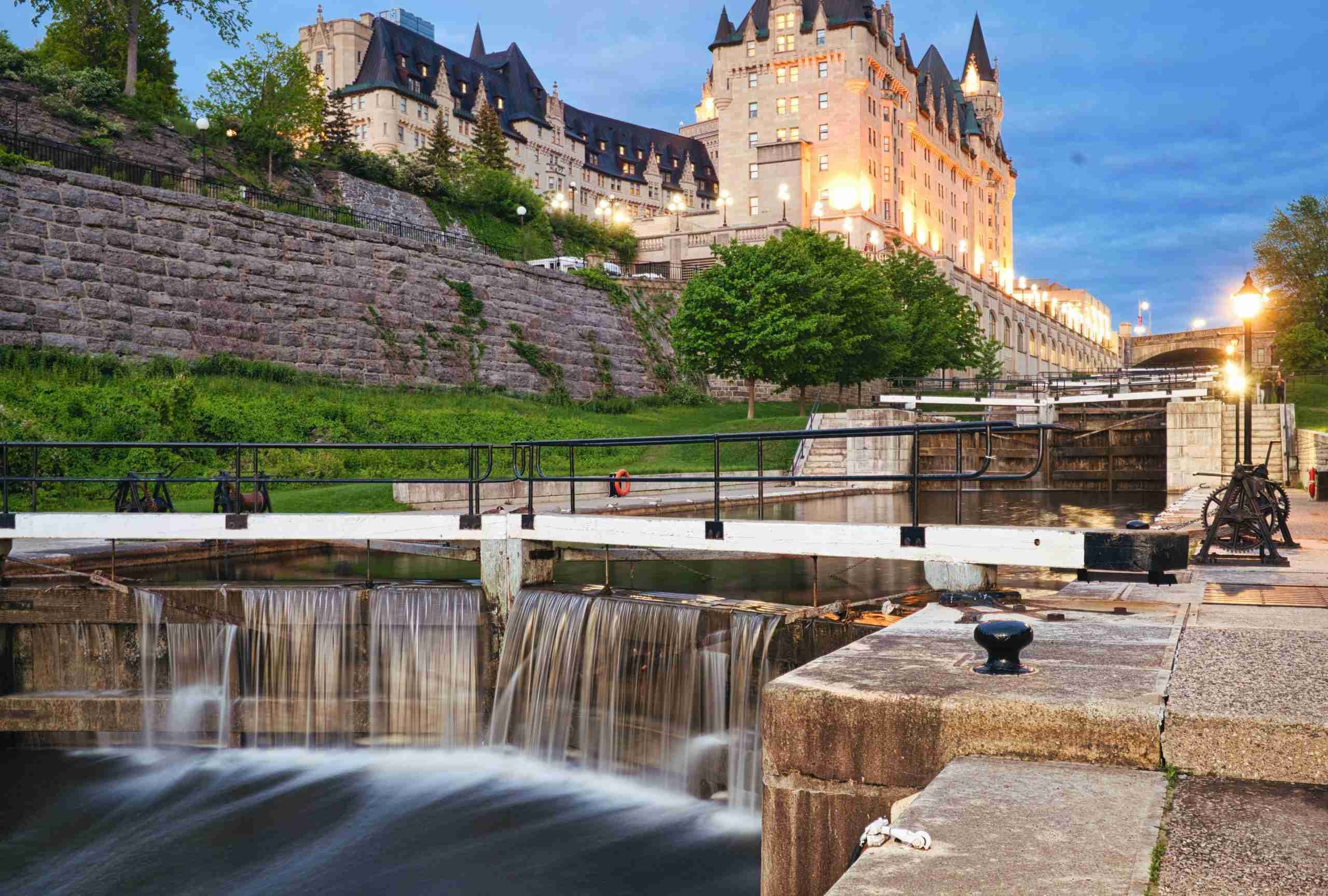
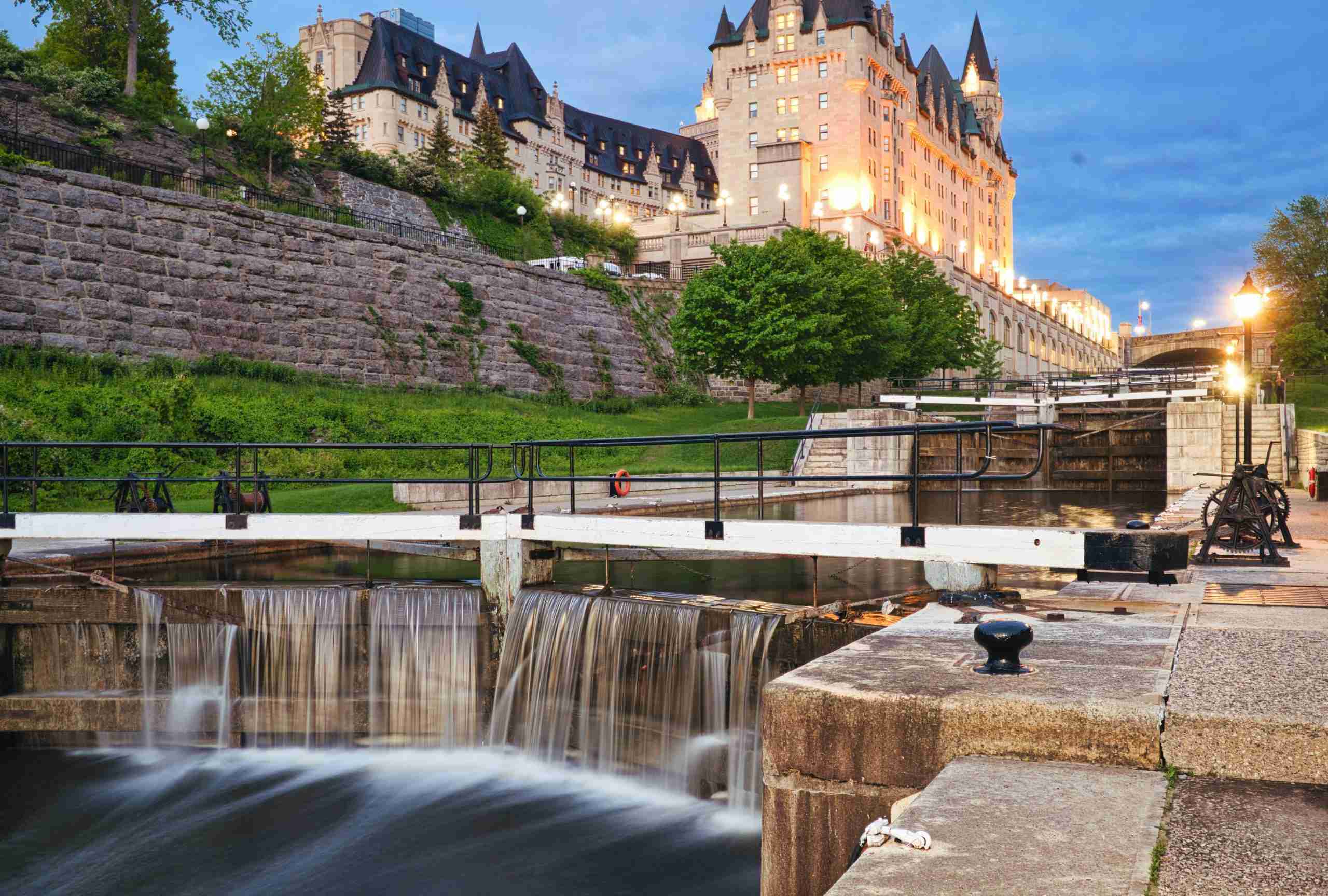
At the threshold between river and city, the first eight locks of the Rideau Canal create a dramatic, ascending corridor of stone, steel, and water. Framed beneath the turreted silhouette of the Château Laurier and backed by Ottawa's historic core, this sequence of locks is as photogenic as it is historically rich. From the base at the Ottawa River, the view rises in perfect symmetry through terraced gates, where moving boats, reflective surfaces, and heritage architecture converge in a visual symphony. Whether you're drawn to the energy of summer navigation or the frozen stillness of winter, this location rewards patience and perspective with layered compositions and rich textures.
Best Photography Opportunities
• Locks 1–8 and the Water Staircase
: The view looking south from the Ottawa River offers a striking composition of the locks aligned in a perfect line, with water stepping upward in a rhythmic pattern. From this vantage, you can capture the entire architectural sweep of the lock system, accentuated by the textured stonework and iron gates that segment each chamber. The repeating geometry of the lock basins and walkways naturally leads the viewer's eye up through the frame, making it a strong anchor point for symmetrical compositions. Reflections from the still water between transits can double the visual impact during calm mornings, while long exposures soften water movement and emphasize the engineered elegance of the system.
• Château Laurier Backdrop
: Sitting immediately above the locks, the Château Laurier dominates the skyline with its grand façade and castle-like turrets. Photographing from below, with the locks in the foreground and the Château rising behind, captures a strong vertical hierarchy—from water to stone to sky. The limestone of the Château takes on a warm hue during golden hour, and the green copper rooftops offer a striking contrast, particularly when framed against a dramatic sky. In fog or light snowfall, the structure gains a dreamlike presence, ideal for moody storytelling and soft-focused telephoto work.
• Boat Traffic and Summer Life
: In warmer months, the canal comes alive with recreational boaters navigating the lock system, often assisted by Parks Canada staff in period attire. These moments introduce human scale, movement, and interaction, transforming the locks from static architecture into a vibrant narrative space. Boats entering or exiting a lock chamber provide excellent timing opportunities for action shots or environmental portraits. Wide-angle lenses can capture the interaction between people and place, while a telephoto perspective isolates gestures, gear, or expressions that tell the story of summer on the Rideau.
• Night Photography with Illuminated Architecture
: The area around the locks takes on an entirely different mood after sunset. Warm architectural lighting from Parliament Hill and the Château Laurier adds contrast to the cool tones of evening sky and water, making this a rewarding site for long-exposure photography. The water surface often mirrors these lights, especially in the stillness of late evening, creating glowing corridors of color and detail. Using a tripod from the Plaza Bridge or the canal's lower path lets you experiment with different shutter speeds to blur the water and deepen the scene's ambiance.
• Winter Ice and Contrasts
: During winter, the locks take on a stark, sculptural beauty as snow and ice simplify the visual field. Frosted railings, snow-dusted gates, and frozen-over lock chambers create a monochrome palette with strong graphic potential. Foot traffic diminishes in colder months, giving photographers more time and freedom to compose shots without interruption. This is also the season when natural light is often diffused by low, overcast skies—ideal for even exposures and minimal shadows when emphasizing texture, negative space, and architectural form.
Best Time to Visit
The Rideau Canal Locks 1–8 offer distinct visual opportunities across all four seasons, but each period comes with its own set of advantages for photographers. From late May through early October, the locks are in active use, creating a vibrant scene filled with boat traffic, Parks Canada staff in heritage uniforms, and frequent crowds along the walkways. This season offers the richest storytelling potential, with dynamic human interaction and moving elements that animate the historic infrastructure. Early morning during these months is ideal—not only does it deliver soft, directional light from the east, but it also allows you to work before tourists and boaters begin to gather.
Sunrise light falls directly down the corridor of locks from the Ottawa River side, casting long shadows and illuminating the stonework with warm, golden hues. This is the best time for symmetrical compositions that emphasize the structure's tiered design. In contrast, late afternoon and golden hour are excellent for capturing side lighting along the upper paths and from Plaza Bridge, where the Château Laurier and Parliament buildings are bathed in a rich, cinematic glow. Cloudy days should not be dismissed—overcast skies flatten shadows and allow for greater control over dynamic range, especially when shooting both sky and water in the same frame.
In winter, while the locks are closed to boat traffic, the area transforms into a minimalist scene of snow and ice. Foot traffic is sparse, granting photographers uninterrupted access to the site's sculptural lines and quiet mood. Subtle tonal contrasts, soft natural light, and the occasional morning fog or frost offer excellent conditions for moody or fine art compositions. The reflective ice and low sun angles of midwinter can be especially powerful tools for creative framing and silhouette work. If your goal is to shoot the canal in its iconic frozen state, January through early February delivers the most reliable ice coverage.
Late autumn and early spring serve as transitional windows with fewer people and more dramatic skies. These shoulder seasons often bring saturated tones after rainfall, stark tree lines, and fleeting moments of dramatic light that reward patience and quick adaptability. Overall, while summer is the most popular time to photograph the locks in action, the site remains a year-round canvas for photographers willing to work with changing conditions and shifting light.
How to Get There
The Rideau Canal Locks 1–8 are located directly adjacent to Parliament Hill in downtown Ottawa. The most convenient access point is from Wellington Street, where visitors can descend to the lock level via a paved path near the Bytown Museum. For those arriving by car, paid parking is available at the National Arts Centre or on nearby side streets, though spaces can be limited during peak hours. Photographers can also access the area on foot or by bike via the scenic canal pathways that run parallel to the water. The site is fully walkable, with multiple vantage points accessible without significant elevation gain, though tripods may require extra care on narrow walkways.
Recommended Gear and Shooting Tips
A versatile kit will go a long way at the Rideau Canal Locks, where both wide cityscapes and intimate details are readily available. A wide-angle lens (16–35mm or equivalent) is essential for capturing the full sweep of the locks from the lower end or Plaza Bridge, especially when composing symmetrical images. A mid-range zoom (24–70mm) allows you to work dynamically as the light shifts or when photographing boat activity, while a longer telephoto (70–200mm) is ideal for compressing layers of architecture, isolating ornamental elements on the Château Laurier, or picking out expressions from visitors and boaters.
A sturdy tripod is highly recommended for low-light or long-exposure work, particularly during twilight or night sessions when you'll want to stretch your shutter speed to capture smooth water or glowing architectural lights. Polarizers can help manage glare on the water's surface during daylight, especially if you're shooting from the side paths where light often reflects at a shallow angle. Neutral density filters are useful for creative long exposures, even in daytime, especially when you want to soften the water or blur pedestrian movement without overexposing the scene.
Weather can shift quickly in Ottawa, so packing a microfiber cloth, rain cover, and weather-sealed gear—or a reliable dry bag—will help you shoot in changing conditions without interruption. In winter, dress warmly and bring lens wipes to handle condensation when moving between warm interiors and cold outdoor air. For those interested in storytelling or fine art imagery, consider visiting multiple times under different lighting and seasonal conditions; the locks reward long-term exploration and evolving vision. Lastly, always check event schedules—summer festivals and Canada Day celebrations bring added energy but also dense crowds, which can change both access and the tone of your images.
Nearby Photography Locations
• Parliament Hill
: Just a short walk from the locks, Parliament Hill delivers classic shots of neo-Gothic architecture, flagpoles, and skyline silhouettes. The west-facing lawn is ideal for sunset backdrops, while the Centennial Flame offers interesting foreground elements for night photography.
: Positioned directly above the locks to the northeast, this park provides sweeping views of the Château Laurier, Parliament, and the Ottawa River. It's especially photogenic in autumn when foliage adds vibrancy to the scene.
• National Gallery of Canada and Maman Sculpture
: Located just north of Major's Hill Park, this contemporary museum building offers a striking contrast to the historic canal. The glass façade reflects sky and weather, while the giant spider sculpture outside creates a dramatic subject in both daylight and low light.
• ByWard Market District
: This lively neighborhood is a few blocks east of the locks and rich with photographic material, from street photography opportunities to heritage façades and colorful storefronts. Early morning visits offer the best light and fewer crowds.
: A few kilometers east along Sussex Drive, Rideau Falls marks the place where the Rideau River joins the Ottawa River. Twin waterfalls split by a small island create a dramatic scene, especially in spring when water flow is strongest or in winter when mist forms striking ice sculptures.
Whether you're visiting Ottawa for the first time or revisiting the capital with fresh creative intent, the Rideau Canal Locks 1–8 are more than just a historic waterway—they're a living canvas where light, movement, and architecture converge. From grand perspectives to quiet details, this location continues to reward those who return with new angles and a deeper appreciation for how history and landscape intersect.
Comments
Loading comments…