
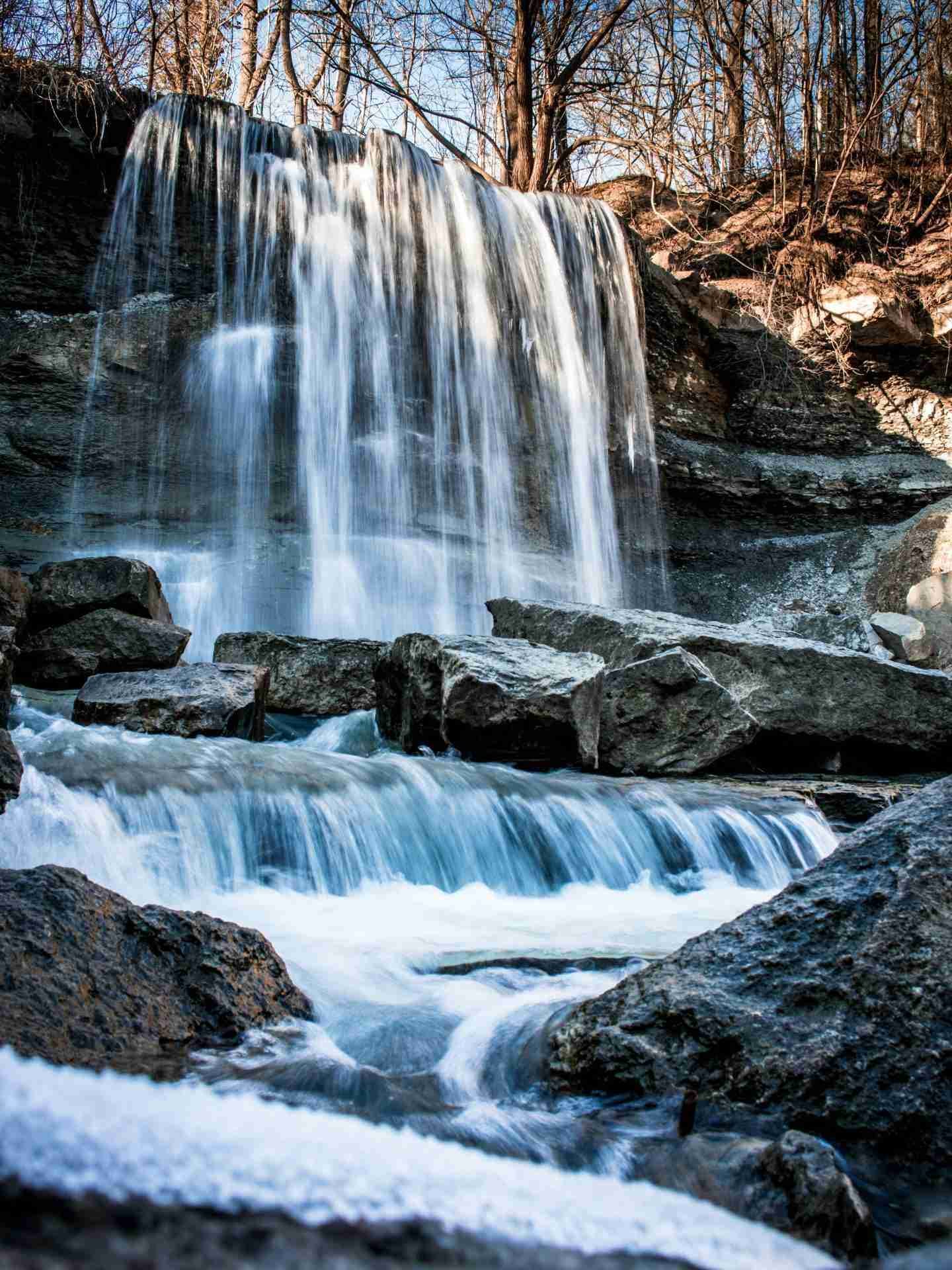
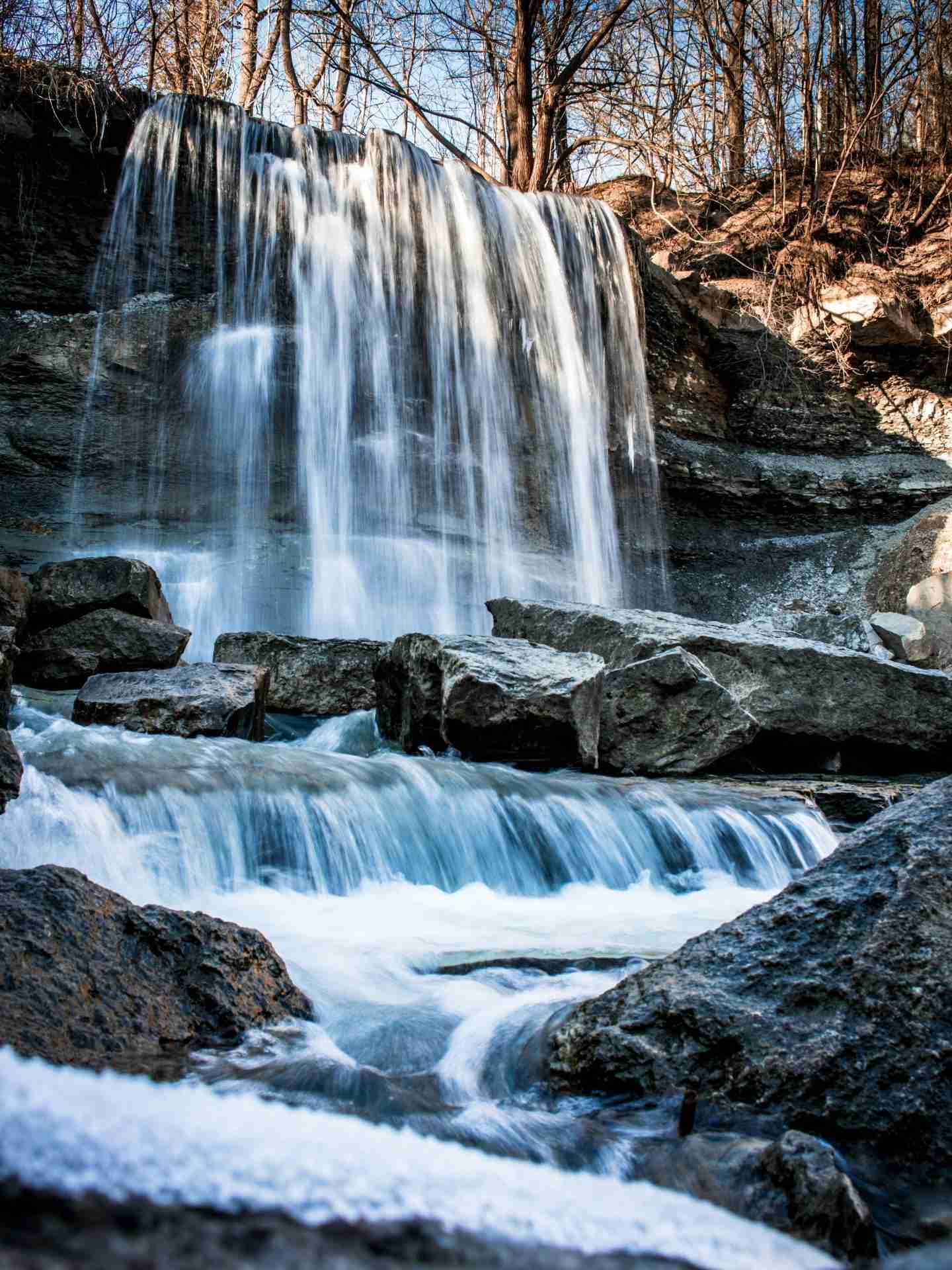
Tucked into the forested hills of Lambton Shores, Rock Glen Conservation Area blends geological wonder, cascading waterfalls, and mature Carolinian forest into one of southwestern Ontario's most photogenic natural settings. At the heart of the park is Rock Glen Falls, a dramatic 10-meter cascade that spills over layers of exposed limestone and shale, offering both grandeur and intimacy depending on your vantage point. Photographers will find a rich variety of subjects here—from rushing water and weathered cliffs to fossil-strewn creek beds and dense woodland trails. Whether you're crafting classic landscape compositions or seeking quiet moments of macro detail, Rock Glen is a compact yet visually diverse destination that rewards thoughtful exploration year-round.
Best Photography Opportunities
• Rock Glen Falls from Multiple Angles
The park's centerpiece, Rock Glen Falls, is accessible from both above and below, giving photographers a range of compositions. From the viewing platform at the top, wide-angle shots emphasize the shape of the falls as it cuts through a dramatic limestone gorge. Descend the trail to the creek bed for an entirely different perspective—here, you can shoot from low angles across the water, using rocks and driftwood in the foreground to build depth. Early morning light from the east illuminates the face of the falls, highlighting the flow and texture of the water. A tripod and a 6-stop ND filter will allow for smooth, silky exposures that contrast with the rugged cliff face.
• Fossil Beds and Geological Detail
One of the area's unique features is the abundance of Devonian-era fossils scattered throughout the creek bed below the falls. Brachiopods, corals, and trilobites can be found embedded in loose shale or weathered into the limestone. These natural relics make excellent macro or close-up subjects—especially when photographed in early morning or overcast light that softens shadows and brings out surface detail. Use a macro lens or a short telephoto with extension tubes to isolate textures, and consider using a small LED light or reflector to fill shadows without flattening the composition. Be mindful to leave fossils in place, in keeping with conservation area guidelines.
• Boardwalk and Forest Trail Vistas
The network of trails and wooden boardwalks winds through dense forest and over gentle ridges, offering elevated views of the Glen and the Ausable River below. These high vantage points allow for layered compositions where the falls, forest, and trail systems converge. In spring and summer, the canopy is lush and green, offering strong contrast with the exposed rock and water below. In autumn, the trail corridors blaze with color—perfect for vanishing-point compositions using fallen leaves and boardwalk lines to draw the eye into the scene. Shoot during golden hour for warm side light filtering through the trees, creating long shadows and added dimension.
• Creekside Reflections and Water Studies
Downstream from the falls, Rock Glen Creek flattens and slows, creating mirror-like pools that reflect overhanging branches and rock walls. These quieter stretches offer a more minimalist approach—ideal for compositions built around negative space, symmetry, or seasonal foliage. Use a polarizer to cut surface glare and reveal submerged stones or autumn leaves caught beneath the current. A 24–70mm lens offers flexibility in these tighter quarters, allowing you to move from wide reflections to tighter detail without switching gear. In colder months, ice formations along the water's edge add visual complexity and subdued tonal range.
• Wildlife and Woodland Atmosphere
The surrounding Carolinian forest is rich in birdlife, small mammals, and native plant species. Spring and early summer are best for photographing migratory birds, while early autumn brings squirrels, chipmunks, and deer into more visible areas as they forage. Use a telephoto lens to isolate wildlife from the dense understory, and keep your shutter speed high to catch movement in low light. For a more atmospheric approach, focus on forest textures—ferns, moss-covered trunks, and sunbeams filtering through the leaves. These quieter shots often speak more to the mood of the place than dramatic vistas do, and they add narrative diversity to your collection.
Best Time to Visit
Rock Glen Conservation Area is photogenic throughout the year, but the nature of the light, vegetation, and water flow varies significantly by season. Spring, from April through early June, offers peak water levels at the falls and lush greenery throughout the forest. This is an excellent time for both waterfall and macro photography, with abundant wildflowers, moss, and mist rising from the gorge on cool mornings.
Summer provides thick canopy coverage and vibrant greens, which frame the falls beautifully but can also limit light in deeper parts of the Glen. Midday sun often filters in as dramatic shafts through the trees—ideal for capturing contrast between light and shadow, especially along boardwalks or creekside paths.
Autumn is the most visually dynamic season. From late September through October, the entire valley transforms with color, and the layered topography makes it easy to compose shots that highlight fall foliage, moving water, and the warm texture of stone and wood. Early morning and late afternoon light is especially rich, casting golden highlights across the falls and deepening the color palette of the surrounding forest.
Winter offers a more minimalistic and quiet experience. The waterfall may partially freeze, icicles hang from the gorge walls, and snow dusts the boardwalks and fossil beds. These conditions are ideal for moodier compositions and monochrome work, especially in soft light. Be cautious, however, as access to lower trails may be limited depending on ice conditions.
Regardless of season, the best light occurs in the first and last hours of the day. Morning is especially rewarding when mist hangs over the water and the park is quiet. Cloudy days are also excellent for shooting the falls and creek, as soft light helps preserve highlight and shadow detail in complex scenes.
How to Get There
Rock Glen Conservation Area is located just outside the town of Arkona in Lambton Shores, Ontario. From London, it's roughly an hour's drive west along Highway 402, exiting at Forest Road or Centre Road, and continuing via local roads to Rock Glen Road. From Sarnia, the drive is just under 45 minutes east along Highway 402 and County Road 79. Clear signage marks the entrance, and the park has a large parking lot with space for visitors year-round.
The conservation area charges a small entry fee during the main visitor season, typically from spring through fall. Parking, washrooms, and picnic facilities are available near the trailhead. From the parking area, a well-maintained network of trails and stairs leads to the main viewpoints, the falls, the fossil beds, and forest trails. Most key locations can be accessed with a short walk, though descending to the base of the falls involves stairs and uneven terrain. Good footwear is recommended, especially in wet or icy conditions.
Tripods, monopods, and handheld equipment are welcome, but drones are prohibited without special permission from the conservation authority. Fossil collection is not allowed, but photography of fossils in place is encouraged and fully permitted.
Recommended Photography Gear
To make the most of Rock Glen's varied terrain and subjects, bring a versatile kit capable of handling both wide landscapes and detailed close-ups. A full-frame DSLR or mirrorless body with high dynamic range performance will allow you to manage the strong contrast between shaded cliffs and bright sky, especially around the waterfall.
A wide-angle lens (16–35mm) is ideal for capturing the full sweep of Rock Glen Falls and the gorge, while a standard zoom (24–70mm) will give you flexibility on the trails and boardwalks. For macro work among the fossil beds or wildflowers, a 90–105mm macro lens or a telephoto with extension tubes allows you to isolate texture without disturbing the subject. A 70–200mm lens is useful for wildlife and compressed landscape views from elevated trails.
A sturdy tripod is essential for long exposures at the falls and creek. Bring a circular polarizer to manage reflections on water and enhance foliage contrast, and a 6- or 10-stop ND filter for silky waterfall effects. Don't forget extra batteries, especially in colder seasons, and lens cloths to handle mist or condensation near the falls.
Weather can shift quickly, so pack light rain gear and a dry bag for sensitive electronics. A comfortable backpack with space for a water bottle and snacks will allow you to move easily between shooting locations without returning to the car.
Nearby Photography Locations
Just 25 minutes south of Rock Glen, this long, sandy beach on Lake Huron offers wide horizons, dune grass, and pastel sunsets—ideal for minimalist shoreline compositions or blue hour long exposures after a day in the forest.
Located within the nearby Lambton Heritage Forest, this boardwalk trail takes you through a rare sphagnum bog ecosystem. It's excellent for macro photography, birding, and capturing textures in low, filtered light.
An hour northeast, this scenic park near Goderich includes its own waterfall, riverfront views, and heavily wooded trails. It's a quieter alternative for those looking to explore more cascading water in a less-developed setting.
Just 45 minutes away, Pinery offers sand dunes, oak savannah, and some of the most dramatic Lake Huron sunsets in Ontario. The variety of habitats supports everything from landscape and wildlife to abstract forest floor studies.
A unique rural location just south of the area, this herb farm features rustic buildings, flower beds, and antique decor perfect for styled shoots and still-life photography. Best visited in spring and summer when the gardens are in bloom.
Rock Glen Conservation Area offers the kind of natural diversity that invites photographers to return across seasons and styles. With its striking waterfall, fossil-rich creek beds, and moody forest interiors, the site rewards both grand landscapes and intimate detail work. Whether you're crafting long exposures at the foot of the falls or pausing to study a 400-million-year-old fossil embedded in stone, this hidden gem offers both visual drama and quiet depth—an ideal destination for nature photographers looking to balance beauty with substance.
Comments
Loading comments…