
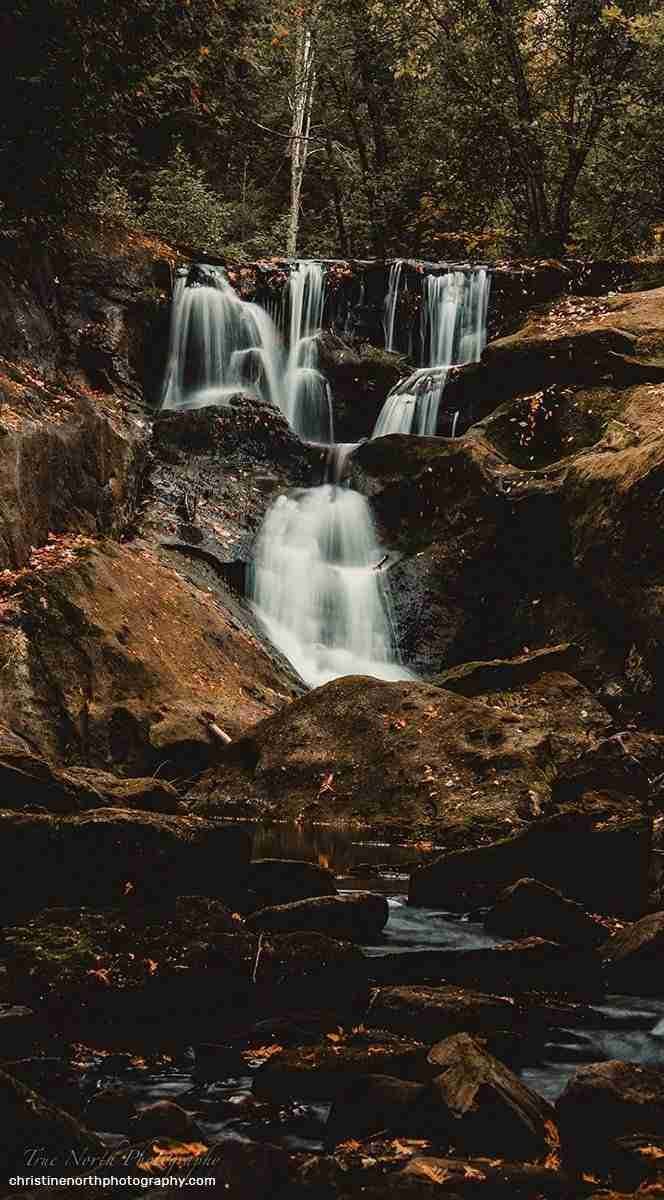
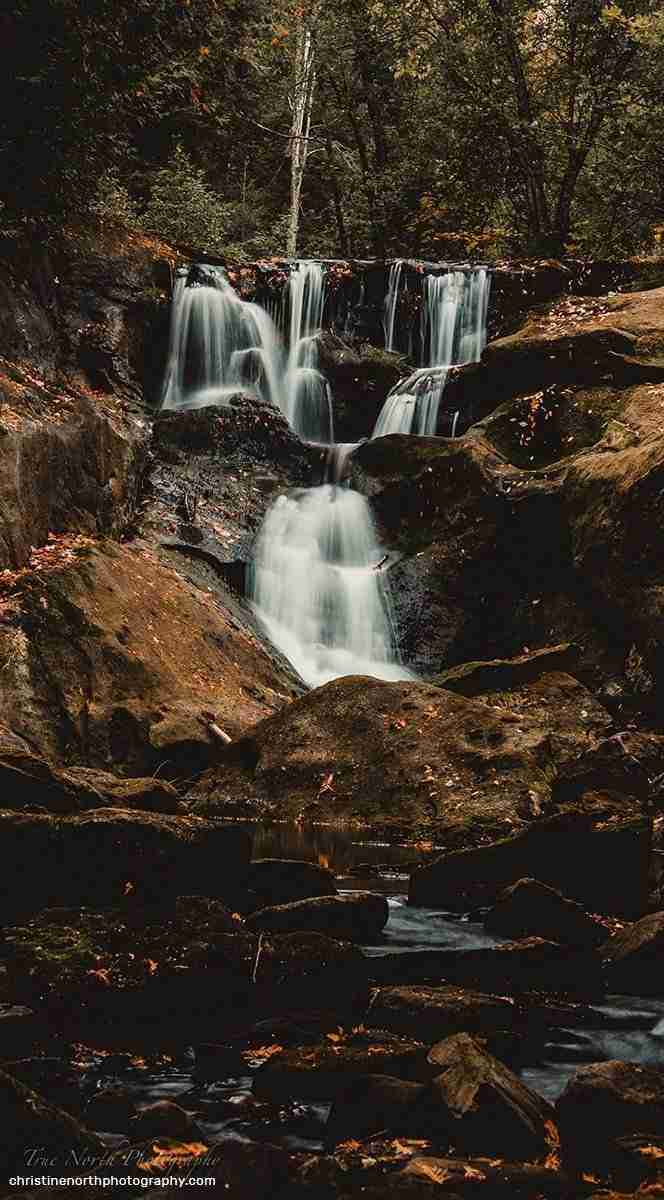
Tucked quietly within the forested backroads of the Madawaska Highlands, Rockingham Waterfall is a hidden gem waiting to be discovered by photographers with a taste for seclusion and subtle beauty. Located just off John Watson Road near Rockingham, Ontario, this intimate cascade tumbles over a rugged, moss-covered drop and flows into a scenic, rock-strewn creek that parallels the roadside. With its whispering canopy, textured creek bed, and ever-changing water flow, the area around Rockingham Waterfall offers a rewarding combination of long-exposure drama, natural detail, and peaceful woodland atmosphere.
Best Photography Opportunities
• Front-On Long Exposure of the Main Falls
The waterfall itself, though modest in scale, offers a beautiful layered drop framed by angular rocks and forest foliage. Shoot from creek level with a tripod and neutral density filter to smooth the motion of the falling water and capture fine detail in the rock textures. Overcast skies or misty mornings help soften the light and deepen greens for a more painterly result.
• Creek Bed Textures and Cascades Along the Road
The creek that runs alongside John Watson Road presents numerous photogenic bends, eddies, and mini-cascades. These sections are ideal for composing tight, intimate shots with leaf-littered rocks, flowing water, and mossy details. Use a polarizing filter to cut glare and reveal submerged textures beneath the water's surface. Low angles and slow shutter speeds add mood and depth.
• Framing Through Woodland Canopy in Autumn
In fall, the dense mixed forest surrounding the creek erupts into brilliant golds and reds, creating fiery reflections in the moving water. Frame your shots through branches or foreground trunks to build layers and highlight the seasonal contrast between warm leaves and cool stream tones. A 24–70mm lens works well for balancing foreground and midground detail.
• Abstract Studies of Light and Water Movement
Dappled light filtering through the trees can create shimmering patterns on the creek's surface. Focus on these ephemeral effects with a mid-telephoto lens and a wide aperture to isolate color, motion, and form. These abstract compositions are especially effective in late afternoon or during gentle rain.
• Drone Perspectives Along the Creekline (If Permitted)
Aerial photography may reveal the natural geometry of the meandering creek and the fall framed by dense woodland. Fly low to capture canopy texture or shoot straight down for minimalist patterns of rock, water, and foliage. Always follow local drone regulations and avoid disturbing wildlife or private properties in the area.
Best Time to Visit
Rockingham Waterfall is most photogenic in spring and autumn, when water levels are higher and the surrounding forest is either lush and green or lit with autumn fire. Spring (late April to early June) brings fresh foliage, flowing water from snowmelt, and subtle morning mist—ideal for long-exposure and woodland photography.
Autumn (late September to mid-October) transforms the landscape into a palette of rich reds, oranges, and yellows, especially striking when mirrored in the water or scattered across the creek bed.
Overcast days are ideal for waterfall photography, as they minimize contrast and allow for longer shutter speeds without blown highlights. Early morning offers the best chance for soft light, quiet conditions, and potentially fog or dew in the undergrowth.
In summer, the creek can run lower, revealing more rock formations and offering opportunities for tighter, texture-focused compositions, though harsh midday light may require timing your shoot carefully.
How to Get There
Rockingham Waterfall is located near the hamlet of Rockingham in eastern Ontario, approximately 15 minutes south of Barry's Bay. From Highway 62 or Combermere, follow regional roads toward John Watson Road, a gravel route that winds through dense forest and along the creek.
There is no formal signage or trailhead, so navigation apps or offline maps are recommended. The waterfall is located just a short distance off John Watson Road and can often be heard before it's seen. Pull off safely at a wide shoulder or clearing near the creek and walk in carefully—some areas may be slippery or uneven.
Foot access to the base of the falls and creek is relatively easy but requires navigating mossy rocks and occasional wet ground. Waterproof hiking boots and a walking stick are helpful, especially if you're carrying gear. There are no facilities or marked trails, so pack water, be respectful of private land, and practice Leave No Trace principles.
Exploring the Surrounding Area
The forest around Rockingham Waterfall is densely wooded and filled with photographic opportunities beyond the main cascade. Continue exploring the creek both upstream and downstream for subtle water textures, natural rock pools, and overhanging branches perfect for framing compositions. Fallen logs, root systems, and pockets of wild mushrooms or moss create excellent macro opportunities.
Beyond the creek itself, the surrounding hardwood forest provides strong vertical lines for forestscape photography, especially in morning mist or low evening light. Deer, songbirds, and other wildlife frequent the area, so a quiet approach and long lens can occasionally yield rewarding fauna shots.
In the warmer months, the interplay of light and leaf shadow creates constantly shifting conditions—ideal for slow-paced exploration and thoughtful framing.
Nearby Photography Locations
• Bonnechere Caves
Located about 30 minutes north, these limestone caverns offer a moody contrast to the waterfall, with underground textures, flowing water, and diffused cave light—perfect for low-light and tripod work. Their sculpted rock formations and echoing chambers create excellent opportunities for capturing atmosphere and geological detail.
• Madawaska River Lookouts
Several roadside pulloffs and hiking trails along the river provide wide views of cascading water, pine-lined shores, and fog-draped valleys. Best shot at sunrise or sunset with a long lens or from elevated viewpoints. Changing water levels throughout the year can dramatically affect both flow and visual impact.
• Crooked Slide Park
A restored historical log chute nestled in the woods just south of Combermere. Great for rustic textures, water motion, and heritage compositions in soft light or light rain. The juxtaposition of engineered woodwork and natural flow makes it ideal for storytelling through images.
• Kingscote Lake and Spectacle Lake
These quiet, lesser-travelled lakes offer mirror-like reflections, driftwood foregrounds, and minimalist compositions during calm, early mornings—ideal for drone or wide-angle work. Occasional morning fog adds mood and ethereal separation between lake and forest.
• Boulter Lake Lookout
A bit farther afield, this highland ridge offers panoramic forest views and brilliant fall colour—a worthwhile stop for golden-hour landscape shooting in autumn. The lookout is especially rewarding during peak foliage for sweeping, painterly compositions of the rolling hills below.
Comments
Loading comments…