
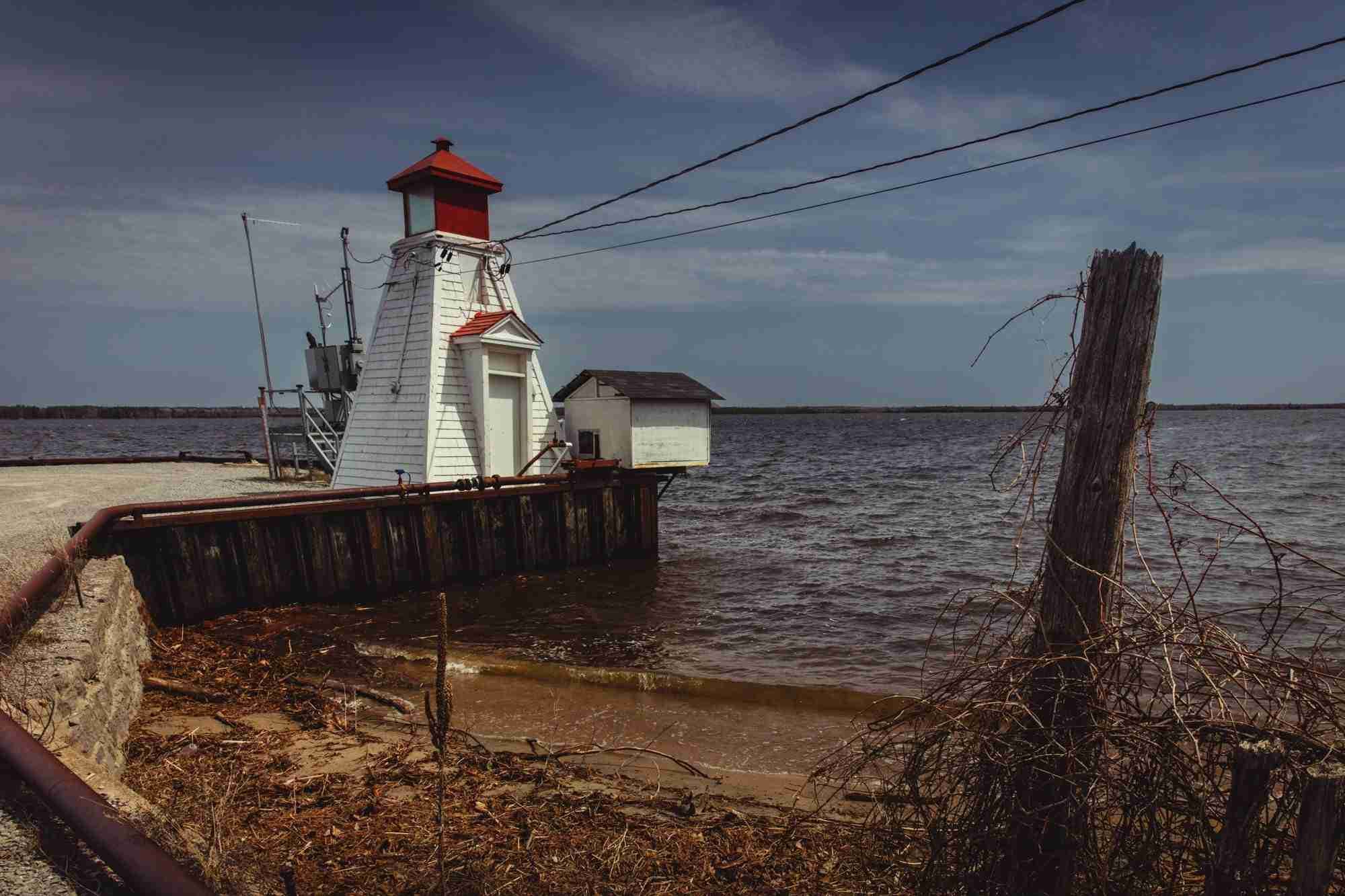
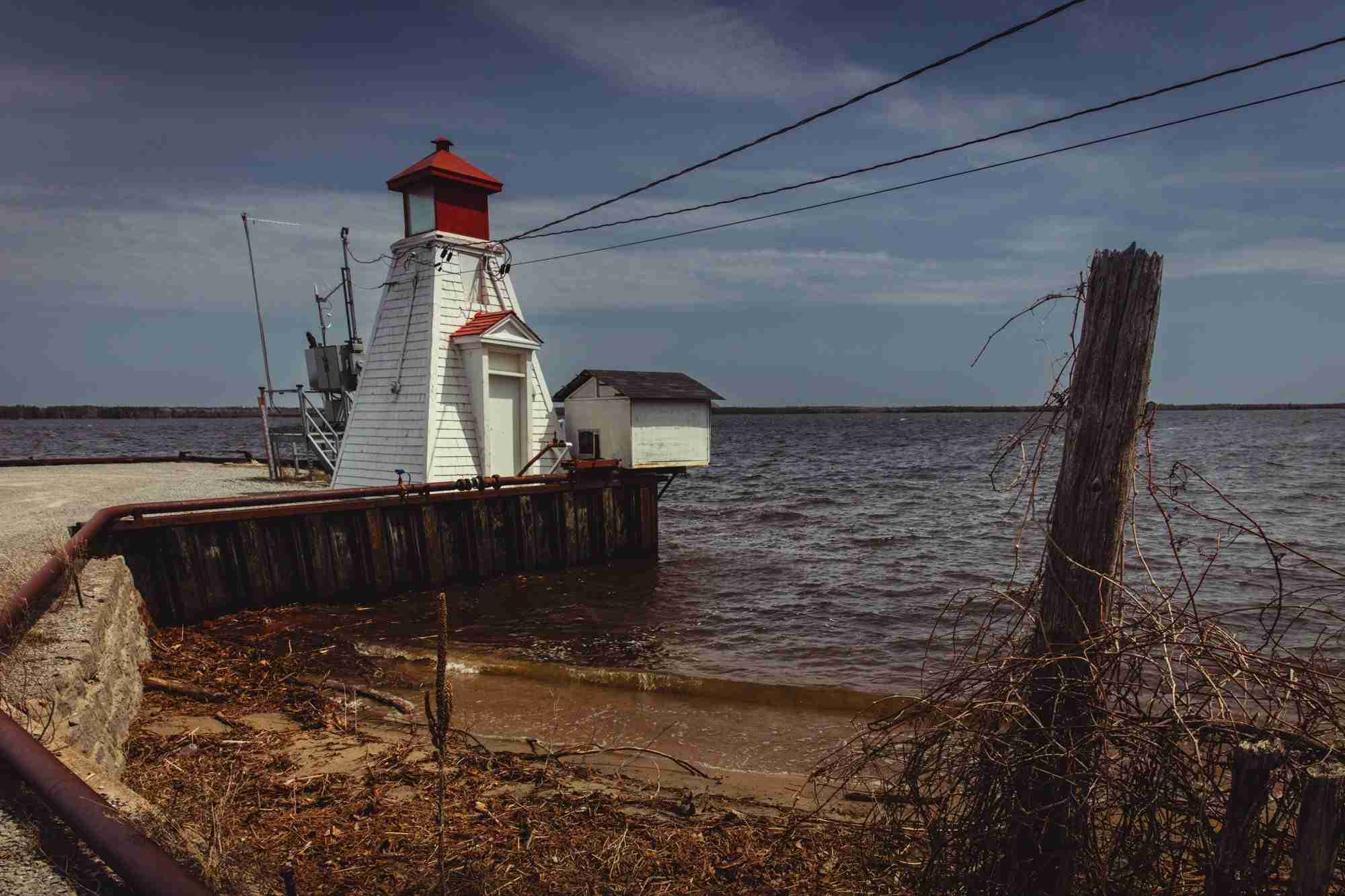
Perched along the quiet shoreline of the Ottawa River, Sand Point Lighthouse is a small but striking red-and-white beacon that rewards photographers with both history and charm. Built in 1907, the lighthouse once marked the ferry terminal connecting Sand Point to Norway Bay, a vital cross-river route that remained active until 1962 when the construction of the Chenaux Hydro Dam shifted regional traffic. Though modest in scale, the lighthouse remains operational to this day and makes an excellent subject for minimalist compositions, sunrise work, and quiet shoreline storytelling.
Set against open water and framed by wharf timbers, this little lighthouse is an easy stop with significant visual payoff, particularly when the light is soft and the river calm. Its red top and white body create bold color contrast against the blue and grey palette of the Ottawa River, especially at dawn or on overcast days when tones become more subdued and atmospheric.
Best Photography Opportunities
• Full Lighthouse and Wharf Composition
From the riverbank, photographers can frame the entire lighthouse along the length of the old wharf. Use a wide-angle lens to capture the structure with a leading line formed by the walkway or embankment, drawing the viewer's eye toward the tower. The lighthouse sits near the water's edge, and a low perspective helps emphasize its relationship to the river, making the structure feel anchored in its environment. Shooting from just west of the site allows the early light to rake across the surface and highlight its red-and-white form.
• Minimalist River and Sky Compositions
Sand Point Lighthouse excels in minimalist frames where the subject is small but striking against wide expanses of sky and water. Especially in winter or early spring, when ice or morning fog smooths the water surface, you can create clean, simple compositions that isolate the lighthouse and allow space for reflection or atmosphere. A longer lens can compress the scene, flattening water and sky for a more graphic look.
• Historical Framing and Wharf Detail
Remnants of the ferry landing infrastructure and the weathered wharf planks offer strong foreground texture. Frame the lighthouse in the background with worn beams, rusted bolts, or shoreline rocks leading into the frame. These images build a narrative between the lighthouse and its former role as a transportation hub. Use a mid-range zoom to keep the lighthouse proportionally balanced while drawing in nearby detail.
• Sunrise Light and Morning Color
Because the lighthouse faces east across the Ottawa River, it is ideally placed for sunrise photography. In the early morning, the first light hits the water and reflects back onto the lighthouse's white body, warming its tones and intensifying the red of the lantern room. Clouds often catch color just before dawn, making it worth arriving early to scout compositions as the light evolves.
• Seasonal Interpretations and Reflections
This site changes character with the seasons. In summer, lush riverbank vegetation frames the lighthouse naturally, while in autumn, the foliage adds warm contrast to the lighthouse's cool tones. Winter brings an entirely different feel, with snow and ice simplifying the palette and reflections forming in the thin ice or open leads. Consider visiting throughout the year to build a series showing the lighthouse in different moods.
Best Time to Visit
Sunrise is the best time to photograph Sand Point Lighthouse, particularly from spring through fall when the sun rises directly across the river. Early light creates warm reflections on the water and highlights the red-and-white structure with soft, directional contrast. Mornings are also the quietest time, with little to no pedestrian or vehicle traffic and a better chance of encountering mist or calm water conditions.
Autumn offers rich, saturated skies and colorful shoreline vegetation that complements the lighthouse's bold tones. Winter conditions can be equally beautiful, with the stark contrast of snow-covered banks, pale skies, and the bright red lantern room offering minimalist appeal. Cloudy or slightly foggy days help diffuse the light and produce gentle shadows on the building's cylindrical shape.
While sunset can still yield good results, the direction of light makes the structure more backlit unless you're shooting with sky or silhouette in mind. Blue hour and twilight work well here for long exposures with soft light reflecting on the water.
How to Get There
Sand Point Lighthouse is located in the small community of Sand Point, Ontario, just west of Arnprior along the Ottawa River. From Ottawa, take Highway 417 west to Arnprior, then follow Daniel Street north until it becomes River Road (County Road 1). Continue west along River Road until you reach the Sand Point area. The lighthouse is located near the junction with McNab Street and is easily visible from the roadside.
There is a small area nearby where you can park safely along the shoulder or on nearby side roads. The site is accessible on foot without the need for hiking or specialized gear. The lighthouse stands on a maintained section of wharf, and you can shoot from either side of the structure or along the riverbank.
Please respect private properties and use the roadside or designated public access areas when setting up your shots. The location is low-traffic and well-suited to peaceful, unrushed photography.
Recommended Gear and Shooting Tips
A wide-angle lens (16–35mm) is perfect for capturing the full lighthouse in its river setting, especially when incorporating leading lines like the wharf or shoreline. A 24–70mm zoom offers versatility for both structural detail and wider contextual scenes. For minimalist or compressed compositions across the river, a 70–200mm lens works well, particularly in fog or at sunrise.
Use a tripod for low-light or long-exposure work, especially during blue hour or foggy conditions. A circular polarizer will help reduce glare on the water and deepen color in skies or foliage. In sunrise conditions, bracket exposures or shoot in RAW to retain highlight detail in the sky and full tonal range on the lighthouse's bright surface.
Neutral density filters are useful if you want to smooth the water or capture cloud movement over longer exposures. In winter, bring lens cloths and battery backups, as riverside cold and condensation can affect performance.
Nearby Photography Locations
• Robert Simpson Park, Arnprior
Just east of Sand Point, this riverside park offers panoramic views, dock structures, and a variety of shoreline compositions. It's an excellent sunset location with strong foreground options and views across the Ottawa River.
This old-growth forest in Arnprior is a quiet natural area with soft woodland light, towering pines, and seasonal color. Perfect for pairing nature-focused photography with architectural shoreline work.
• Chenaux Hydro Dam and Rapids
West of Sand Point, the dam offers a dramatic industrial counterpoint to the simplicity of the lighthouse. Long exposures of water flow and detailed structural shots offer a very different visual story from the same river.
• White Lake Village and Marina
South of the river, this tranquil lakeside village offers reflective dock scenes, boat details, and misty morning conditions. It's especially beautiful in early fall or just after sunrise.
• Old Braeside Schoolhouse
Along River Road, the abandoned Braeside School makes for a great companion subject—blending rural decay and historical architecture in a quiet roadside setting. Combine both sites for a day of mixed documentary and architectural work.
Though modest in size, Sand Point Lighthouse offers a clean, elegant structure full of visual interest and regional history. Its ease of access, striking color contrast, and quiet river location make it a worthy stop for photographers exploring the Ottawa Valley—especially at first light, when the river and sky begin to shift and the lighthouse glows quietly into the day.
Comments
Loading comments…