
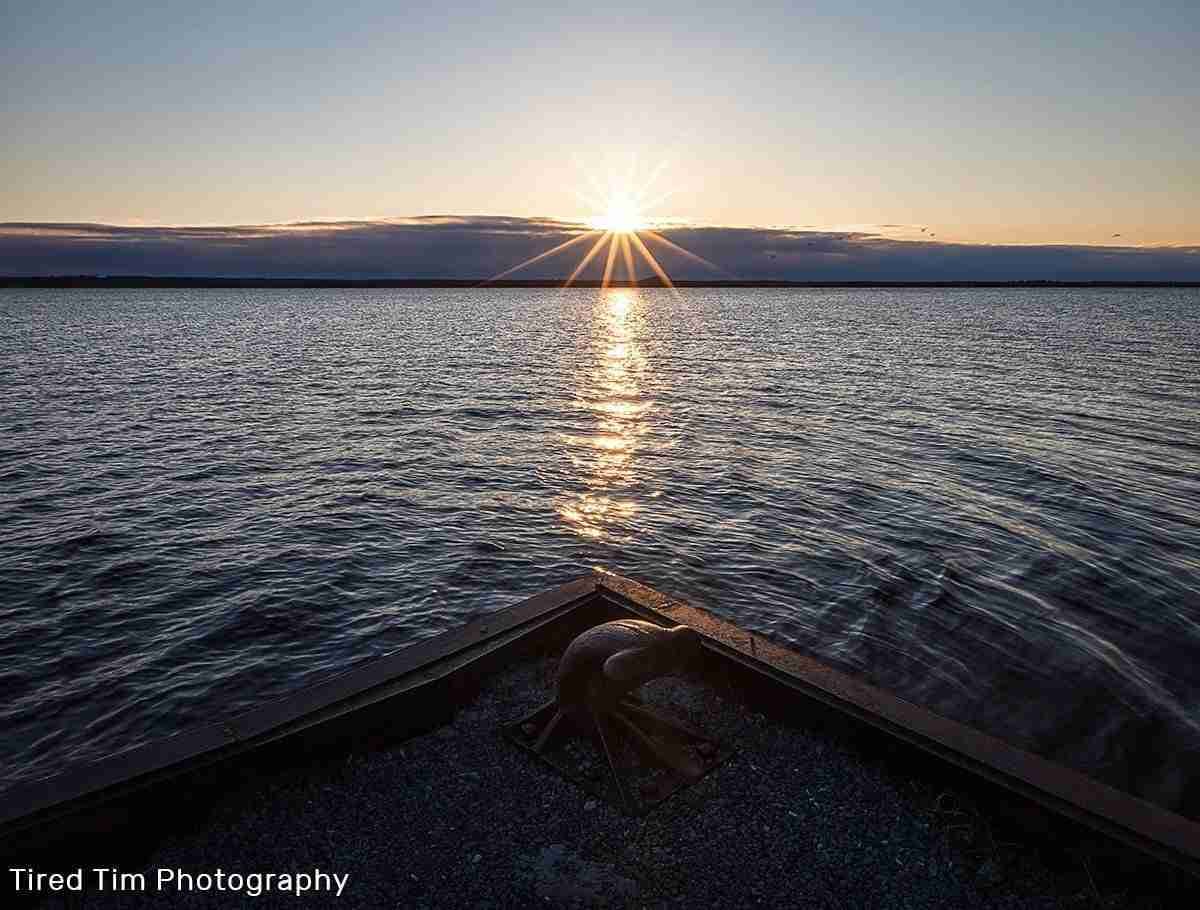
Jutting quietly into the Ottawa River near the small community of Braeside, Ontario, Sand Point Pier is a relic of a bygone era—once the Ontario landing for a ferry that crossed from Norway Bay, Quebec until operations ceased in 1963. Today, the remains of this historic crossing serve as a peaceful riverside lookout and a surprisingly rich photographic site. With open views across the wide river, subtle textures in the old concrete structure, and the changing light that sweeps in from the west, Sand Point Pier offers a compelling blend of nostalgia, open space, and natural beauty. Its simplicity and openness to the elements make it a perfect setting for minimalist compositions, long exposures, and moody waterscapes.
Best Photography Opportunities
• Pier Structure and Leading Lines
: The remaining structure of Sand Point Pier, though weathered, offers strong linear elements that draw the eye directly into the scene. Shooting from the approach captures a central vanishing point flanked by river and sky, ideal for wide-angle work and symmetrical compositions. The texture of cracked concrete, rusted rebar, and tufts of grass emerging from the cracks adds subtle foreground detail, reinforcing the pier's weathered character.
• Sunset over the Ottawa River
: Facing northwest, the pier is well-positioned for evening light. Sunset bathes the water and far shore in warm color, while the open river allows the sky to reflect freely across the surface. On calm nights, the mirrored sky creates near-symmetrical compositions, especially effective with longer exposures to smooth out the water. Including silhouetted trees from the shoreline or people walking along the pier adds scale and emotional resonance.
• Historic Minimalism and Weathered Texture
: The pier's history and decay make it an ideal subject for minimalist or black-and-white photography. Fog, overcast skies, or moody lighting strip the scene to its bare essentials—form, light, and negative space. Isolating the pier's edge against open water emphasizes the feeling of solitude and passing time, while close-up shots of eroded surfaces offer abstract textures that convey age and memory.
• River Fog and Atmospheric Morning Light
: On cool mornings, fog often lingers over the Ottawa River, muting the distant shoreline and diffusing the light into soft tones. These conditions are ideal for creating ethereal, dreamlike images with gentle tonal transitions. The pier's simple lines work especially well when fading into mist, making for quiet, contemplative compositions that emphasize stillness and mood.
• Reflections and Long Exposure Water Studies
: On days with light wind, the river surface becomes a reflective plane, catching color from the sky and structure alike. Using ND filters for long exposures, photographers can transform the water into a smooth gradient, accentuating the pier's geometry and softening background clutter. Shooting just after sunset or during blue hour often brings out the best color in these reflections, especially in shoulder seasons when the air is clear.
Best Time to Visit
Sand Point Pier is best visited in the early morning or evening, when the quality of light over the Ottawa River is most dynamic. Golden hour in the evening creates long shadows and warm highlights along the pier, while the sun sets directly across the water, making for excellent color and silhouette work. Blue hour extends the photographic window, allowing time to shoot with ambient sky light and gentle river reflections after the sun has dipped below the horizon.
Morning light tends to be softer and more subtle, especially when fog or low mist is present on the river. These conditions lend themselves to high-key images with pastel skies and delicate tonal transitions. Autumn is one of the most dramatic seasons, with colorful foliage lining the opposite shore and crisp air enhancing visibility and reflection. Winter visits offer stark contrast, with snow and ice simplifying the scene into graphic elements—though caution is advised on icy surfaces. Spring brings rising water and dramatic skies, while summer delivers the most predictable light and calm evenings for mirrored reflections.
How to Get There
Sand Point Pier is located just off River Road (County Road 1) in Braeside, Ontario. From nearby Arnprior, drive west along the river for approximately 10 minutes until you reach the small community of Sand Point. The pier is visible from the road and accessed via a short gravel path that leads down to the shoreline. There is space for roadside parking nearby, though no formal lot or facilities. The pier is publicly accessible year-round and requires no permits or fees for photography. The surface can be uneven and potentially slippery when wet, so exercise caution when shooting close to the water, particularly in colder months or during high water levels.
Exploring the Surrounding Area
While the pier is the focal point, the surrounding stretch of riverbank offers additional photographic value. Nearby treelines, reeds, and river stones create natural framing and foreground opportunities, especially useful for wide environmental shots or macro work. The view across to Norway Bay on the Quebec side adds context to the pier's former purpose, while the slow-moving water often captures shifting light and weather patterns that evolve by the minute. A short walk east along the shoreline reveals quieter coves and marshland ideal for bird photography or softer landscape work. The area remains relatively quiet, offering solitude and ample time to work through compositions without interruption.
Nearby Photography Locations
: Located in nearby Arnprior, this old-growth forest offers towering white pines, winding trails, and filtered light perfect for woodland photography. The diversity of textures and vertical lines contrasts beautifully with the open horizontality of the pier.
• Bonnechere River Mouth at Castleford
: About 20 minutes to the west, this is where the Bonnechere River meets the Ottawa, forming a wide, photogenic delta. It's especially rich in birdlife and atmospheric morning light, ideal for quiet landscape studies.
• Dochart Falls and Madawaska River Lookout
: Just east of Arnprior, these rapids and cascades offer a more dynamic water feature for long exposure work. Best visited in spring or after rain, when water levels rise and flow is at its most photogenic.
• White Lake Shorelines
: South of Braeside, White Lake offers a mix of forested shorelines, docks, and lily-filled bays that are perfect for softer, reflective compositions and seasonal change. In autumn, the color along the shoreline is especially vivid.
: On the Quebec side, just across from the pier, this quiet bay features sandy beaches and calm waters, offering a complementary perspective of the Ottawa River at sunset. It's worth the short ferry-free drive for those seeking a broader view of the region.
Sand Point Pier may no longer connect two provinces by ferry, but it still links past and present through quiet beauty and a powerful sense of place. With its open skies, reflective water, and echoes of history, it invites photographers to slow down and see not just what remains, but what continues to shift in light and time. Whether you're drawn to soft river dawns, textured twilight, or minimalist echoes of industry, this forgotten crossing offers far more than meets the eye.
Comments
Loading comments…