
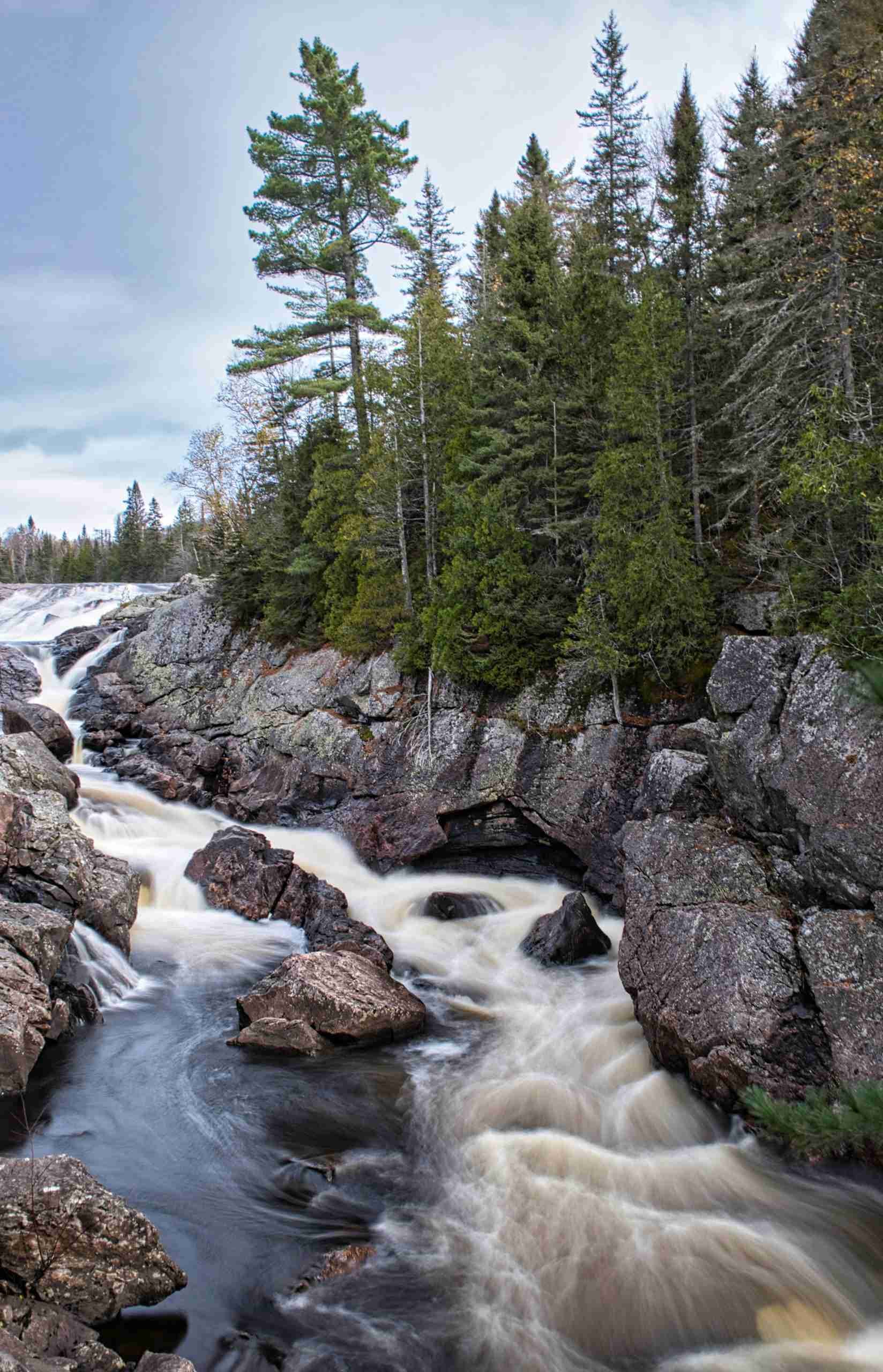
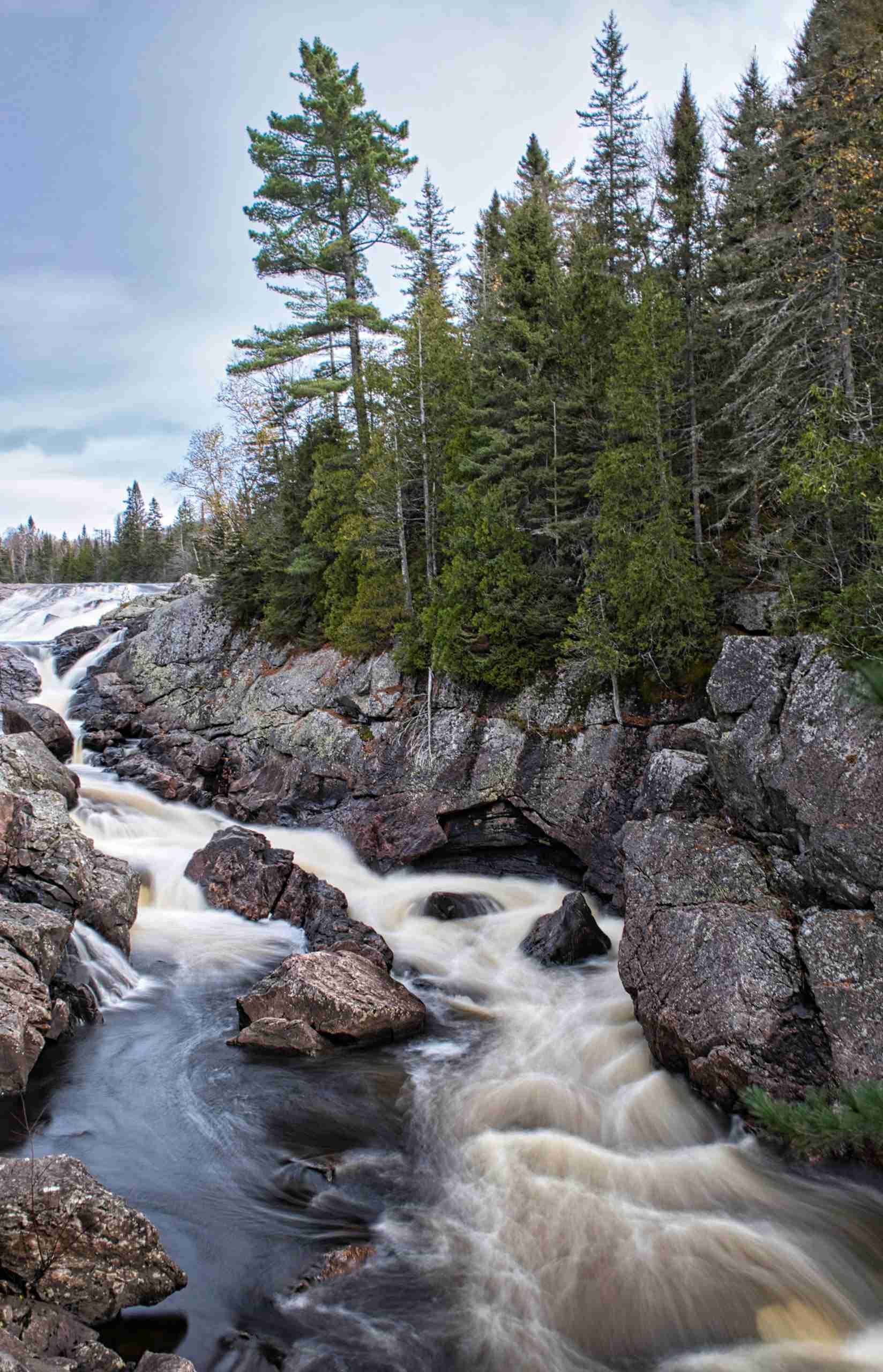
Tumbling toward Lake Superior through a rugged, forested valley, the Sand River ends in a spectacular series of cascading falls, with many more hidden upstream along the Pinguisibi Trail. Located within Lake Superior Provincial Park, this accessible but wild-feeling trail follows the river's course inland, revealing waterfall after waterfall—each unique in flow, shape, and framing. From gentle ledge drops to dramatic, rushing chutes, the Sand River is a dream location for long exposure photography and landscape storytelling.
Unlike more remote waterfalls in the region, the Sand River system is easily reached from a roadside pull-off along the Trans-Canada Highway, yet once you step onto the trail, the noise of the road vanishes and you're surrounded by the sound of rushing water and birdsong. This is a location that rewards slow exploration, with opportunities to shoot from close to the water or from above, thanks to the trail's changing elevation and natural overlooks.
Best Photography Opportunities
• Lower Falls Near the Picnic Area
Just steps from the parking pull-off, the Sand River finishes its journey in a final series of broad cascades that spread across flat bedrock before spilling into Lake Superior. These wide, layered falls are ideal for long exposure work, especially in spring when the flow is strong. Use the rock ledges as foreground interest and look for pools that reflect sky or foliage. Golden hour light adds warmth and contour to the ledges, while overcast days enhance color saturation and surface detail.
• Mid-Trail Waterfalls and Rapids
As you head up the Pinguisibi Trail, the river tightens and reveals a nearly endless series of photogenic drops. Each bend in the trail offers something new—rushing diagonals over jagged rocks, quiet chutes tumbling beneath tree roots, or smooth, sculpted shelves worn down by centuries of flow. These sections are excellent for vertical compositions and more intimate waterfall studies. Bring a tripod and take your time; subtle changes in light and angle can dramatically alter the mood of your images.
• Rocks, Roots, and Riverbank Textures
The forest along the trail clings to the river with exposed cedar roots, moss-covered boulders, and lichen-streaked ledges. These elements offer rich compositional material for macro or detail-focused shots. Shoot low and close with a wide aperture to isolate textures and surface contrast, or use a polarizer to bring out the depth in the wet rocks and foliage. After rain, everything glistens, adding even more life to these earthy details.
• Reflections and Seasonal Color
In calmer sections of the river, reflections can provide symmetry and tranquility to balance the power of the rushing falls. Look for scenes where autumn foliage or the sky mirrors in the water, especially in early morning before the wind picks up. These moments are perfect for minimalist compositions or using the river as a framing device for the forest beyond.
• Trail Overlooks and Layered Views
The Pinguisibi Trail occasionally rises above the river, offering elevated views back down onto the water. These angles allow for layered compositions of forest, rock, and river winding below. Wide-angle shots from these points can capture the sense of depth and wildness that defines Lake Superior Provincial Park. These overlook views are particularly strong at sunrise or late afternoon when the light cuts through the trees and adds depth to the scene.
Best Time to Visit
Spring is the most dynamic time to photograph the Sand River, as snowmelt feeds the falls and the flow reaches its peak. This season also delivers dramatic skies, cool color palettes, and active skies that pair beautifully with long exposure compositions. Summer brings easier trail access and warmer conditions, but the flow may be more subdued unless after heavy rain.
Autumn is exceptional for color, as the forest along the trail bursts into gold, crimson, and orange. The contrast between bright foliage and the river's dark water creates a vibrant visual palette, especially in soft light. Winter transforms the trail into a snow-covered corridor, with parts of the river freezing and others continuing to run—a stark, minimalist beauty for those prepared for the conditions.
The Pinguisibi Trail can be photographed all day, but early morning and late afternoon provide the best light angles and softer shadows. Overcast days are ideal for detail work and long exposures, minimizing glare and creating even lighting across the water and rocks.
How to Get There
The Sand River access point is located directly off Highway 17 (Trans-Canada Highway) within Lake Superior Provincial Park. As you drive north through the park, look for signage marking the Sand River picnic area and Pinguisibi Trail. The parking area is adjacent to the river and includes picnic tables, washrooms, and a clear trailhead.
From Sault Ste. Marie, the drive is approximately two hours north; from Wawa, about an hour south. The location is well-marked and sits between the park's more remote trail systems and beaches, making it an easy addition to a broader photographic itinerary through the region.
The trail itself is moderate in difficulty, generally well-maintained but with rocky and root-covered sections. Sturdy footwear is essential, especially if you plan to climb onto wet rocks or get close to the water. The trail parallels the river for several kilometers, with plenty of opportunities to exit, set up a shot, and move on at your own pace.
Recommended Gear and Shooting Tips
A sturdy tripod is essential for long exposures, especially on uneven rock surfaces. Bring a wide-angle lens for capturing full waterfall scenes and forested river landscapes, and a mid-range zoom for isolating detail or working in tighter spaces. A polarizing filter is especially useful here—it reduces water glare and enhances the greens and reds in the forest, particularly after rain.
A neutral density filter (6- or 10-stop) is helpful for long exposures during daylight, allowing you to blur the river's motion even under bright conditions. A microfiber cloth is also a must, as spray from the falls or mist from the river can accumulate on your lens quickly.
Take your time exploring. The river and trail offer new scenes every few dozen metres. Shoot from different elevations, return to spots as light shifts, and look for quiet moments between the dramatic cascades where light and texture come together in subtle ways.
Nearby Photography Locations
• Old Woman Bay
Located north of the Sand River, this dramatic cliff-lined beach offers stunning views of Lake Superior, powerful wave action, and excellent sunrise or sunset compositions. The cliffs add scale and mood to wide landscape frames.
One of the most culturally significant locations in the park, this site includes Indigenous pictographs painted directly onto the lakeside rock face. The trail is short but steep and offers rugged shoreline compositions with Lake Superior crashing at your feet.
A calmer, sandy beach perfect for sunrise and minimalist compositions. The gentle curve of the cove, scattered driftwood, and misty morning air make for quiet, evocative images, particularly in the off-season.
Further south along the Trans-Canada Highway, this roadside lookout offers elevated views of the Lake Superior coastline—ideal for layered landscapes with strong atmospheric perspective and morning light.
• Agawa Canyon (via train or winter access)
Though less accessible, the canyon offers dramatic vertical views, frozen waterfalls in winter, and lush forest color in autumn. It's a strong addition for photographers looking to extend their Lake Superior photographic journey.
The Sand River and Pinguisibi Trail aren't defined by a single, towering waterfall but by a constant unfolding of water, rock, and forest in motion. It's a place where photographic opportunity lies in patient movement, repeated frames, and a willingness to step off the main trail and into the rhythm of the landscape. For those drawn to wild water and the details of northern Ontario's backcountry, it's one of the most rewarding river corridors to shoot.
Comments
Loading comments…