
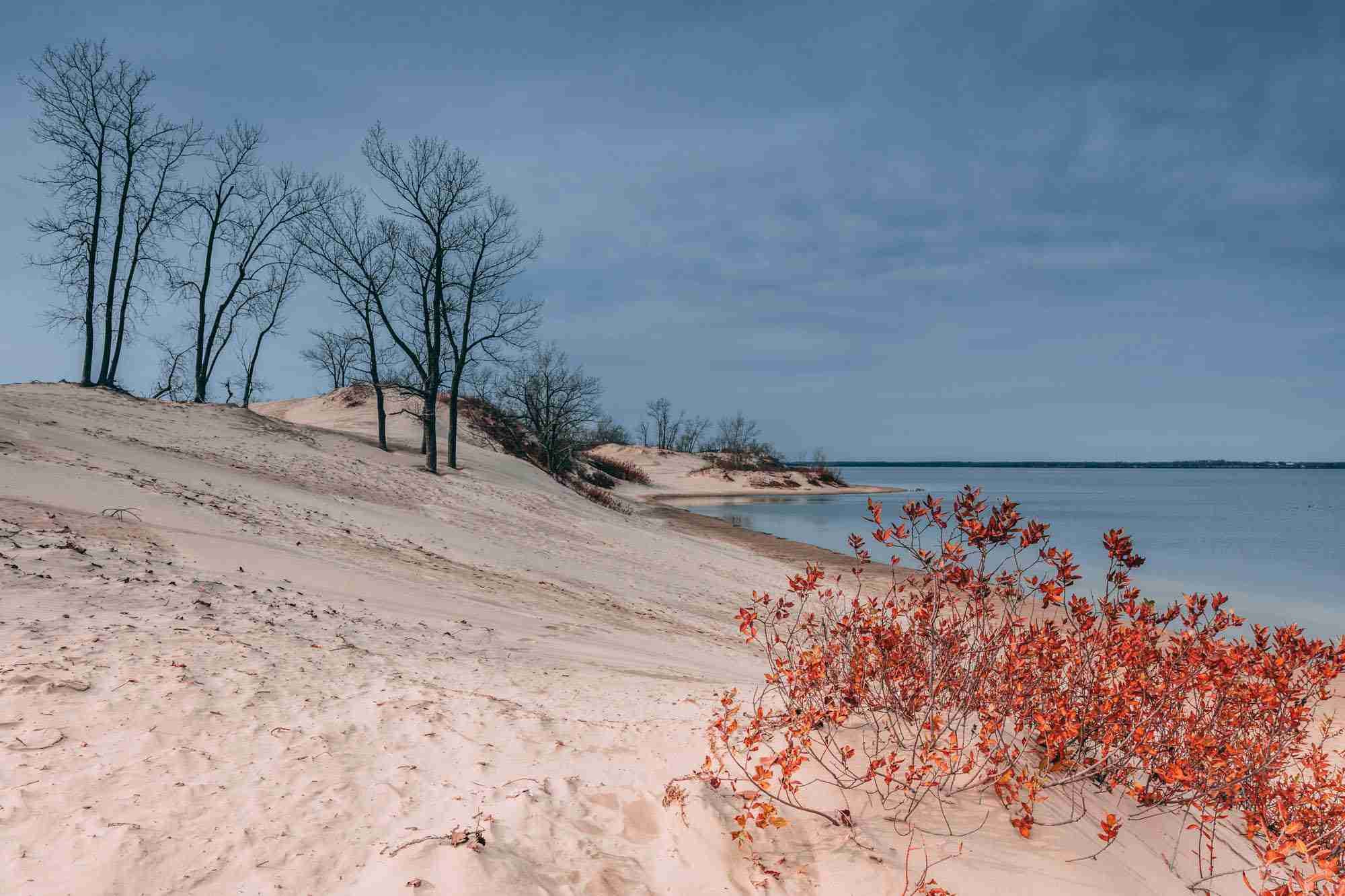
Tucked along the northern edge of Sandbanks Provincial Park, where West Lake meets a stretch of sheltered shoreline, lies a remarkable and unexpected photographic landscape. The West Lake Dunes, part of one of the largest freshwater coastal dune systems in the world, rise gently from soft, pale sands that drift up into sculpted ridgelines and sweeping curves. It's a place where light moves subtly across wind-carved textures and where the interplay between sky, water, and earth becomes the heart of every composition.
Though popular in the summer months for its accessible beach and calm, family-friendly waters, West Lake becomes a more tranquil and visually striking destination during the off-season. When the beach empties out and the light softens, photographers are free to explore the undulating landscape of sand, sky, and scrub with fewer distractions and broader creative freedom.
Best Photography Opportunities
• Dune Forms and Minimalist Composition
The sand dunes are shaped by wind and time, forming graceful ridges, wave-like crests, and subtle hollows that catch light beautifully throughout the day. Use a wide-angle lens to exaggerate these forms, especially when shooting low to the ground to create strong foreground interest. Early or late sunlight brings long, sweeping shadows that help define the sculptural quality of the terrain. This is an ideal spot for minimalist compositions that focus on curve, contrast, and line.
• Wind Patterns and Surface Texture
Zoom in on the sand itself to capture the intricate patterns left by wind and water—ripples, indentations, and ridgelines that shift daily. These textures are at their most defined during golden hour or on overcast days with angled light. Footprints, animal tracks, or the occasional piece of driftwood can add narrative to otherwise abstract frames. A macro or telephoto lens helps isolate these textures and reveal the small dramas occurring just beneath your feet.
• Lake and Horizon Views Across West Lake
From the dunes, photographers can frame expansive lake views with wide open skies and subtle wave action in the foreground. The calm surface of West Lake offers reflection opportunities, especially in early morning when the wind is low. Use horizon-line compositions or blend sky and dune into painterly transitions where earth and air seem to dissolve into one another. Cloudscapes can become powerful compositional anchors in these broader views.
• Silhouettes and Sunset Drama
The western orientation of this shoreline makes it perfect for shooting dramatic sunsets. Position a subject—person, tree, or grass tuft—at the top of a dune for a clean silhouette against the sky. The tall beach grass provides delicate contrast against the intense color of the setting sun. Use small apertures to create sunbursts as the light cuts across the dunes, or go handheld for backlit natural scenes that emphasize mood and shape.
• Off-Season Atmosphere and Moody Conditions
During fall, winter, and early spring, the dunes take on a different character. Windswept, quiet, and stark, the location becomes ideal for black-and-white imagery or soft, high-key exposures. In winter, snow occasionally dusts the dunes, creating abstract, high-contrast patterns between the drifts and exposed sand. These months also bring fog, low sun angles, and the kind of solitude that allows for more meditative work.
Best Time to Visit
While summer offers the most accessible conditions and vibrant colors, the West Lake Dunes are best photographed during the shoulder seasons—spring and autumn—when the park is less crowded and the light is more forgiving. Golden hour in the early morning or late evening offers the best contrast for dune textures and the most flattering light for wide scenes and silhouettes.
Autumn brings beautiful color to the scattered shrubs and grasses, while spring delivers fresh greens and newly formed wind patterns in the sand. Winter visits are possible but depend on access and weather—check park conditions before venturing out during colder months. Overcast days are ideal for shooting textures and softening harsh midday light, making them surprisingly good for this location.
Weekdays and early mornings provide quiet, undisturbed shooting conditions. If visiting in summer, arrive early or stay late to avoid crowds and capture the softer light.
How to Get There
The West Lake Dunes are part of Sandbanks Provincial Park in Prince Edward County, Ontario. From Picton, take County Road 12 south to the main park entrance, then follow signage to the West Lake section. The beach area is accessible by foot from nearby parking lots, with well-maintained paths leading directly to the sand.
During the operating season, entry to the park requires a day-use permit. There is ample parking available, and restrooms and picnic facilities are typically open during staffed hours. In the off-season, visitors may need to park outside the gates and walk in, depending on snowfall or closures.
The dunes themselves are fragile ecosystems. Always stay on marked paths and avoid disturbing vegetation to help preserve this unique landscape for future visitors.
Recommended Gear and Shooting Tips
Bring a wide-angle lens (16–35mm) for dramatic dune compositions and sweeping lake views. A 24–70mm zoom allows flexibility when composing both landscapes and mid-range dune details. A telephoto (70–200mm) is excellent for compressing dune layers or isolating small surface patterns in the sand. For abstract work and textures, a macro lens or a long lens with close focusing capability will bring out the fine details in ripples and debris.
A tripod is helpful for early morning or golden hour shooting, especially for low-angle compositions or long exposures over water. A circular polarizer helps deepen the blue of the lake and sky, enhance sand contrast, and reduce glare. Neutral density filters are useful for smoothing lake surfaces or creating movement in clouds during longer exposures.
Be prepared for wind and blowing sand—use protective gear for your lenses and bring a brush or cloth to clean equipment as needed. Low-angled light exaggerates texture, so timing your visit around sunrise or sunset is key for bringing out the best in the dunes' natural patterns.
Nearby Photography Locations
• Dunes Beach and Outlet River
A short distance east, Dunes Beach offers broader lake views and a mix of open sand and winding shoreline. The Outlet River, which cuts through the dunes, creates excellent leading lines and reflection opportunities—ideal for long exposures and twilight work.
The southern edge of the park opens onto Lake Ontario's vast horizon. Here, beachgrass and driftwood provide strong foreground interest, and the surf creates rhythmic motion for seascape compositions. Good for sunrise and stormy weather shooting.
Located east of the park, this quiet lookout offers scenic views of the Bay of Quinte and the ferry as it crosses. Best photographed during sunset or when mist settles along the water's edge.
• Bloomfield and Picton Heritage Architecture
Nearby towns feature charming streetscapes, vintage signage, and historical buildings. Great for a change of pace from landscapes—ideal for street-style photography or architectural detail studies.
• Wellington Beach and Boardwalk
A more structured beach environment with a boardwalk and small-town charm. The pier and rocky shoreline offer nice compositional options for shooting wind, water, and sky.
The West Lake Dunes in Sandbanks Provincial Park offer a rare inland experience of coastal textures and light, where you can photograph sweeping natural forms in peaceful seclusion. For photographers who appreciate the subtle interplay between land and light, sand and shadow, this location offers both quiet beauty and powerful visual potential throughout the year.
Comments
Loading comments…