
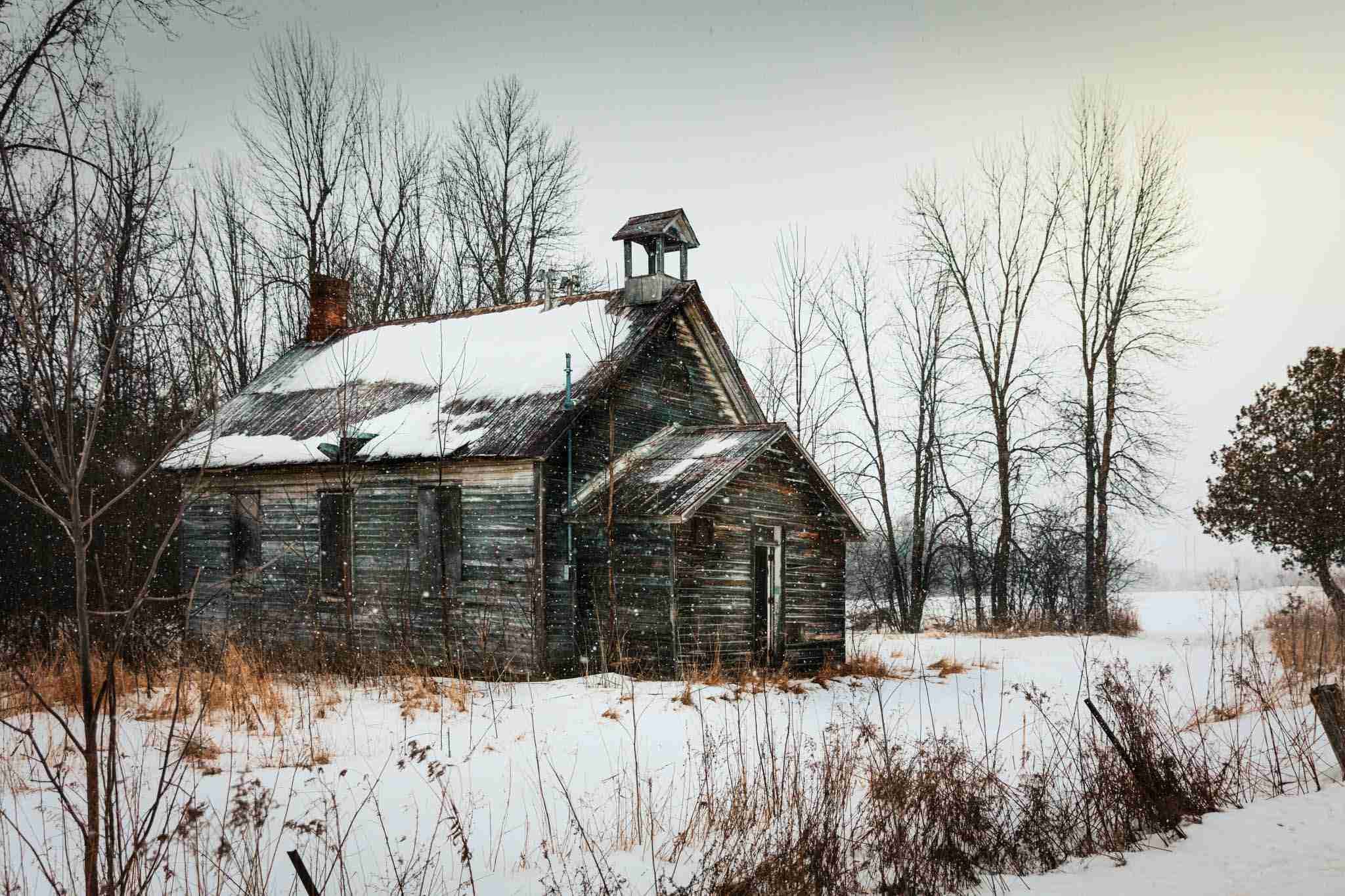
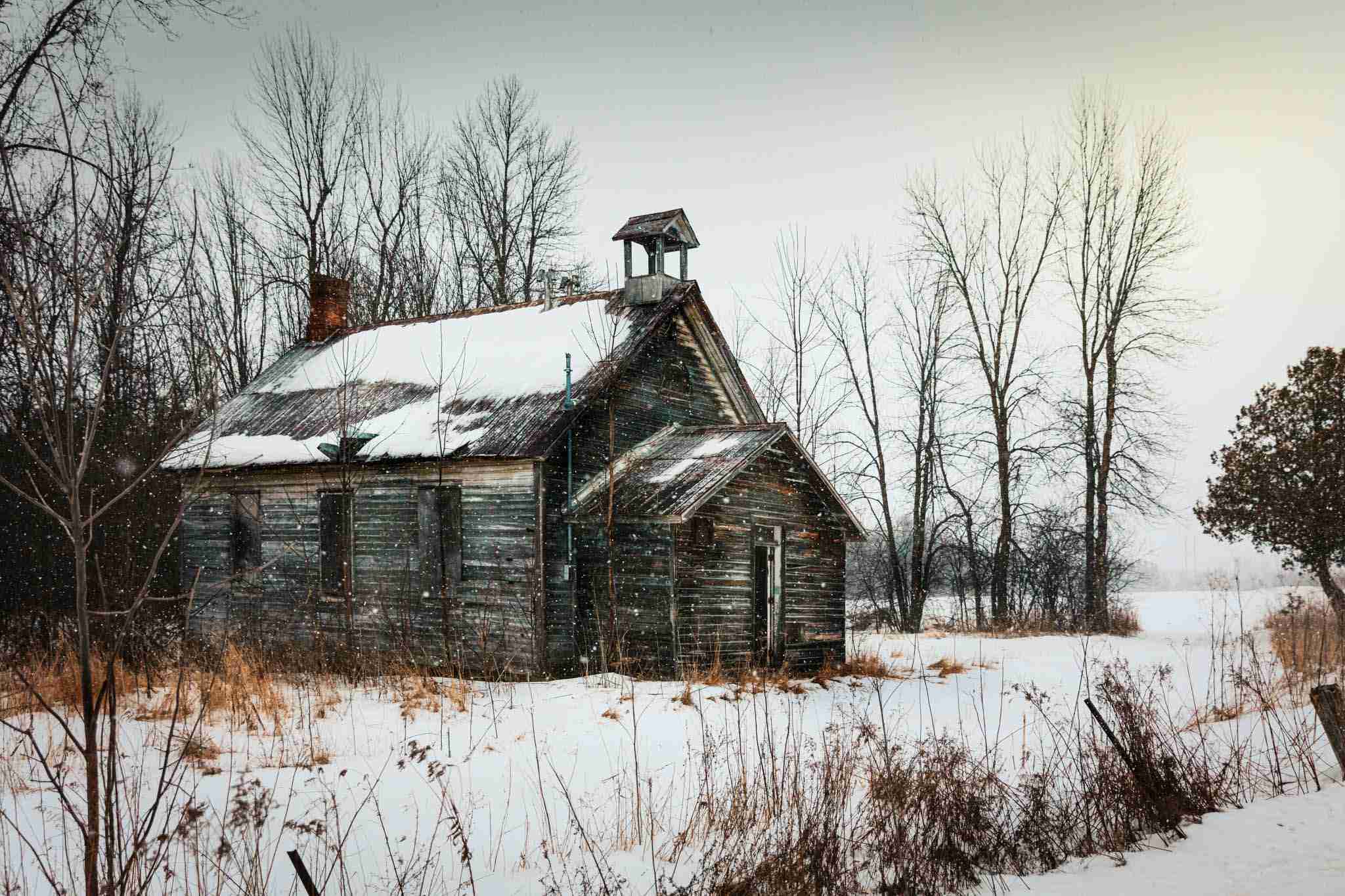
Tucked among rolling fields near Cassburn, Ontario, School House No. 4 East is a poignant remnant of the once widespread écoles séparées d'Ottawa—a network of French-language schools built in the early 1900s to serve the rural Franco-Ontarien population. Like its counterpart, School House No. 5, this former one-room schoolhouse speaks to a time when access to French-language education was a matter of political tension, cultural preservation, and quiet resistance. Today, School House No. 4 East stands weathered but remarkably intact, making it one of the most photogenic and historically significant of the remaining sites from this era.
Best Photography Opportunities
• Frontal Façade and Weathered Walls
The front of the schoolhouse, with its central doorway and high gabled roof, creates a strong geometric focal point when framed from the opposite side of the road or field. Early morning and golden hour light skim across the clapboard or brickwork, picking out fine textures and revealing decades of wear. Include the gravel road or fence lines for added compositional depth, and consider stepping back with a wide lens (24–35mm) to include the surrounding field for environmental context.
• Rooflines and Vernacular Details
School House No. 4 East retains period features like original eaves, chimney stacks, and a steep roof pitch that cast graphic shadows and break cleanly against open sky. These elements are ideal for detail-focused shots—especially in winter or early spring when trees are bare and architectural lines are more pronounced. Shooting upward with a short telephoto or moderate zoom lens helps you isolate these details against changing skies.
• Aerial Perspectives with Drones
Drone photography is particularly effective at this location, allowing you to reveal the schoolhouse's isolation and symmetry from above. Top-down shots capture the roof structure against the geometry of field rows and property lines, while oblique aerial views let you combine land, sky, and structure into a layered narrative. Fly during sunrise or sunset to get soft shadows and directional light, and always follow Canadian drone regulations, especially regarding altitude and proximity to roads or inhabited buildings.
• Long-Lens Compressions and Minimalism
With its unobstructed surroundings, School House No. 4 East lends itself to minimalist photography. Using a telephoto lens (100–200mm), you can compress the schoolhouse against distant tree lines, cloud formations, or rolling fields to produce moody, painterly compositions. This approach is especially effective during misty mornings or snow-covered conditions, when visual clutter is minimal and the schoolhouse feels even more isolated.
• Seasonal Change and Light Play
Each season transforms the mood of the location. In spring and summer, tall grasses and dappled sunlight create a pastoral feel, while autumn brings warmth to both the land and the structure itself. In winter, the schoolhouse stands stark against the snow—perfect for high-contrast black-and-white imagery or minimalist color palettes. Early morning fog, especially in the shoulder seasons, adds atmosphere that's best captured with a wide dynamic range and a low-to-the-ground perspective.
Best Time to Visit
The best light for photographing School House No. 4 East typically occurs during sunrise and golden hour, when the low angle of the sun enhances the textures of the façade and casts soft, directional light across the open land. Morning fog and mist are common in the shoulder seasons (spring and autumn), adding cinematic atmosphere that complements the stillness of the abandoned structure.
Seasonally, autumn is particularly rewarding thanks to the rich earth tones in both foliage and field. In winter, fresh snow simplifies the scene and emphasizes the geometry of the building and its placement on the land. Overcast days are also productive, especially for shooting details without the distraction of harsh shadows or blown highlights.
Try to avoid harsh midday light unless you're going for stark contrasts or infrared photography. Wind can be a challenge, especially for drone work or long exposures—check weather conditions and bring appropriate stabilization tools if needed.
How to Get There
School House No. 4 East is located near Cassburn, Ontario, within the United Counties of Prescott and Russell. From Ottawa, it's approximately a 90-minute drive east via Highway 417. Exit at County Road 9 and travel south through Plantagenet and eastward on local farm roads toward Cassburn. The schoolhouse is located near the edge of an active field and is visible from the roadside.
There are no formal signs or parking areas. Pull off the road with care and avoid blocking access points or disturbing local traffic. Be respectful of property lines—many of these schoolhouses are on or near privately owned farmland. If you plan to fly a drone or approach the building closely, it's best to seek permission from the landowner in advance.
Recommended Gear and Shooting Tips
Bring a wide-angle lens (24mm or wider) for full-building shots and environmental context. A mid-range zoom (24–70mm) offers flexibility for both detail work and tighter architectural compositions, while a telephoto lens (100–200mm) lets you compress elements for a minimalist or cinematic feel. For aerial work, a drone with a 1-inch sensor or better will help retain detail in shadows and midtones, especially during early or late light.
A tripod is invaluable for long exposures, bracketing, and stable compositions—especially useful when the light is low or the wind is light but persistent. Consider using a circular polarizer to cut glare off wet surfaces or to deepen sky tones, and ND filters if you plan to work with long shutter speeds to smooth out motion in grass or sky.
Dress for rural conditions—mud, wind, and sudden weather shifts are common. Pack weather protection for your gear and use lens hoods to reduce flare when shooting toward the sun. Always have a microfiber cloth on hand, particularly in colder seasons where condensation can be an issue.
Nearby Photography Locations
• School House No. 5
Just a short distance west, School House No. 5 offers a complementary architectural subject with a similar history and design. The two can easily be photographed in a single outing, with contrasting light and weather adding diversity to your visual narrative.
Head east to explore riverfront vistas, boat docks, and weathered structures along the water's edge. Golden hour light here is excellent for atmospheric landscape work or environmental portraits.
This charming village is known for its Victorian homes, painted murals, and brick architecture. It's a great contrast to the rural austerity of the schoolhouses and offers strong compositional opportunities for architectural detail and color.
South of Cassburn, this extensive managed forest includes gravel paths, dense pine stands, and small clearings—ideal for woodland photography, especially in mist or snow. It's a calming stop for those interested in pairing architectural and natural themes.
• St. Isidore and Rural Churches
Numerous small churches in nearby communities offer striking silhouettes, Gothic detail, and historic interiors. Many are accessible from the road, making them convenient additions to a rural photography itinerary focused on heritage and form.
Comments
Loading comments…