
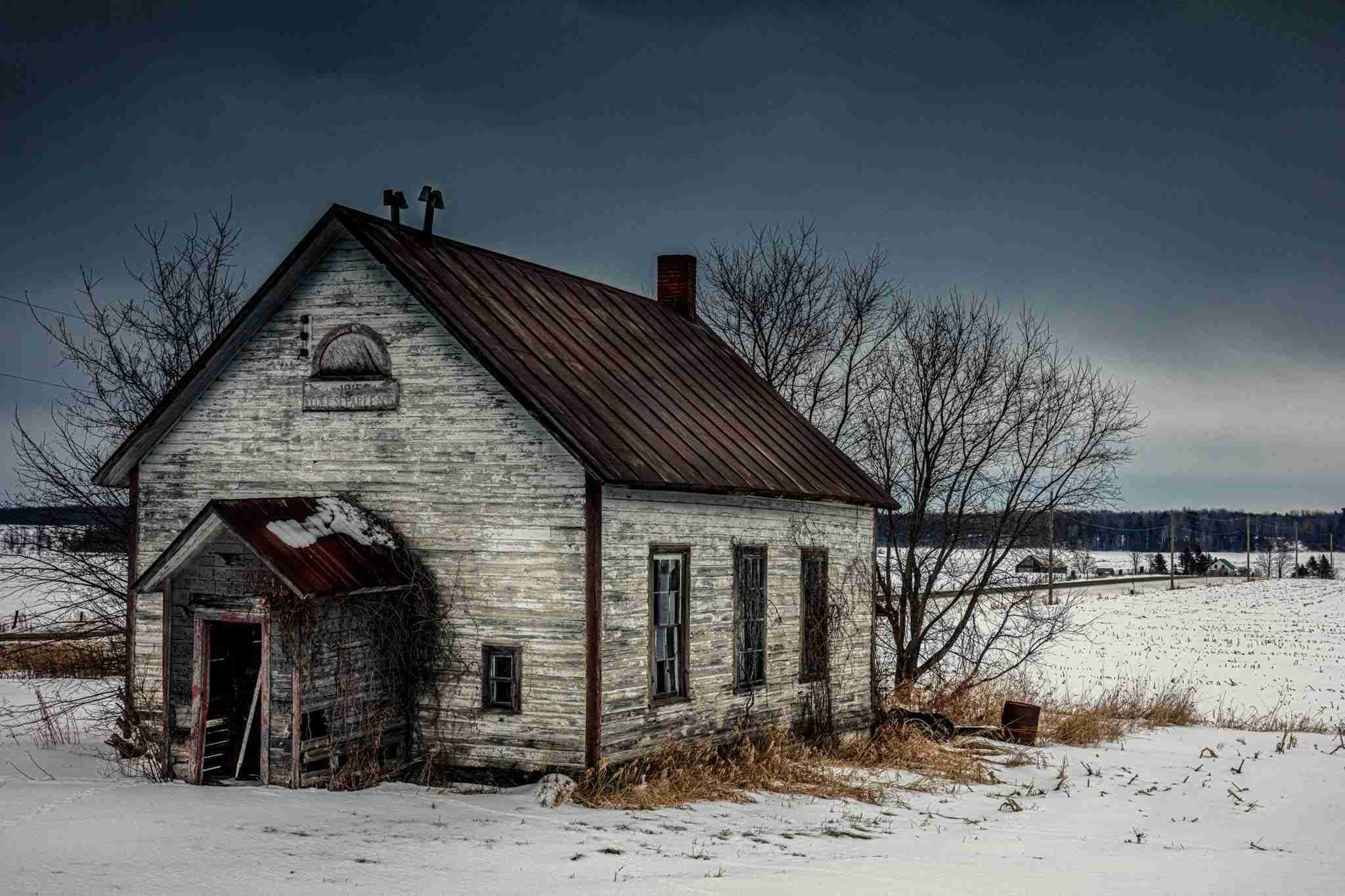
Set quietly at the edge of a wide, open field in Cassburn, Ontario, School House No. 5 stands as a weathered monument to a contentious chapter in Canadian educational history. Once part of the écoles séparées d'Ottawa, this early 20th-century French-language schoolhouse served the Franco-Ontarien community during a time when access to French-language education was both politically and culturally fraught. Today, the building is abandoned but impressively well-preserved, offering photographers a powerful intersection of rural landscape, architectural decay, and cultural memory.
Best Photography Opportunities
• Exterior Front and Side Elevations
The schoolhouse's front façade, often featuring a central doorway and symmetrical windows, makes a clean subject for frontal or three-quarter compositions. Golden hour light—particularly at sunset—casts long shadows across the field, highlighting the texture of the wood or brick and giving the structure visual weight against the open sky. A wide-angle lens (24–35mm) can emphasize the surrounding emptiness, while a short telephoto (85–135mm) compresses the scene for a more intimate, documentary feel.
• Roofline and Architectural Details
The roof pitch, soffits, and chimney—often constructed with simple but distinctive period craftsmanship—are perfect for isolated architectural studies. Shoot upward against cloud-heavy skies for contrast, or frame them in golden hour backlight for subtle rim lighting and silhouette work. Seasonal weathering on shingles or exposed timbers adds depth and storytelling to these detail shots.
• Aerial Compositions with Drones
When flown responsibly and in accordance with Canadian drone regulations, drones offer a powerful way to capture School House No. 5 in context with the surrounding agricultural landscape. Overhead views emphasize the symmetry of the schoolhouse and its isolation within the vast farmland. Early morning and late afternoon provide low, directional light that reveals the contours of both building and field. A top-down perspective can also highlight the subtle geometry of paths, furrows, or seasonal textures that may not be visible from the ground.
• Contextual Landscapes and Environmental Portraits
School House No. 5 is framed beautifully by its surroundings: flat agricultural land, distant tree lines, and big skies that change dramatically throughout the day. Positioning the building within its landscape tells a fuller story and emphasizes its rural isolation. Long exposure photography during cloud movement or fog creates a haunting, timeless aesthetic, while incorporating a human figure—small in scale—can enhance the sense of abandonment or memory.
• Seasonal Mood and Atmosphere
Each season brings a different photographic mood. In winter, snow outlines the school's geometry and amplifies its starkness. Spring and summer bring contrast between life and decay, with wild grasses or flowers surrounding the foundation. Autumn offers golden tones and long shadows, especially effective for black-and-white interpretations. A foggy morning or stormy sky can turn a simple composition into something cinematic and emotionally resonant.
Best Time to Visit
The best time to photograph School House No. 5 depends on your desired mood. Sunrise and sunset deliver the most evocative light, with warm tones and long shadows that highlight the schoolhouse's texture and form. Overcast days provide soft, even lighting perfect for shooting detail work without harsh contrasts. Foggy mornings are ideal for creating atmospheric, moody frames where the schoolhouse emerges gradually from mist—a particularly poignant approach for a subject so tied to historical memory.
Seasonally, autumn is arguably the most visually rich, with the surrounding farmland shifting into golds and browns that complement the school's aged facade. Winter offers a stark, minimalist aesthetic, while spring and summer soften the setting with color and movement from wind-blown grasses or birds overhead.
Avoid harsh midday light if you're aiming to capture subtle textures or faded paintwork, and check wind conditions—since you'll often be working in exposed fields, long exposures will require stable gear and careful timing.
How to Get There
School House No. 5 is located near the hamlet of Cassburn, in eastern Ontario's United Counties of Prescott and Russell, roughly 90 minutes east of Ottawa. From Highway 417, take Exit 12 toward Plantagenet and continue south along County Road 9, turning east onto local farm roads that lead into Cassburn. The schoolhouse is situated just off a rural road and visible from the field's edge—look for an open area with a slightly elevated building set back from the road.
There is no formal signage or parking area. Pull off safely along the roadside without blocking traffic or field access. This is a rural setting—be respectful of private property boundaries and seek landowner permission if you plan to get close or enter the structure. Many of these buildings are on or near active farmland, and cooperation with locals ensures ongoing access for others.
Recommended Gear and Shooting Tips
Bring a wide-angle lens (24mm or wider) to capture the schoolhouse in its full environmental context, especially when working with leading lines from roads or field rows. A standard zoom (24–70mm) will help you frame tighter architectural shots, while a telephoto lens (85–200mm) is perfect for isolating features like windows, rooflines, or doorways against flat backdrops.
A tripod is essential for shooting in low light or for long exposures—especially helpful at dawn, dusk, or under cloud-heavy skies. A circular polarizer can manage glare on glass and bring out detail in clouds or faded paint, while a neutral density filter allows for motion blur in skies or grasses during wind.
Weatherproof your gear and dress accordingly—open fields can be muddy, windy, or snow-covered depending on the season. A lens cloth is helpful for managing condensation in early morning shoots, and gloves or knee protection can make low-angle work more comfortable when shooting foreground grasses or mud.
Focus on storytelling as much as composition. Think of the schoolhouse as both a subject and a symbol—its architectural features are important, but so too are the traces of history it represents. Use restraint, patience, and framing that respects the quiet dignity of its presence.
Nearby Photography Locations
• St. Isidore Church and Cemetery
A short drive south, this rural parish offers dramatic Gothic Revival stonework and a serene cemetery with well-preserved statuary—perfect for golden hour compositions or exploring spiritual themes alongside vernacular architecture.
• Ottawa River Lookouts (Lefaivre or Wendover)
Drive north to access calm, scenic views of the Ottawa River, where early morning light reflects off the water and offers wide vistas of misty shoreline, boats, and layered hills—ideal for pairing landscape work with rural architecture.
Known for its Victorian brick homes and painted murals, this charming village features ornate architectural details, historic storefronts, and well-maintained streetscapes. Excellent for street photography or architectural studies with a more polished aesthetic.
• La Seigneurie Lavender Fields (summer only)
Located near L'Orignal, this cultivated lavender farm provides strong lines, vibrant color, and compositional rhythm during peak bloom season—perfect for contrast with more subdued subjects like the schoolhouse.
• Abandoned Farmsteads near St-Eugène and East Hawkesbury
The surrounding region is dotted with aging barns, silos, and homesteads in varying states of preservation. These structures complement the story of School House No. 5 and offer additional opportunities for rural exploration.
Comments
Loading comments…