
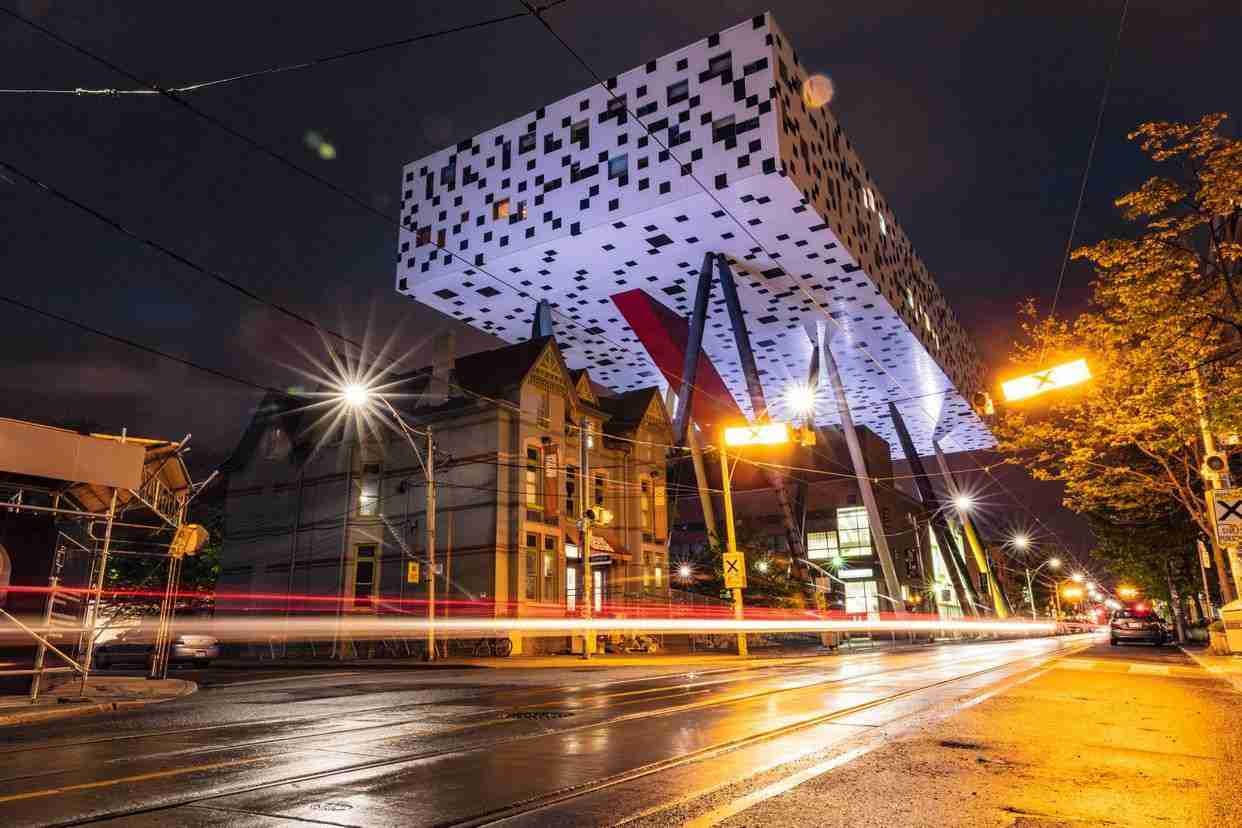
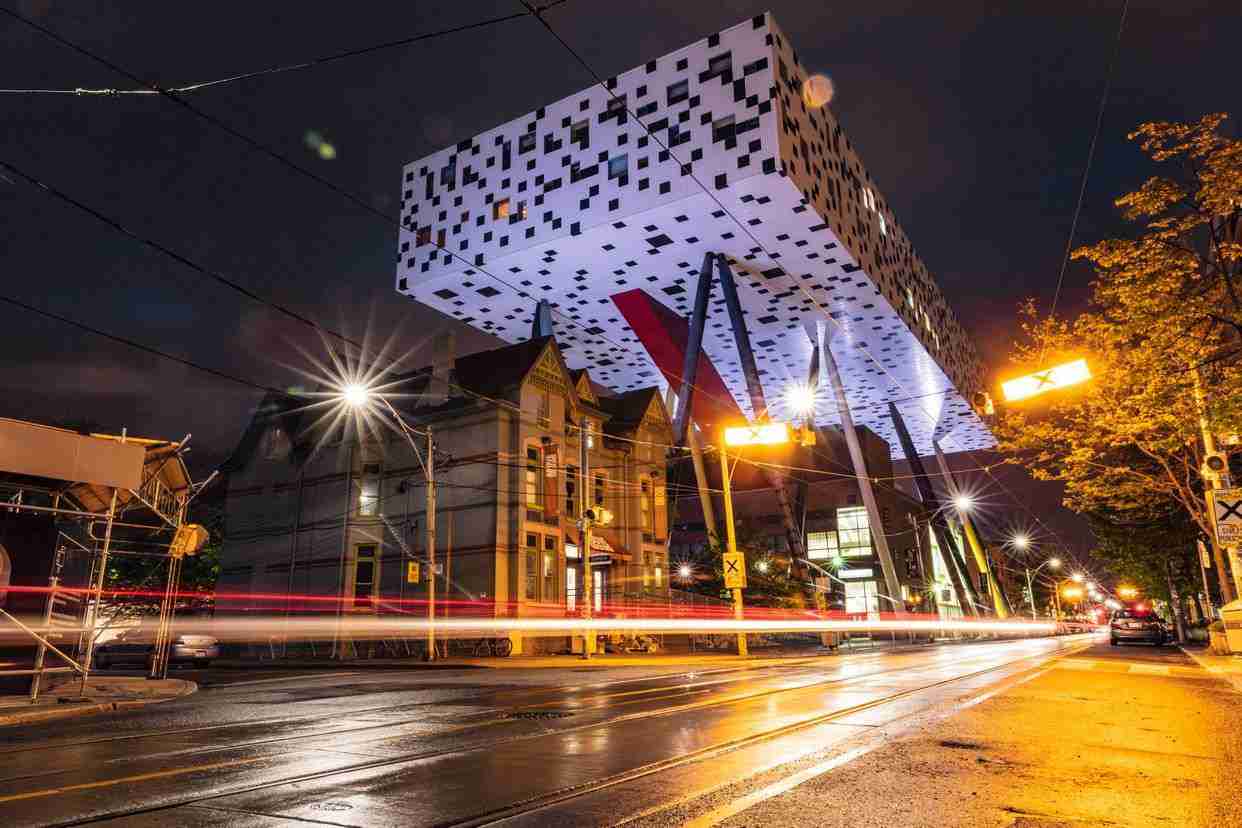
Hovering four storeys above street level in downtown Toronto, the Sharp Centre for Design at OCAD University is one of the city's most visually compelling modern structures. Designed by British architect Will Alsop in collaboration with Toronto-based Robbie/Young + Wright Architects and completed in 2004, the building is often likened to a giant tabletop or pixelated cloud, held aloft by a scattered arrangement of angled steel columns. Its checkerboard-patterned underbelly and bold pops of color offer photographers an exceptional subject rich in form, contrast, and unconventional geometry. Whether shooting in soft daylight or after a rain-soaked evening, this architectural landmark invites bold compositions and experimental framing.
Best Photography Opportunities
• Wide-Angle Shots from the Base
– Standing beneath the elevated structure allows you to capture the soaring volume of the building contrasted against the support columns' erratic angles. A wide-angle lens exaggerates the sense of lift and drama, especially when framed tightly against the backdrop of nearby red-brick buildings and city infrastructure. Shooting from a low position enhances the optical illusion of the structure floating in space.
• Long Exposure at Night After Rain
– The checkerboard underside and colored pillars glow under streetlights, and rain-slicked pavement reflects the patterns above for an immersive, mirror-like effect. A long exposure adds ambient light and helps isolate color against the darkened sky, making this one of Toronto's most photogenic buildings for night photography.
• Detail Shots of Angular Columns and Textures
– Each column supporting the structure is painted in a bold color and set at a unique angle. Zooming in on these elements allows for playful, abstract compositions that emphasize the building's sculptural aspects. Using a shallow depth of field or framing the columns against a blue sky adds layers to the composition.
• Golden Hour Street Context
– From nearby intersections, such as McCaul and Dundas Streets, you can capture the Sharp Centre in its urban context. During golden hour, the building's white and black façade takes on warm tones, and the contrasting architectural styles in the area—Victorian, institutional, and modern—create a rich visual juxtaposition.
• Reflections and Urban Framing
– Storefront windows, puddles, and even neighboring glass buildings offer opportunities to reflect the Sharp Centre's bold lines. Framing the building through alleys, over traffic, or through pedestrian movement gives additional layers to your image, combining architectural boldness with human scale.
Best Time to Visit
The Sharp Centre for Design can be photographed year-round, but different times of day and weather conditions radically change its mood and visual impact. Golden hour (shortly after sunrise and before sunset) softens the stark contrast of the checkerboard and warms the surrounding architecture, while twilight and blue hour bring out the building's lighting details and make for the most dynamic compositions.
Rainy evenings and nights following a storm are particularly rewarding. Reflections on the wet pavement enhance the bold shapes above, and fewer people in the area allow for long exposures and clean, surreal compositions. Overcast days are ideal for capturing the building's high-contrast patterns without harsh shadows.
Spring and autumn offer the most varied lighting conditions and also benefit from nearby street trees changing color, providing natural framing options. In winter, snow buildup on nearby rooftops and clean, empty sidewalks give the scene a minimalist, architectural purity.
How to Get There
The Sharp Centre for Design is located at 100 McCaul Street, just north of Queen Street West in downtown Toronto. It's easily accessible by TTC streetcar via the 501 Queen line—exit at McCaul Street and walk one block north. The St. Patrick subway station (Line 1) is also just a short walk east via Dundas Street.
Street parking in the area is limited, but several nearby lots and underground garages are available. For best results when shooting at night, visiting by foot or transit allows for easy exploration of angles without worrying about parking or traffic congestion.
There are no restrictions on photographing the building from public sidewalks, though tripods may draw attention during busy periods. The area is active during the day but quiets considerably after dark, making early morning or evening ideal for photographers looking to work without interruption.
Exploring the Sharp Centre and the Surrounding Area
Once you've photographed the Sharp Centre from multiple angles, the surrounding Grange Park neighborhood offers a wealth of urban textures and contrast. Just behind the building is a large urban park with mature trees and walking paths that provide more naturalistic foregrounds for the hovering structure. Shooting from within the park gives a clean sightline to the building with fewer visual distractions.
The alleys and side streets around McCaul, Beverley, and Dundas offer interesting juxtapositions of old Toronto brickwork, graffiti, utility lines, and compact urban life. Photographers can capture the contrast between bold modern design and the intimate, weathered textures of Toronto's urban fabric.
The building also casts interesting shadows and reflections on the surrounding sidewalks and facades, particularly in morning light. With a flexible approach and a good walk around the block, you'll find multiple compositions that balance architectural ambition with street-level charm.
Nearby Photography Locations
– Located directly behind the Sharp Centre, this revitalized park features tree-lined paths, open sightlines, and a calm green space ideal for wide shots of the building framed by nature. It's also a peaceful spot for photographing shadows and soft light.
– Just south of the Sharp Centre, Dundas West is lined with vibrant street art and hand-painted murals. These colorful backdrops add local character and offer a contrast to the building's geometric form.
– Across the street, the AGO's sweeping Frank Gehry-designed facade is another modern architectural marvel. The interplay between the AGO's curves and the Sharp Centre's angular lines makes for compelling architectural pairings.
– A block north, this narrow pedestrian street is home to heritage buildings, eclectic signage, and cozy patios. It's perfect for candid street photography and capturing Toronto's small-scale urban charm.
– Just a minute south, this lively commercial strip offers streetcars, storefronts, and constant human movement. Including the Sharp Centre in a wider urban narrative is easy when blending it with Queen West's vibrant street life.
As one of Toronto's most iconic and unconventional buildings, the Sharp Centre for Design challenges photographers to see space, scale, and color in new ways. With its elevated presence, bold geometry, and dynamic surroundings, it's a place that rewards experimentation, patience, and creative vision—whether you're working with sunlight, rain, or the quiet glow of city lights.
Comments
Loading comments…