
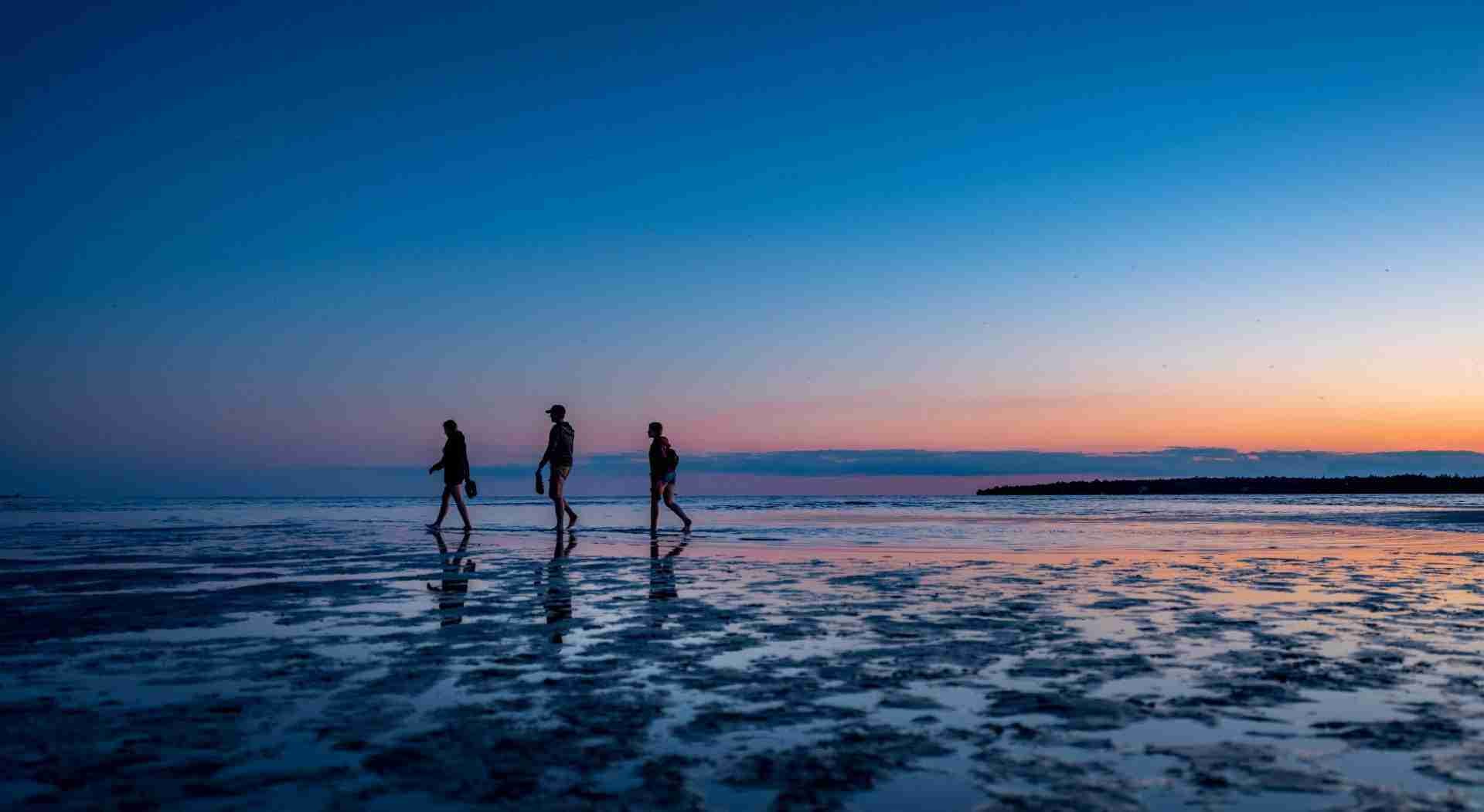
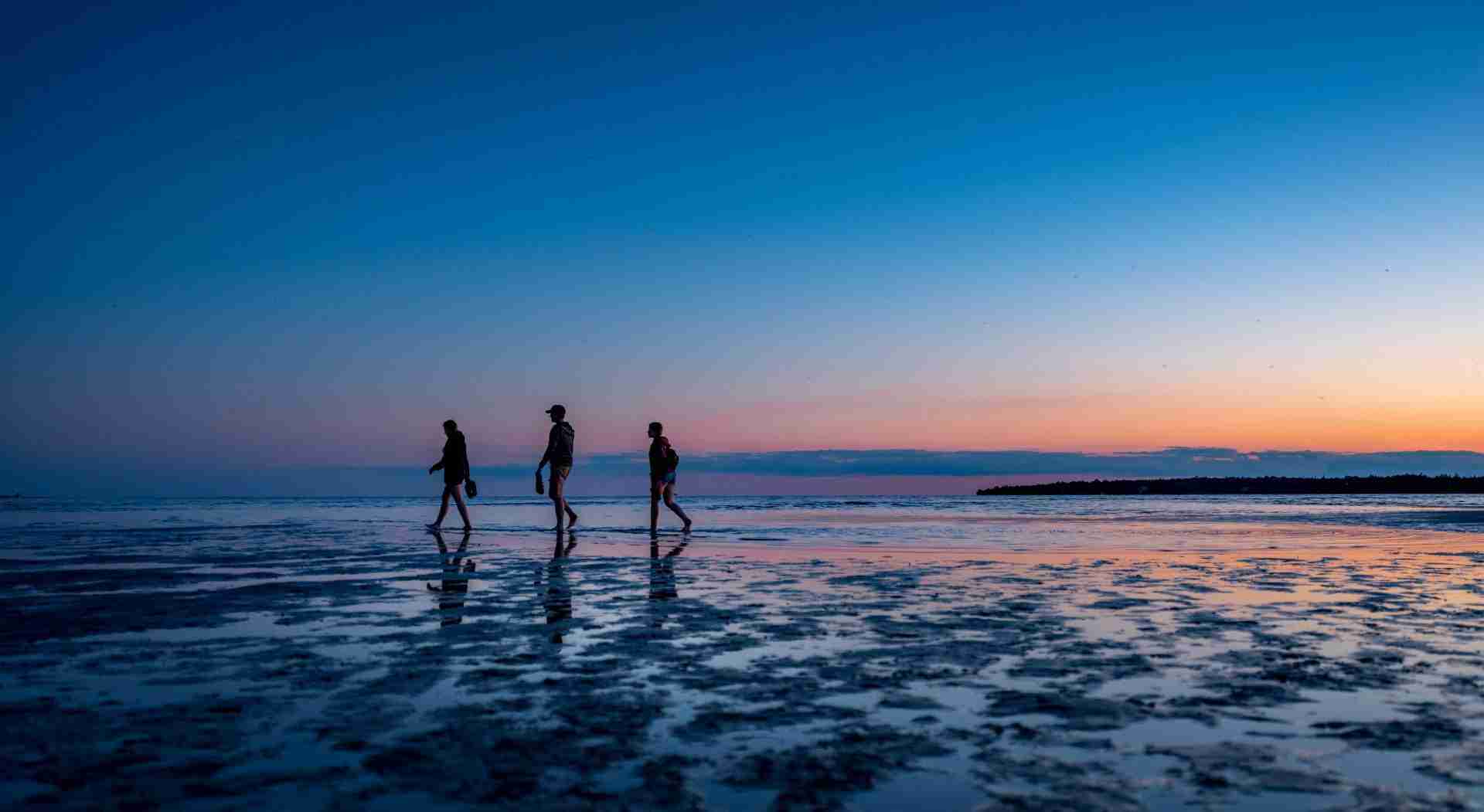
Tucked along the Lake Huron shoreline just south of Tobermory, Singing Sands is one of Bruce Peninsula National Park's lesser-known treasures. This peaceful beach offers more than sand and sunsets—its surrounding landscape includes rare dune and fen ecosystems that support some of the Great Lakes region's most elusive plant species. The open shoreline, soft golden light, and unique wetland textures make this area especially rewarding for photographers interested in both wide landscapes and botanical detail. Whether you're capturing the pastel glow of twilight on shallow water or focusing in on a rare orchid tucked beside the trail, Singing Sands invites a quiet, intentional approach to your photography.
Best Photography Opportunities
• Wide Beach and Lake Horizon Views
: The gently sloping beach at Singing Sands opens to a vast, shallow expanse of Lake Huron that's often mirror-still in the early morning or late evening. Use a wide-angle lens to emphasize the openness of the shoreline, and shoot low to the ground to capture the fine grain of the sand in the foreground. Sunsets here are particularly soft and pastel-toned, thanks to the lake's western exposure. On calm days, the water can reflect the sky almost perfectly, making for minimalist compositions with strong symmetry and gentle gradients.
• Boardwalk Framing Through the Fen
: A short boardwalk trail runs through the heart of the fen ecosystem, surrounded by native grasses, sedges, and seasonal wildflowers. This path creates a natural leading line through the landscape and is ideal for composition with depth and direction. Use a mid-range zoom to balance trail, flora, and sky, or go wide to incorporate low dune contours and the shifting color of the plant life in early morning mist or late afternoon sun.
• Macro Studies of Carnivorous and Rare Plants
: Singing Sands is home to four species of carnivorous plants, including pitcher plants and sundews, as well as several orchids and other rarities. Use a macro lens or close-focusing telephoto to isolate these subjects in their natural setting. Soft, diffused light—especially on overcast days—enhances surface detail and avoids harsh highlights on delicate petals and plant hairs. Get close but tread carefully; many of these species are fragile and grow in protected zones, so always shoot from trailside or boardwalk edges without disturbing their habitat.
• Fog and Twilight Atmosphere
: On cooler mornings, fog often settles over the dunes and fen, especially where wet ground meets warmer air. This creates soft, ethereal light and adds depth to otherwise simple compositions. Use a longer lens to compress layers of grass, fog, and silhouetted trees, or keep it wide for open, moody minimalism. At twilight, the temperature drop often stills the lake completely, allowing for long exposures that stretch soft color across the water and sand.
• Wildflower Patterns and Low Light Textures
: In late spring and early summer, the dunes and fen come alive with wildflowers, sedges, and mosses that create beautifully chaotic ground textures. A short telephoto lens can help frame clusters of blooms or create layered compositions that emphasize repetition and contrast. Try shooting at oblique angles with the sun just above the horizon to create backlit halos around flowers or dew-covered grasses, adding fine detail to soft, glowing scenes.
Best Time to Visit
Singing Sands is most photogenic between late May and early October, with specific visual highlights depending on the season. Late spring and early summer bring out the rare orchids and carnivorous plants, while mid-to-late summer introduces color and texture to the fen from grasses and seasonal wildflowers. Autumn light is lower and softer throughout the day, with fewer visitors and increased chances of mist over the landscape in early morning.
The best time of day for photography is sunrise and the hour following it. At this time, light filters low across the lake and fen, bringing out surface detail and illuminating the mist that often hangs over the area. Sunset offers excellent conditions as well, especially for long exposures of the lake and minimalist shoreline compositions. Midday sun can be harsh, but overcast conditions or light fog make the plant-rich areas of the fen especially rewarding.
Visit during calm, windless mornings for glassy water conditions and clearer reflections. After a light rain, many of the plants—especially sundews and wildflowers—appear more vibrant and textured. Avoid weekends in peak summer if you're looking for solitude; mornings on weekdays typically offer a quieter and more contemplative environment.
How to Get There
Singing Sands is part of Bruce Peninsula National Park and is located on Dorcas Bay Road, just off Highway 6 south of Tobermory, Ontario. From Tobermory, head south for approximately 6 km and turn west onto Dorcas Bay Road, following signs to the Singing Sands Day Use Area.
Parking is available on-site through Parks Canada and is subject to seasonal access and park use fees. The beach and fen area are easily accessible by foot from the parking lot via a short trail and boardwalk, with wide, level pathways suitable for tripods and easy gear transport. Washrooms and picnic facilities are available seasonally.
There are no restrictions on non-commercial photography, but drone use and off-trail activity are not permitted due to the sensitivity of the ecosystem. Stay on designated trails and platforms when photographing plant life, and avoid disturbing any part of the dunes or wetland.
Recommended Gear and Shooting Tips
A wide-angle lens (16–35mm) is ideal for expansive lake scenes, beach perspectives, and boardwalk compositions that feature sky and foreground detail. A mid-range zoom (24–70mm) is useful for capturing layered views within the fen and composing around natural lines in the landscape. A macro lens or a telephoto with close focusing capability is essential for photographing the rare plants that grow close to the trail.
Use a tripod for low-light sunrise and twilight work, especially when working with long exposures or bracketing shots for dynamic range. A circular polarizer can help deepen skies and eliminate glare on water or damp plants, while a lens hood will help control contrast in early or late sun.
For plant-focused work, shoot in soft light—early morning or overcast days help reduce contrast and preserve surface detail. Bring waterproof footwear if you plan to shoot near the fen's edge, and pack a kneeling pad or small mat if you'll be working close to the ground. Always carry a microfiber cloth to clean your lens from mist or plant moisture, and work slowly to avoid missing subtle details in this quiet, richly textured setting.
Nearby Photography Locations
: Located along the Georgian Bay shoreline within Bruce Peninsula National Park, this remote cobble beach offers striking boulder formations, deep blue waters, and long sightlines beneath dramatic limestone cliffs. The area is ideal for sunset compositions and minimalist shoreline studies, especially when using long exposures to smooth the motion of the bay.
: This nearby stretch of the Bruce Trail winds through forest, rocky outcrops, and wetland areas, eventually connecting to cliffs overlooking Georgian Bay. With varied terrain, moss-covered ground, and filtered light, this trail section is excellent for both woodland landscapes and detailed macro studies in early morning.
: Just inland from Singing Sands, the dune systems of Dorcas Bay offer wide, open landscapes with unique vegetation, patterns in the sand, and subtle elevation changes. Visit during golden hour to catch long shadows stretching across the grass-covered mounds, or during overcast days for soft, detail-rich compositions of dune textures.
: A clear, stone-strewn inlet near Tobermory that offers some of the peninsula's most striking shallow water photography. Smooth rock, aquamarine water, and dense tree lines make this a rewarding stop for abstract shoreline studies and symmetrical, low-angle compositions.
: Perched at the entrance to Tobermory's harbor, this iconic white lighthouse is best captured during early morning or at dusk, when warm light skims the water and enhances the textures of the rocky shoreline. Pair lighthouse shots with reflections in calm water or include passing boats for added narrative interest.
Singing Sands is a location where small details and quiet light come together in rare harmony. Whether you're capturing the open breath of the shoreline or crouching down to study a dew-covered sundew in the fen, this beachside environment invites calm observation and slow, meaningful photography. It's a place where subtlety and stillness yield some of the Bruce Peninsula's most intimate images.
Comments
Loading comments…