
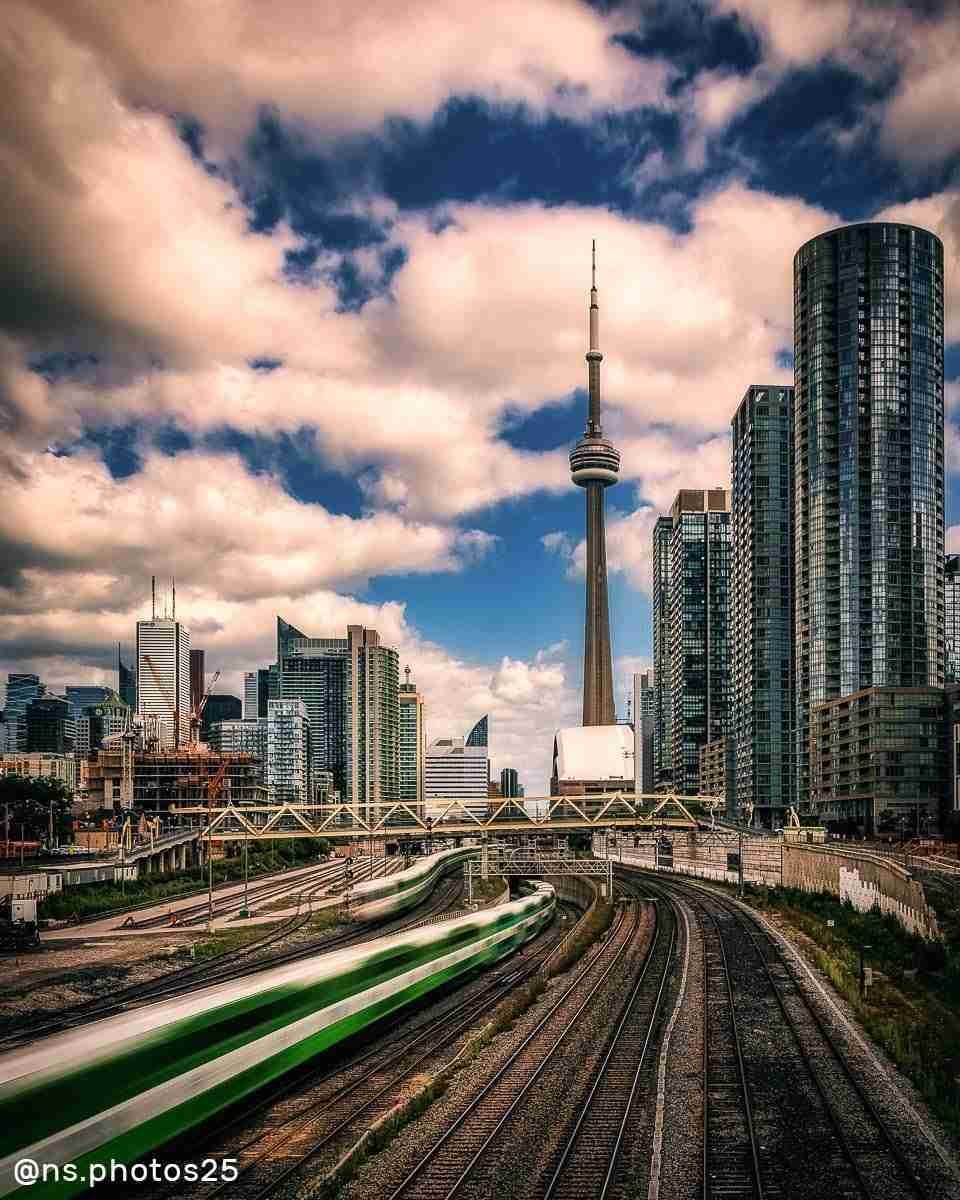
Stretching over Toronto's rail corridor at the foot of Bathurst Street, the Sir Isaac Brock Bridge is an under-the-radar gem for cityscape photographers seeking unique skyline views. With a straight sightline toward the west, this bridge offers a natural frame for the CN Tower rising above the downtown core—especially photogenic when set against golden hour light or twilight skies. The bridge's steel trusses, passing streetcars, and rhythmic lines of urban infrastructure give it strong compositional elements, making it an ideal location for both handheld snapshots and tripod-based long exposures. For those who love capturing city rhythm, layered perspectives, and architectural symmetry, the Sir Isaac Brock Bridge delivers dynamic possibilities.
Best Photography Opportunities
• Framing the CN Tower with Urban Lines
: From the center of the bridge looking west, the CN Tower aligns beautifully within the downtown skyline, flanked by glassy high-rises and intersected by rail lines and rooftops. The steel arches and horizontal beams of the bridge itself create a natural architectural frame around the tower, ideal for centered or rule-of-thirds compositions. Shooting just after sunset adds depth to the buildings as they light up against the soft glow of dusk.
• Streetcar Motion and Light Trails
: The Bathurst streetcar runs directly across the bridge, creating perfect conditions for motion blur and light trail photography. Using a tripod and long exposure at blue hour or night allows you to capture streaks of red and white as streetcars move past, adding energy and storytelling to an otherwise static cityscape. The metal rails and overhead wires help guide the eye toward the skyline, building strong visual flow.
• Railway Lines and Depth
: Looking down from the eastern edge of the bridge, the multiple rail lines running beneath it create powerful leading lines that stretch toward Union Station and the Financial District. These converging tracks add depth and perspective to any composition. A telephoto lens compresses these elements into a dramatic urban canyon, while a wide-angle exaggerates their vanishing point effect.
• Twilight Skyline and Reflective Windows
: The city skyline from this vantage point becomes especially photogenic during twilight when interior lights begin to glow from office towers and condo buildings. Reflections in the glass façades bounce back color from the sky, while the CN Tower's lighting gradually becomes more prominent. This mix of natural and artificial light adds mood and contrast to any cityscape shot taken from the bridge.
• Minimalist Architectural Studies
: The trusses and riveted steel of the bridge itself are excellent for architectural abstraction. Close-up compositions of the beams, shadows, and intersections lend themselves to black-and-white photography, while wide shots with the skyline softly out of focus can act as background texture for portrait or editorial-style work. The geometric patterns shift depending on your position, giving ample room for experimentation.
Best Time to Visit
The Sir Isaac Brock Bridge is at its best from golden hour through to early nightfall. Sunset light from the west illuminates the skyline in warm tones, and as twilight deepens, the city lights create contrast and visual rhythm along the horizon. Blue hour—about 20 to 45 minutes after sunset—is the ideal time for balanced exposures between ambient sky light and artificial illumination from the skyline and streetcars.
Mornings are less dramatic for skyline color but offer cleaner air and minimal pedestrian or vehicular traffic—ideal for architectural detail studies or minimalist compositions. Cloudy days also work well here, softening the light and allowing the steel structure and skyline to take center stage without harsh contrast. Winter provides crisp light and long shadows, while summer sunsets stretch late into the evening with more dramatic sky color.
How to Get There
The Sir Isaac Brock Bridge is located at the south end of Bathurst Street, spanning the railway corridor just north of Fort York Boulevard. It is easily accessible on foot, by bicycle, or via the 511 Bathurst streetcar. For those driving, limited street parking is available nearby, though public transit or walking is often easier, especially during peak hours.
The pedestrian walkways on both sides of the bridge are protected by railing and offer safe, uninterrupted shooting angles. No permit is needed for personal photography, and the area is open 24 hours a day. For nighttime work, bring a tripod and consider a lens hood or filter to reduce glare from passing headlights or overhead lights on the bridge.
Exploring the Surrounding Area
Beyond the bridge itself, the surrounding area offers diverse photographic material within walking distance. Fort York National Historic Site sits just below to the west, with open fields, cannons, and stone structures for heritage-inspired compositions. To the south, the Bathurst Quay and Harbourfront neighbourhoods offer waterfront scenes, marinas, and skyline reflections across Lake Ontario. North of the bridge, King West transitions into a lively mix of restaurants, modern architecture, and street-level urban scenes, perfect for street photography.
Walking east along Front Street or Wellington Street brings you into the heart of the Financial District, where reflective glass towers and pedestrian energy give the city a different kind of rhythm. These surrounding zones let you build a full visual story—from elevated urban symmetry to street-level motion—all within a compact radius.
Nearby Photography Locations
: Just beneath the bridge, this historic site offers 19th-century buildings, open space, and wide views of the city skyline. Excellent for combining historic texture with urban backdrop.
: South of the bridge, this waterfront park and quay area features marinas, boats, and skyline reflections. Golden hour and morning light are ideal here for tranquil, lakeside compositions.
: A pedestrian bridge linking CityPlace to Front Street, it features sculptural design and colorful lighting at night. Great for light trails and architectural abstracts.
: A few blocks northwest, this market made of shipping containers offers urban color, modern lines, and excellent street photography opportunities in a trend-forward environment.
: A short bike ride west, this lakeside park offers clean views of the skyline and wide, open skies. Ideal for sunset compositions, long exposure work, or quiet moments away from the city's intensity.
The Sir Isaac Brock Bridge is more than just a commuter crossing—it's a platform for viewing Toronto's energy, structure, and scale from a unique vantage point. Whether you're drawn to bold city lines, motion in the streets below, or the CN Tower rising over it all, this bridge offers a rich visual experience that shifts with every hour of the day. For those who seek clean frames, dynamic movement, and the interplay of infrastructure and skyline, it's one of the city's most rewarding urban locations.
Comments
Loading comments…