
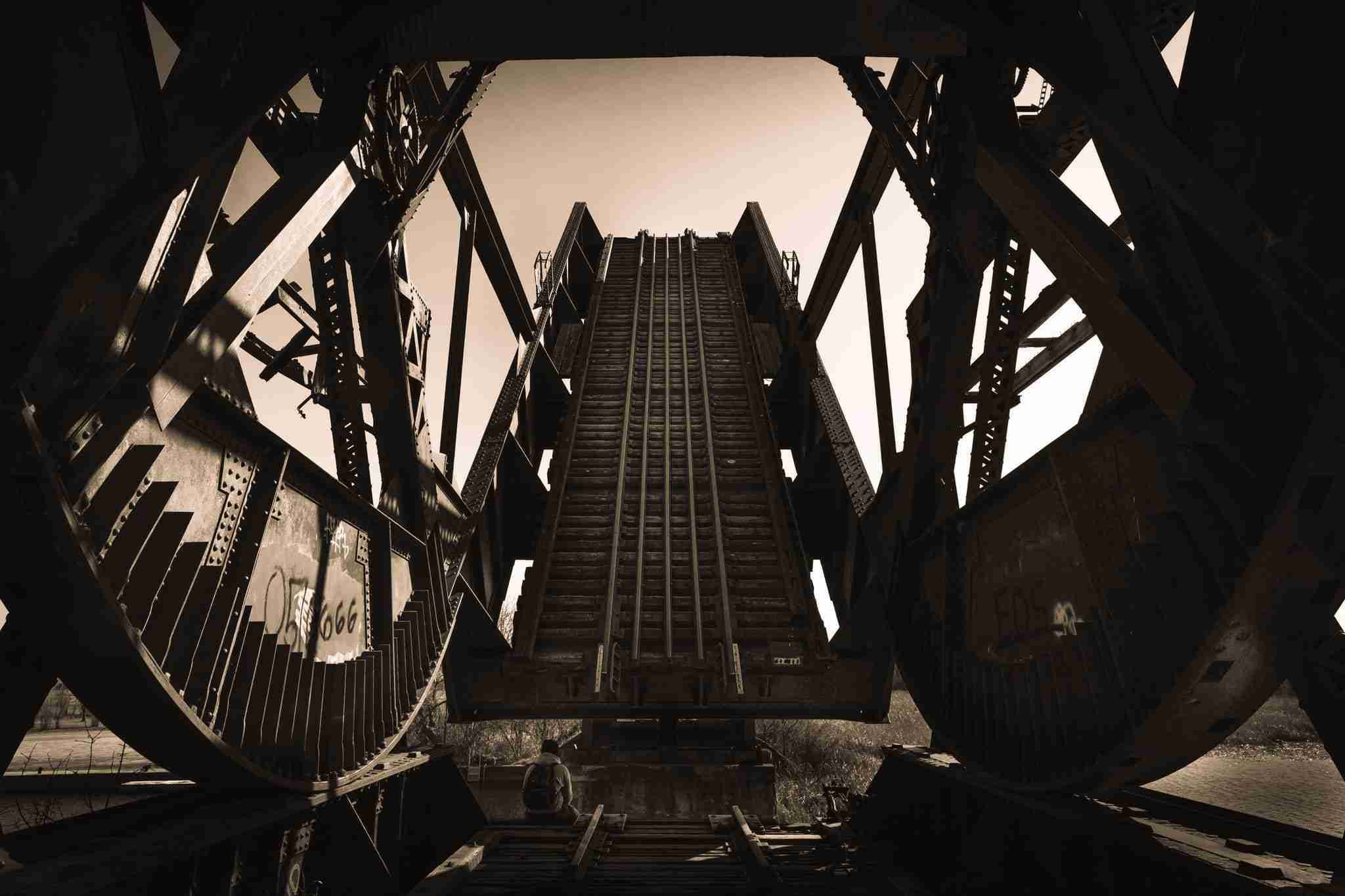
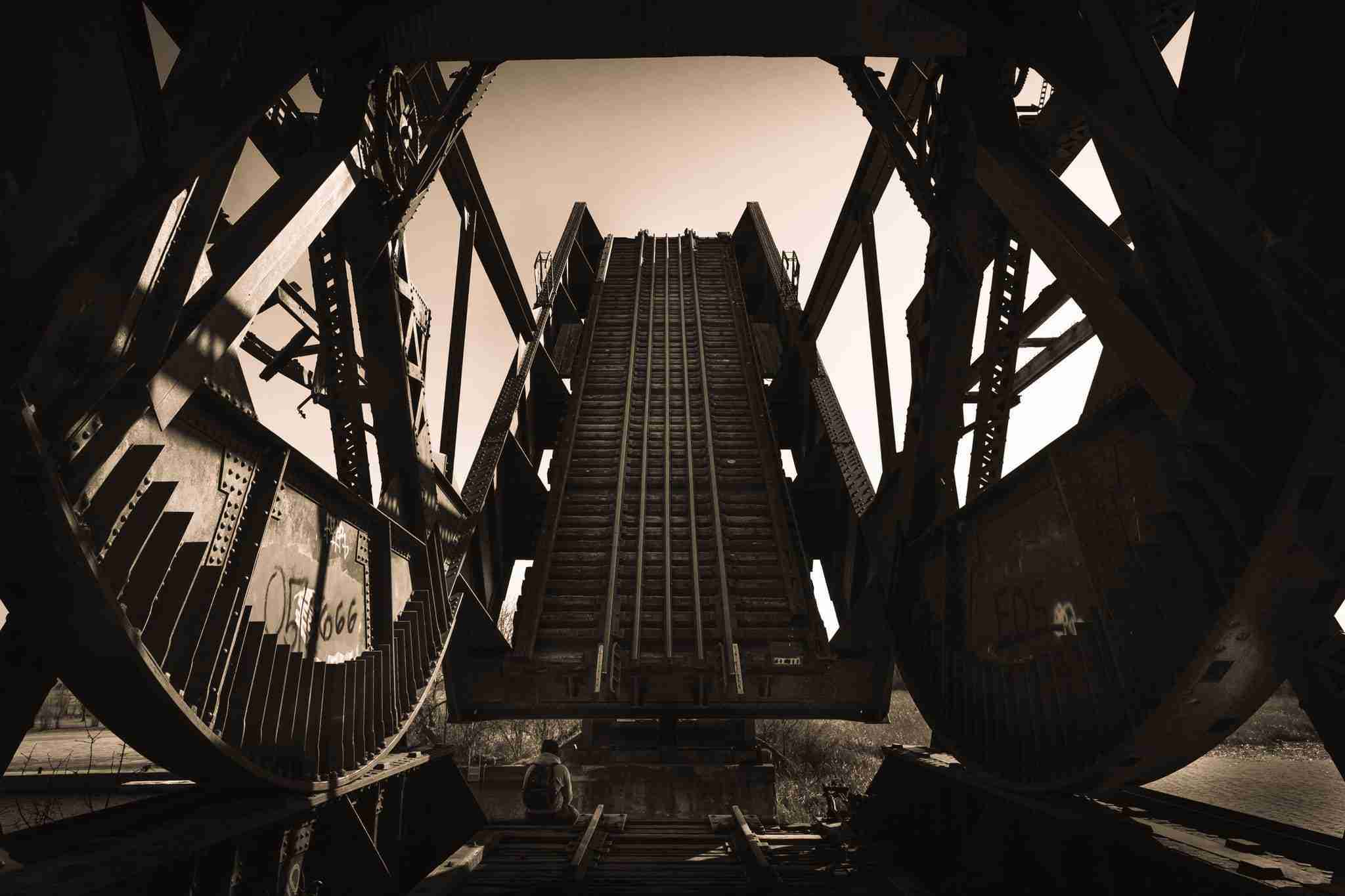
Standing proudly over the Rideau Canal in the heart of Smiths Falls, Ontario, the historic Bascule Bridge is one of the last remaining structures of its kind in the province. Built in 1912 for the Canadian Northern Railway, this single-leaf Scherzer rolling lift bridge once served both freight and passenger rail lines, lifting its steel deck to allow boats to pass through the canal. Although no longer operational, the bridge remains a striking example of early 20th-century engineering and a compelling photo subject. With its massive counterweights, aged steel framework, and waterside setting, the Smiths Falls Bascule Bridge offers photographers an industrial-era landmark rich in form, texture, and historical narrative.
Best Photography Opportunities
• Golden Hour for Warm Tones and Structural Detail
– The bridge's dark steel structure catches soft light beautifully during sunrise and sunset. Early morning sun from the east highlights the rivets, beams, and mechanical joints with warm tones and gentle shadows. Shooting from the east bank of the canal in the morning or from the nearby trails at sunset provides ideal light angles and pleasing backdrops.
• Reflection Photography Along the Canal
– The calm waters of the Rideau Canal offer near-perfect reflections of the bridge, especially in the early morning or late evening when the wind is minimal. Framing the bridge's lifted leaf and mirrored shape in the water creates a strong sense of symmetry. Including surrounding trees or buildings in the reflection adds interest and color.
• Industrial Texture and Close-Up Details
– For those drawn to texture and design, the bridge's exposed gears, riveted joints, and rusted surfaces make excellent close-up subjects. Using a macro or short telephoto lens allows you to isolate these elements and tell a more intimate story of time and wear. Black-and-white processing emphasizes the patina of the steel and the gritty mechanics of the structure.
• Leading Lines and Framing from the Trail
– The nearby Cataraqui Trail and pedestrian paths offer excellent perspectives of the bridge from slightly elevated positions. Using the canal's edge or path as a leading line helps draw the viewer into the scene, while the raised bridge deck provides strong vertical elements for framing. Wide-angle lenses can exaggerate the bridge's geometry and emphasize its relationship to the landscape.
• Night and Blue Hour Photography
– Though the bridge is not lit with dramatic floodlights, ambient town lighting and canal reflections create a moody atmosphere after sunset. Blue hour shots benefit from the contrast between the steel silhouette and the glowing sky. Long exposures can smooth out water reflections and enhance the quiet, contemplative feel of the scene.
Best Time to Visit
The bridge is a year-round subject, though the experience and mood change with the seasons. Spring (April–June) brings fresh greenery and high water levels, which enhance reflections and contrast nicely with the dark steel. Summer (July–August) offers lush foliage and soft evening light, with boat activity on the canal adding life and scale to the scene.
Autumn (September–October) is particularly photogenic, as the fall colors surrounding the canal bring warmth and vibrance to the industrial frame of the bridge. The bridge looks especially dramatic when framed by orange and red foliage on both banks.
Winter (December–February) presents a minimalist, stark atmosphere with snow and ice softening the industrial setting. Snow-covered beams and a frozen canal create a monochrome palette ideal for black-and-white compositions.
Early morning and golden hour remain the most flattering times of day for lighting. Cloudy or foggy conditions can also add mood and mystery, especially when photographing the bridge's form emerging through mist over the water.
How to Get There
The Smiths Falls Bascule Bridge is located just south of downtown Smiths Falls, spanning the Rideau Canal near the intersection of Abbott Street and Ferrara Drive. From Ottawa, it's about a one-hour drive southwest via Highway 15.
Free public parking is available nearby at the Smiths Falls Combined Lockstation or along Ferrara Drive. The bridge is easily accessible on foot, with nearby walking paths, the Cataraqui Trail, and canal-side viewpoints all offering varied shooting angles.
There are no fees to visit or photograph the bridge. While the bridge itself is not accessible for climbing or close inspection, all the best photographic angles are available from public walkways and trail areas nearby.
Exploring the Bascule Bridge and the Surrounding Area
Beyond the bridge itself, the surrounding area offers a mix of industrial history, recreational green space, and charming townscape. The nearby Rideau Canal Combined Lockstation is one of the most active on the waterway, providing action shots of boats transiting the locks and heritage buildings that frame the canal beautifully.
Smiths Falls' revitalized downtown is just a short walk away and features historic brick storefronts, old mill buildings, and urban street photography opportunities. The canal path leads to several scenic spots where cyclists, boaters, and wildlife interact with the water and town, offering strong lifestyle and environmental compositions.
In the evening, the quiet stillness of the canal and the silhouette of the bridge against the setting sun create a peaceful, reflective mood. A short walk in either direction reveals new perspectives—framed by trees, layered with reflections, or silhouetted against a rising moon.
Nearby Photography Locations
– Just upstream from the bridge, this busy set of locks features heritage stone buildings, moving boats, and scenic reflections—ideal for action shots and documentary-style photography.
– Located just a few minutes from the bridge, this restored 19th-century home offers elegant architecture, gardens, and period furnishings for portrait or detail photography.
– A former railway line turned multi-use trail that offers elevated views of the town, canal, and countryside. Ideal for nature photography, trail compositions, and capturing the bridge from different angles.
• Victoria Park and Water Tower
– Smiths Falls' urban park space offers tree-lined paths, historical monuments, and views of the Rideau River, including the nearby water tower—a local landmark that adds scale and vertical drama to wide shots.
• Old Mill Ruins and Beckwith Street
– Smiths Falls' industrial past is also visible in its old stone mills and warehouse buildings, many of which feature textured facades, ghost signs, and brickwork that pairs well with urban exploration photography.
The Smiths Falls Bascule Bridge is more than a piece of defunct infrastructure—it's a character-rich link to Ontario's railway and canal heritage, framed by water, weather, and the passing of time. Whether you're after structural detail, wide scenic views, or the quiet dialogue between metal and landscape, this bridge rewards patient observation and creative framing at every turn.
Comments
Loading comments…