
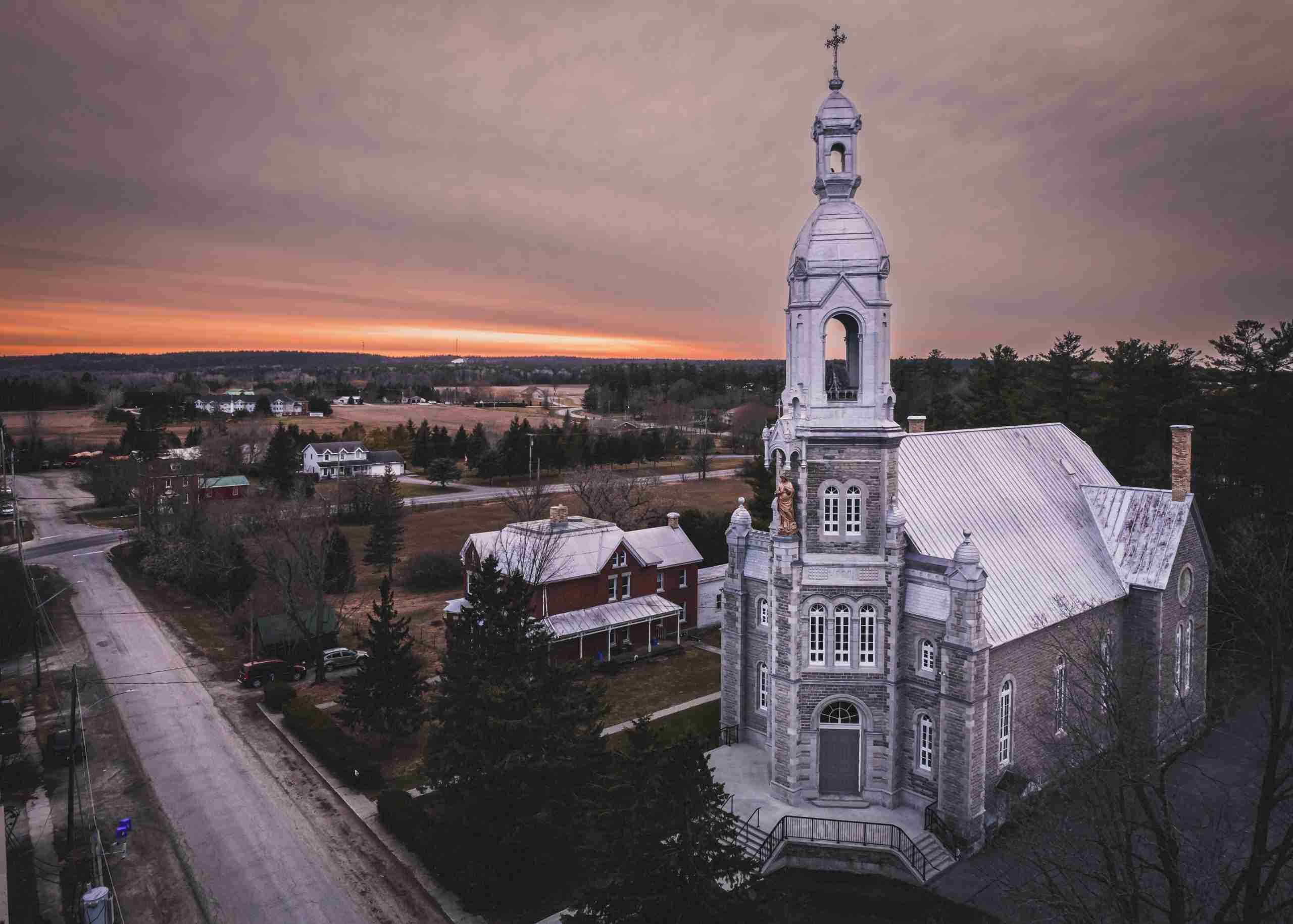
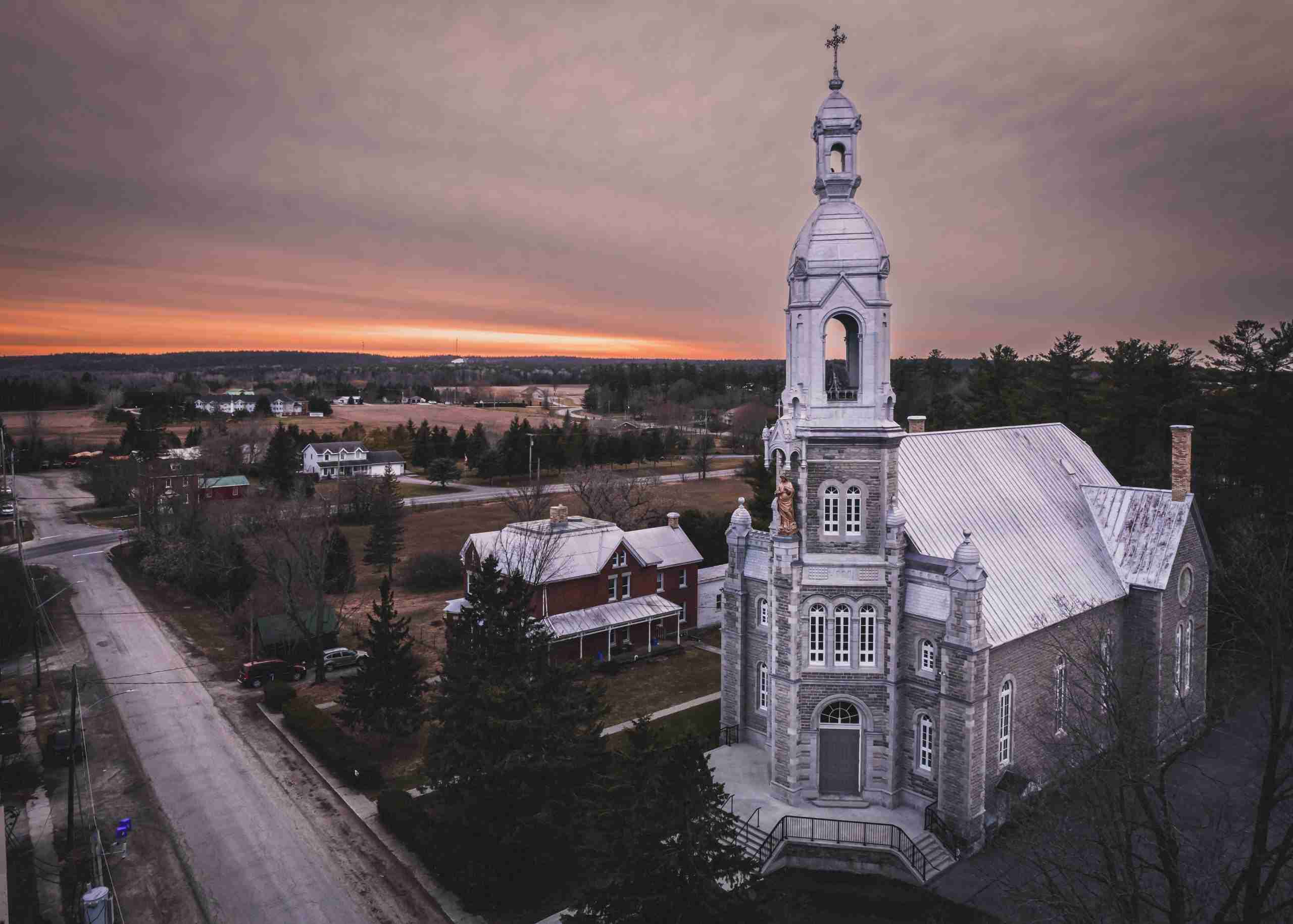
Standing gracefully atop a hill in the village of Pakenham, St. Peter Celestine Roman Catholic Church is one of the most architecturally striking rural churches in all of Canada. Built in 1892, the church is a stunning example of ecclesiastical architecture influenced by French, Italian, and French Canadian design traditions. From its stone exterior and twin towers to its intricate interior detailing, St. Peter Celestine offers a wealth of photographic opportunities that blend history, craftsmanship, and serene landscape context.
The church has remained nearly unchanged since its original construction, thanks to a careful restoration completed in 1992 to mark its centenary. Its preservation allows photographers to engage with a rare, unaltered piece of rural religious heritage. The elevated site offers wide views of the surrounding town, while the building's form commands attention from every angle, both up close and from a distance.
Best Photography Opportunities
• Full Facade and Symmetrical Compositions
From the base of the hill or across the road, photographers can capture the symmetrical grandeur of the church's twin towers and arched main entrance. Use a wide-angle lens to emphasize the vertical lines and slight curvature of the towers as they rise into the sky. The elevation of the site means you can also shoot from slightly below eye level, adding drama to the composition. Early morning or late afternoon light brings out the warm tones in the stone and helps sculpt shadow along the facade.
• Architectural Details and Stone Texture
Move in closer to photograph the stonework, arched windows, ornamental ironwork, and sculptural flourishes that adorn the church's exterior. These details are finely crafted and full of texture, ideal for capturing with a mid-range zoom or telephoto lens. On overcast days, the diffuse light reveals subtle variations in the stone and makes decorative elements like window tracery and carvings pop with clarity and depth.
• Interior Symmetry and Ornamental Light
If the church is open for services or events, the interior is equally impressive, with Italianate flourishes, stained glass windows, and a vaulted ceiling that draws the eye upward. Use a tripod and wide lens to shoot symmetrical compositions from the central aisle or capture light filtering through the colored glass. The richly decorated altar and frescoes along the walls offer excellent opportunities for detail studies or ambient interior shots with natural light.
• Contextual Shots with Village and Landscape
From the side or rear of the churchyard, you can frame compositions that include the surrounding hills, homes, and trees of Pakenham. These contextual shots tell a broader story of the church's place in the community and its commanding presence above the town. In autumn, the backdrop turns vibrant with foliage, making for excellent seasonal contrast. In winter, the building's sharp edges and stone color stand out beautifully against a snow-covered landscape.
• Golden Hour and Blue Hour Silhouettes
The church's steeples and rooftop crosses make for striking silhouettes when shot against a glowing sunrise or sunset sky. Position yourself west or east of the church depending on time of day, and underexpose slightly to preserve sky color while rendering the church in silhouette. Blue hour shots also work well here—especially when snow or mist softens the scene and adds atmosphere.
Best Time to Visit
St. Peter Celestine is photogenic in every season, but the most dramatic images often come during autumn, when the surrounding trees catch fire with color, or in winter, when the snow blankets the hill and softens the village beyond. Early morning and late afternoon provide the best directional light for emphasizing the stone textures and defining the structure's lines.
Interior photography depends on church access, so it's best to plan a visit around public events or check with parish staff if you're hoping to shoot inside. Midday light can be harsh on the exterior, especially in summer, so either aim for early light or wait for evening warmth.
Weekday visits tend to be quieter, allowing time to set up compositions or work from a tripod without interruption. The surrounding grounds are open and easily walkable, with plenty of room to explore multiple angles without obstruction.
How to Get There
St. Peter Celestine Church is located in the village of Pakenham, Ontario, roughly an hour west of Ottawa. From Ottawa, take Highway 417 west to the Kinburn Side Road exit, then follow signs toward Pakenham via County Road 29. The church sits prominently on a hill in the center of town, easily visible and accessible from the main road.
Street parking is available nearby, and visitors can walk up the gently sloped driveway to access the grounds. The church is often open during religious services and community events, but even from the outside, the building provides numerous excellent photographic angles. Be respectful of church functions and the private nature of some parts of the grounds.
Recommended Gear and Shooting Tips
A wide-angle lens (16–35mm) is essential for capturing the full facade or the interior nave if shooting indoors. A 24–70mm zoom is ideal for general walkaround work, allowing you to move between full-building compositions and tighter architectural details. A 70–200mm telephoto is helpful for isolating upper-level features like steeples, crosses, and window ornamentation.
Use a tripod for low-light interior work or blue hour shooting outdoors. A circular polarizer can help reduce glare off the stained glass and deepen blue skies during daytime shots. In winter or damp conditions, bring a lens cloth to manage condensation or mist, particularly in the early morning.
Try shooting from across the street or from the slope below to take advantage of the building's elevation. Framing with tree branches, nearby gates, or headstones (if tasteful and respectful) can also add foreground texture and draw the viewer into the frame.
Nearby Photography Locations
• Pakenham Five-Span Bridge
Just down the hill, this historic stone bridge over the Mississippi River is the only five-arch stone bridge in North America. A strong complement to the church, it offers symmetry, river reflections, and soft light compositions, especially at sunrise.
• Mount Pakenham Lookout
A short drive from the village, this hilltop lookout provides sweeping views over the Ottawa Valley and is ideal for panoramic landscape photography or capturing weather patterns across the terrain.
Located east of Pakenham, the town of Almonte features waterfalls, stone mills, and charming downtown streetscapes—perfect for classic long exposures and heritage architectural work.
A peaceful riverside trail system just minutes from Pakenham. Excellent for woodland compositions, textured water movement, and seasonal atmosphere—especially in spring or after rain.
• White Lake Marshlands
West of the village, this wetland area offers misty mornings, birdlife, and rich tonal palettes at sunrise. Ideal for pairing architectural work with a natural contrast.
St. Peter Celestine Church is a gem of rural Ontario architecture—a testament to craftsmanship and cultural legacy that remains remarkably intact. For photographers drawn to ecclesiastical detail, village charm, and elevated perspectives, this church delivers a full range of composition options in a peaceful and accessible setting.
Comments
Loading comments…