
Rising out of the rural landscape like a cathedral arrested in time, St. Raphael's Ruins offer photographers a rare opportunity to document Gothic revival architecture that has been preserved in partial destruction. Located just outside of Alexandria in South Glengarry, Ontario—about 90 minutes southeast of Ottawa—these haunting remains of the Church of St. Raphael are among the most visually and emotionally powerful ruins in the province. After a devastating fire in 1970 gutted the original structure, the stone walls and arches were intentionally stabilized and preserved, leaving behind an open-air silhouette of the once-mighty church.
The site evokes both grandeur and loss, with exposed tracery windows, empty nave, and scorched details all revealing a narrative of time, faith, and survival. Whether you're working with the strong symmetry of ecclesiastical design or the fragmented forms left by fire, St. Raphael's rewards a thoughtful, reverent approach. The space is expansive and exposed to the sky, allowing natural light to become a defining element of each composition throughout the day.
Best Photography Opportunities
• Grand Façade and Tower Arch
The towering west façade, with its surviving main entrance and skeletal bell tower opening, serves as a dramatic focal point for frontal compositions. Use a wide-angle lens to capture the scale and symmetry, especially during golden hour when the warm light washes over the textured stone. Shooting from a distance with a longer focal length compresses the structure against the rural horizon, giving a stately, solemn character to the frame.
• Interior Walls and Empty Nave
Step inside the former nave to frame compositions where blue sky replaces the roof and sunlight floods the aisles. Vertical shots looking toward the chancel emphasize the height and linear flow of the space, while side angles reveal the rhythm of Gothic arches and buttresses. In the early morning or late afternoon, shadows cast by the wall openings create geometric lightplay that changes by the minute—perfect for time-lapse sequences or long exposures with ND filters.
• Stone Texture and Fire Scarring
The ruins carry visible remnants of the 1970 fire—charred stone, melted iron fittings, and discolored surfaces that speak to both destruction and preservation. These close-up details are ideal for abstract compositions and for photographers drawn to textural storytelling. Look for sections where soot and moss meet, or where lightning cracks and architectural symmetry have been interrupted. These micro-narratives elevate the ruins from static monument to living history.
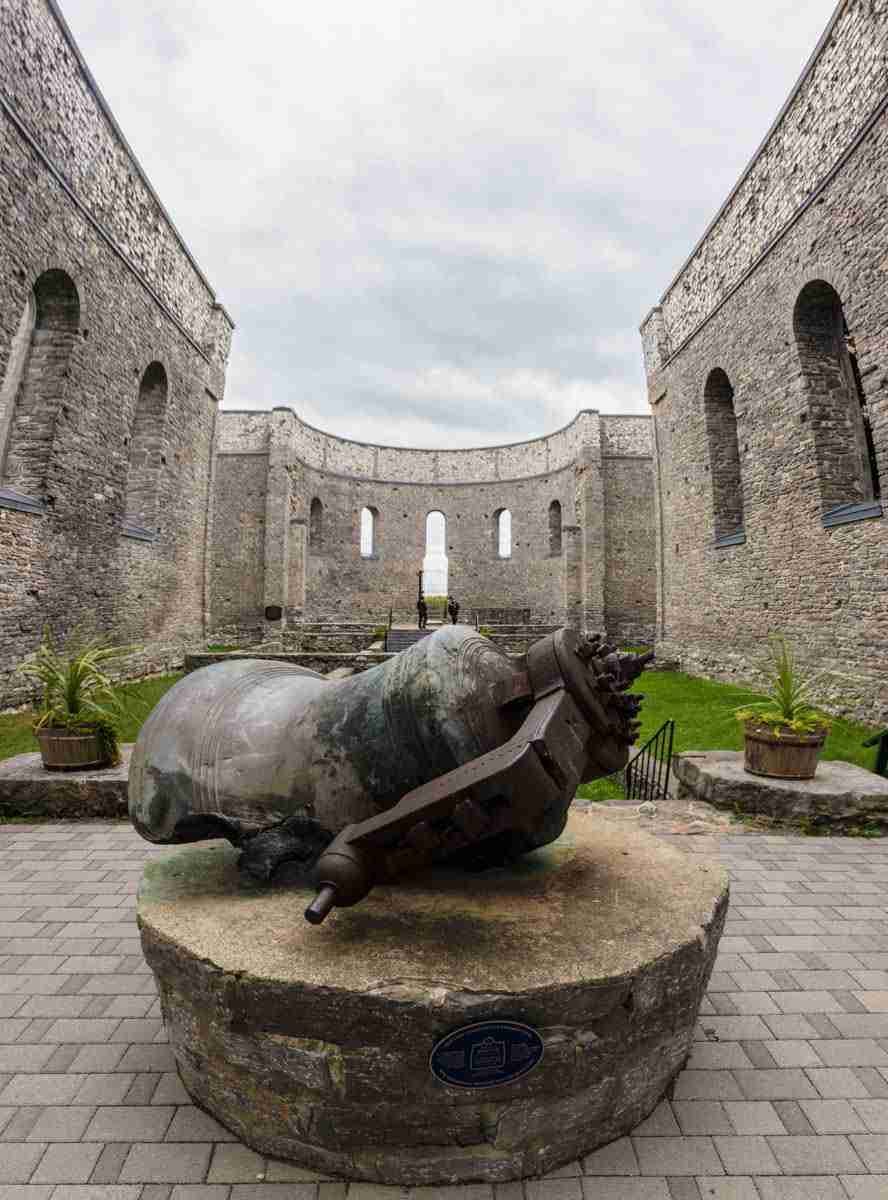
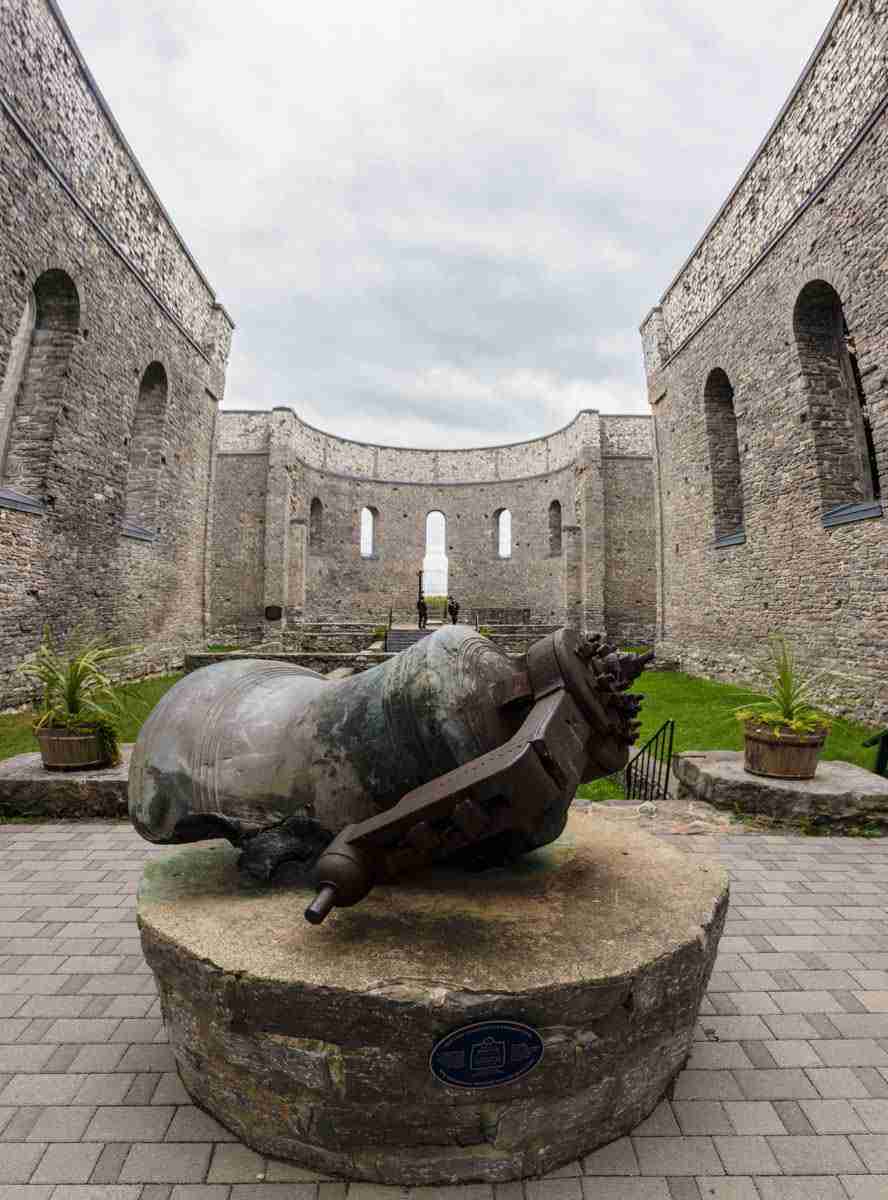
• The Melted Bell and Interior Relics
One of the most poignant elements on site is the partially melted bell salvaged from the collapsed tower. Its twisted form and disfigured shape offer a quiet yet powerful subject. Frame it against a background of wall arches or sky for contrast, and use a shallow depth of field to isolate its warped surface. It's especially photogenic on cloudy days, when diffuse light softens the sharp edges and highlights the surface patina.
• Night Sky and Astro Composition
For photographers comfortable with low-light work, the remote location of St. Raphael's makes it a compelling site for night photography. The silhouette of the ruins against a clear sky allows for powerful compositions featuring stars or the Milky Way framed by Gothic arches. Use a fast wide-angle lens and long exposures to capture celestial motion, and consider light painting the walls subtly to balance foreground and sky without overexposure.
Best Time to Visit
St. Raphael's Ruins are accessible year-round, but each season presents its own atmosphere. Summer and fall offer the best lighting conditions for sunrise and sunset, when angled sunlight highlights the stone texture and deepens shadows along the arches. Spring brings early morning mist that can drift across the open nave for moody, ethereal shots, while winter simplifies the scene and emphasizes architectural lines under a dusting of snow.
Photographers should aim to visit in the early morning or late afternoon to take advantage of soft, directional light. The open-air nature of the site means harsh midday sun can flatten stone texture and create distracting contrast. Overcast days are ideal for intimate, close-range compositions of stone detail, the melted bell, and atmospheric textures throughout the site.
Night visits should be planned carefully—bring a sturdy tripod, warm clothing, and follow all guidelines regarding access and safety. Always check ahead to ensure the ruins are open, as the site occasionally closes for preservation or events.
How to Get There
St. Raphael's Ruins are located in South Glengarry, Ontario, near the small hamlet of St. Raphael, just off County Road 18. From Ottawa, take Highway 417 east and connect to County Road 34 south, following signs to Green Valley and then west to St. Raphael. From Montreal, the drive is just under two hours via Autoroute 20 and Highway 401, exiting near Lancaster and continuing north to County Road 18.
There is a dedicated parking area near the site, and the ruins are clearly marked with informational signage. Access is easy and suitable for all levels of mobility, with a flat lawn and gravel paths leading around and into the ruins. Facilities are minimal, so plan accordingly if visiting for an extended shoot.
Recommended Gear and Shooting Tips
A wide-angle lens (16–35mm) is essential for capturing the scale and architectural flow of the ruins, especially from within the nave or looking up at the façade. A mid-range zoom (24–70mm) is useful for framing archways, window tracery, and the melted bell, while a telephoto (70–200mm) allows for detail isolations and compression against the sky or horizon.
Tripods are highly recommended, especially for low light, golden hour, or night photography. A circular polarizer can reduce glare on stone and deepen sky tones, while ND filters allow for creative long exposures during daylight. A lens hood is useful when shooting upward to control flare through open windows and roof arches.
Pack for variable weather—rural Ontario can shift quickly. Extra batteries are important in winter, and a microfiber cloth is helpful year-round to manage condensation or dust. Take your time and return more than once if possible; the changing light transforms the mood and message of this space from hour to hour.
Nearby Photography Locations
• College of Iona Ruins
Directly across the street from St. Raphael's Ruins, this partially collapsed former seminary is a moody, overgrown companion piece to the main church. The two sites work beautifully as a paired shoot—especially in early morning mist or golden evening light. Ivy-covered walls and deteriorated interiors create an eerie but beautiful texture.
Located 20 minutes north, this open-air museum features preserved 19th-century buildings including a blacksmith shop, schoolhouse, and historic church. These heritage structures offer contrast to the ruins, and the site hosts seasonal reenactments that bring added depth for documentary or portrait work.
A short drive east, this quiet park on Mill Pond features boardwalks, tree-lined paths, and scenic water views perfect for long exposures or wildlife photography. Combine a stop here with a morning shoot at the ruins for a full day of varied texture and tone.
• Lancaster Waterfront and Marina
On the shores of the St. Lawrence River, Lancaster's marina and shoreline offer wide views of water and sky, with docks and breakwalls providing strong leading lines. Sunrise and twilight reflect beautifully off the river, making this a great end-of-day pairing with the inland ruins.
• Chartrand Corner Windmill and Rural Barns
Scattered across the countryside between St. Raphael and Cornwall are historic barns, windmills, and old stone homes. These vernacular structures provide strong context for photographers building a portfolio around rural architecture, heritage decay, or Eastern Ontario's layered past.
St. Raphael's Ruins is not just an architectural remnant—it's a cathedral of memory, a shell that still echoes with presence and reverence. For photographers drawn to the fusion of history, light, and form, it offers the kind of subject that reveals new details with every visit and changes with every hour of the day.
Comments
Loading comments…