
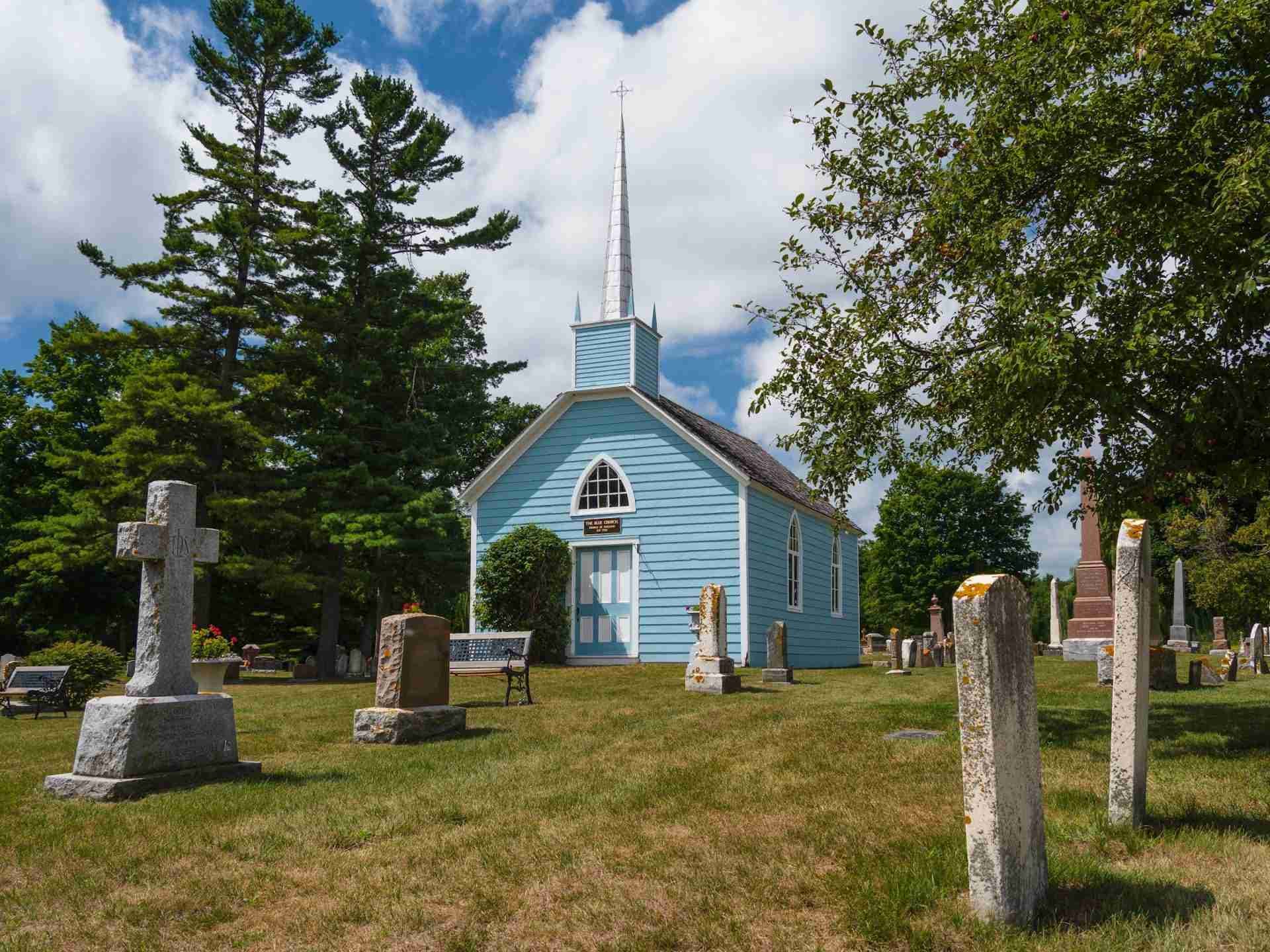
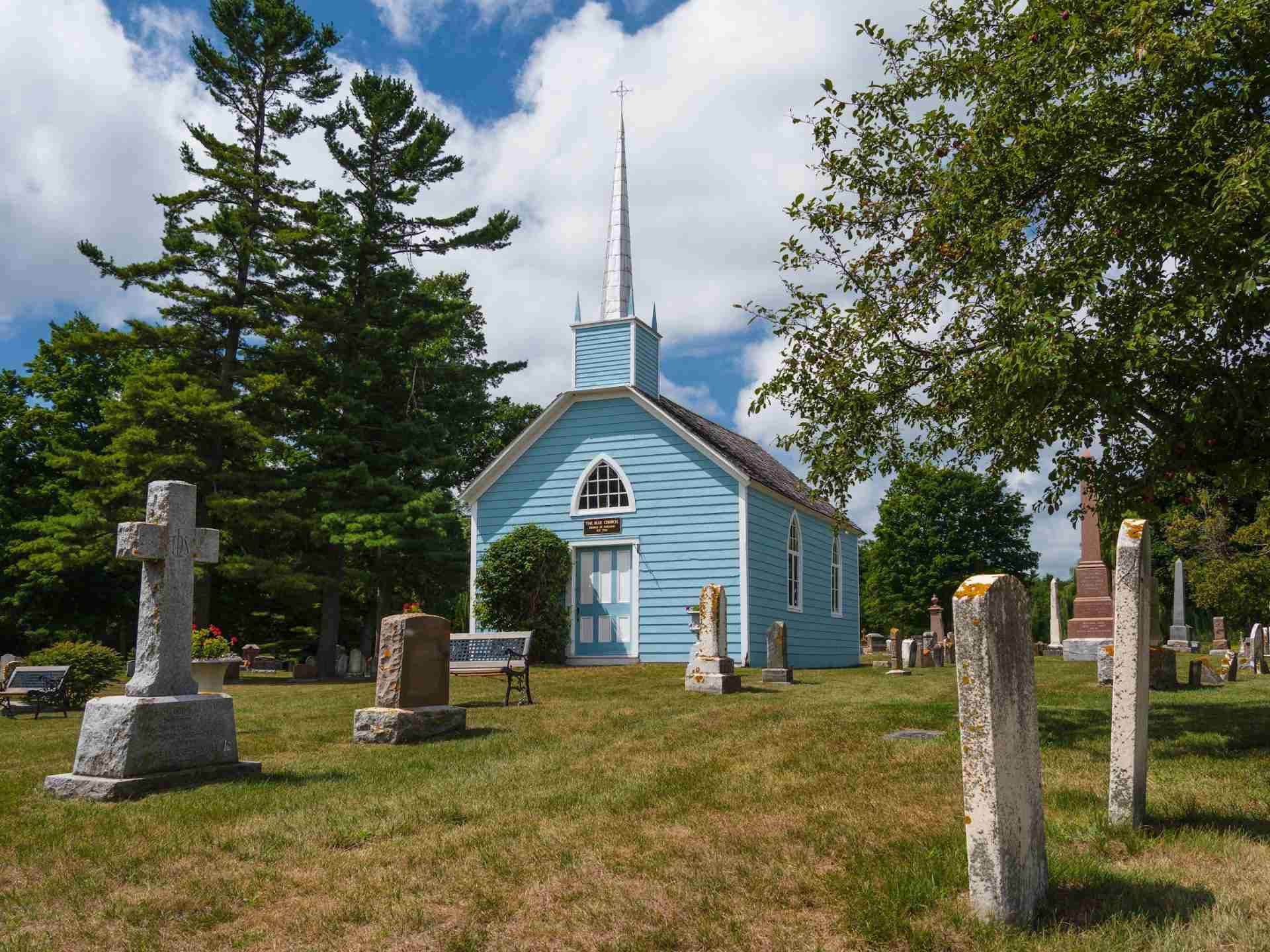
Standing quietly along the banks of the St. Lawrence River, The Blue Church is a historical and visual treasure tucked into the landscape of Eastern Ontario. Built in 1845 and painted a distinctive royal blue, this small Anglican chapel evokes a sense of time suspended—its simplicity, symmetry, and enduring color scheme giving photographers a striking focal point in a pastoral setting. Framed by mature trees and set against open river views, the church is as much about what surrounds it as what it contains: a carefully kept graveyard, period headstones, and the deep stillness of the river. For those drawn to modest architecture, layered landscapes, or historically grounded subjects, The Blue Church offers a scene of understated but lasting visual power.
Best Photography Opportunities
• Frontal Elevation and Gothic Symmetry
The church's narrow nave, pointed-arch windows, and sharply pitched roof make for a balanced, vertical composition when photographed head-on. A standard lens around 35mm to 50mm captures the full height and color contrast between the vivid blue walls and the white window trims and doorway. The symmetry of the structure is ideal for centered, formal framing—especially when shot from ground level with the graveyard in partial foreground. In spring and summer, overhanging trees add softness and context, while in winter, snow at the base of the church emphasizes its clean lines and stark geometry.
• Side Angles with River and Sky Backdrop
Moving to the east side of the church allows for side-angle compositions that bring the St. Lawrence River into frame. In early morning or late afternoon, the river reflects pastel sky tones that complement the rich blue of the chapel's walls. Wide-angle lenses allow the viewer to see both the building and its broader setting—graves, fence lines, and tree silhouettes—while preserving depth and scale. This is especially effective during golden hour, when the low sun highlights texture in the wood siding and glints off the water beyond.
• Graveyard Textures and Time-Worn Stone
The graveyard surrounding the church features 19th-century headstones in various states of aging—some upright and legible, others moss-covered or leaning. These elements make excellent foregrounds or detail shots, particularly in overcast or foggy conditions that flatten the contrast and enhance atmosphere. Use a telephoto or macro lens to isolate carved lettering, lichen, or shadow play across the stone surfaces. Wide apertures allow you to blur the background and bring emphasis to the craftsmanship of the old markers, many of which date back over 150 years.
• Architectural Detail and Color Contrast
The blue-and-white palette of the church makes it especially compelling for detail shots: the arched frames of the windows, the wooden siding, and the simplicity of the gable end are all strong visual subjects. These images work best in diffuse light or late-day conditions when glare is minimized. Consider black-and-white versions for stark winter compositions, or embrace the vibrancy of the blue facade in color during spring, when blooming vegetation softens the starkness of the geometry.
• Seasonal Context and Environmental Mood
The church changes character dramatically with the seasons. In autumn, golden foliage creates a warm contrast against the cool blue paint. In winter, snow isolates the church in a quiet, monochromatic landscape. In spring, new green growth surrounds it with life, and in summer, the full canopy of trees casts dappled shadows that shift throughout the day. Returning at different times of year allows for a varied set of images that tell a more complete visual story of the site's emotional range.
Best Time to Visit
The Blue Church is accessible and visually interesting throughout the year, though early morning and late afternoon consistently provide the most favorable light for photography. At sunrise, the eastern-facing river reflects soft pastels, and low sun brushes across the side of the church, enhancing texture. Sunset offers warm backlighting and deep contrast along the grave markers and the chapel's west-facing facade.
Spring and fall offer the richest color contrasts—spring with the fresh greens and blossoms, fall with the yellows and rusts that frame the church in seasonal warmth. Summer provides lush backgrounds and the fullest expression of the site's verdant surroundings. Winter photography is quieter but often more impactful, with the bright blue church standing out starkly against white snow and grey skies. Cloudy days also work well here, helping to balance exposure between the building, the sky, and reflective surfaces like the river.
The site is rarely crowded, making it ideal for quiet, unrushed sessions. Mornings are particularly peaceful, and early visits allow for undisturbed tripod use and exploration of multiple angles before shadows grow too long or contrast becomes harsh.
How to Get There
The Blue Church is located just west of Prescott, Ontario, along Highway 2. From Prescott, head west toward Brockville on the scenic riverside route, and you'll find the church clearly signed along the south side of the road. It's situated on a small rise overlooking the river, with a modest gravel parking area adjacent to the grounds.
Access is unrestricted, and the site is open to the public year-round during daylight hours. Visitors are free to explore the exterior of the church and the graveyard, though the building itself is typically closed to the public except on special occasions or guided tours. The grounds are level and walkable, though slightly uneven in areas due to tree roots and stone placement. There are no restrooms or facilities on-site, so plan accordingly.
The church is a short drive from both Prescott and Brockville, making it an easy addition to a broader day of photography in the Thousand Islands region. While public transit does not reach the location directly, it is easily accessible by car, with ample space to pull over and shoot from various points along Highway 2.
Recommended Gear and Shooting Tips
A standard zoom (24–70mm) covers most compositions here, from full-building portraits to closer views of headstones and trim. A wide-angle lens (16–35mm) is useful for including foreground gravestones or capturing the church in relation to the sky and river. A short telephoto (85–135mm) helps compress perspectives and isolate elements like trees, windows, or shadow patterns.
Tripods are useful for early morning, blue hour, or long-exposure shots—particularly if you want to smooth reflections in puddles or shoot in low light. A polarizing filter is helpful when dealing with glare from the river or enhancing sky contrast. Bring a lens cloth for misty mornings or damp conditions around the graves.
Use leading lines from the fence, the path, or tree shadows to guide the eye toward the church. Framing with surrounding vegetation or shooting through branches can add depth and a natural vignette effect. Compose vertically for the steeple and horizontal for wider environmental context, especially when the river or sky plays a role in the shot.
This is also a site that rewards stillness—lingering in one spot as light changes can reveal unexpected compositions, subtle textures, or shadow plays that aren't immediately visible on first glance.
Nearby Photography Locations
• Prescott Riverfront and Marina
Just minutes east of the church, the waterfront area of Prescott offers clean lines, sailboats, and wide open views across the St. Lawrence River. Great for sunrise and blue hour work, especially with long exposures or minimalist compositions.
Located in Prescott, this well-preserved 19th-century fort features stone walls, cannons, and elevated views over the river. Strong lines and historical texture make it ideal for architectural photography and storytelling sequences.
A short drive west, this conservation area offers marshlands, forested trails, and seasonal bird migration. It's an excellent companion site to the Blue Church for wildlife and nature photographers looking to round out a day of shooting.
• Downtown Brockville and Tunnel
Brockville's historic downtown features 19th-century architecture, colorful facades, and the illuminated Brockville Railway Tunnel. The tunnel offers a surreal long-exposure opportunity, especially at night when the interior lights cycle through vivid hues.
• Thousand Islands Parkway Overlooks
Further south and west, the Parkway offers elevated viewpoints of the islands and the river, especially scenic in autumn. Stop at roadside lookouts for panoramic compositions and dynamic sky–water reflections.
The Blue Church may be modest in size, but it delivers a deeply layered photographic experience. It's a place where history, architecture, and natural beauty coexist in perfect harmony. Whether you're after crisp graphic symmetry, mood-rich weather conditions, or quiet, contemplative landscapes, this riverside gem offers more than meets the eye.
Comments
Loading comments…