
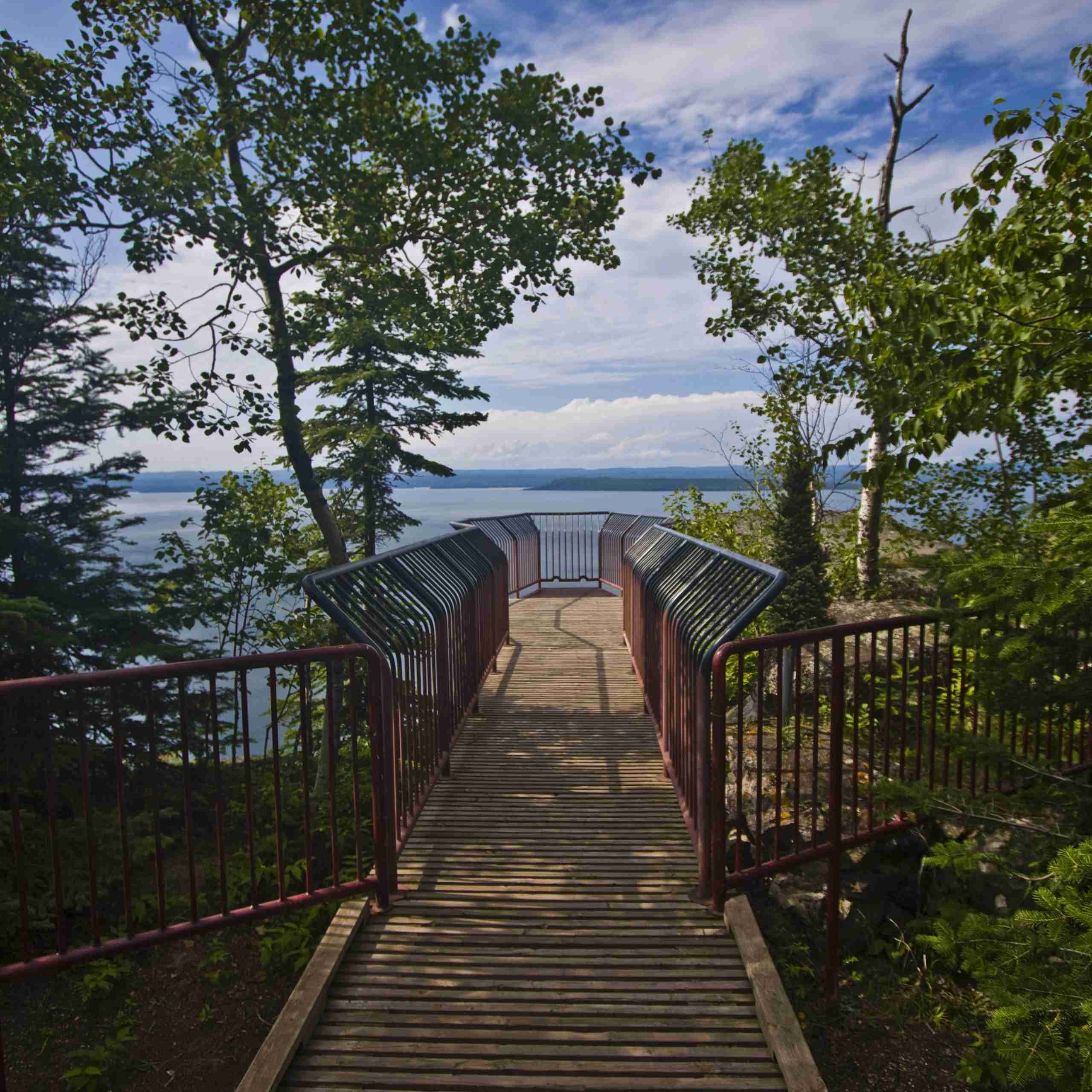
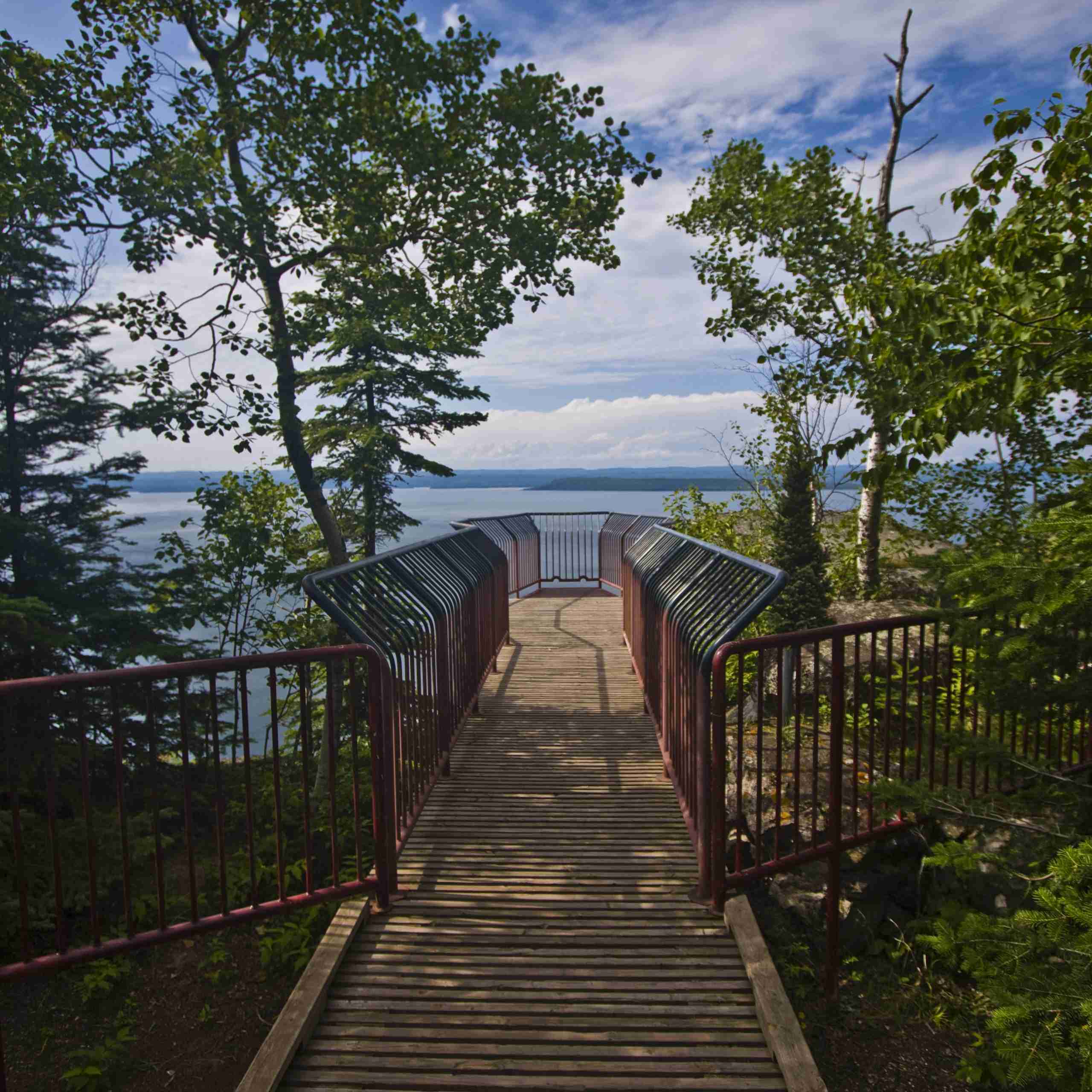
Thunder Bay Lookout is one of Ontario's most breathtaking and vertigo-inducing photo locations. Perched atop the dramatic cliffs of Sleeping Giant Provincial Park, the steel platform extends out over the sheer escarpment and offers an unrivaled panoramic view of Lake Superior's northern shore. From this high vantage point, the vastness of the lake stretches endlessly toward the horizon, blending sky and water in a minimalist gradient of deep blue and silver. Below, a vertical drop reveals the rugged geology of the Canadian Shield, often shrouded in mist or softened by morning haze.
For photographers, the site offers the perfect balance between geological grandeur and clean, uncluttered visual lines. The lookout not only delivers cinematic wide-angle compositions but also invites moodier, abstract work as clouds, fog, and water interact in constantly shifting layers. Whether you're working with long exposures, minimalist silhouettes, or golden-hour landscapes, Thunder Bay Lookout is a place where the elements do the heavy lifting—you just need to be ready.
Best Photography Opportunities
• Platform Vistas and Expansive Wide Angles
The steel viewing platform itself makes a strong compositional anchor, stretching boldly over the cliff with straight, industrial lines that contrast against the organic wilderness below. A wide-angle lens from the platform or just behind it frames the structure as a dramatic leading line into the expanse of Lake Superior. On clear days, the distant curvature of the Earth becomes subtly visible, especially when shooting low on the platform's surface to exaggerate foreground scale. Use a polarizer to manage lake glare or enhance sky contrast, and shoot just before sunset for side light raking across the platform and cliff face.
• Layered Atmosphere and Horizon Compression
On foggy or overcast days, the scene transforms into a soft gradient of tone and mood. A telephoto lens works beautifully here to compress the layers of mist, forest, water, and sky into painterly, abstract frames. Horizon shots can become powerful minimalist studies, with subtle tonal variation and no distinct edge between water and cloud. These conditions are perfect for black-and-white work or desaturated color grading to emphasize form and emotion.
• Vertical Drops and Sheer Cliff Drama
Looking directly down from the platform reveals an abrupt, dizzying descent to the forested slope below. Use this angle for dramatic, high-impact compositions that play with scale and vertigo. A centered top-down shot with the lake beyond can create powerful tension. This perspective is ideal for capturing the immensity of the drop, and for including small environmental details like lichen-covered rocks or wind-bent trees at the edge of the cliff.
• Golden Hour and Sky Reflection
At dawn and dusk, the lake surface often reflects the color of the sky with mirror-like clarity. These golden-hour conditions create a surreal wash of pastel light over the entire scene, especially when the water is calm. Shoot westward at sunset to capture warm tones across the lake or turn eastward during sunrise for subtle gradients above the forest canopy. Bring a graduated ND filter if you want to hold sky detail without losing foreground exposure.
• Seasonal Color and Cloud Drama
In autumn, the escarpment comes alive with bursts of red, gold, and orange as the boreal forest transitions for winter. These warm tones against the cool lake make for striking contrast-heavy images. Thunderstorms or fast-moving clouds frequently roll across the lake from the south, and long exposures during these conditions create streaked cloud forms and texture-rich skies. Time your visit when weather systems are shifting quickly for a chance to capture Lake Superior in one of its more dramatic moods.
Best Time to Visit
The best time to photograph Thunder Bay Lookout is during the golden hours of early morning or late evening, when low sun enhances the depth and texture of both cliff and lake. Sunset tends to offer slightly more consistent light, especially with the lookout facing west across the open water. That said, sunrise visits often provide low-lying fog and peaceful silence—ideal for minimalism and long-exposure work.
Late spring through early fall provides the most reliable access, as the road to the lookout is seasonal and may be gated during shoulder months or after heavy snowfall. Summer offers the clearest skies and calmer lake surfaces, while autumn delivers color contrast and atmospheric haze. Winter photography is possible but considerably more difficult due to road closures and extreme conditions.
Overcast and misty days also work beautifully here, softening shadows and reducing glare off the lake. If your goal is moody, cinematic imagery, aim for days when weather is transitioning—cloud breaks, incoming storms, or fog lifting off the trees can create exceptional light and texture.
How to Get There
Thunder Bay Lookout is located inside Sleeping Giant Provincial Park, approximately 90 minutes east of the city of Thunder Bay. From Highway 17, turn south onto Highway 587 and follow signs toward the park. Once inside, look for directional signage to the Thunder Bay Lookout Road—a gravel road that branches west from the main park route.
When the gate is open (typically during the main season from late spring through fall), visitors can drive directly to a small parking area near the lookout. The gravel road can be rough, so a high-clearance vehicle is recommended, especially after rain. If the gate is closed, access requires a 10 km (one way) hike or bike ride from the nearest trailhead—a challenging but rewarding trek if you're up for it.
As always, check road conditions and park alerts before visiting. Cell service may be limited in the area, so download maps in advance and plan accordingly.
Recommended Gear and Shooting Tips
A wide-angle lens (16–35mm) is essential here for dramatic lake views, platform shots, and cliff-edge compositions. For more compressed views across the lake or into layers of atmospheric haze, a 70–200mm telephoto works beautifully. A mid-range zoom (24–70mm) covers most of the scene's variations if you're packing light.
Bring a sturdy tripod—winds off the lake can be strong, especially on the platform, and longer exposures benefit from extra stability. A polarizer helps with reflections and contrast in the sky, while a 6-stop ND filter enables soft water effects or slow-moving cloud trails even in brighter conditions. Don't forget a lens cloth—moisture and mist can gather quickly on your glass, particularly in cooler temperatures or early mornings.
Use the platform railings for compositional structure, but be cautious of strong leading lines pulling the viewer's eye out of frame. Experiment with placing the horizon high or low to shift visual weight, and take advantage of the cliff edge to create a sense of scale and tension. Layering the distant headlands or islands into the frame can give your wide shots added depth.
Nearby Photography Locations
A full-day hike, this popular trail offers expansive views over Lake Superior from the top of Sleeping Giant itself. Incredible for wide vistas, geological texture, and high-elevation panoramas with dramatic cliff edges and sky.
Located along the shoreline trail system, this natural arch resembles a sea lion's profile and sits surrounded by blue lake waters. Best photographed at sunrise or in soft side light for form and texture.
This historic mining village at the park's edge features weathered boathouses, rocky piers, and moody lakeshore compositions. Excellent for black-and-white and documentary-style rural scenes.
A more tranquil spot within the park, the lake offers calm reflections, forest-framed compositions, and opportunities for early morning fog scenes. Ideal for canoe-based or shoreline long exposures.
Located north of Thunder Bay, this dramatic geological gorge features sheer rock walls and rare arctic-alpine vegetation. A fantastic contrast to the open lake views, offering depth-heavy landscapes and overhead views.
Thunder Bay Lookout is one of those rare places where scale, atmosphere, and geological drama intersect. It demands a slow, observant approach and rewards patient photographers with views that feel impossibly vast and grounded at once. Whether you're there for the long views or the fleeting weather, it's a location that captures both the grandeur and intimacy of northern Ontario's wild beauty.
Comments
Loading comments…