
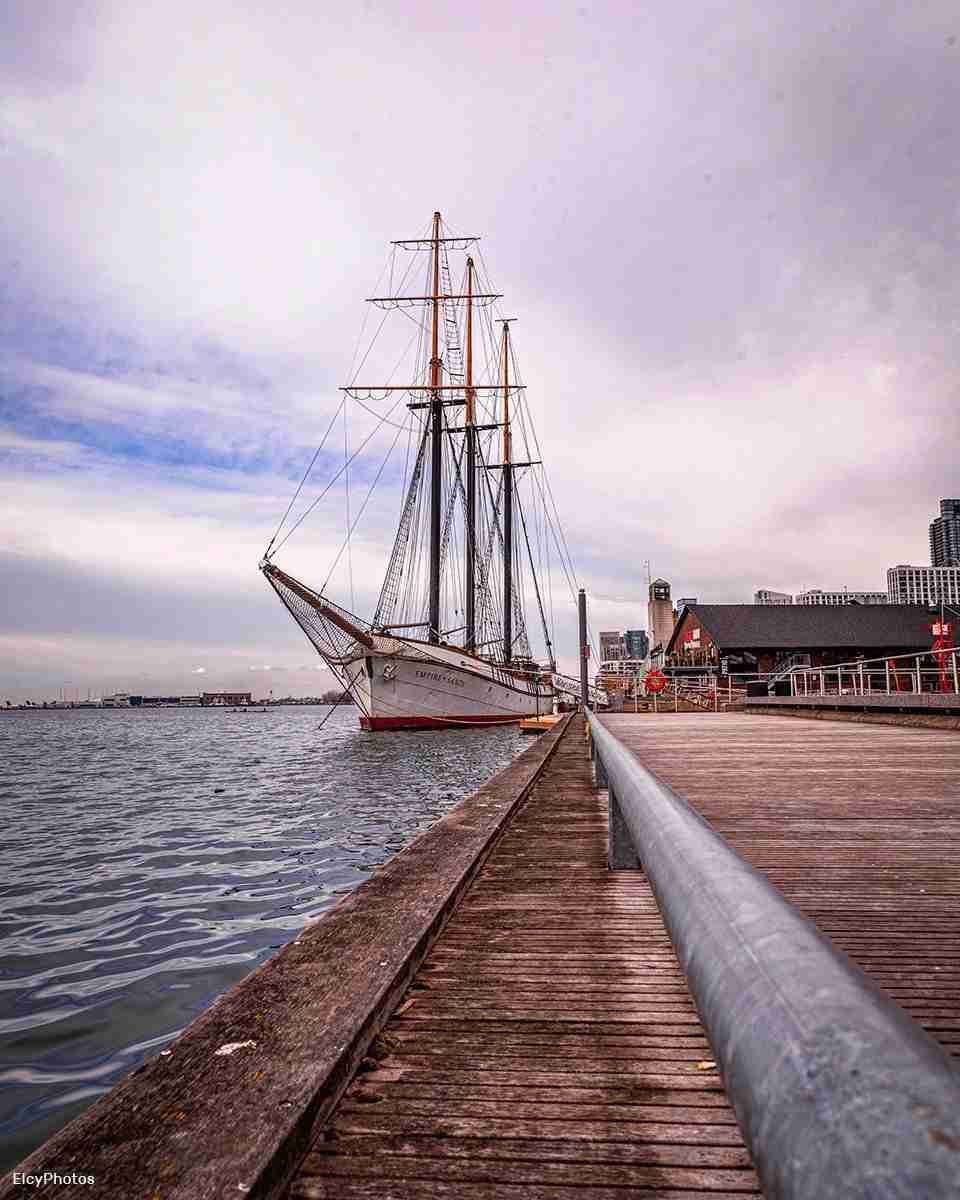
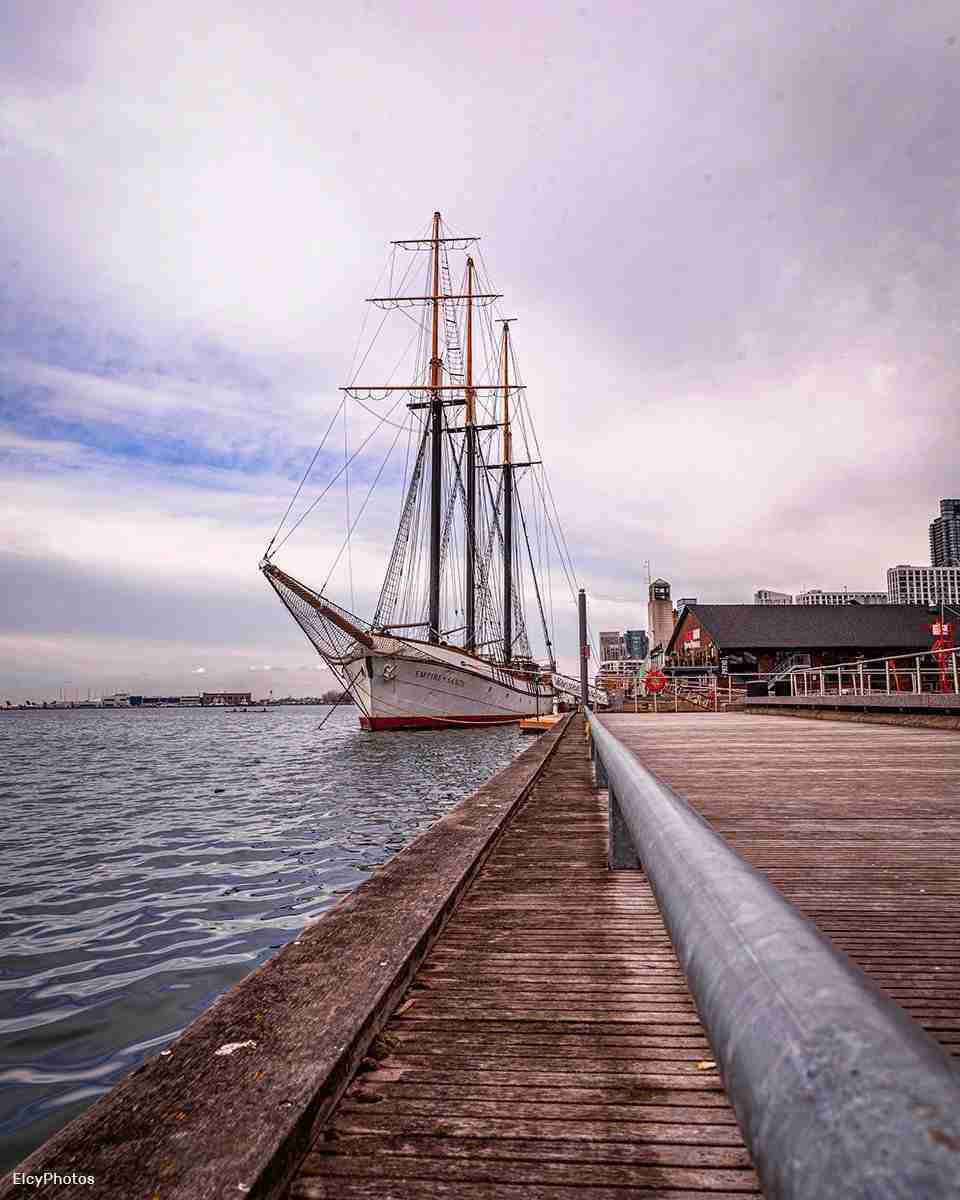
Stretching along the northern edge of Lake Ontario, the Toronto Harbourfront is one of the city's most visually dynamic and accessible shoreline locations. Framed by a mix of marinas, open water, modern architecture, and public boardwalks, this waterfront corridor offers photographers a range of subjects—from elegant sailboats and geometric piers to skyline reflections and golden hour silhouettes. Whether you're capturing the calm of sunrise over the lake or the busy rhythm of ferry boats and tall ships, the Harbourfront delivers a constantly shifting mix of light, texture, and movement right in the heart of downtown Toronto.
Best Photography Opportunities
• Boardwalk and Marina Reflections
: The long wooden boardwalks that trace the shoreline offer excellent leading lines for wide-angle compositions. In the early morning or late evening, the lake surface often reflects the masts and hulls of docked sailboats, especially in the quieter coves between Queens Quay and the Toronto Music Garden. Use a low vantage point and a wide lens to emphasize the symmetry and texture of the boardwalk planks leading into the water. Overcast mornings create soft, even reflections, while golden hour adds warmth and contrast to the scene.
• Toronto Skyline from the Water's Edge
: From several points along the Harbourfront—especially near HTO Park or the ferry terminals—you can frame the downtown skyline rising over the lake. The CN Tower anchors compositions, and the skyline's reflection on the water adds depth and symmetry. A mid-range zoom allows for both panoramic and tightly framed skyline shots, while sunrise and sunset produce dramatically different moods. Sunrise offers clean, crisp light from the east, while sunset casts the buildings in golden glow from behind your shooting position.
• Tall Ships and Historic Vessels
: Occasionally, the Toronto Harbour hosts visits from tall ships and historic sailing vessels, which make for excellent focal points amid the modern urban setting. These ships, with their intricate rigging and classic lines, offer rich detail for both telephoto and wide-angle compositions. If you're lucky enough to catch them docked or in motion, look for low-angle shots that silhouette masts against the sky or reflections in the lake's surface. Late afternoon light works particularly well to highlight textures in sails and rigging.
• Sunrise over the Inner Harbour
: The eastern stretch of the Harbourfront offers unobstructed views of the rising sun over Lake Ontario. Mornings here are quiet and often misty, with subtle light casting long shadows across the boardwalk and marina piers. This is the best time for calm water and clean compositions without boat traffic or harsh light. Use a tripod for long exposures that soften the water surface, and consider neutral density filters to extend shutter times once the sun is above the horizon.
• People and Street Scenes at Waterfront Events
: The Harbourfront is also a lively people-watching location, especially during summer festivals or weekends. Musicians, market stalls, and local life play out against a scenic lakeside backdrop. These candid, street-style shots are best captured with a fast prime lens and a discrete approach. The changing waterfront atmosphere—from quiet sunrises to busy afternoons—offers endless opportunities for human-focused storytelling set within a natural and architectural context.
Best Time to Visit
Sunrise is the most peaceful and light-rich time for landscape photographers working along the Harbourfront. The sun rises over the lake and casts long, soft light across the marinas and skyline, with fewer crowds and calmer conditions for reflection photography. Blue hour before sunrise is excellent for long exposures, especially when boats are docked and the lake surface is still.
Summer and early autumn bring the most activity to the Harbourfront. While midday light can be harsh, these seasons offer the best chance of capturing tall ships, sailing regattas, and community events. Sunset sessions are equally photogenic, particularly when clouds build texture into the western sky, and the buildings take on a golden hue against the lake.
Winter presents a different character. Ice and snow can frame the shoreline with high-contrast textures, and cold temperatures keep the crowds away. Morning sun reflecting off frozen sections of the lake creates minimalistic and subdued compositions, often in a monochromatic palette that highlights form and geometry. Be prepared for wind and weather exposure in colder months, and check conditions before venturing out on footpaths near the water.
How to Get There
The Toronto Harbourfront runs along Queens Quay West, stretching from the Jack Layton Ferry Terminal in the east to Bathurst Street in the west. It is easily accessible by foot, bicycle, streetcar, or car. Several TTC routes run along Queens Quay, including the 509 and 510 streetcars, which stop directly at key access points such as Harbourfront Centre, HTO Park, and the Music Garden.
Public parking is available in nearby underground lots and side streets, though it fills quickly on weekends and event days. The Harbourfront is fully walkable, with continuous boardwalks, trails, and parks along the water's edge. Most shooting locations, including the marinas, ferry docks, and open viewing platforms, are open year-round and do not require special access.
For photographers with gear, the area is flat and well-maintained, making it easy to transport tripods, sliders, or drone cases. Be aware of posted drone restrictions, especially near Billy Bishop Airport, as much of the waterfront falls within controlled airspace.
Recommended Gear and Shooting Tips
For broad landscapes and waterfront scenes, a wide-angle lens is essential—especially for capturing the long boardwalks, expansive skies, and full skyline views. A 24–70mm zoom is perfect for switching between city and marina details, while a telephoto lens allows for distant compression of tall ships, skyline elements, or abstract water patterns.
Tripods are recommended for sunrise, blue hour, and long exposure work along the water. Neutral density filters are useful when photographing water during daylight or sunset, helping to smooth wave motion or emphasize cloud streaks. A circular polarizer is also helpful for cutting reflections off the lake surface and deepening sky tones.
Wind can be a factor along the water, especially in the colder months, so bring weighted support for your tripod and dress for exposure. Sunrise setups often require low-light gear and flashlights for orientation, especially near less-lit segments of the boardwalk. Keep camera gear protected from spray or mist when working close to the lake edge.
The waterfront has constant foot traffic, so early visits offer more control over compositions. Be patient with moving boats or changing light—conditions can shift quickly as the city wakes up, and you may only get a few minutes of optimal reflection or silhouette light.
Nearby Photography Locations
: Just across the inner harbour, the islands offer a panoramic view back toward the skyline, especially from Ward's Island or Centre Island beaches. Ferries run year-round, and golden hour or sunset from the island side is among the best skyline compositions in the city.
• Polson Pier (Cherry Street)
: Located on the east side of the harbour, this elevated viewpoint provides a dramatic skyline view at sunset with boats often cutting across the foreground. It's especially good for long-lens compression shots and cityscape panoramas.
• HTO Park and Urban Beach
: A modern park space with yellow umbrellas, urban sand, and views across the marina. Great for environmental portraits or color-forward compositions, especially during mid-summer light.
• The Bentway and Fort York
: A short walk north, this unique underpass park and surrounding historical area adds modern design to heritage architecture, ideal for architectural and abstract photography.
• Tommy Thompson Park (Leslie Spit)
: For more nature-forward work, this man-made peninsula offers migratory birds, wildflowers, and distant views of the city skyline. It's excellent for long-lens nature photography and sunset silhouettes.
From polished waterfront architecture to fleeting sunrise color and the creak of wooden docks, the Toronto Harbourfront offers photographers a rich, evolving canvas. With subjects that range from bold skyline studies to soft reflections and maritime moments, it remains one of the most versatile and rewarding photographic locations in the city.
Comments
Loading comments…