No photography journey through Toronto is complete without a sweeping view of its unmistakable skyline, and while there are many popular spots to frame the city's towers, few can rival the clarity, symmetry, and drama offered from Olympic Island. Situated within the Toronto Islands archipelago, just a short ferry ride from downtown, Olympic Island provides a solid-ground shooting location with unobstructed views of the city's entire skyline—from the CN Tower's vertical dominance to the layered glass forms of the Financial District. Whether you're capturing golden hour warmth, twilight reflections, or long exposures of the city lighting up under a summer sky, this site consistently delivers iconic results. For night cityscape photographers and skyline purists alike, it is Toronto's definitive vantage point.
Best Photography Opportunities
• Sunset and Blue Hour Skyline Composition
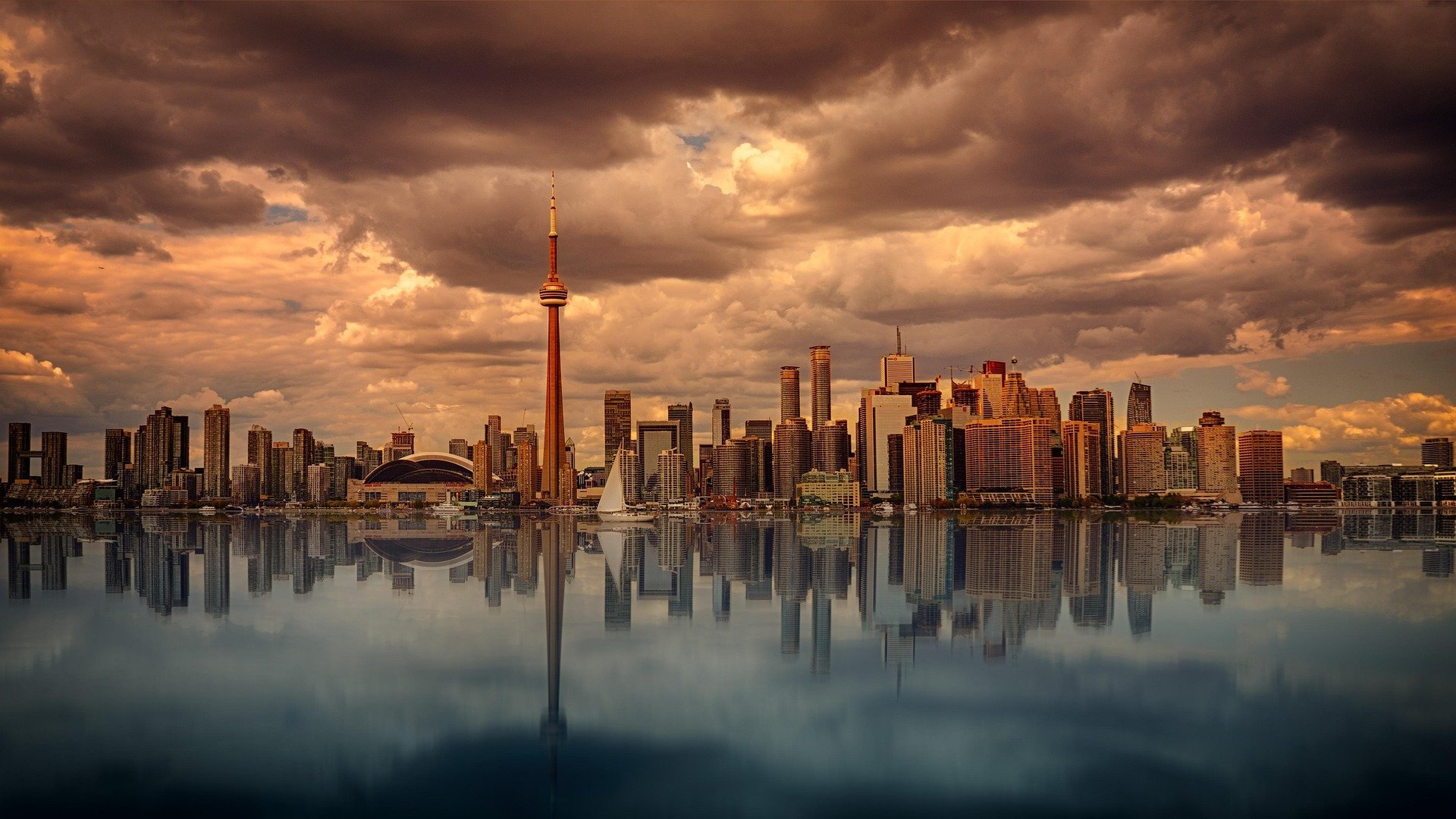
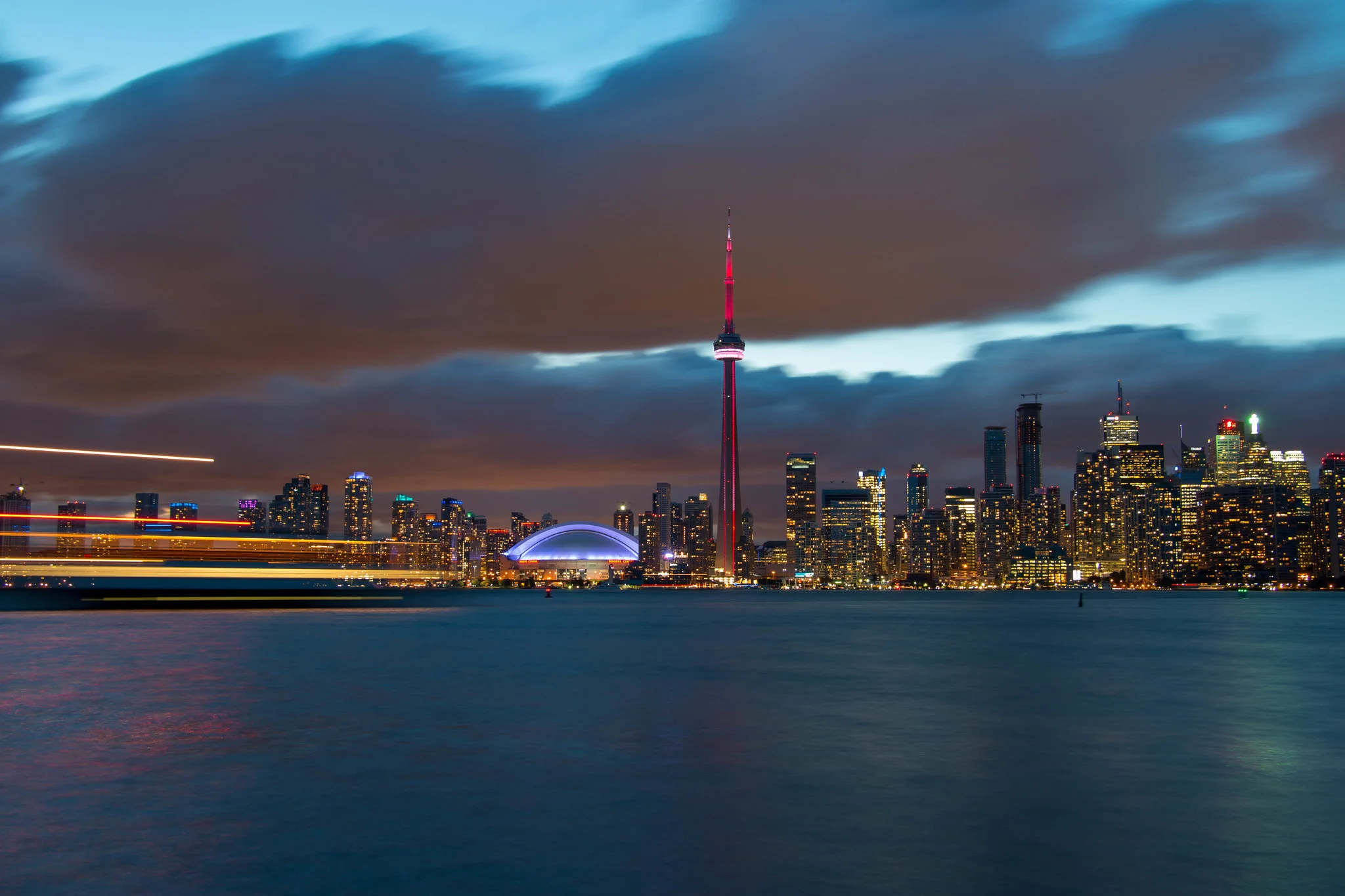
: The most iconic frame from Olympic Island looks directly north across the water to Toronto's skyline, with the CN Tower perfectly positioned near center. From the eastern edge of the island near the open green lawn, use a wide-angle or standard zoom (24–70mm) to include the full arc of the city with maximum reflection in the water. Sunset colors often linger behind the towers, and blue hour introduces a deepening contrast between sky and lighted architecture. A tripod and long exposure smooth the lake surface, enhancing reflections and softening any passing boats.
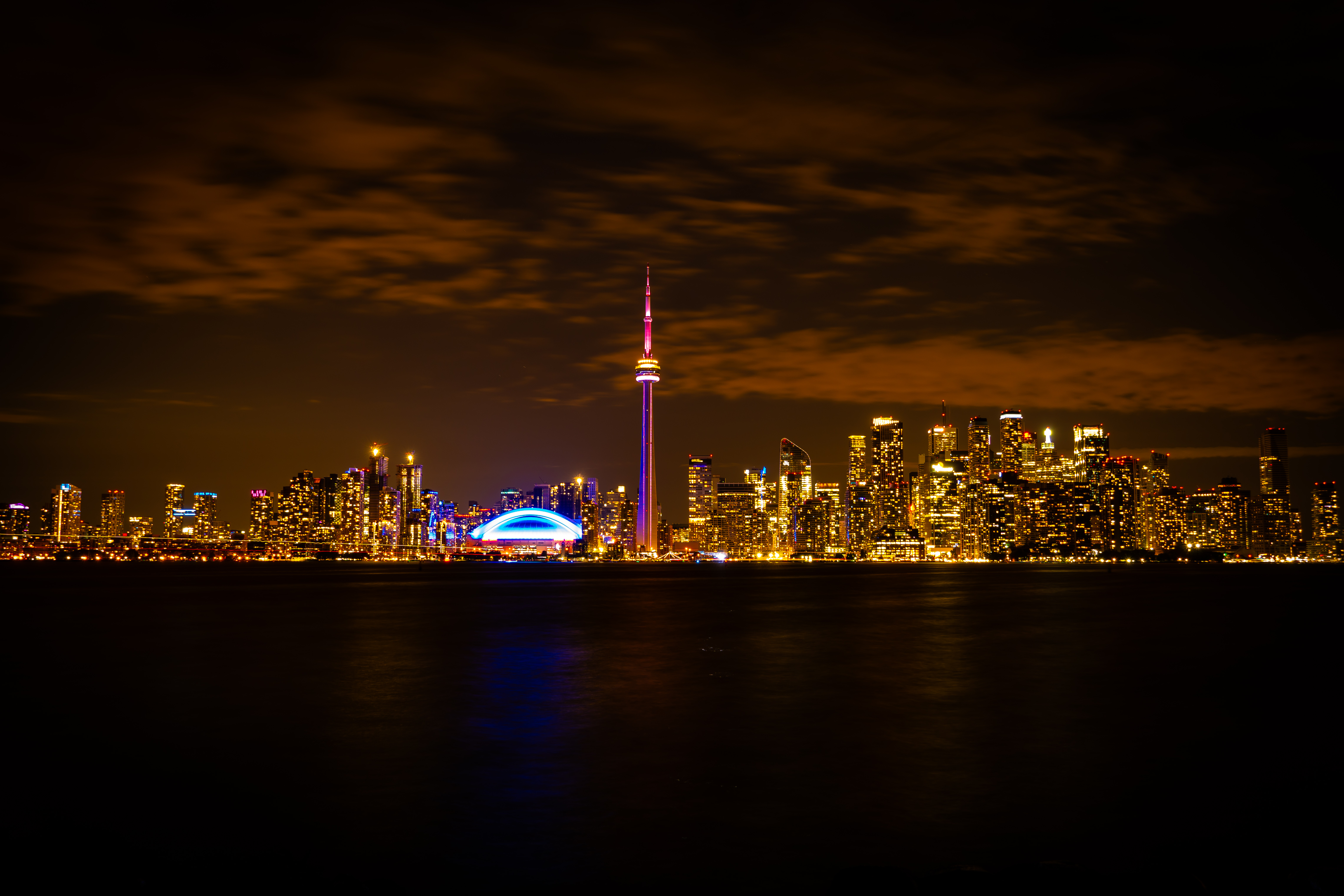
: When the city lights flicker to life, Olympic Island transforms into a stage for dramatic night photography. Long exposures (10–30 seconds) allow you to capture the full sparkle of Toronto's lit towers, with car light trails occasionally visible from ferry routes and low-lying lake traffic. Frame the scene to include the full skyline width and wait for the city's signature magenta, white, and amber lights to cycle across the CN Tower's LED spire. The calm water acts as a mirror on still nights, creating some of the best reflection shots available in the city.
• Midday Skyline with Dynamic Clouds
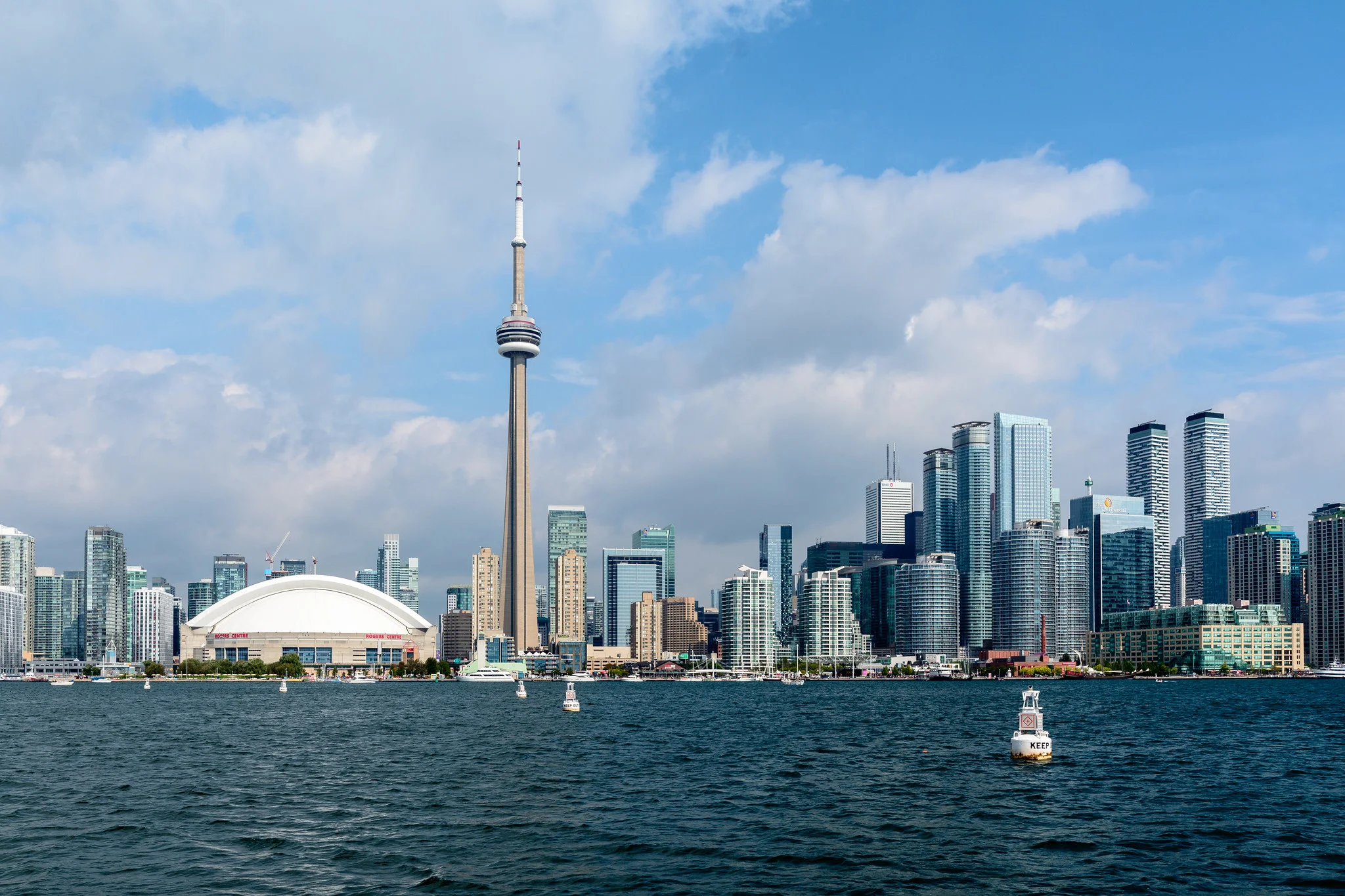
: Though night is the most popular time to shoot here, dramatic midday skies can also produce excellent results. Use a polarizer to deepen the lake and sky contrast, and compose low with water or reeds in the foreground for texture. In spring and fall, cumulus clouds often drift in over Lake Ontario, adding shape and movement to an otherwise static midday scene. A telephoto lens (70–200mm) allows you to isolate specific towers or compress the cityscape for a more graphic composition.
• CN Tower Dominance and Vertical Studies
: From Olympic Island's central viewing area, the CN Tower sits slightly off-center and rises higher than any surrounding structure. This positioning is ideal for vertical compositions that emphasize its height and presence. Use a standard lens (50mm) to frame it cleanly, or a short telephoto to isolate the tower and its LED lighting during color changes or special events. On clear nights, star trails can even be incorporated into longer exposures if ambient light allows.
• Reflections and Foreground Elements at the Shoreline
: At the edge of the island, you'll find opportunities to incorporate rocks, shoreline grass, or even the occasional driftwood into your composition. These foreground elements ground your frame and add depth, especially during early morning or late evening when light rakes across the water. A wide-angle lens is key here—get low to the ground, stop down to f/11 or smaller, and let the city rise behind your foreground anchors.
Olympic Island shines brightest during late spring through early autumn, when ferry service is frequent, skies are often clear, and the waterfront is free from ice and snow. Sunset through blue hour is the prime window for skyline photography—light fades gradually, providing enough time to capture multiple compositions under changing conditions. In July and August, summer haze may reduce contrast, but the sunsets often yield deep magentas and oranges that reflect dramatically across the water.
Autumn brings crisp air and clear skies, perfect for high-contrast night scenes and sharp reflection detail. Winter is less ideal due to ice and wind exposure, though early winter evenings do offer excellent twilight with the city lights on against a darker sky at an earlier hour.
📷 Photo Tip
Photographers aiming to capture fireworks (such as during Canada Day or New Year's Eve) will find Olympic Island a strong vantage point, though crowds increase and ferry schedules may limit access after dusk. Check the City of Toronto's event calendar in advance.
How to Get There
Olympic Island is part of the Toronto Islands chain, accessible via ferry from the Jack Layton Ferry Terminal at the foot of Bay Street. While Centre Island is the main destination for most visitors, Olympic Island is directly connected by footbridge and is less crowded—ideal for tripod setups and uninterrupted skyline views.
📷 Photo Tip
Take the Centre Island ferry and follow signs west across the bridge to Olympic Island (roughly a 5–7 minute walk). The western edge of Olympic Island opens onto the most photogenic viewing area, with wide grassy clearings and a full city view across the harbor.
Return ferry service operates seasonally and on a timed schedule; in summer, evening ferries run later, allowing for full night shooting sessions. In winter and off-peak times, check schedules carefully, as evening return trips may be limited. There is no motor vehicle access—bring only what you can comfortably carry, and pack out all equipment and trash.
To make the most of this location, bring a stable tripod for long exposures and low-light work. A wide-angle lens (16–35mm) allows for full skyline captures with foreground inclusion, while a mid-range zoom (24–70mm) handles most balanced compositions. A telephoto lens (70–200mm) is useful for isolating parts of the skyline or compressing tower lines during mist or sunset flare.
📷 Photo Tip
A remote shutter or 2-second timer helps eliminate camera shake during exposures of 10 seconds or longer. ND filters can be useful if shooting during the day—particularly 3- or 6-stop versions for softening water or capturing cloud motion. A polarizer helps manage lake reflections and enhances the sky's saturation during the day but can create uneven results in ultrawide compositions.
Bring extra batteries—long exposure work drains them quickly—and a headlamp if shooting past dusk. Wind off the lake can be brisk even in summer, so secure your tripod and shield your lens from vibrations when possible. Scout locations early and test compositions as the light fades—each minute during blue hour offers a different visual voice.
: Just east of Olympic Island, this long wooden pier faces out into Lake Ontario, offering minimalist lake-and-sky compositions with Toronto's skyline visible to the west. It's a quieter alternative for sunrise.
• Toronto Islands Ferry Docks (on return trip)
: As the ferry heads back to the mainland, it passes directly in front of the skyline, offering a mobile shooting platform for short exposures or handheld frames with wake lines leading into the city.
• Polson Pier (a.k.a. Cherry Street Lookout)
: On the mainland's eastern edge, this is another classic skyline view, especially for sunrise and long exposure work with industrial foregrounds and smoother angles.
: West of downtown, this park offers more subtle skyline views with curving shoreline elements and natural framing—excellent for layering Toronto's high-rises with native flora.
• Harbourfront Canoe & Kayak Launch
: For a low-angle water-level shot of the skyline, the east side of the Queens Quay canoe launch allows for moody twilight compositions with reflections, city glow, and minimal foot traffic.
Olympic Island is where Toronto's skyline feels both close and cinematic—glimmering over water, unbroken by buildings, and framed by the quiet of the island. Whether you're setting up for a perfect long exposure or catching a last golden flare over glass and steel, this is the place where skyline photography becomes something more than documentation. It becomes story, scale, and atmosphere—captured in one clean, perfect line.


Comments
Loading comments…