
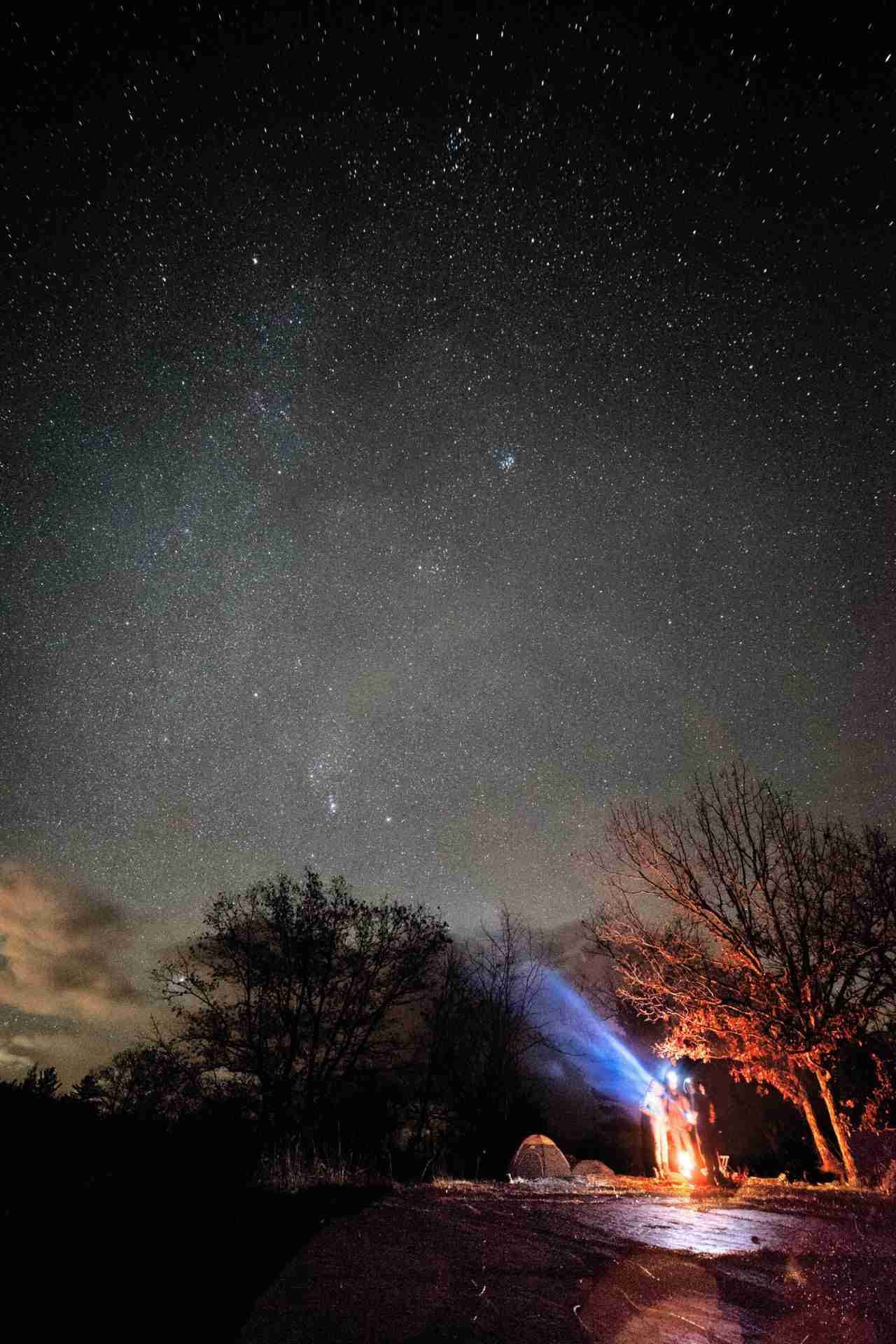
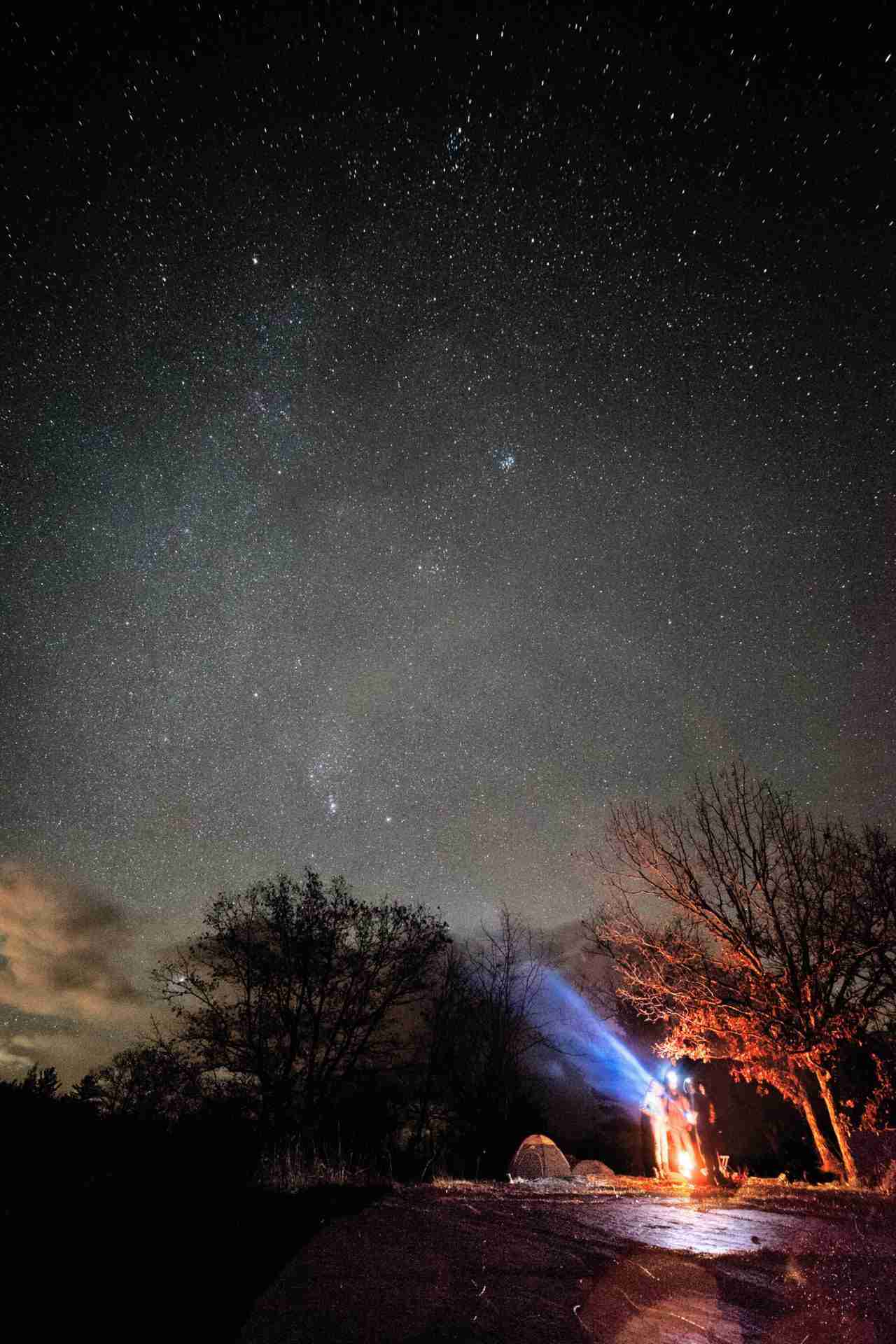
Located just west of Gravenhurst along Southwood Road, the Torrance Barrens Dark-Sky Preserve is one of Ontario's most accessible and visually distinct destinations for astrophotographers. Officially designated as the first permanent dark-sky preserve in Canada, this expansive conservation area offers a rare combination: skies virtually untouched by light pollution and a foreground shaped by billions of years of geological history. The exposed Canadian Shield—bare rock, scattered lichen, and wind-worn pine—creates a surreal, almost lunar surface that perfectly frames the spectacle above. From sprawling Milky Way arcs to the kinetic light trails of meteor showers, the Torrance Barrens delivers a night photography experience that is immersive, elemental, and deeply rewarding.
Best Photography Opportunities
• Milky Way Arcs and Panoramic Skies
: During new moon phases and between April and October, the Milky Way becomes the centerpiece of night photography at the Barrens. Use a wide-angle lens (14–24mm) with a fast aperture (f/2.8 or lower) to capture the galactic core as it rises in the southeast and moves across the sky. The flat terrain allows for uninterrupted 180-degree panoramas with minimal horizon interference. Stitching multiple frames in post-production can yield dramatic nightscapes with immense spatial scale.
• Meteor Showers Over Shield Rock
: During peak meteor events like the Perseids in August or the Geminids in December, the preserve transforms into a natural amphitheatre for celestial motion. Compose using a 24mm or 35mm lens to balance foreground detail with expansive sky coverage. Position the camera slightly tilted upward and include features such as rock fissures, scraggly pines, or lichen-covered boulders to anchor the frame. Use interval shooting over several hours to capture trails and possible fireballs.
• Star Trails and Still Foregrounds
: The preserve's low vegetation and unobstructed views make it ideal for extended star trail compositions. Face north to center Polaris or west for longer diagonal sweeps. Use a tripod and an intervalometer or bulb mode for exposures of 15 minutes to 2 hours. Smooth granite surfaces and shallow rock pools can be incorporated for reflection or contrast. Overcast conditions on previous days often leave puddles that reflect stars in darker tones.
• Low-Light Landscapes and Ambient Glow
: While the sky is the main subject, the Barrens' foreground has its own visual strength. In the blue hour or under moonlight, the textures of the rock surface—cracks, mineral veins, and lichen blooms—emerge softly. Light paint gently with a diffused flashlight or headlamp to define depth without overpowering the natural ambiance. Use a low ISO and long exposure to retain tonal detail in both sky and land.
• Time-Lapse and Motion Work
: The vastness of the site lends itself well to time-lapse sequences. With the Milky Way tracking slowly across the sky or meteor showers lighting up different quadrants, capturing temporal movement over several hours adds cinematic storytelling to your session. Anchor your shot with a central pine tree, cairn, or distant ridge. Be mindful of condensation and pack lens warmers or silica packets during humid nights.
Best Time to Visit
The optimal time to photograph at the Torrance Barrens is during new moon periods from late spring to early fall. Between May and October, temperatures are comfortable, skies are often clear, and the Milky Way is highly visible after midnight. July and August bring the galactic core highest into the sky, while also coinciding with warmer nights and major meteor showers.
Visit on a clear, moonless night and arrive at least an hour before astronomical twilight ends to scout compositions and set up gear in daylight. Even in winter, the Barrens can be accessed for crisp star photography and dramatic snowy foregrounds, though trails may be less navigable.
Avoid nights with high humidity or after heavy rain, which can result in fog or lens condensation. Use an astronomy forecast app to verify cloud cover, seeing conditions, and moon phase.
How to Get There
The Torrance Barrens Dark-Sky Preserve is located along Southwood Road (Muskoka Road 13), approximately 25 minutes west of Gravenhurst, Ontario. From Highway 11, exit at District Road 169 westbound toward Torrance, then turn south onto Southwood Road. A gravel parking lot and signage mark the preserve's main access point, which leads to multiple trail loops and open rock clearings.
The site is open year-round and has no entry fee. There are no artificial lights, on-site services, or structures—bring everything you need, including water, insect repellent, and headlamps with red-light mode. Cell reception is limited, so download maps offline and inform someone of your location in advance.
Photography is permitted throughout the preserve. Drones are allowed only during daylight hours and must follow Transport Canada regulations. Generators, large artificial lights, and laser pointers are strictly prohibited to preserve the integrity of the night sky.
Recommended Gear and Shooting Tips
Bring a full-frame camera with excellent low-light performance, paired with a fast wide-angle lens—14mm, 20mm, or 24mm at f/1.8 to f/2.8—for maximum star definition and sky coverage. A sturdy tripod, remote shutter release, and extra batteries are essential; cold nights can drain power quickly.
A headlamp with a red LED mode is vital for preserving your night vision and avoiding disruption to other stargazers. Use manual focus, set to infinity, and double-check sharpness by zooming into a bright star. Shoot in RAW to maximize detail recovery during editing.
Start with exposure settings of 20 seconds, ISO 3200, and f/2.8, then adjust depending on sky brightness and ambient conditions. Use the 500 Rule (500 divided by focal length) to avoid star trailing during static exposures.
Avoid light painting during shared sessions unless coordinated—minimize ambient light to respect other photographers. Consider building compositions during the day and returning to pre-scouted locations at night. Stay alert for wildlife and tread carefully on rock surfaces, which can become slick with dew or ice.
Nearby Photography Locations
: Located 15 minutes north of Torrance, this park features boardwalks, small lakes, and shoreline forests—ideal for sunrise and golden hour landscape photography. Visit in autumn for vivid color reflections.
• Lake Muskoka Shorelines
: Public docks and road-accessible bays offer excellent sunset views and water reflections under moonlight. Calm nights yield long-exposure opportunities with reflections of constellations in the lake.
• Skeleton Lake Lookout
: A more secluded viewpoint with elevated horizons and broader views of the night sky. The surrounding highlands are excellent for Milky Way shots with silhouetted pine ridges.
: This Muskoka trail system leads to exposed granite ridges ideal for both daytime hiking and nighttime photography. The higher elevation provides a cleaner sky dome and a strong foreground of wind-worn rock.
: Just west of Bala, this cascade offers long-exposure potential by day and smooth, dark rock textures that pair well with moonlight landscape photography after dark.
The Torrance Barrens is a place where light becomes rare and precious—each star, each curve of the Milky Way, each glowing meteor a reminder of the vastness above. For photographers willing to wait in the silence and embrace the dark, it offers not just images, but perspective—a moment when sky, stone, and time align.
Comments
Loading comments…