
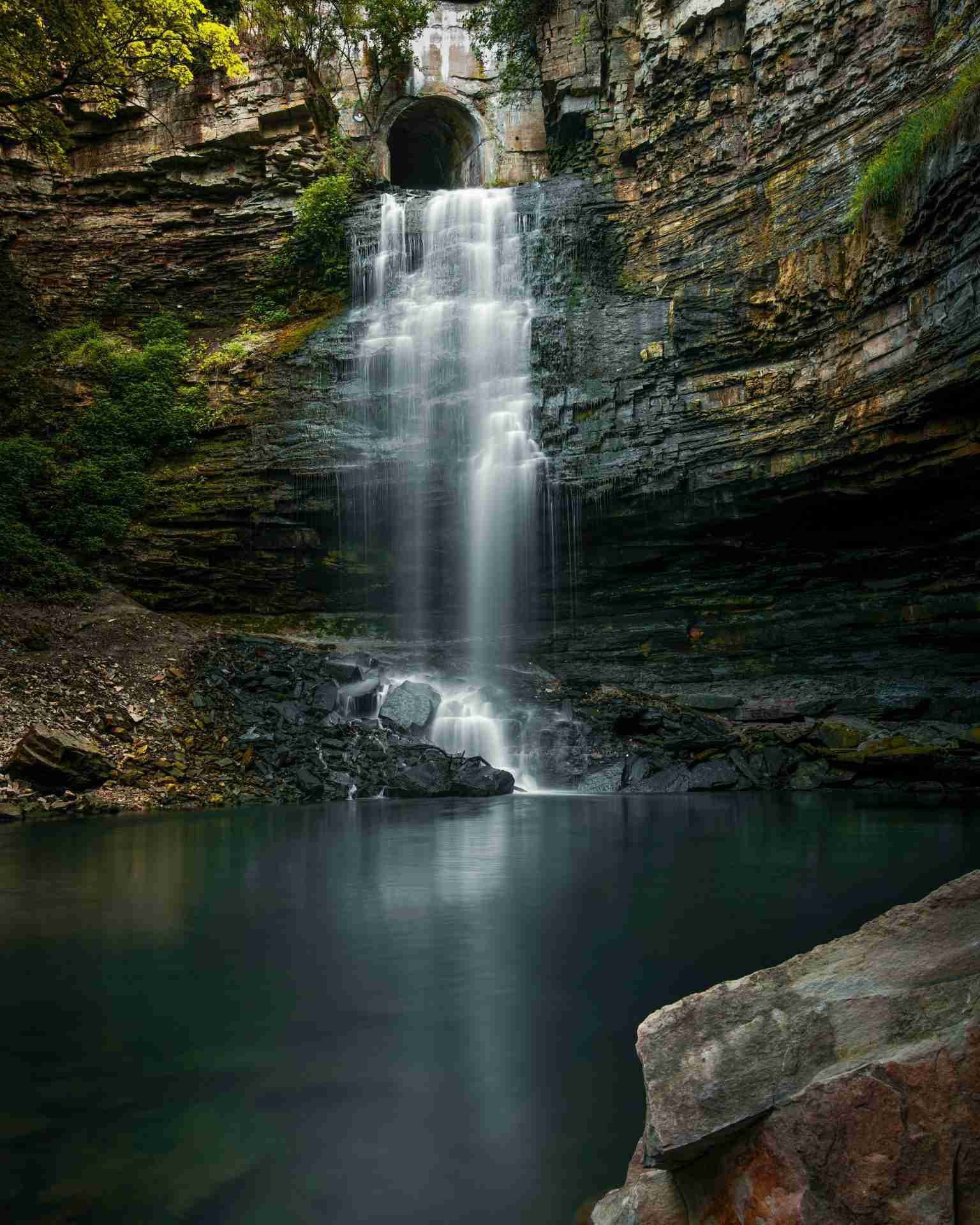
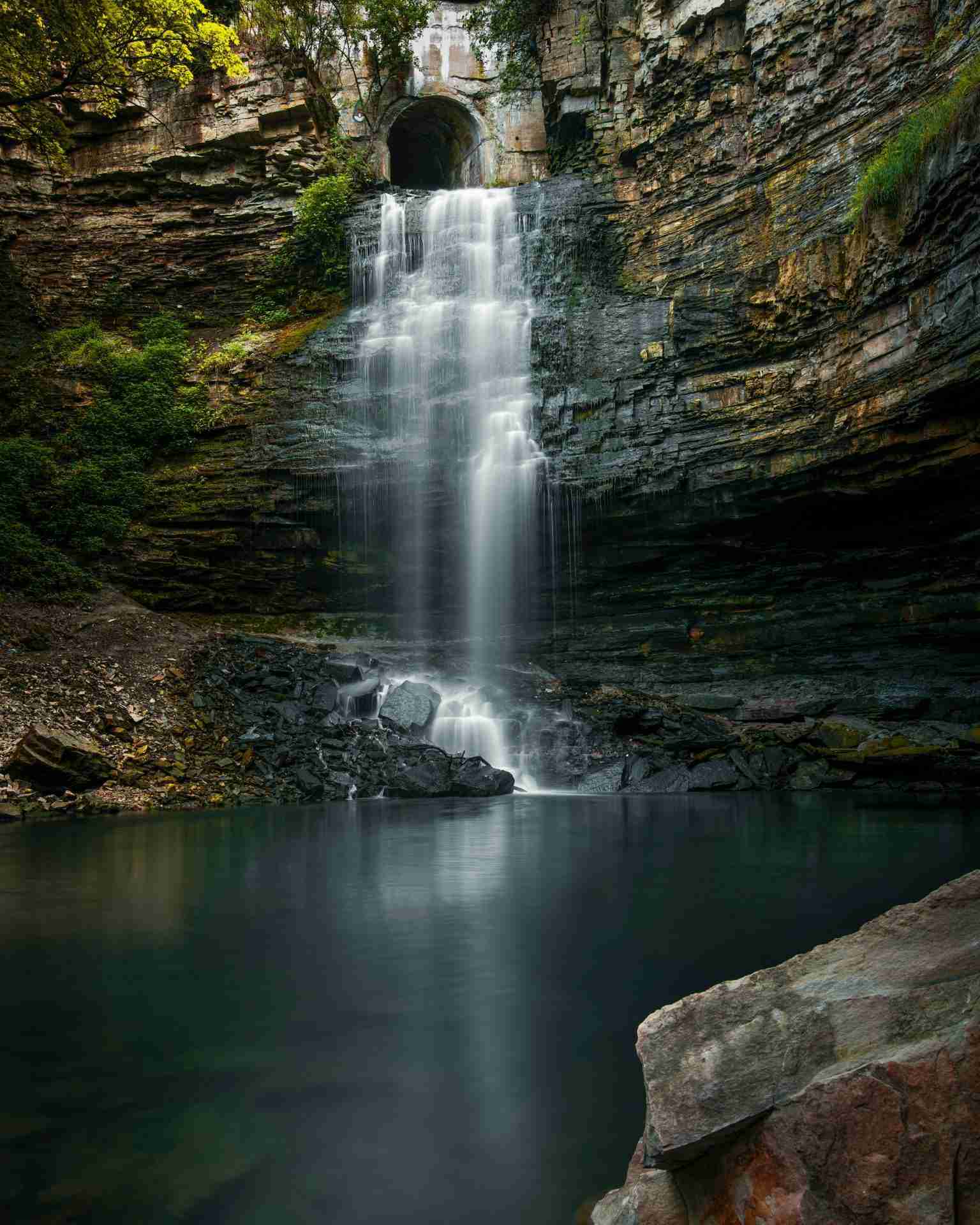
Tucked into a shaded ravine at the western edge of Hamilton's urban boundary, Upper Chedoke Falls is a quiet and photogenic reward for those willing to seek it out. Cascading 18 meters down a rugged cliff face, the waterfall drops cleanly into a pool surrounded by native forest, broken rock, and the ambient quiet of the Niagara Escarpment's deeper pockets. Unlike its better-known waterfall siblings in the Hamilton area, Upper Chedoke remains less trafficked, allowing for more contemplative shooting sessions without interruption. Its vertical drop, forested surroundings, and seasonal light shifts make it an excellent subject for long exposure work, natural abstracts, and layered compositions that blend geology with atmosphere.
Best Photography Opportunities
• Frontal Long Exposure of the Cascade and Pool
The main draw is the clean vertical plunge of the waterfall, which drops over exposed layers of escarpment stone into a narrow pool below. From a mid-distance point near the base, a tripod-mounted wide-angle lens allows for full-frame compositions of the falls, pool, and surrounding rock ledges. Use a neutral density filter to extend exposure times and soften the motion of the water into a continuous veil. Position your shot to include boulders or plant life in the foreground for added depth, especially when moss or ferns are in bloom during spring and early summer.
• Side Views Framed by Tree Trunks and Ravine Walls
The trail near the top and sides of the falls provides alternate views through the trees, creating a more layered, intimate frame. Use a standard zoom or mid-telephoto lens to compress the scene slightly, balancing waterfall motion with forest textures. These angles are particularly effective when early morning or late-day light cuts through the canopy and creates highlights across the falls and adjacent rock faces. A polarizing filter can help manage reflections and reveal details in the wet stone.
• Trail and Ravine Compositions
The hike to Upper Chedoke passes through a steep, wooded corridor where tree roots, escarpment ridges, and filtered light combine for quiet, moody compositions. These transitional shots can help contextualize the approach to the falls. Use leading lines from the trail or shadows cast by canopy gaps to guide the viewer's eye into the frame. A wide-angle lens and vertical framing work well for capturing both trail and treetops in a single composition.
• Macro and Detail Work on Forest and Rock Textures
In addition to the falls, the surrounding area offers compelling details for macro and close-range photography. Water-worn limestone, moss-covered ledges, leaf litter, and the occasional wildflower or fungus patch all make excellent subjects, especially after rainfall when colors intensify and surfaces glisten. Use a macro lens or a short telephoto with a wide aperture to isolate these textures against a softly blurred forest backdrop. Low, directional light enhances contrast and reveals fine surface structure.
• Seasonal Variations and Water Flow Dynamics
Spring melt and post-rainfall conditions produce the highest volume and most visually dramatic versions of the falls. During dry summer months, the flow can reduce to a gentle stream, revealing more of the underlying rock face and pool bed—ideal for minimalist compositions or detail studies. In autumn, fallen leaves collect at the pool's edge, and the canopy overhead shifts into rich oranges and golds, creating vibrant color contrast against the stone. In winter, the falls partially freeze, forming sculptural icicles and sheets that reflect cold light—best captured during overcast skies or early morning blue hour.
Best Time to Visit
Spring and late autumn are the most rewarding seasons for photography at Upper Chedoke Falls. In spring, increased runoff feeds a strong, steady flow and the forest begins to green, providing lush surroundings and reflective light. Mid-April through late May offers the most consistent conditions for both waterfall and trail photography. The falls are especially vibrant after a few days of rain, which also enhances the mood and color of the forest floor.
Autumn brings rich color in the upper canopy and strong directional light in the late afternoon, making it ideal for framed compositions and moody landscape work. From late September into October, the interplay between leaf color, stone, and water is at its most dynamic.
Avoid midday in the summer, when light filters harshly through the canopy and water levels are lower. Early morning and golden hour light are ideal, particularly if you're aiming for soft exposures and minimal visitor traffic.
Winter access is more difficult and often slippery, but the rewards include sculptural ice formations and crisp, contrasty light. If visiting in snow season, traction aids and caution are essential, especially on the steeper trail sections.
How to Get There
Upper Chedoke Falls is located just off Upper Paradise Road in Hamilton, Ontario, and is part of the broader Chedoke Radial Trail system that intersects with the Bruce Trail. The most direct access point is from the small parking area on Upper Paradise Road near Scenic Drive. From there, follow the trail entrance downhill into the ravine.
The trail is unmarked in some sections and moderately steep, with loose rock and roots common along the way. Good hiking footwear is essential. It takes about 15–20 minutes to reach the falls from the road, depending on conditions and pace. There are no handrails or developed platforms near the falls, so all photography must be done with caution and respect for the natural surroundings.
There are no fees or permits required to access the falls, and the area is open year-round. However, there are no washrooms or formal facilities nearby, so visitors should come prepared with essentials and leave no trace.
Recommended Gear and Shooting Tips
A wide-angle lens (16–35mm) is ideal for full compositions of the waterfall and ravine. A standard zoom (24–70mm) is helpful for framing trail shots and forest scenes, while a macro or short telephoto (85–135mm) works well for isolating texture in rock and plant life. A tripod is essential for long exposures and low-light work under the canopy.
Use ND filters (3 to 6 stops) to control exposure time when photographing the falls. A circular polarizer will cut glare on wet surfaces and bring out natural color in moss and stone. Shoot in RAW to retain detail in both highlights and shadows, which can be extreme under the dappled forest light.
Arrive early to avoid foot traffic and to make the most of the softer, angled light. Because the trail is rugged and sometimes steep, pack light and use a sling or harness system to keep hands free while hiking.
Nearby Photography Locations
Located downstream, this shorter waterfall is set in a more urban context but still offers striking compositions of cascading water and surrounding escarpment rock. A great spot to combine with an Upper Chedoke visit for a full afternoon shoot.
This scenic multi-use trail provides wooded views, railway history, and connections to the Bruce Trail. Look for footbridges, stream crossings, and distant views across Hamilton's west end—ideal for quiet landscape compositions.
A few kilometers west, Scenic Falls is another under-visited gem with a more dramatic flow in spring and plenty of forest context. Often less crowded than other major Hamilton waterfalls, it's great for long exposure work and wide-angle forest scenes.
Just north of the falls, this section of the Bruce Trail system offers ridge views, glacial rock outcrops, and wooded pathways perfect for seasonal transitions and wildlife photography.
• Borer's Falls
A short drive northwest, Borer's Falls is a taller, more dramatic ribbon waterfall accessible from the Rock Chapel area. Its forested setting and nearby lookouts offer great variety for both wide and detail-oriented photographers.
Upper Chedoke Falls is not a spectacle in scale, but rather a study in subtle contrasts—where cliffside shadows meet filtered light, and soft water flow carves through quiet stone. For photographers seeking solitude, seasonal change, and the layered complexity of escarpment terrain, it remains one of Hamilton's most rewarding and meditative locations.
Comments
Loading comments…