
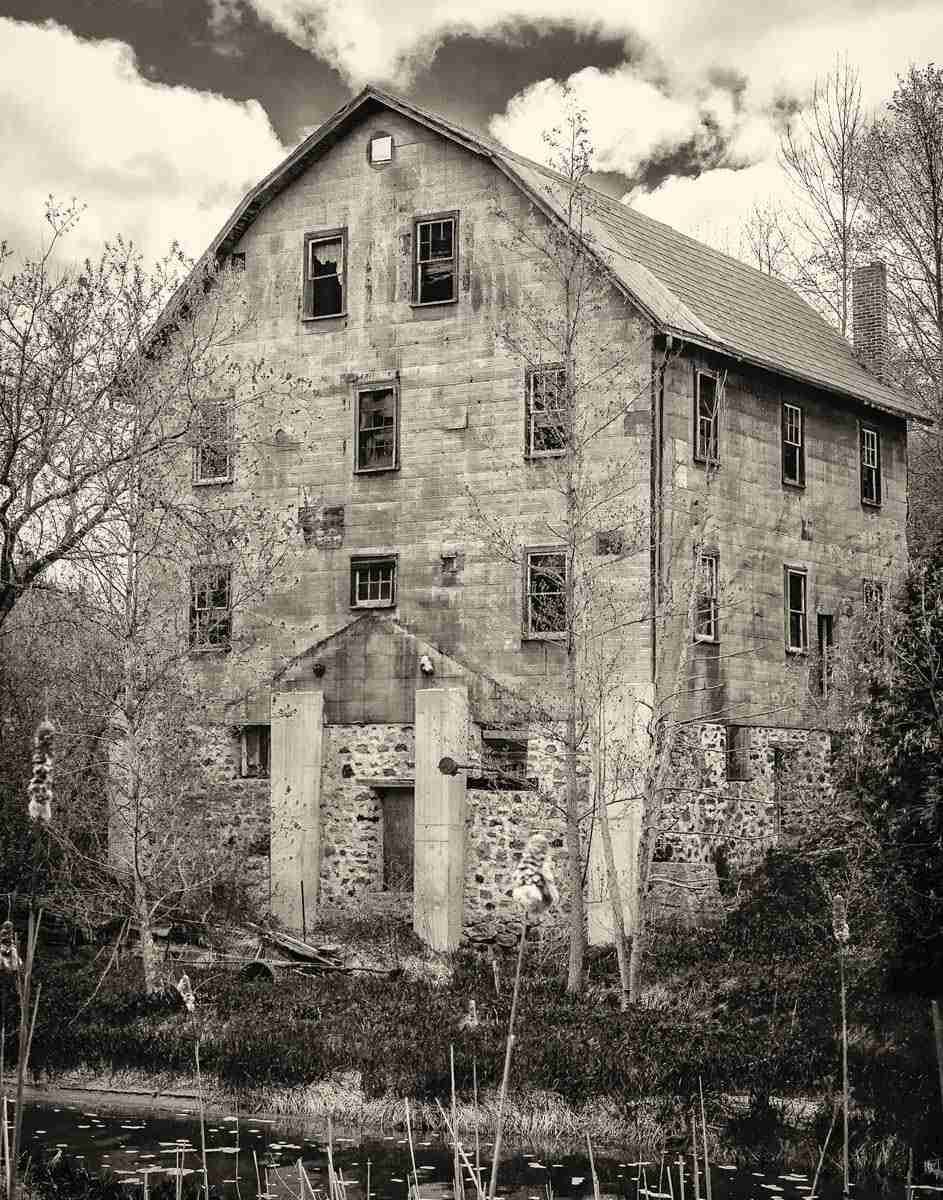
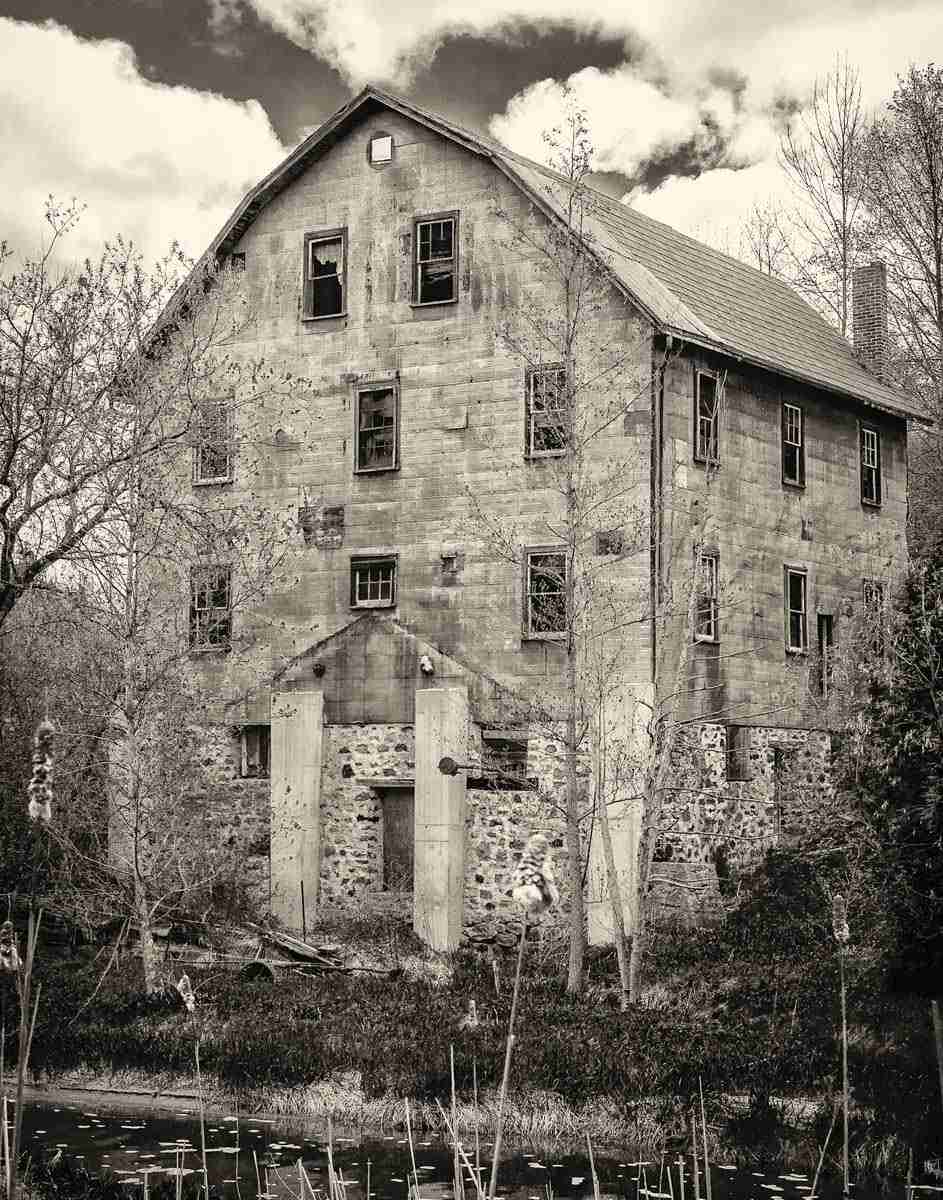
Hidden among the hardwoods and soft forest trails of the Utopia Conservation Area, the Utopia Grist Mill stands as a haunting and beautiful relic of Ontario's industrial past. Built in the 19th century to serve the small agricultural community of Utopia, this now-abandoned mill has been gradually reclaimed by the forest. Its weathered stone walls, open roofline, and quiet setting by the stream make it a powerful subject for photographers interested in rural ruin, moody woodland light, and the quiet dignity of forgotten industry.
The mill's isolation and its blend of manmade and natural textures create a perfect environment for contemplative composition. Filtered sunlight moves across lichen-covered stone, plants grow through old foundations, and water traces routes that once powered the grindstones. This isn't a space for spectacle—it's one for atmosphere, texture, and stillness. The key is to move slowly and notice the interplay of decay, geometry, and light.
Best Photography Opportunities
• Stone Façade and Remaining Structures
The mill's front-facing stone walls, partially collapsed but still standing tall, offer a dramatic subject whether you're working in tight detail or environmental wide shots. Late afternoon and morning light cast angled shadows across the rock face, highlighting the color variation in the stone and bringing out rich texture. These walls, cracked and overgrown in places, create visual interest from any angle, especially when framed against the backdrop of encroaching forest. In the winter, frost and snow enhance the structure's skeletal quality, making for striking monochrome compositions.
• Framing Through Windows and Arches
What remains of the interior walls includes stone-framed openings that are perfect for natural framing techniques. Composing through these windows lets you incorporate trees, sky, or interior ruins into the shot, adding layers and storytelling. A wide-angle lens will help exaggerate the perspective, while a shallow depth of field can isolate delicate forest detail beyond the structure. These openings also function as compositional anchors in sequences that show the transformation of the mill over time or across changing seasons.
• Woodland Reflections and Streamside Context
The mill sits near a small waterway that can offer mirrored reflections during calm conditions. These reflections, paired with soft light and trailing greenery, make for elegant compositions. Positioning the mill in the upper third of the frame and using the stream as a lead-in creates depth and flow. Fallen leaves and subtle ripples add texture to the water's surface, and the stream itself often acts as a visual divider between nature and history. Long exposures here can blur water motion and enhance the mood of stillness.
• Detail Work and Nature Reclamation
The textures here are where the story really lives—moss climbing up stone, vines coiling through cracks, and rusted metal bolts or mill fittings half-buried in the forest floor. A macro or mid-range lens can help isolate these moments and highlight the relationship between human craft and natural takeover. Decay, rather than destruction, defines the space, making it ideal for photographers who favor subtle, layered compositions. These close studies can stand alone or be integrated into larger storytelling portfolios.
• Aerial Viewpoints (if permitted)
If drone flight is allowed in the area and flown responsibly, a low-altitude aerial pass over the mill provides a stunning view of the ruins set within the forest. The contrast between the geometry of the old stone and the randomness of the surrounding trees is visually striking, especially in autumn or after snowfall. Aerial compositions allow you to experiment with symmetry, pattern, and abstraction in ways ground-based photography cannot. Sunrise and sunset flights offer especially dynamic light, with the long shadows cast by the remaining walls creating natural lines and contrast across the landscape.
Best Time to Visit
The Utopia Grist Mill is most photogenic in early morning or late afternoon when forest light is directional and dappled, especially in spring and autumn when shadows are long and leaves are sparse. Morning mist can occasionally rise from the nearby stream, adding ethereal atmosphere that enhances both detail shots and wide frames.
Autumn is particularly rich, with fallen leaves softening the ground and color contrast between foliage and stone. Spring offers lush greens and ephemeral wildflowers, while winter reveals the full skeletal structure of the ruins beneath a dusting of snow. Overcast days are ideal for even lighting when shooting textures, reflections, or forest details without harsh contrast.
Avoid visiting during or after heavy rainfall, as the trail and area around the mill can become slick and unstable. The site is unmaintained and can be dangerous if approached too closely—photograph the structure from a safe distance and respect any posted warnings.
How to Get There
The Utopia Grist Mill is located in the Utopia Conservation Area in Utopia, Ontario, west of Barrie. From Highway 400, take the exit for County Road 27 and follow it south toward Utopia. Parking is available at the entrance to the conservation area, and the mill can be reached via a short, easy walk along the marked trail system.
The trails are well-maintained and suitable for most footwear, though they can become muddy in wet weather. Allow around 10 to 15 minutes from the parking lot to reach the mill site. There are no washrooms or visitor services on site, so come prepared with water, proper footwear, and any photography gear you'll need for the duration of your visit.
The structure itself is not fenced off, but it is unstable and not maintained. For safety reasons, do not enter the ruins or climb on any part of the building. Composition from a respectful distance is strongly encouraged.
Recommended Gear and Shooting Tips
A wide-angle lens (16–35mm) is excellent for capturing the full scope of the mill and its surroundings. A mid-range zoom (24–70mm) gives flexibility for tighter architectural shots or details framed through windows and openings. For close-up work, a macro or fast 50mm lens helps isolate textures, small plant life, and subtle contrasts between ruin and regrowth.
A sturdy tripod is useful for long exposures in low forest light or when bracketing exposures for high dynamic range. A circular polarizer can reduce glare on wet stone and enhance color in foliage and stream reflections. If shooting detail textures, keep your ISO low and use manual focus to control sharpness across irregular surfaces.
Bring a microfiber cloth for lens cleaning—humidity and mist can affect your gear quickly in this environment. Consider water-resistant footwear and pack out anything you bring in. This is a quiet, natural area and should be treated with respect.
Nearby Photography Locations
A short drive northeast, this protected natural area offers boardwalks, wetlands, and forest scenes that contrast beautifully with the more structured ruins of the mill. In the early morning, mist hovers over the low-lying creek bed and through the marsh reeds, perfect for moody nature photography or wildlife observation. Trails are easy to navigate, and bird photography opportunities abound during migration seasons.
Just south of Utopia, this forested park offers winding trails, boardwalks, and reflective ponds—ideal for early morning mist, wildlife photography, or seasonal color work. The area includes interpretive trails that can lead you to tranquil forest clearings and water-edge compositions. It's a particularly useful stop for testing composition with vertical elements like trees or manmade structures against natural horizons.
Combine your trip with some urban texture—Barrie's waterfront and historic core offer murals, old stone buildings, and industrial-era textures that pair well with a narrative about heritage and change. The waterfront, with its docks and lake-facing pavilions, also presents opportunities for sunrise compositions, long exposures, or reflections of city lights on water.
For a broader natural landscape, the nearby Minesing Wetlands offer open marshes, winding rivers, and panoramic views that contrast with the close, enclosed feel of the Utopia woods. Use a long lens to compress distant tree lines or work with wide shots to capture dramatic skies reflected in the still waters of the wetlands. During the fall, migratory birds add a dynamic, living element to your compositions.
This former rail line turned trail features bridges, tunnels, and rural backdrops ideal for leading lines and seasonal transitions—excellent for those who enjoy documenting vanishing infrastructure in rural Ontario. The overpasses and converted bridges create symmetry and depth, especially when photographed at sunrise or in low fog. Pacing along this trail gives you a slower, rhythm-based approach to composition.
Comments
Loading comments…