
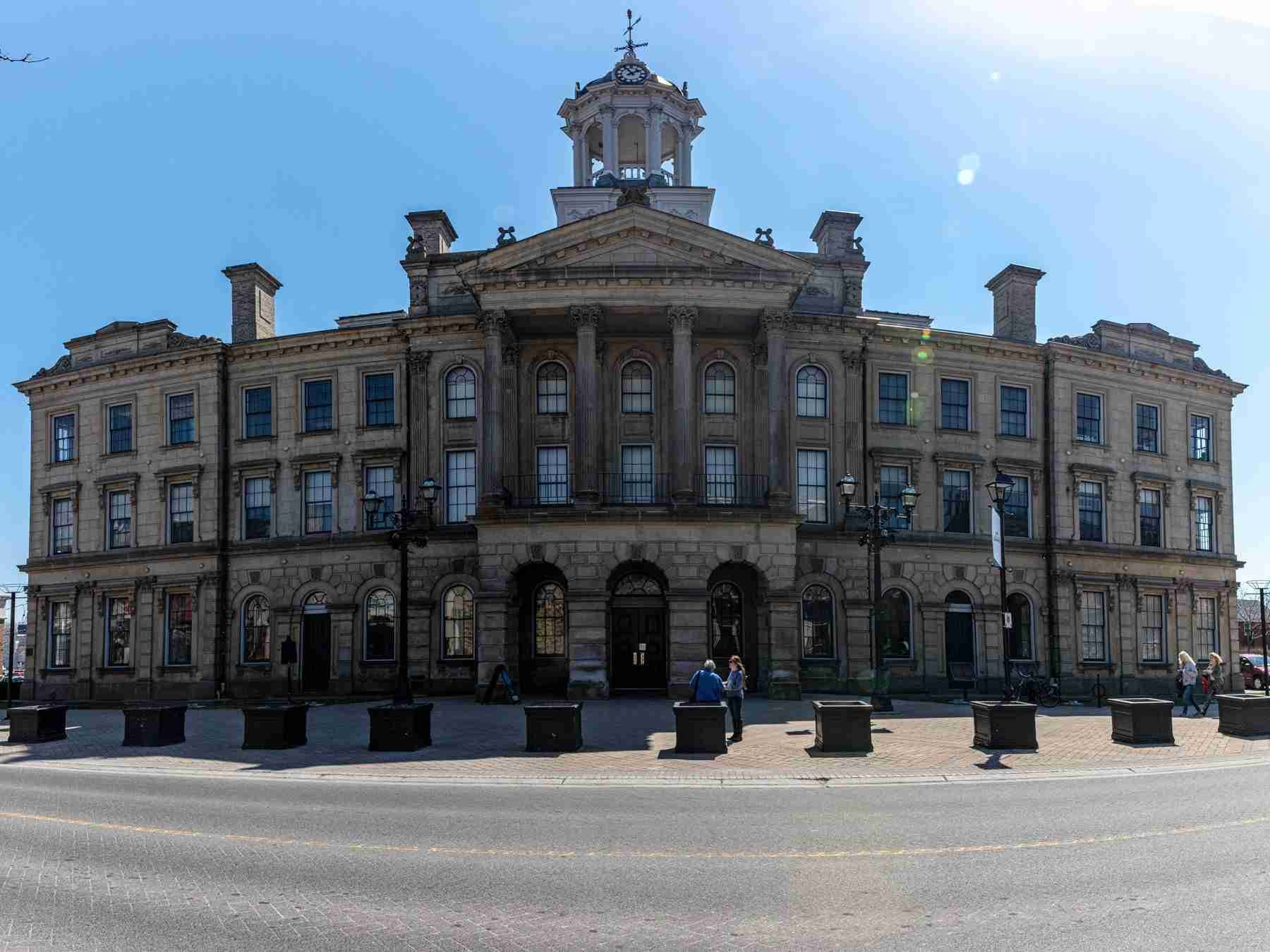
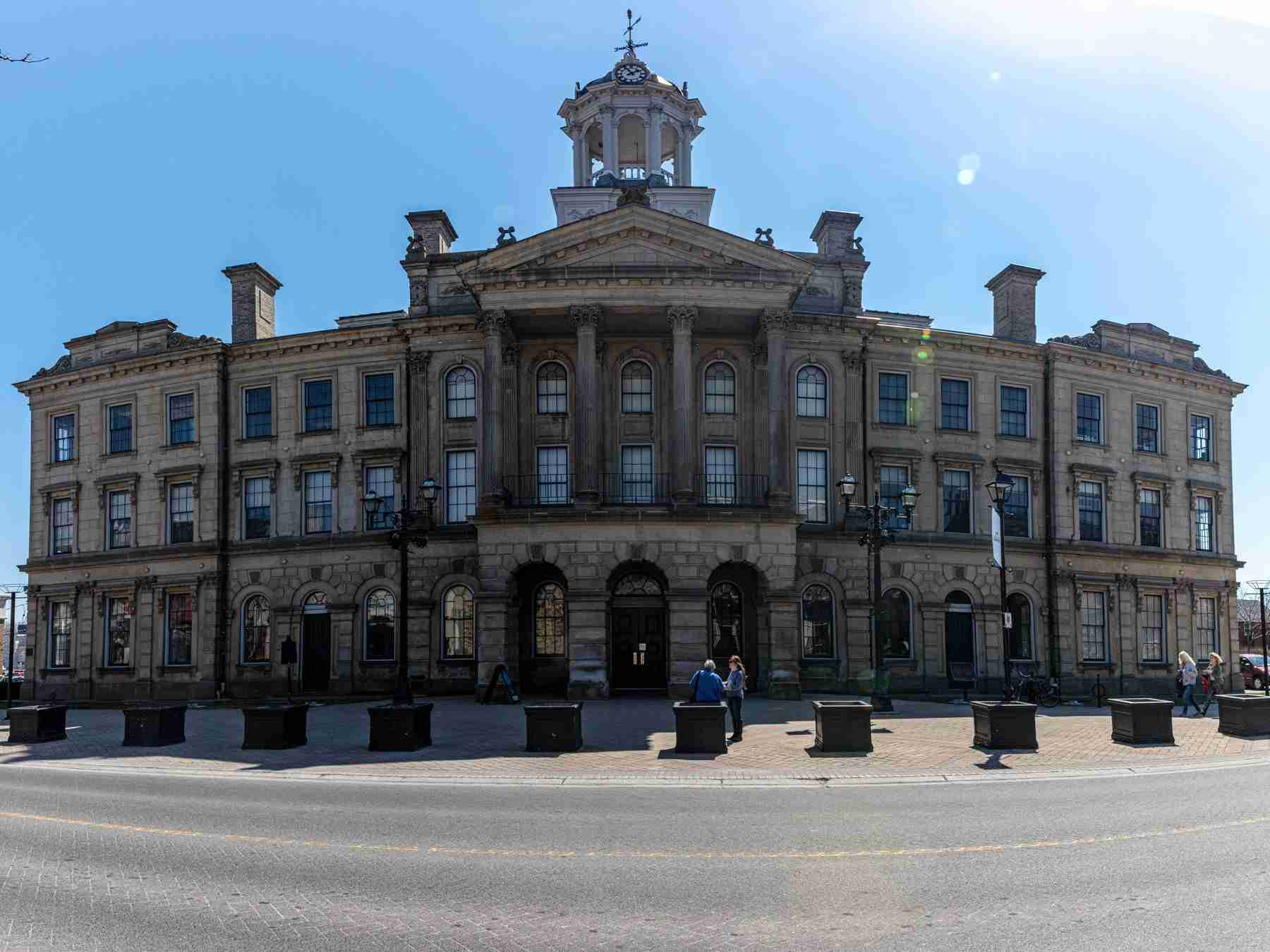
Standing proudly in the heart of downtown Cobourg, Victoria Hall is one of Ontario's finest examples of 19th-century neoclassical architecture. Designed by Kivas Tully and completed in 1860, this stately building has served as the civic and cultural hub of the town for over 160 years. With its towering Corinthian columns, finely carved limestone façade, and elegant clock tower rising above the main portico, Victoria Hall offers photographers a compelling blend of symmetry, detail, and historic atmosphere. Whether you're drawn to full architectural portraits or intricate stonework, the hall's imposing yet refined design rewards careful composition and changing light throughout the day.
Best Photography Opportunities
• Frontal architectural symmetry from King Street
: The most iconic view of Victoria Hall is directly from King Street, where the full neoclassical façade reveals its symmetry and grandeur. This vantage captures the building's stately portico, clock tower, and limestone detailing with balanced perspective. Shoot wide to incorporate the sidewalk and street for scale or tighter to focus attention solely on the columns and entryway. Early morning or golden hour enhances the warm tones in the stone and creates soft directional shadows across the carvings.
• Column and pediment details under angled light
: The Corinthian columns and triangular pediment are rich with ornate capitals, floral carvings, and dentil molding—ideal for close-up compositions. Use a mid-range or telephoto lens to isolate these elements, particularly when lit by low-angle sun in the morning or late afternoon. These details work especially well in overcast conditions as well, which help reveal the texture of the stone without harsh shadow contrast.
• Clock tower silhouettes and vertical framing
: The building's central clock tower rises above the portico and is perfectly framed by the hall's front columns. From across the street or at the edge of the town square, shoot vertically to emphasize the tower's proportions. The tower's silhouette stands out best during blue hour or under dramatic skies. Long lenses from further back can also compress the structure against the skyline or include passing clouds for added movement.
• Side angles and architectural depth from Third Street
: Walk around to the east side of the building along Third Street for oblique angles that reveal the hall's full depth. From this perspective, you can shoot along the façade to capture receding windows, stone reliefs, and the clock tower in partial profile. These compositions work well for storytelling and editorial styles, and they allow for creative depth-of-field experiments by shooting through lampposts, trees, or seasonal decor.
• Interior lobby and concert hall (if accessible)
: If open to the public or during scheduled events, the interior of Victoria Hall is equally photogenic. The entrance lobby features detailed plasterwork, chandeliers, and sweeping staircases, while the concert hall upstairs—known as the Concert Hall at Victoria Hall—offers Victorian-era theater elegance. Use fast lenses or high ISO settings, as natural light is often minimal. Focus on curves, materials, and historic textures for rich, atmospheric compositions.
Best Time to Visit
Victoria Hall is photogenic throughout the year, but each season offers a unique lens through which to photograph its architecture. Spring and summer bring vibrant flower beds and leafy trees to the surrounding square, adding color and vibrancy to wider frames. Autumn adds rich, warm tones that complement the limestone, particularly when shooting the building framed by foliage. Winter offers a clean, minimalist aesthetic with snow-dusted steps and icicles catching light along ledges.
Light quality plays a critical role here. Early morning light illuminates the façade directly from the east, revealing detail in the columns and carvings. Late afternoon light grazes the building from the west, casting shadows that accentuate its neoclassical lines. Blue hour is ideal for photographing the clock tower, especially if it's lit, with the glow from nearby streetlights adding additional warmth and contrast.
Overcast days are highly effective for detail and texture studies, helping reduce glare on the stone and emphasizing the craftsmanship of the carvings. Avoid high midday sun, which flattens the stone's natural depth and can introduce harsh reflections.
How to Get There
Victoria Hall is located at 55 King Street West in downtown Cobourg, Ontario. It sits at the heart of the town's historic core, just a few blocks from the waterfront and the Cobourg Marina. From Highway 401, exit at Division Street and head south toward downtown. King Street is the main east-west route through the town, and Victoria Hall is easily spotted by its prominent clock tower and columned entrance.
Public parking is available on King Street and in nearby municipal lots. The building is situated in a pedestrian-friendly area, making it easy to explore on foot from multiple angles. Photographers visiting on weekends or early mornings will find quieter surroundings ideal for tripod setups and uninterrupted shooting.
During business hours, the building may be open for visitors, and it's worth checking in advance whether the concert hall or art gallery spaces are accessible for interior photography. Special events may restrict access or introduce temporary décor, which can alter the look and feel of the scene.
Recommended Gear and Shooting Tips
A wide-angle lens (16–35mm) is essential for capturing the full width of the façade from across King Street or at oblique angles from nearby sidewalks. For tighter compositions and architectural detail, a mid-range zoom (24–70mm) gives you flexibility while preserving sharpness. A telephoto lens (70–200mm) is particularly useful for compressing vertical elements like the clock tower or isolating ornamental carvings high on the pediment.
Bring a tripod for blue hour, golden hour, or interior work, especially when shooting in low light or for precise architectural alignment. A circular polarizer can help reduce glare on the windows and deepen the color of surrounding sky or foliage. ND filters may be useful for long exposures if you want to blur movement from cars or pedestrians.
Shoot during multiple times of day if possible—shifting shadows reveal different architectural features and can dramatically alter the mood of your images. Return in different seasons to incorporate floral borders, fall leaves, or winter atmosphere into your compositions.
Nearby Photography Locations
• Cobourg Beach and Marina
: Just a short walk south, this area offers scenic lakefront views, sailboats, and beach curves with the occasional lighthouse visible from certain angles. Great for early morning or sunset shoreline compositions.
: Located between Victoria Hall and the waterfront, this well-maintained park includes tree-lined paths, sculptures, and seasonal flowerbeds that work well for environmental portraits and depth-focused compositions.
: One of Cobourg's oldest and most photogenic churches, this Gothic Revival landmark is ideal for contrast against the neoclassical tones of Victoria Hall. Its stained glass and tall spire are especially striking during golden hour.
• Cobourg Railway Station
: A few blocks to the north, the VIA Rail station offers historic charm with passing trains, vintage signage, and urban texture—perfect for documentary and black-and-white styles.
: King Street and its side lanes are lined with 19th-century storefronts, cast iron signage, and red-brick buildings. These backdrops work beautifully for street photography or tighter architectural frames with period character.
Victoria Hall is more than a municipal building—it's a living symbol of Cobourg's heritage, craftsmanship, and civic pride. For photographers, it's a rare opportunity to capture Canada's architectural history in a location that remains active, accessible, and consistently bathed in beautiful, directional light.
Comments
Loading comments…