
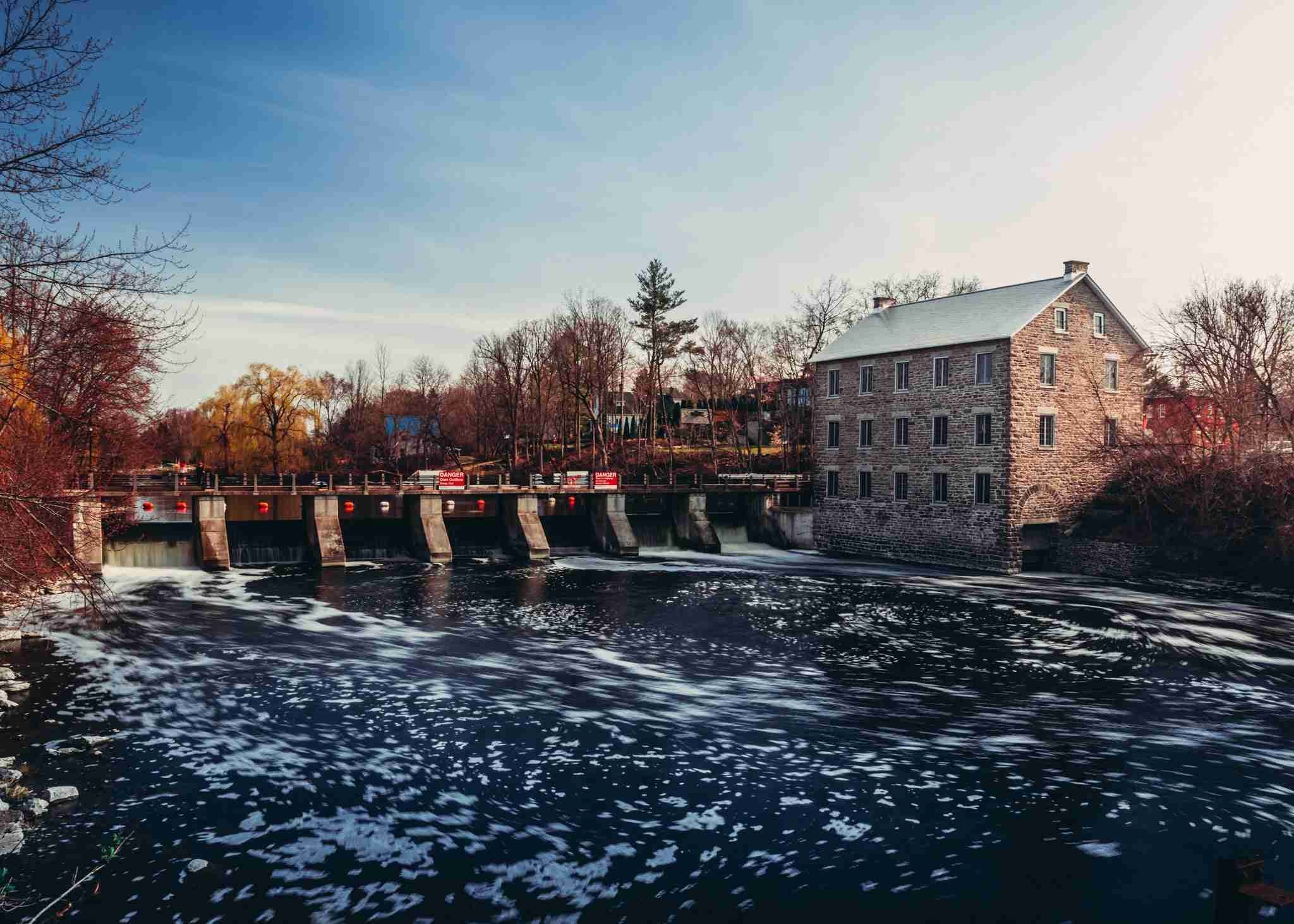
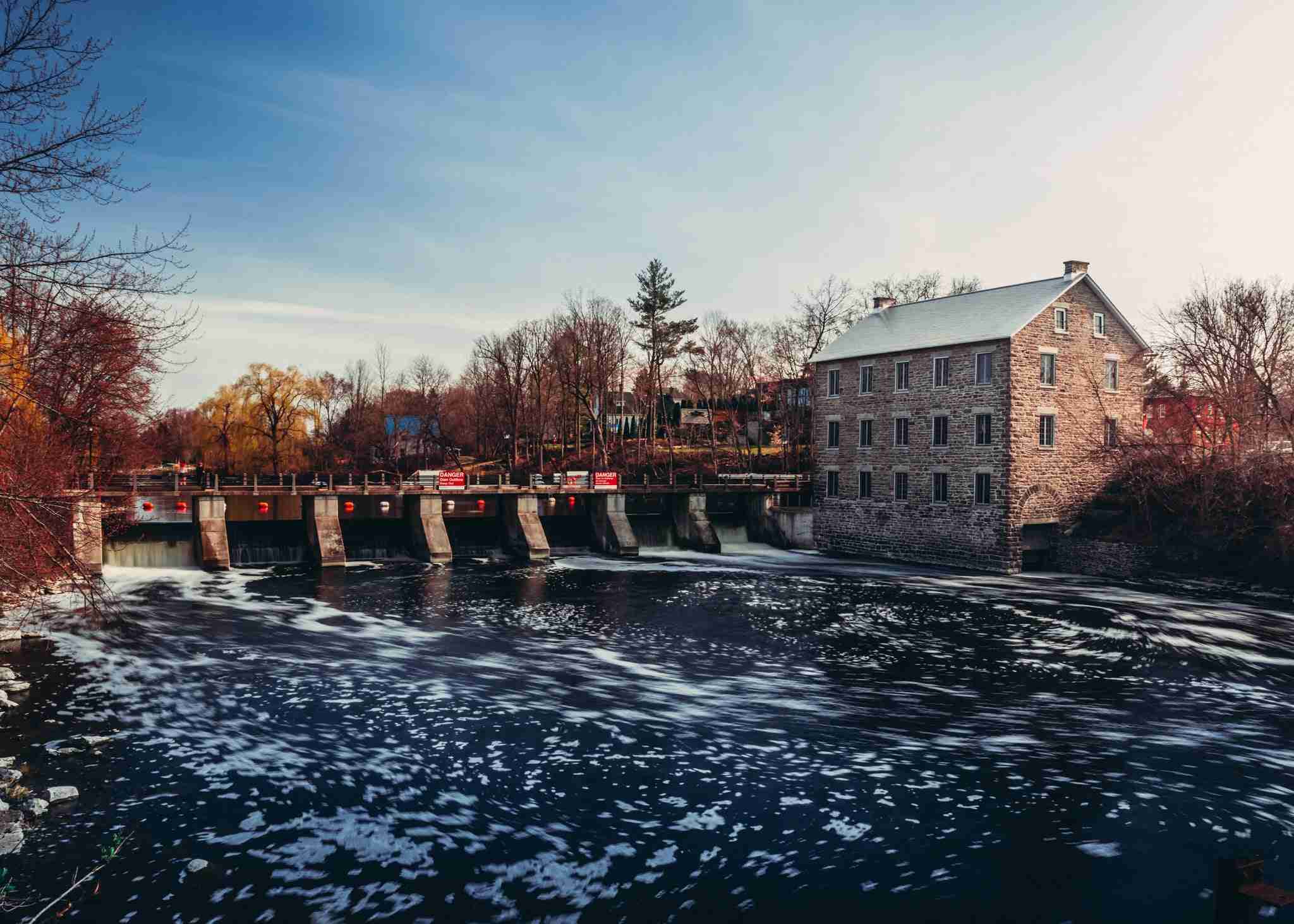
Set along the banks of the Rideau River in the village of Manotick, Ontario, Watson's Mill is one of Canada's best-preserved 19th-century gristmills still in working order. Built in 1860, the three-story limestone structure sits beside a flowing weir and canal, its tall windows, steep-pitched roof, and water-powered machinery offering a rare glimpse into Ontario's milling heritage. Whether capturing the mill's classic stone architecture, the motion of water cascading over the dam, or the soft evening light reflecting off the river, Watson's Mill is a scenic and historically rich location for both architectural and landscape photographers.
Best Photography Opportunities
• Golden Hour Reflections on the Rideau River
– In the early morning or late afternoon, the sunlight bathes the mill's limestone walls in a warm glow while the water below reflects the golden tones of the sky. Shooting from across the river or beside the weir provides an unobstructed view of the full structure with soft, symmetrical reflections. Autumn is particularly beautiful, with vibrant foliage framing the mill and adding warm color to the scene.
• Long Exposure for Water Movement
– The steady flow of the Rideau River provides excellent opportunities for long exposure photography. Using a neutral density filter, you can blur the motion of the water cascading over the weir or flowing past the mill's base, creating a smooth, ethereal surface that contrasts beautifully with the sharp, detailed stonework. This technique works especially well during overcast days or twilight hours.
• Architectural Details and Interior Machinery
– Watson's Mill still houses much of its original milling equipment, offering fantastic interior shots for photographers interested in industrial heritage and texture. Inside, wooden beams, iron gears, and old stone floors provide rich material for detail shots and documentary-style photography. Windows offer soft natural light that filters through dust and highlights the grain of old timber.
• Bridge and Canal Views
– The nearby bridge over the Rideau River and the adjacent lock system provide additional vantage points to frame the mill within its environment. Shooting from the bridge allows for an elevated, slightly offset composition, while including the canal and lock gates in the frame adds layers of historical context. These locations also offer excellent symmetry and leading lines for clean, balanced compositions.
• Night Photography and Light Painting
– Watson's Mill is often softly lit in the evening, and during local events or holidays, it may be illuminated more dramatically. Blue hour offers a beautiful balance of ambient light and reflection, especially when viewed from across the river. For more creative night shots, light painting techniques can highlight the mill's architectural features without overpowering the ambient glow.
Best Time to Visit
Watson's Mill is visually rewarding year-round, though each season brings a unique atmosphere. Summer (June–August) features lush greenery and bustling community activity, making it ideal for vibrant daytime shots or golden-hour reflections. Autumn (September–October) is perhaps the most photogenic season, with colorful trees surrounding the site and misty mornings providing added mood.
Winter (December–February) transforms the scene into a quiet, snow-covered landscape. The mill's stone walls contrast beautifully with the white surroundings, and icicles often hang from the eaves or the weir, adding delicate detail for close-up photography. Spring (March–May) brings rushing water and renewed vegetation, perfect for capturing the energy of the river and fresh seasonal tones.
For optimal lighting, early morning and late afternoon provide the most flattering conditions, especially for reflections and texture. Overcast days are excellent for photographing interiors or for soft, even lighting on the building's exterior.
How to Get There
Watson's Mill is located at 5525 Dickinson Street in Manotick, a historic village within the city limits of Ottawa, Ontario. From downtown Ottawa, it's about a 25-minute drive south via Prince of Wales Drive or River Road.
Free public parking is available just steps from the mill, and the area is very walkable, with nearby trails and sidewalks offering access to multiple shooting angles. The Rideau Valley Conservation Authority also maintains nearby green spaces, making it easy to explore the riverfront on foot.
There is no fee to photograph the exterior of the mill or surrounding areas. Interior access may be limited outside of public opening hours, but guided tours and events are offered during the warmer months. For indoor photography or access to specific features, contacting the mill in advance is recommended.
Exploring the Surrounding Area
The village of Manotick offers a wealth of additional photographic material beyond the mill itself. The charming main street is lined with heritage stone and clapboard buildings, cozy cafes, and boutiques that retain their 19th-century charm. Dickinson House, located next to the mill, provides another excellent subject with its classic colonial lines and surrounding gardens.
Walking along the river or exploring the adjacent parks allows for nature-focused compositions, including birdlife, weeping willows, and calm riverside reflections. Local footbridges and stone fences add rustic detail to foregrounds and backgrounds, enhancing the character of the area. Manotick's quiet pace and preserved heritage create an ideal setting for slow, intentional photography.
Nearby Photography Locations
– Right next to the mill, this heritage home offers period architecture and gardens. Its white siding and green trim make it especially photogenic in spring and summer, and the porch columns provide classic framing elements.
– A short drive north, this section of the Rideau Canal features historic lock gates, stone buildings, and a beautiful mix of water and forest. Ideal for long exposures, symmetrical compositions, and sunrise shots along the canal.
– Various green spaces along the Rideau River offer riverbank views, wooded trails, and small waterfalls. Excellent for nature photography, especially in early morning light with mist or wildlife activity.
• Andrew Haydon Park
– Closer to Ottawa's western edge, this park provides waterfront access, walking bridges, and expansive views of the Ottawa River. Great for sunset reflections and wildlife, especially during migration seasons.
– One of Ottawa's oldest homes, set on a forested hilltop, with gardens, trails, and stone outbuildings. Ideal for architectural and documentary-style photography of Ottawa's colonial past.
Watson's Mill offers more than just a picturesque scene—it's a living piece of Ontario's history, set in a landscape that seamlessly blends water, stone, and time. Whether you're capturing golden-hour reflections, the intricacy of historic machinery, or seasonal shifts along the Rideau, the mill invites photographers to slow down and discover the enduring beauty of Canada's rural heritage.
Comments
Loading comments…