
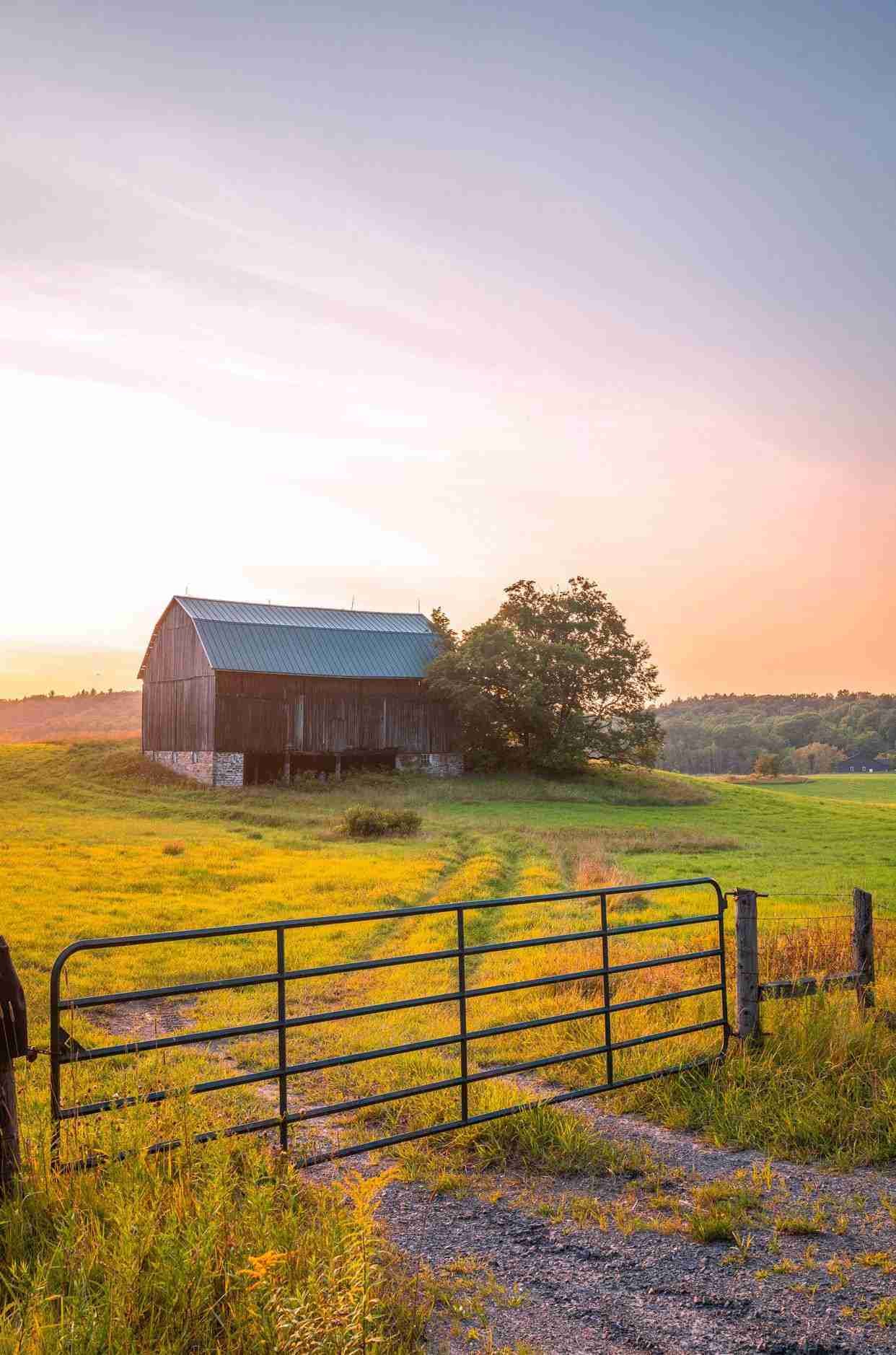
Set against the rolling green tapestry of Ontario's Muskoka region, the old barn on the west side of Windermere Road near Bracebridge stands as a weathered monument to rural endurance. Its gray, timeworn siding and sagging rooflines speak not of decay, but of permanence—of a structure that has witnessed generations of seasons, storms, and sunsets. This isn't just another roadside barn. Its unique positioning in an open field, framed by expansive sky and low horizon, makes it an exceptional location for capturing the soft light and glowing drama of Ontario's evening hours. For photographers drawn to rustic architecture, pastoral texture, and the dance of twilight across wood and sky, this location is an invitation to pause and compose with care.
Best Photography Opportunities
• Sunset Silhouette with Open Sky Composition
: Because the barn is set low and unobstructed in a wide field, it can be easily silhouetted against the full arc of the sunset. From across the road or slightly northwest of the structure, use a wide-angle lens (16–35mm) to capture the full barn framed beneath a dramatic, color-shifting sky. On evenings with broken cloud cover, the layered atmosphere ignites in purples, oranges, and reds that reflect subtly in the barn's weathered surfaces. Silhouetting the barn creates graphic contrast, especially effective when processed in deep tones or black and white.
• Golden Hour Texture on the Barn's Facade
: As the sun begins to dip toward the horizon, it casts long, low-angle light that rakes across the barn's timber walls. These warm highlights and sharp shadows reveal every split board, rusted hinge, and dented panel with cinematic clarity. A mid-range zoom (24–70mm) gives you the flexibility to isolate corner details, highlight window frames, or include leading lines of field stubble that draw the eye inward. This is the time to shoot head-on or at a 45-degree angle to the western face for maximum textural depth.
• Foreground Layering with Field Elements
: The surrounding field—sometimes hayed, sometimes left wild—provides natural compositional elements for anchoring your frame. Use low-growing grass, fence posts, or tractor tracks as foreground layers that lead into the barn. Shooting from a crouched position with a 35mm prime or wide zoom exaggerates depth and makes the barn rise against the horizon. During summer, wildflowers can provide both color contrast and delicate texture to the lower frame; in autumn, dry grasses offer golden tones that echo the sky.
• Cloudscape and Stormlight Framing
: On days when storms are approaching or breaking to the west, dramatic skies can turn this location into a moody, painterly scene. The barn's neutral palette allows it to sit quietly within turbulent cloud forms, often providing a grounding focal point in otherwise overwhelming skies. Use a longer focal length (70–200mm) to compress sky and structure, and consider underexposing slightly to retain highlight detail in the clouds while letting the barn recede into shadow.
• Minimalist Winter Studies
: In winter, when the field is covered in snow and the sky often remains pale or colorless, the barn transforms into a stark minimalist subject. Its vertical lines and roof slope contrast powerfully with the clean horizontal sweep of snow. Compose symmetrically for a formal tone, or offset the barn and use negative space to emphasize solitude. A monochrome treatment works especially well in these conditions, stripping the image down to line, tone, and silence.
Best Time to Visit
This location reaches its peak photographic potential in the late afternoon through sunset, particularly between May and October. During these months, the sun sets directly behind the barn when viewed from Windermere Road, aligning perfectly with the open west-facing horizon. Golden hour typically begins about 60 to 90 minutes before sunset and provides the best balance of shadow and warmth for both wide compositions and close detail work.
Spring brings fresh green to the field and soft, cooler light that works well with the barn's gray tones. In summer, high clouds and warm evening air often produce vivid color in the sky, and the longer days allow more time for setup and exploration. Autumn introduces a deeper palette—burnt gold, amber, and rust—which harmonizes with the barn's earthy character. Even on cloudy evenings, filtered sunlight behind the clouds adds subtle tones to the scene.
Winter visits are best timed around snowfall or just after a fresh dusting, when the structure sits cleanly within the white field. While sunset light is still useful in winter, the scene often benefits most from overcast skies that cast a diffused, even tone across the composition.
How to Get There
The barn is located along the west side of Windermere Road, just a few minutes' drive outside the town of Bracebridge, Ontario. From downtown Bracebridge, take Manitoba Street north to Falkenburg Road, then turn right onto Windermere Road. Drive for approximately five minutes—watch for the barn on your left (west) side, just before the landscape opens into a broad, uninterrupted field.
There is no official parking area, but the shoulder is wide enough in certain areas to pull off safely. Be sure to park well off the road and avoid blocking driveways or gates. This is private land, and the barn should be photographed respectfully from the road or the grassy public edge—do not enter the field or approach the structure without permission.
Because the road is gently curved and sparsely traveled, shooting across it with a tripod is generally safe during off-peak hours, especially near sunset. Always stay alert to oncoming traffic, and move gear back to the shoulder when not actively shooting.
Recommended Gear and Shooting Tips
This is a location where light is everything, and the structure's simple geometry rewards both wide and compressed compositions. Bring a wide-angle lens (16–35mm) to emphasize sky, field, and structure together, especially when cloudscapes or sunset colors are prominent. A standard zoom (24–70mm) is ideal for mid-range work and contextual storytelling shots that balance architecture and landscape.
A telephoto (70–200mm or longer) will allow you to compress the barn against the horizon or isolate its silhouette against a colorful sky. For textural studies and detail work—such as nail heads, peeling wood, or window frames—a fast 50mm or 85mm prime provides shallow depth of field and excellent low-light performance during the final minutes of golden hour.
A sturdy tripod is essential for longer exposures, especially in lower light or windy conditions common to open fields. Graduated ND filters can help retain sky detail when the sunset is strong, and a polarizer may help cut glare off wet wood after rain. Bring a microfiber cloth to clean lenses, especially in winter or on humid evenings when condensation can creep in.
The best results often come from patience—arrive at least an hour before sunset, scout multiple angles, and wait as the light shifts. The field, the sky, and the barn all change character dramatically in the space of 30 minutes, so stay alert to subtle changes in light and contrast.
Nearby Photography Locations
• Bracebridge Falls and the Muskoka River
: Just 10 minutes south, the historic Bracebridge Falls and surrounding bridges offer strong urban-rural contrast. The cascading river and old brick buildings provide a dramatic counterpoint to the quietude of Windermere Road.
• Kerr Park and Muskoka River Flats
: This open riverside park features forested paths, river reflections, and misty sunrise potential—ideal for morning shoots after an evening at the barn. Fog often lingers along the flats, softening background elements for a moody start.
• High Falls Trail and Dam
: A few minutes northeast of Bracebridge, High Falls combines wooded trails, granite rock faces, and a hydro dam with strong visual lines. Especially good after rain or during spring melt, when water flow is strongest.
• Milford Bay and Lake Muskoka Shoreline
: About 20 minutes west, this lakeside area provides a wide, open horizon and the chance to photograph docks, boats, and sky in clean compositions. Excellent for minimalist lake scenes and drone work.
• Uffington Road Barns and Farmland
: Northeast of Bracebridge, this stretch of quiet rural road features several historic barns, rolling hills, and misty morning fields that complement the visual language of the Windermere barn.
The Windermere Road barn is a rare convergence of architectural nostalgia and natural spectacle. Framed by the Muskoka landscape and lit daily by one of Ontario's most reliable shows—the setting sun—it offers a timeless, honest stage for rural storytelling through your lens.
Comments
Loading comments…