
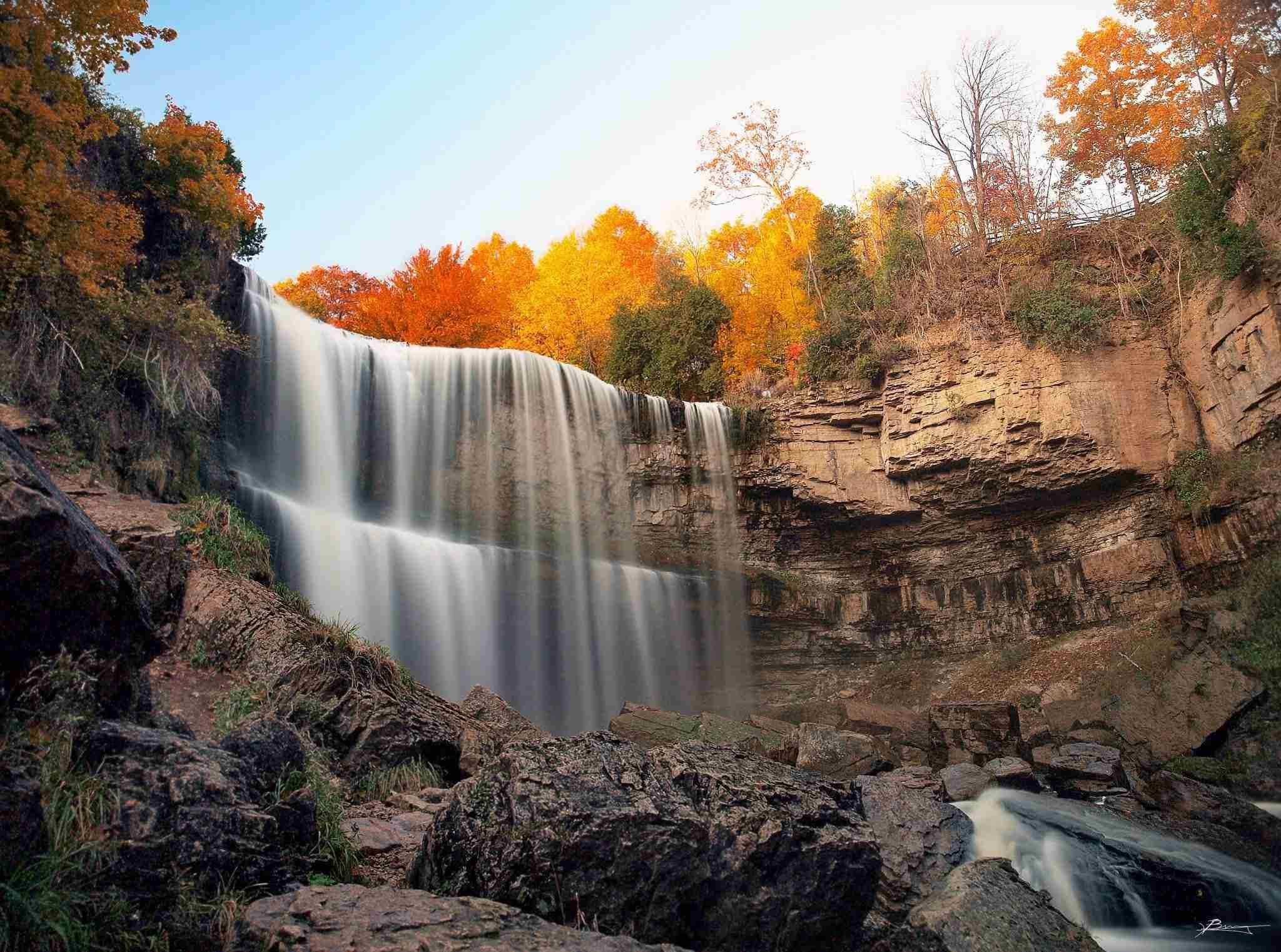
Set within the dramatic landscape of the Spencer Gorge Conservation Area near Dundas, Ontario, Webster Falls is one of the most picturesque and easily accessible waterfalls along the Niagara Escarpment. With its wide, classical horseshoe shape tumbling over layered rock into a wooded ravine below, it stands as one of Ontario's most iconic natural photo subjects—particularly during peak fall color. Surrounded by rolling terrain, hardwood forest, and panoramic escarpment views, the entire area offers a rich array of photographic opportunities, from sweeping vistas to intimate woodland details. Whether you're a landscape photographer chasing golden hour or a nature lover seeking symmetry in water and stone, Webster Falls and its surrounding trails deliver with both drama and grace.
Best Photography Opportunities
• Webster Falls from the Upper Viewpoint
: The most popular and accessible vantage is the upper observation area, offering a head-on view of the falls with a natural amphitheatre of trees curving around the cascade. Shoot with a wide-angle lens to capture the full arc of the falls and surrounding foliage, especially in early morning when soft light filters through the trees. In autumn, the color contrast between orange leaves and grey limestone creates a powerful visual frame.
• Long Exposure at the Water's Edge
: While direct access to the base of Webster Falls has been restricted in recent years to protect against erosion and ensure visitor safety, you can still capture motion-rich images from above using a tripod and ND filter. Longer exposures smooth the curtain of water into a silky sheet, contrasting beautifully with the rough rock ledges. Even from a distance, the falls retain their compositional impact—especially when framed by foliage or overhanging branches.
• Autumn Canopy and Color Reflections
: During peak fall, the forest surrounding the gorge explodes into a kaleidoscope of yellows, reds, and golds. Look for reflective puddles, damp leaves, and color-splashed rocks along the trail for foreground interest in wide compositions. Early morning or late afternoon light enhances saturation and casts warm glow across the canopy.
• Escarpment Brow Panoramas
: The upper trail network includes lookout points along the Niagara Escarpment, where you can capture sweeping vistas over the Spencer Gorge and surrounding countryside. These high points are excellent for sunrise or backlit fall compositions. Use a telephoto to compress the layers of rolling hills, or go wide to emphasize the vertical drop and geological formations.
• Woodland Details and Creekside Textures
: The trails beyond Webster Falls offer quieter photographic moments—mossy rocks, leaf-strewn footpaths, and bubbling brooks. These subtle scenes are ideal for storytelling or a photo series capturing the seasonal mood of the forest. Overcast days work particularly well for this type of work, reducing glare and deepening greens and browns.
Best Time to Visit
Webster Falls is photogenic throughout the year, but the most rewarding time for photographers is during the fall foliage season—typically from late September to mid-October. During this window, the surrounding hardwoods light up in fiery tones, and the contrast against the grey stone and white water makes for compelling compositions from nearly any angle.
Early mornings during fall are best for soft light and fewer crowds. Aim to arrive right after the park opens to take advantage of golden hour light striking the escarpment and forest. Spring is another excellent time to visit, when snowmelt swells the falls and wildflowers begin to emerge along the trails. Winter visits can yield stark, icy compositions—frozen cascades and snow-covered cliffs—but require caution due to slick trails and cold exposure.
Summer offers lush greenery and longer shooting windows, though water flow may be lower and mid-day light more challenging. For the best photographic conditions, avoid weekends during peak season, as the park can be crowded and access points may be limited by timed entry.
How to Get There
Webster Falls is located within Spencer Gorge Conservation Area, just west of downtown Dundas, Ontario, and is managed by the Hamilton Conservation Authority. From Highway 403, exit at Highway 6 or Main Street West and follow signs toward Dundas. Access to the falls is via Harvest Road, with parking available at the Webster Falls lot.
Access during peak seasons is regulated through timed reservations and shuttle services from Christie Lake Conservation Area, especially during fall weekends. It's highly recommended to check current conditions, access rules, and entry fees on the Hamilton Conservation Authority website before planning your shoot.
The trail from the parking area to the falls is well-maintained and relatively short, though there are some inclines and uneven terrain. Wear sturdy shoes and be prepared for wet, muddy sections, especially in spring or after rain. Tripods and camera gear are easy to carry due to the short hike, and designated viewing platforms provide stable footing for setup.
Exploring the Surrounding Area
While Webster Falls is the star attraction, the surrounding Spencer Gorge Conservation Area is equally rich in photographic potential. The trails wind through dense forest, over ridgelines, and along stream beds, offering a mix of vistas and close-up detail work. You'll find side trails that lead to unexpected perspectives—bends in the creek, clusters of old trees, and ledges that drop off into sweeping views.
Keep an eye out for wildlife as well—chipmunks, hawks, and songbirds are common in the area, particularly in early morning hours. Fallen logs and mossy rocks create visual rhythm for those working on forest compositions, while the layered geology of the escarpment provides strong abstract patterns in rock.
If you're photographing during off-peak hours or shoulder seasons, you'll likely have long stretches of trail to yourself, making it easier to set up compositions without interruption and to hear the calming sound of the falls in the background.
Nearby Photography Locations
: Just a short walk from Webster Falls via the connecting trail, Tew Falls is a tall ribbon cascade framed by sheer cliffs and forested slopes. Its narrow profile contrasts beautifully with Webster's wide form and offers vertical compositions ideal for long exposure.
: One of the region's most popular lookout points, Dundas Peak provides a panoramic view over the Spencer Gorge, the town of Dundas, and the rolling terrain beyond. It's especially dramatic during fall and at sunset, when the entire valley glows in warm tones.
: Located nearby, this lakeside park offers tranquil shoreline compositions, woodland trails, and access to golden hour light reflecting off the water. Great for softer, slower-paced landscape photography.
• Cootes Paradise
: Just east toward Hamilton, this large wetland and nature reserve is a haven for bird photographers and offers boardwalks, marsh textures, and moody water reflections throughout the year.
: North of Spencer Gorge, this smaller waterfall and adjacent forest trails provide a quieter alternative with unique geological features and less foot traffic. Ideal for woodland compositions and early morning serenity.
Webster Falls is more than just a beautiful cascade—it's a gateway to some of Ontario's most photogenic natural terrain. With its classic waterfall form, forested trails, and the dramatic contours of the Niagara Escarpment all around, it offers something for every photographic style, from sweeping vistas to close-up serenity. Whether you're drawn by the roar of falling water, the glow of autumn leaves, or the quiet complexity of forest light, a visit to Webster Falls promises a deep and rewarding visual experience.
Comments
Loading comments…