
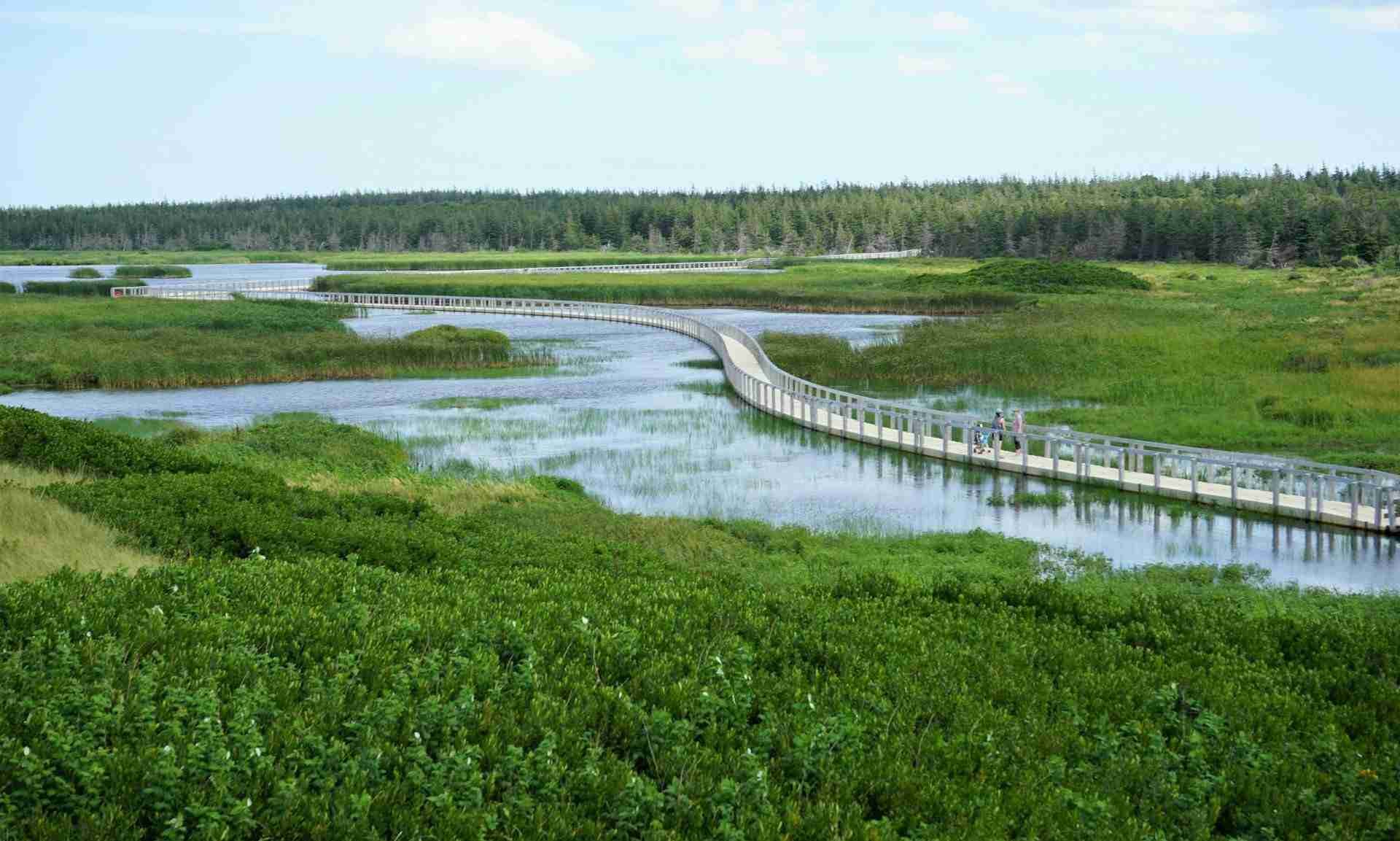
Tucked along the northeastern shoreline of Prince Edward Island, the Greenwich section of PEI National Park offers one of the most dynamic and quietly spectacular photography locations in Atlantic Canada. Known for its rare and shifting parabolic dunes, floating boardwalk, and sweeping views of St. Peters Bay, this landscape blends the serenity of coastal ecosystems with the power of wind-shaped terrain. It's a location where minimal compositions thrive, light changes everything, and every footstep leads you through a different natural story—whether it's forest, freshwater pond, grassland, or beach.
Unlike other parts of PEI, which tend to feature gentler landscapes and more accessible coastal views, Greenwich is raw and elemental. The dunes rise like sculpted waves, casting deep shadows and golden ridgelines in the early light. Meanwhile, the curving boardwalk that snakes through the marsh has become one of the most iconic photography subjects in the Maritimes, offering elegant leading lines and perfectly balanced geometry. For landscape photographers seeking a mix of compositional structure, natural abstraction, and atmospheric light, Greenwich delivers an extraordinary canvas.
Best Photography Opportunities
• Floating Boardwalk Trail
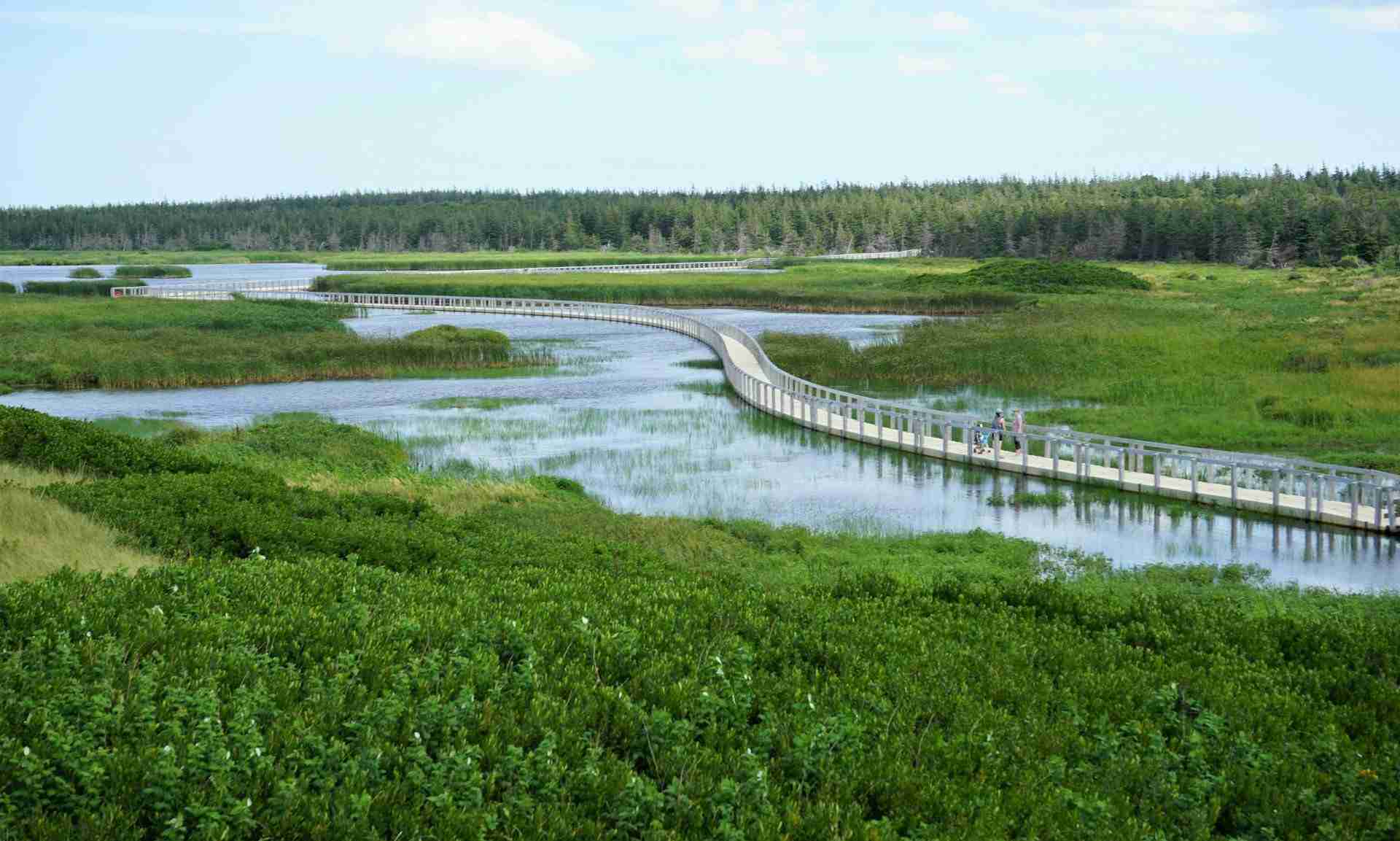
One of the most visually unique features of Greenwich is the floating boardwalk that stretches across Bowley Pond toward the dunes. Its gently curving form leads the eye perfectly into the distance, framed by tall grasses and soft wetland reflections. Shoot wide for sweeping leading lines, or zoom in for layered, graphic compositions where the boardwalk intersects with clouds, shadows, or passing wildlife. Early morning often brings still water and dramatic sky reflections, while late afternoon emphasizes texture and structure in the wooden planks.
• Parabolic Sand Dunes
These are not your typical beach dunes. Greenwich's parabolic dunes are the largest of their kind in Atlantic Canada and shift subtly with each season. Their steep faces and sharp contours make them perfect for minimal, high-contrast imagery—especially at sunrise or sunset when side lighting defines every curve. Try shooting low to the ground with a wide angle to exaggerate scale, or compress the scene with a telephoto to highlight abstract wave patterns and layers of vegetation.
• St. Peters Bay and Coastal Vistas
From several vantage points along the trail, you can capture expansive views of St. Peters Bay with the dunes in the foreground and the Gulf of St. Lawrence stretching beyond. In golden hour, the light paints the water in soft tones of peach and blue, and the beach grasses glow warmly along the dune edges. A polarizer helps enhance water color and contrast in the sky, while a graduated ND filter can balance exposure during sunrise or sunset.
• Wildlife and Seasonal Plant Life
The diverse ecosystems of Greenwich provide opportunities for photographing foxes, herons, and waterfowl, especially during early morning hours when the area is quieter. In spring and summer, wildflowers and native grasses frame many of the trails, offering colorful foreground elements or soft bokeh-friendly textures for macro shots and detail-oriented compositions. Autumn brings warm foliage to the forested sections of the trail, adding contrast to the cooler tones of the sky and water.
• Sky and Weather Drama
Because of its open coastal exposure, Greenwich is especially rewarding when weather systems move in. Fast-changing skies over the dunes and pond create moody, atmospheric shots where light breaks through clouds or mists hover over the wetlands. Long exposures here—especially just before or after storms—can create ethereal images with motion in the sky or water surface. A strong ND filter and a tripod are essential for this kind of work, especially during off-peak light conditions.
Best Time to Visit
Greenwich reveals its best photographic moods from late spring through mid-autumn. June and July offer vibrant greens and active wildlife, while August brings deep warmth to the dune grasses and peak conditions for dramatic sunsets. September and October provide rich golden foliage along the forest edges and fewer crowds, making it easier to work uninterrupted along the boardwalk or dunes.
Light plays a crucial role here. Sunrise brings clean, directional light that slides across the sand and creates crisp contrasts on the dune ridges, while golden hour before sunset enhances color saturation and softens shadows. Early mornings tend to be quieter, windless, and more likely to offer mirror-like reflections across the wetland. Late-day light on the dunes often reveals subtle lines and patterns in the sand that disappear in full sun.
Avoid midday if possible, as the overhead light flattens both the dunes and wetlands, making it harder to capture texture or atmosphere. Cloudy days can still be productive, especially for more muted, minimalist scenes where tone and line matter more than color.
How to Get There
Greenwich is located on the northeastern tip of Prince Edward Island, near the town of St. Peters Bay. From Charlottetown, it's about a 1.5-hour drive via Route 2 and Route 313. The entrance to the Greenwich section of PEI National Park is well-marked, with a paved access road leading to a visitor center and parking area.
From the parking lot, the main photography areas—including the boardwalk, dunes, and coastal viewpoints—are accessed via a well-maintained trail system. The Greenwich Dunes Trail, which includes the floating boardwalk, is approximately 4.5 km round trip and relatively flat, though sandy sections near the dunes may require extra care when carrying gear. There are washrooms and interpretive displays at the trailhead, and the area is open from dawn to dusk. Park entry fees apply seasonally, so check ahead if you're visiting during the operating months.
Tripods and gear are welcome on the trails, but be mindful of wind exposure, particularly on the boardwalk and dune summits, where stability can be a challenge. Drones are not permitted within the national park boundary without special authorization.
Recommended Gear and Shooting Tips
A wide-angle lens is essential for making the most of the expansive views, boardwalk compositions, and dune curvature. Focal lengths between 14–35mm give you the flexibility to move between environmental landscapes and layered foreground-background work. A 70–200mm telephoto is ideal for compressing dune shapes, capturing distant wildlife, or isolating light patterns across the marsh.
A lightweight but sturdy tripod is important for long exposure and golden hour shooting, especially when working with strong winds or uneven surfaces. A circular polarizer helps manage glare off the water and deepens the natural colors of the grasses and sky. ND filters (especially 6- or 10-stop) are useful if you want to blur water surfaces or clouds during dramatic weather.
Footwear should be chosen with terrain in mind—parts of the trail near the dunes can be soft or sandy, so hiking boots or trail shoes with ankle support are ideal. Weather changes quickly along the coast, so packing a rain shell, lens cloths, and a waterproof pack cover is a good idea even on seemingly clear days.
Photographically, pay attention to movement. The boardwalk flexes slightly underfoot and wind can rattle grasses and reeds. When shooting long exposures, use a remote trigger or self-timer to eliminate camera shake and wait for calm moments between gusts to preserve clarity in your frame.
Nearby Photography Locations
Just west of the Greenwich trail entrance, the town and bay offer soft coastal views, moored fishing boats, and expansive sky. Sunrise here reflects beautifully over the calm water, while the community dock provides a clean, linear foreground for early morning landscapes.
On the north-central coast of the island, this section of the park features wide red sand beaches, dramatic skies, and rolling dunes. It's a great complement to Greenwich, offering different coastal formations and accessible shoreline compositions.
About an hour northeast of Greenwich, this scenic lighthouse stands at the easternmost tip of PEI and is known for its panoramic views of the Gulf of St. Lawrence. The cliffs here catch golden light beautifully, and the beacon itself adds a strong focal point to both wide and telephoto compositions.
Famous for its "singing sands," this beach offers unique textures and brilliant water color, especially in mid- to late summer. The wharf, bridge, and dramatic horizon lines make it a rewarding stop for minimalist and abstract coastal photography.
• Morell River and Lakeside
Just south of Greenwich, this area features calm river inlets, pastoral settings, and boardwalk-accessible wetlands. It's ideal for morning mist shots, bird photography, and gentle landscape work in softer light.
Whether you're capturing leading lines through marshland, dune shadows under a dramatic sky, or the rhythmic sweep of sand and grass against water, Greenwich offers a rich and varied landscape that continues to reveal new photographic possibilities with every step.
Comments
Loading comments…