
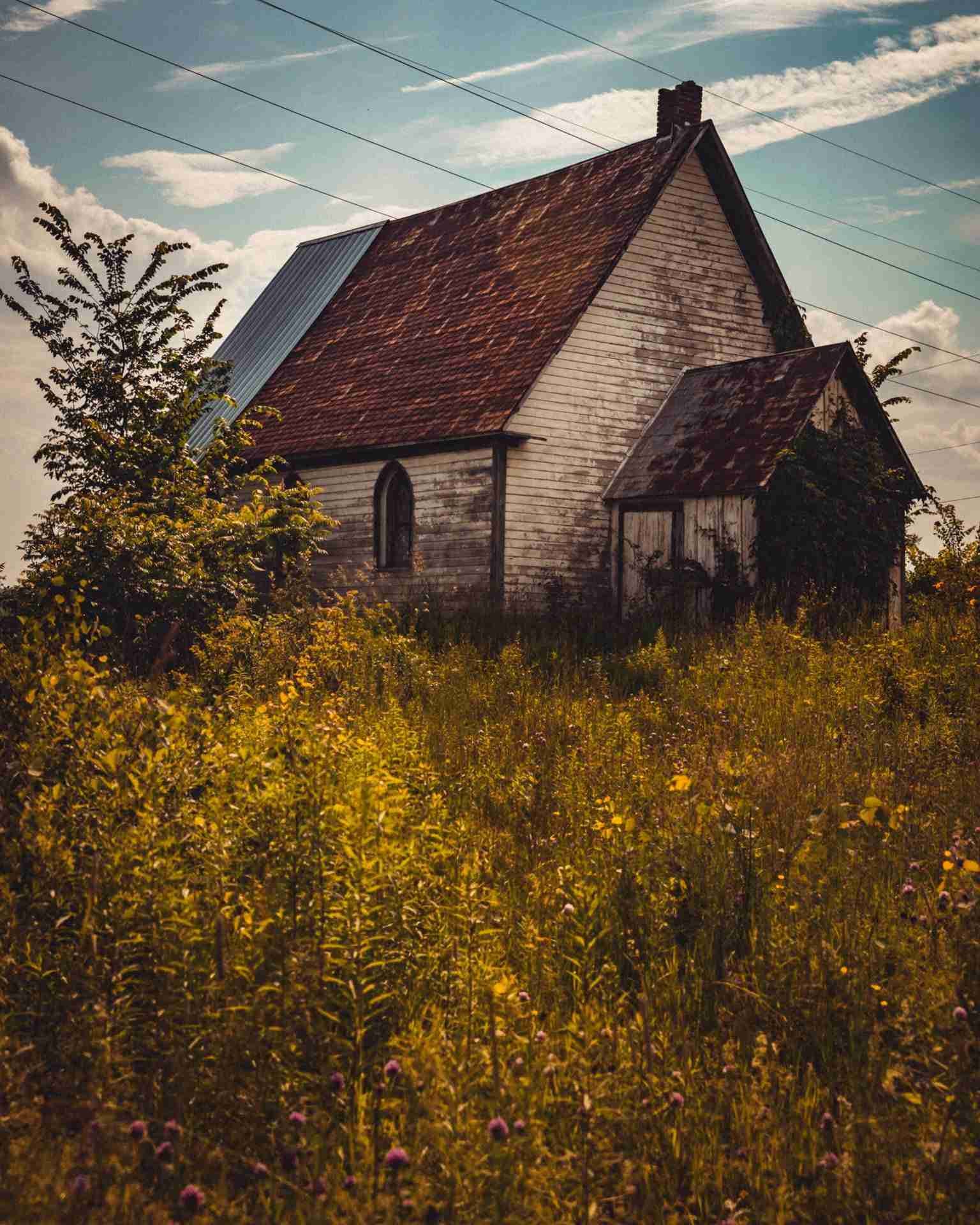
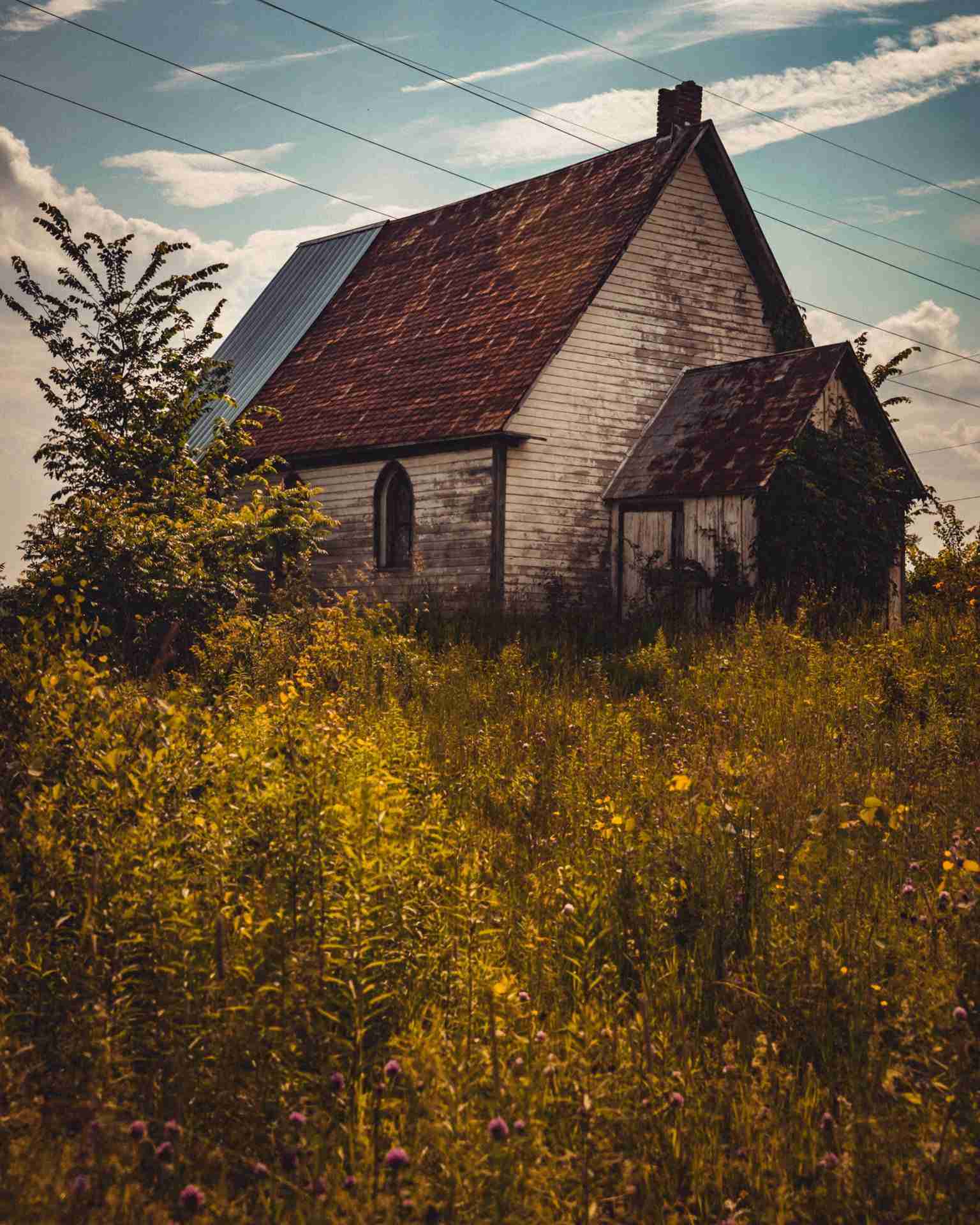
Former St. Luke's Anglican Church in Bristol, Quebec: Fading Faith and Rural Stillness
The former St. Luke's Anglican in Bristol, Quebec, with its overgrown and weed-covered facade, makes a remarkable subject for photographers interested in capturing the poignant allure of abandonment and decay. This rural location exudes a fascinating, melancholic vibe, and its weather-beaten, rustic features could provide exceptional opportunities for textural and detail photography. Please bear in mind that this is private land, and as such, respect for boundaries is essential, and attempts to enter the structure should not be made.
Best Photography Opportunities
• Facade Framed by Foliage
The church's classic silhouette—a small peaked roof and modest steeple—is softened and partially obscured by surrounding weeds and branches. This creates a moody, layered composition when shot from the roadside. A 24–70mm lens offers flexibility in capturing both the full scene and tighter, atmospheric studies. Overcast skies bring out the subtle grain of aged wood and stone, while spring and autumn growth provide colorful natural framing that hints at the passage of time. For more dramatic compositions, include diagonal foreground lines such as leaning trees or overgrown pathways to draw attention toward the building. Dawn fog or light snowfall can turn a quiet shot into a ghostly rural tableau.
• Weathered Details and Surfaces
Peeling paint, rusted hinges, cracked stained-glass windows, and warped wood all tell the story of the church's decline. A telephoto lens or macro setup allows you to isolate these details from the roadside. Early or late light skimming across the structure enhances texture. A polarizer can deepen wood tones and cut down on reflective glare. These elements—decaying signage, broken crosses, mossy thresholds—invite slow, patient image-making. Try experimenting with focus stacking if you're working with dense surface textures or capturing layers of decay. Including small natural elements like insects or plants poking through architectural features can emphasize the slow merging of the manmade and the organic.
• Seasonal Contrast and Symbolism
Each season reshapes the emotional impact of the site. Snow softens the scene into monochrome quietude, emphasizing absence and silence. Spring growth juxtaposes new life against crumbling infrastructure, while fall intensifies the feeling of change and inevitable decline. Shooting during these transitional moments helps amplify the site's metaphoric richness. Fog or low cloud cover can enhance atmosphere and isolate the church visually from its surroundings. In late summer, tangled grasses and golden light wrap the building in a kind of glowing neglect, offering a powerful narrative contrast between light and disrepair.
• Monochrome for Emotional Weight
Black-and-white photography works powerfully here, distilling the church's simple architecture and overgrowth into stark contrasts. Use strong leading lines—like fence posts or winding roads—to draw viewers into the frame. This setting lends itself well to low-key compositions where shadows dominate and only key highlights define form, especially under stormy or dim skies. Embrace grain, vignettes, or tilt-shift effects in post-processing to underscore the aged aesthetic. Even reflections in puddles or wet stone can be captured in monochrome to introduce subtle compositional echoes.
• Contextual Wide Shots
From across the road or a nearby hill, you can frame the church within its wider rural setting—rolling fields, tangled fences, or distant trees. A wide-angle lens lets you explore the interplay between structure and landscape, highlighting isolation and time's slow encroachment. Including empty roads or telephone wires can add visual narratives of abandonment and lost connection. If you're shooting at dusk, silhouette the building against a gradually cooling sky to capture its shape in a somber outline. For added visual depth, look for layered compositions with blurred foreground foliage leading into crisp mid-ground architecture and soft background terrain.
Best Time to Visit
The former church is visually striking year-round. Overcast skies, common in late fall and early spring, create beautifully diffused lighting ideal for emphasizing textures without harsh shadows. Early morning and twilight offer the best mood lighting, especially if fog rolls in across the nearby fields, wrapping the building in soft atmospheric layers.
Autumn transforms the location into a painterly scene. Red and orange leaves scatter the ground and cling to overgrowth, providing vibrant contrast to the building's faded grays and browns. The play of autumnal decay and architectural decline echoes the visual poetry of endings.
Winter lends a minimal, somber tone. Fresh snow outlines the roofline and ground, turning the scene into a sparse monochrome study. In spring, moss, saplings, and weeds reassert their claim on the structure, creating a visual tension between rebirth and erosion.
Avoid midday sun, which can flatten textures and wash out the building's patina. Instead, aim for angled side light to reveal every warp and weathered detail. Visiting just after rainfall enhances color and texture and may provide reflective puddles for added compositional depth.
How to Get There
The church is located in the rural community of Bristol, Quebec, along Sixth Line Est Road, between Chemin Ragged Chute and Chemin Magic. This quiet country road offers a clear view of the structure from the public right-of-way. While the building is situated on private property, it can be respectfully photographed from the roadside. A gravel shoulder nearby allows for short-term parking without obstructing traffic.
Because the site is on private land, do not attempt to enter the property. Use a telephoto lens for close-up details, and consider bringing a step stool if you need to elevate your vantage point above roadside vegetation. The area is calm, but always be courteous of locals and maintain a discreet presence.
Recommended Gear for Rural Abandonment Photography
A mid-range zoom (24–70mm) is ideal for composing both full building views and tighter contextual shots. This lens offers versatility for framing everything from wide facade compositions to intimate close-ups of crumbling architectural elements. A telephoto lens (70–200mm or longer) allows you to zero in on specific details like broken trim, stained-glass remnants, or creeping vines while maintaining a respectful distance from the property. Fast primes, such as a 50mm f/1.4 or 85mm f/1.8, are excellent for handheld shooting in low light, delivering shallow depth of field and beautiful falloff that enhances mood and subject isolation.
A sturdy tripod is a must for early morning or blue hour photography. It stabilizes long exposures, enables precise composition, and supports your gear safely if you're navigating uneven roadside terrain. Combine it with a remote shutter release or timer mode to eliminate shake. A polarizing filter is essential to cut glare on windows, intensify textures in aged wood or stone, and deepen contrast in the sky or foliage. ND filters, particularly 3- to 6-stop versions, can help blur motion in passing clouds or create ethereal effects under shifting light conditions.
Weather-sealed equipment or rain covers are strongly recommended. The site is exposed to the elements, and mist, drizzle, or road spray can affect your gear. Microfiber cloths, sensor swabs, and weatherproof storage bags ensure your kit stays clean and functional. A lens hood or flare blocker helps manage backlight or cross-lighting during sunrise and sunset.
Footwear should offer both traction and comfort, as roadside shoulders may have loose gravel, tall grass, or soft earth. A lightweight stool or small ladder can improve your vantage point above shrubs or guardrails and allow for more stable, elevated shots. A headlamp or flashlight is useful for pre-dawn setup, and insect repellent is a practical addition during warmer months.
For those looking to document their visit more fully, consider packing a field notebook or voice recorder to capture story details and shooting impressions. Finally, always carry spare batteries and memory cards—abandonment photography often rewards slow, immersive exploration, and you don't want your gear to give out before you do.
Nearby Photography Locations
• Bristol Beach Lookout
: A peaceful waterfront spot with expansive river views, ideal for sunset reflections and pastel-toned skies. It's a great place to switch gears from architectural work to wide-open landscapes.
• Norway Bay Cottages
: This heritage-filled neighborhood offers a mix of aging wood cabins, charming signage, and weathered details perfect for nostalgic photo essays.
• Green Lake Road
: Rolling hills, old barns, and winding gravel roads make this a prime area for rural scenes, particularly under dramatic skies.
• Mill Road Ruins
: Further west, remnants of a stone structure slowly crumbling into the surrounding field offer moody material for detail studies and black-and-white compositions.
• Pontiac Abandoned House
: Just a short drive away, this weathered roadside house offers a powerful sense of narrative decay and complements the themes found at St. Luke's.
Photographing the former St. Luke's Anglican Church is about more than capturing decay—it's about exploring atmosphere, memory, and the quiet dignity of forgotten places. The structure offers a visual meditation on faith, time, and the slow transformation of space through seasons and silence.
Comments
Loading comments…