
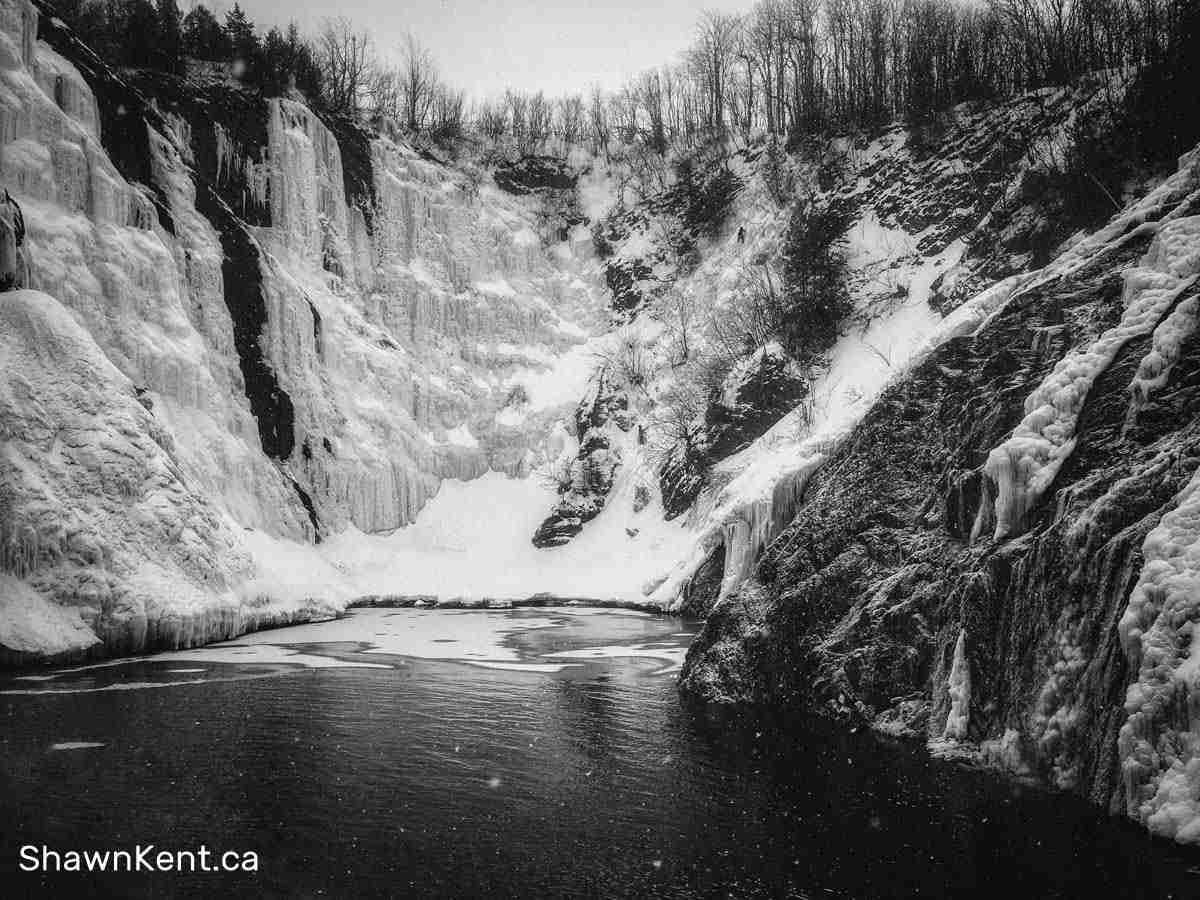
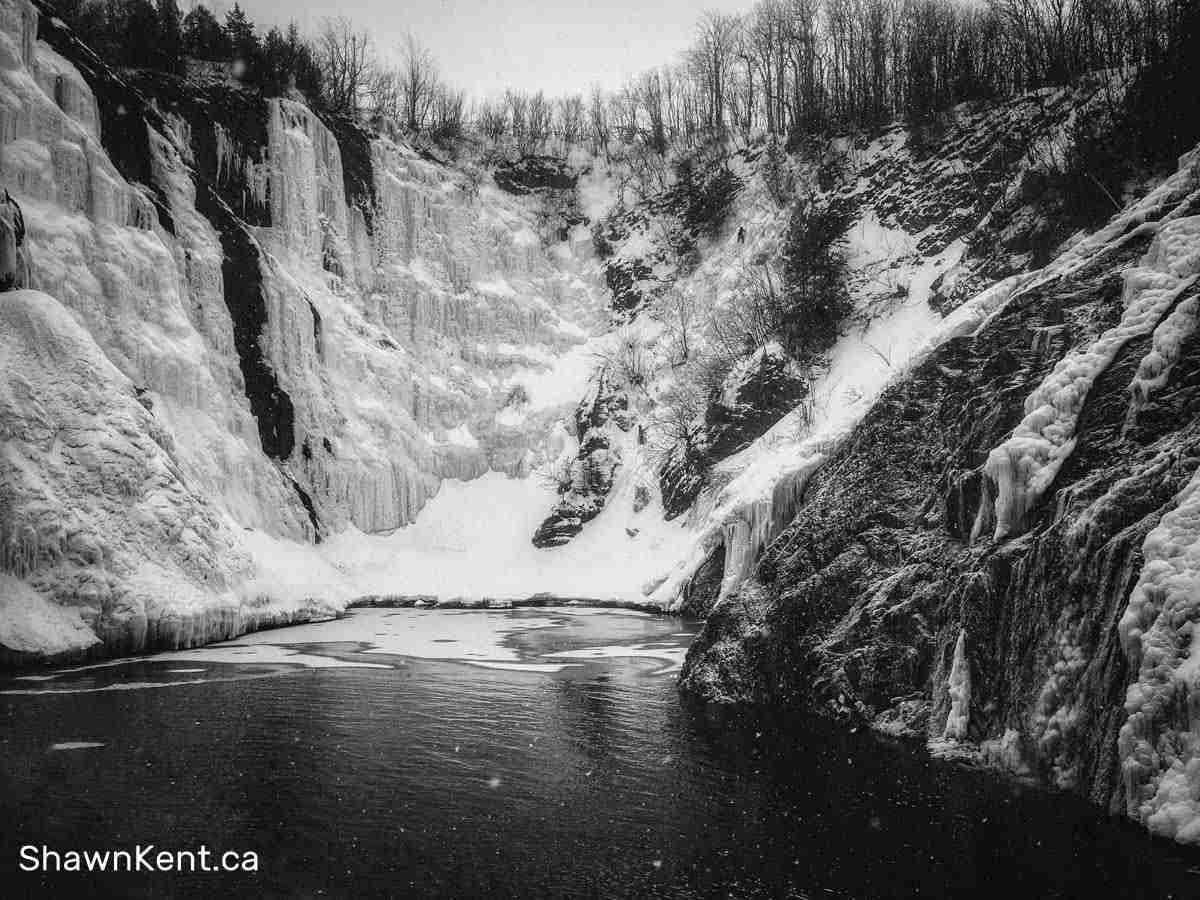
Parc de la Petite Chute, located in the Beauce region of Quebec just north of Saint-Georges, is a small but evocative natural area built around a scenic cascade. Unlike more grandiose destinations, its appeal lies in intimacy and quietude—sloped forest trails, textured rock formations, and the constant rhythm of falling water. For photographers, it's a space that encourages a slower pace, with opportunities to explore detail, light, and seasonal variation. The waterfall itself, while modest in height, flows with enough grace and character to anchor compositions year-round, framed by the kind of foliage and terrain that reward careful observation and thoughtful framing.
Best Photography Opportunities
• Main waterfall compositions from the viewing platform and stream edge
The central feature of the park, Petite Chute, descends a layered rock face into a narrow streambed, framed by hardwood forest and moss-covered ledges. From the designated wooden platform, photographers can capture the full curtain of water as it moves over uneven terrain, offering natural lines and texture that lend themselves to both fast and slow shutter speeds. A tripod and neutral density filter allow for smooth, ethereal long exposures, especially in low light. Step slightly off the main path—while remaining on solid footing—and you can shoot from stream level, incorporating foreground rocks, leaves, or branches into wide-angle compositions. These elements anchor the image and create a sense of proximity, pulling the viewer into the flow of the scene.
• Intimate detail studies along the creek and rock shelves
The stream below the falls continues through a shallow, rocky corridor that changes character with the seasons. In spring and after rainfall, water snakes between stones and over miniature ledges, producing compelling motion for tight compositions. In autumn, the rocks collect layers of fallen leaves, creating textural contrast between the organic and the mineral. Look for reflective surfaces or moss that catches light from the canopy above. A mid-range zoom or fast prime allows you to isolate these elements, especially when shooting handheld in soft light. These scenes are not about grandeur but about the subtle harmony of water, light, and surface.
• Framed perspectives using bridges, handrails, and tree cover
Several small bridges and wooden structures punctuate the path, offering linear elements that contrast with the curves of water and trail. These can be used to frame scenes or introduce human geometry into natural compositions. From slightly elevated positions on a bridge or adjacent slope, you can photograph the waterfall with the framing of the bridge itself, or create symmetrical compositions with leading lines converging at the falls. In autumn, overhanging branches form a canopy of warm tones, which can be used to enclose the frame and draw focus to the central cascade.
• Forest paths and canopy light patterns
Beyond the waterfall, the park's trail system moves through dense patches of maple, birch, and spruce, with occasional clearings that open to softer light and subtle elevation shifts. These sections are ideal for layered vertical compositions, particularly in morning or evening light. Fallen logs, trail curves, and tree roots provide structural rhythm and visual interest. Use a wide-angle lens to exaggerate the depth of the path and include nearby elements like ferns or low-lying shrubs to create a multi-dimensional frame. In mist or light fog, these trails take on an ethereal quality, softening contrast and adding mystery to otherwise straightforward scenes.
• Seasonal atmosphere and changing surface textures
The appeal of Parc de la Petite Chute is deeply tied to its seasonality. In spring, melting snow swells the stream and feeds rivulets across the rock face, while the forest floor comes alive with early moss and ground cover. In summer, light dapples through the leafy canopy, creating shadow play and areas of high contrast ideal for mood-rich black and white work. Autumn is the most colorful and varied time—leaves fall into the stream, trails turn golden, and the waterfall is framed by vibrant foliage. Winter transforms the area completely: the falls partially freeze, snow accumulates on the rocks, and icicles hang from the ledges, producing a sculptural stillness that invites minimalist compositions.
Best Time to Visit
Parc de la Petite Chute offers compelling photographic conditions year-round, though each season brings its own pacing and palette.
Spring is dynamic, with strong water flow and new growth emerging from under the last patches of snow. The stream runs fast, and the trail is textured with melting debris and early vegetation. This is an ideal time for capturing natural renewal and subtle motion, especially under diffuse light.
Summer introduces fuller foliage and more consistent lighting. Morning and late afternoon are best for avoiding harsh midday sun, and the forest trails offer cool shade that works well for capturing layered compositions with sharp contrasts. The waterfall's flow may be reduced in late summer, making it ideal for tight, graphic studies of water movement over rock.
Autumn is the most photogenic season in terms of color and mood. Late September through mid-October sees peak foliage, and the combination of fallen leaves, golden canopies, and reflective water provides an abundance of visual possibilities. Fog and mist are common, particularly after rain, creating soft, atmospheric conditions that favor storytelling images.
Winter simplifies the landscape into a study of tone, line, and contrast. The waterfall often continues flowing beneath ice, creating unique textures that reward close-up work and long exposures. Snow on branches and along the stream edge helps isolate shapes and build strong composition. It's a quieter season, ideal for contemplative images and minimalist frames.
How to Get There
Parc de la Petite Chute is located just north of Saint-Georges in the Beauce region of southern Quebec, approximately 90 minutes by car from Quebec City. From Route 173 (Boulevard Lacroix), follow local signage to reach the park's small parking area. The entrance is clearly marked, and the main trailhead begins directly from the lot.
The park is compact and easily navigated on foot, with the waterfall reachable in just a few minutes along a gently sloped trail. Bridges and viewing platforms make the space accessible, though winter visitors should be cautious of icy conditions.
There is no entrance fee, and the park is open year-round. Amenities are minimal, so bring water and appropriate footwear for the season. The quietest times for photography are early mornings and weekdays, when visitor traffic is low and the light is soft and undisturbed.
Recommended Photography Gear
A wide-angle lens (16–35mm) is essential for capturing the full waterfall, forest paths, and layered stream compositions. For more controlled framing and subject isolation, a mid-range zoom (24–70mm) provides excellent flexibility—particularly useful when shooting from slightly elevated vantage points or compressing forest depth.
A fast prime lens (35mm or 50mm) is ideal for hand-held detail work, especially in shaded trail sections or when focusing on streamside textures. For macro and abstraction, a dedicated macro lens or a close-focusing prime can reveal intricate details in bark, rock, ice, and seasonal vegetation.
A tripod is critical for long exposures, especially at the falls. Combine this with a 6-stop or 10-stop ND filter to manage shutter speeds in brighter light and create smooth water effects. A circular polarizer is helpful in all seasons for cutting glare on wet surfaces and enriching color saturation, particularly in autumn or spring.
In winter or wet conditions, carry lens cloths, rain protection, and stable footwear. The terrain is generally forgiving, but stream edges and wooded areas can become slick. A compact gear setup is ideal, as the park encourages slow, immersive shooting rather than long-range exploration.
Nearby Photography Locations
A larger and more varied park with seven named waterfalls, forested staircases, and elevated lookouts. Ideal for panoramic forest scenes, dynamic water movement, and multi-angle compositions within a more rugged landscape.
This historic wooden bridge spans the Chaudière River and offers clean lines, strong symmetry, and seasonal beauty—especially when framed against snow, foliage, or reflected in calm water below.
• Chaudière River in Saint-Georges
A more urban setting along the riverbanks downtown, with stone embankments, walkways, and the river's dynamic flow offering strong leading lines and reflective compositions. Excellent at golden hour or after rainfall.
• Lac Poulin Lookout
A quiet lakeside viewpoint that offers expansive water reflections, distant ridgelines, and rich morning color. Best visited at sunrise or on still days when the lake acts as a mirror.
Located nearby, this small woodland preserve offers subdued forest paths, marshland textures, and occasional wildlife activity—an ideal complement to the water-centric compositions at Parc de la Petite Chute.
Parc de la Petite Chute may be modest in scale, but for the patient photographer, it offers a concentrated experience of natural rhythm and visual quiet. With just a few steps off the trail, you can find yourself surrounded by the essential elements of landscape photography—light, water, structure, and time—waiting not for spectacle, but for attention.
Comments
Loading comments…