
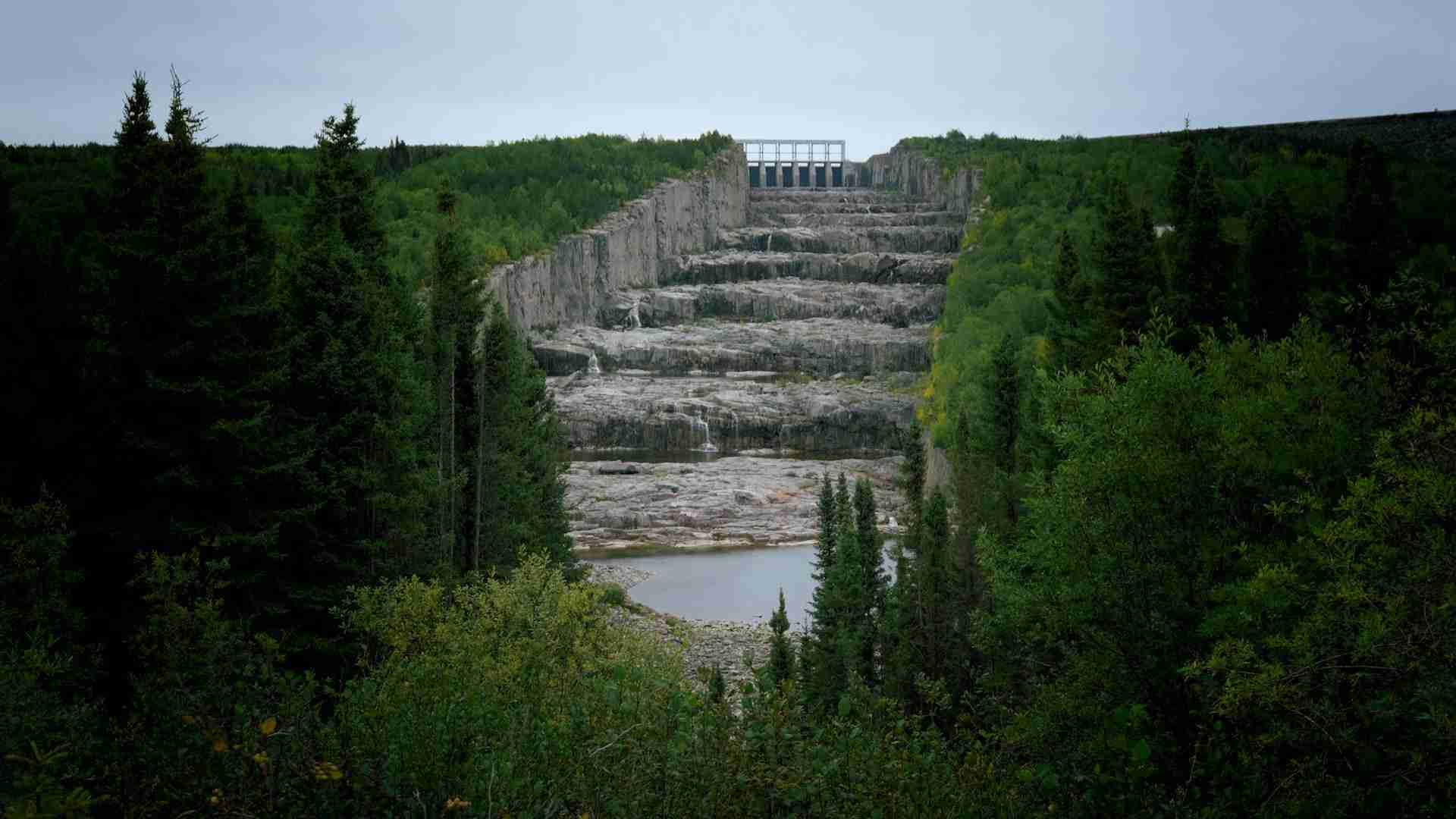
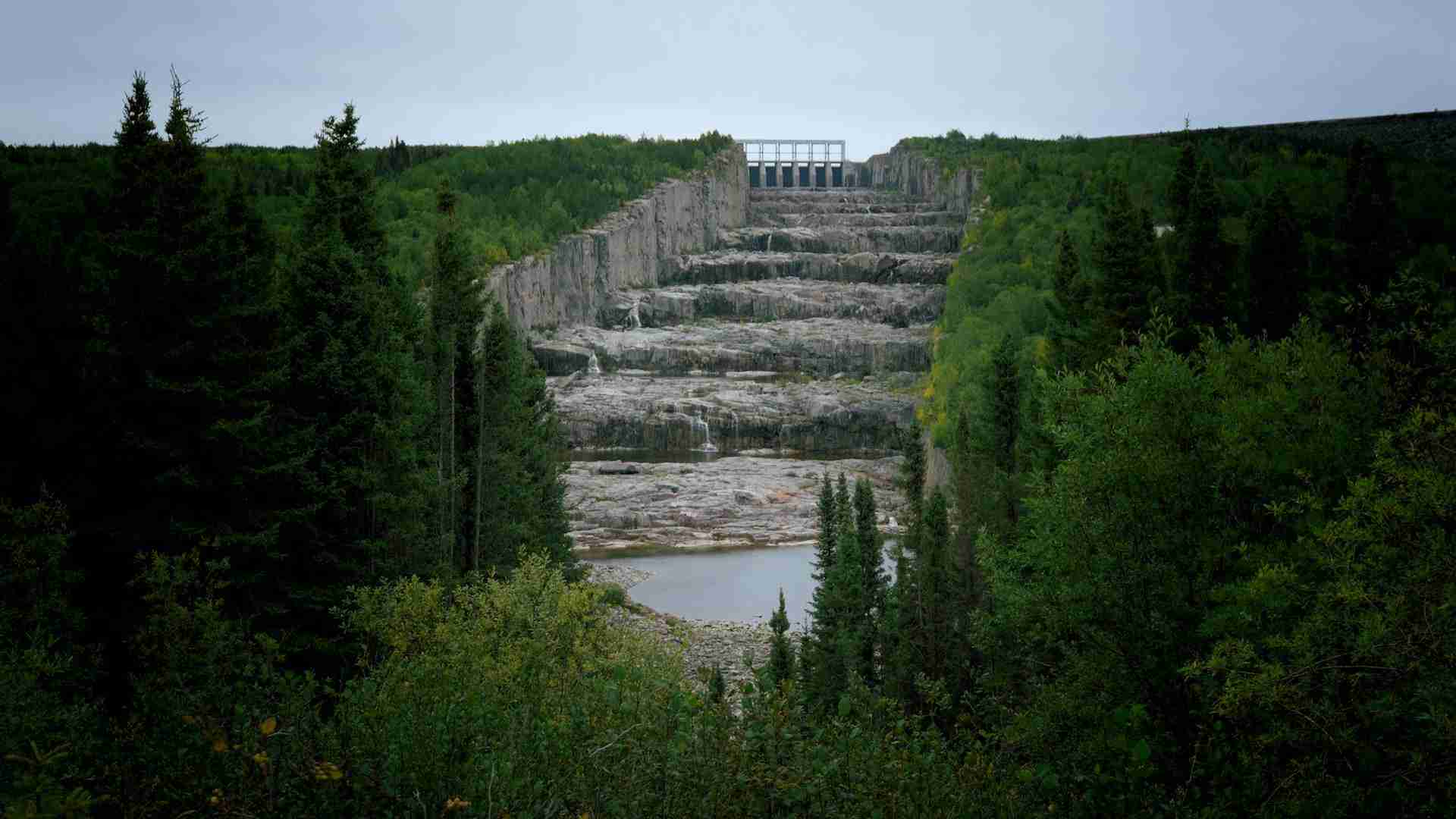
Belvédère Robert-Bourassa offers a rare and structured view over the Escalier des Géants, where stepped spillways carve their way down the massive face of the Robert-Bourassa hydroelectric complex. Situated off the James Bay Road in northern Quebec, this elevated platform provides a direct, open view of the sprawling infrastructure set against the remote boreal landscape. The scale of the site is immense, but the view is clean and ordered, with the engineered lines of the spillway creating strong visual direction for wide and compressed compositions. The surrounding forest and sky give balance to the hard textures of the concrete, and the light across this open terrain changes gradually throughout the day. For photographers looking to work with line, motion, and the tension between natural form and massive construction, this location delivers a steady and expansive field of view.
Best Photography Opportunities
Overlook Platform Framing the Full Spillway Structure
The primary view from the belvédère gives photographers a stable and elevated angle looking directly onto the spillway's stepped structure. A wide-angle lens between 16 and 35 millimeters is essential for capturing the full scope of the engineering below. Morning light comes in from behind and to the side, casting directional shadows that enhance the texture and depth of the giant concrete steps. Midday is flatter but still effective due to the structural repetition across the frame. This view works well with both color and black and white, and the presence of forest beyond the dam helps create a visual backdrop that reduces sky dominance. The platform has space for a tripod and offers uninterrupted shooting without barriers.
Detail Studies of the Spillway Surface and Flow Pattern
When water is running, tighter compositions using a 70 to 200 millimeter lens allow you to isolate sections of the spillway and capture patterns in the water's descent. These studies benefit from medium to fast shutter speeds to freeze the geometry of the falling water against the hard surface. Focus on areas where texture shifts between wet and dry steps or where lines converge in the center channel. Even in dry periods, the weathered concrete provides tonal variation and rhythm that holds interest. Overcast conditions help manage contrast and make it easier to balance exposure without clipping highlights.
Layered Compression Using Telephoto from Rear Angles
From slightly farther back along the ridge, or from the access road if permitted, it is possible to use a telephoto lens to compress the layered elements of the spillway and the forest beyond. This angle is especially effective in early morning or late afternoon when the shadows stretch across the vertical lines. Framing carefully allows you to remove the sky entirely, focusing attention on the structural repetition and tonal transitions. A focal length between 135 and 300 millimeters gives the best flexibility here, especially if you are working in changing light or trying multiple framings within a short time.
Environmental Wide Frame Showing Forest and Sky
If you want to create a more environmental image that places the spillway within the broader context of the James Bay region, step back from the platform and include the treeline, horizon, and elements of the sky. A 24 to 70 millimeter lens provides the reach and flexibility needed to pull this together without flattening the space too much. These compositions work best in early morning or just before sunset, when the sky carries subtle color and the contrast between infrastructure and forest is softened by warm tones. Cloud cover helps unify the frame, especially if you are shooting for tone rather than detail.
Evening Light and Subtle Motion When Water is Present
On days when water is flowing, the last hour before sunset gives you a narrow but productive window for long exposures. Use a tripod and a remote shutter to stabilize the frame and capture soft movement across the stepped face. A neutral density filter in the three to six stop range helps slow the shutter without losing highlight control. This type of image works well with strong horizontal framing, balancing sky, spillway, and motion. Be aware that water flow is not constant year-round, so verify conditions in advance if you are planning this approach.
Best Time to Visit
The best season for photographing Belvédère Robert-Bourassa is between late spring and early autumn, when access roads are open and the weather is more stable. May through July is typically the most productive period for water flow, especially after snowmelt, though conditions may vary depending on operational schedules for the hydroelectric system. In these months, the light is clearest in early morning and more colorful in the final hour of the day.
Midday during summer offers the longest access windows and more predictable conditions, but the light can be harsh and require careful exposure control. Cloud cover often helps manage contrast and adds texture to otherwise blank skies. In autumn, the surrounding forest begins to shift in tone, and while color change is not dramatic, the lower sun angle and cooler air increase clarity and sharpness across the frame.
Winter access is limited and not recommended unless you are part of a permitted tour. The platform may be closed, and visibility is often reduced due to fog, snow, or overcast conditions. Bring weather protection for your gear at all times, as wind is common across the open ridge, especially during early and late hours.
How to Get There
Belvédère Robert-Bourassa is located off the James Bay Road near the Robert-Bourassa generating station in northern Quebec. From Matagami, follow the James Bay Road north for several hours until reaching the signed access road to the station. The overlook is located along the visitor route used for guided tours but is also accessible by car during the open season. The final approach is on a maintained road, and there is a designated parking area at the belvédère itself.
There is no hike required to reach the overlook, and the viewing platform is level and fully accessible. Photography is permitted from all public viewing areas. Entry to the site is free, but access to the interior of the generating station or dam structure requires advance arrangement through Hydro-Québec. Be sure to check in advance for hours of operation or seasonal restrictions, particularly during late fall and winter months.
Recommended Photography Gear
Bring a sturdy tripod for long exposures and low-light work, especially during early morning or late evening sessions. A wide-angle lens such as a 16 to 35 millimeter is necessary for capturing the full spillway from the viewing platform. A 24 to 70 millimeter zoom helps manage balanced environmental frames that include forest and sky. For isolated detail work or compressed compositions from farther back, a 70 to 200 millimeter or longer telephoto lens is essential.
Use a circular polarizer to reduce glare on wet concrete and manage brightness in the sky. A three or six stop neutral density filter is helpful for softening water motion during flow periods. Pack a lens cloth, as wind and mist can cause buildup on glass, especially during high water flow. A lightweight pack and wind-resistant clothing are recommended due to exposed conditions on the ridge. Batteries drain more quickly in cold air, so bring extras if you are working in early morning or off-season light.
Nearby Photography Locations
Located upstream from the generating station, this massive reservoir offers calm water, broken shorelines, and distant treelines. It is best used for simple, open compositions in soft light or when the wind drops enough for reflection work.
James Bay Road Scenic Turnouts
Along the route north and south of the belvédère, several pullouts offer views of the boreal forest, long ridgelines, and isolated rivers. These are best suited to telephoto studies and layered compositions in changing light.
La Grande River Crossing
The river crossings south of the dam give wide views over flat, forested floodplains. Use these for atmospheric studies during sunrise or late day when shadows move cleanly across the terrain.
Chisasibi Area Shoreline
Farther north near the community of Chisasibi, the shore of James Bay opens into low, open tidal flats with quiet inlets and distant sky. This is a strong area for minimal work and horizon line studies, though travel time is significant.
Eastmain River Lookout
South of the main station, this remote point gives a clear view of the river cutting through forest with strong directional flow. Best used with a telephoto lens from the shoulder or short trail segments nearby.
Belvédère Robert-Bourassa provides photographers with a stable, structured location to work with one of the largest hydroelectric features in Canada. The contrast between the engineered face of the dam and the remote forest surrounding it gives balance and flexibility to the frame. Whether you're isolating detail or framing wide scenes of scale and repetition, this site offers quiet, uninterrupted sessions in a part of the province that few photographers ever reach.
Comments
Loading comments…