
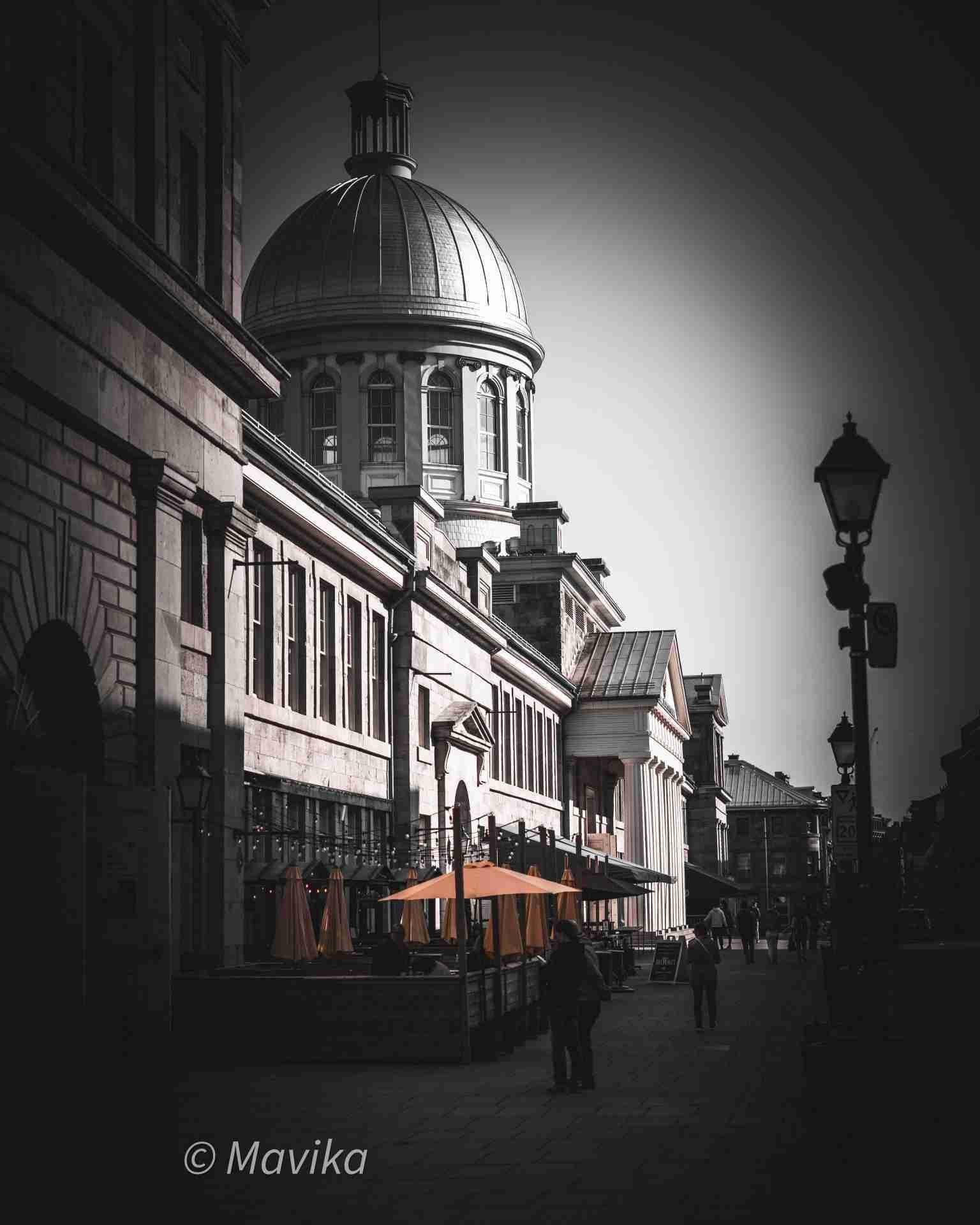
Bonsecours Market, Montreal: Architectural Grandeur and Old Port Charm in the Heart of the City
The Bonsecours Market sits in the heart of Old Montreal and is a two-story domed public market with unmistakable neoclassical architecture. For more than 100 years, it served as the city's primary market space, acting as a focal point for local commerce and civic pride. Today, it is one of Montreal's most visually compelling heritage sites. The building's polished aluminum dome, grand colonnades, and historic stonework are juxtaposed against the cobbled streets and modern bustle of the Old Port, offering photographers a layered setting rich with architectural detail, reflection potential, and storytelling character.
Best Photography Opportunities
• Morning Light and Symmetry from Rue de la Commune
Position yourself along Rue de la Commune early in the morning when the market is bathed in golden light and pedestrian traffic is minimal. From this low vantage point, the building's dome and symmetrical façade reflect beautifully in the street's glassy cobblestones after rainfall. Use a wide-angle lens to capture the full scale of the market while framing with the flanking buildings or lampposts to guide the eye inward. The morning light adds warmth to the gray stone and highlights architectural contours. For the most dynamic results, arrive just before sunrise to catch the blue-to-gold transition and take advantage of long shadows and clean streets. Overcast mornings are also effective for diffused, shadowless detail shots.
• Reflections in the Old Port Basin
From the footpath across the water basin just south of the market, the Bonsecours dome often reflects sharply on calm mornings or after light rain. A standard 24–70mm lens allows you to compress the building and its reflection into one balanced frame. This is particularly effective in autumn when the riverfront trees add a band of warm color beneath the stonework. A circular polarizer can help you manage surface glare while enhancing color contrast between water and sky. In early evening, this same spot offers the chance for golden-toned reflections under soft sidelight, or light trail experiments when boats or bikes pass in front of your composition.
• Details and Textures from the Building's Flanks
Walk along the side alleys—such as Rue Bonsecours or Rue Saint-Paul—for tighter architectural studies of doorways, columns, stone textures, and wrought iron. A 50mm or 85mm prime lens is ideal for isolating details with pleasing background separation. Look for repetitive elements like windows or cornices and play with light and shadow for added depth. On overcast days, the diffused light works to your advantage, creating a soft, even exposure that highlights the building's material qualities. Pay special attention to the market's inscription, emblematic crests, and weather-worn fixtures—they tell the story of the building's age and craftsmanship in ways that wide shots cannot.
• Street Life and Market Activity
The plaza and pedestrian areas around Bonsecours Market come alive during festivals, weekends, and summer evenings. Street musicians, vendors, and local performers add vibrancy to the space and make it perfect for candid photography. A 35mm lens gives you environmental context while allowing close composition. Use a fast shutter speed to freeze motion or a slightly slower one for subtle blur that conveys energy and movement. Early evening light adds warmth, while later hours let you experiment with artificial lighting contrasts. The juxtaposition of historic architecture and contemporary human presence provides fertile ground for street photography narratives that feel distinctly Montreal.
• Blue Hour and Dome Illumination
As night falls, the dome of Bonsecours Market is lit with soft white lighting, contrasting beautifully against the deepening blue of the sky. Set up across the street or along the water's edge with a tripod for long exposures, capturing both the glow of the structure and the light trails of passing vehicles. Use an ND filter to lengthen exposures even before it gets fully dark, allowing for motion in the clouds or smoothing pedestrian movement. Reflections in nearby puddles or the water basin can enhance the overall composition. For added impact, compose your shot to include street lamps or illuminated signage that adds depth and color to the frame, and consider bracketing exposures for later blending in post-processing.
Best Time to Visit
Bonsecours Market is visually compelling year-round, but each season offers a different photographic mood. Spring and summer bring soft morning light and active pedestrian traffic, perfect for capturing life around the building. Early morning and late evening light in these seasons casts long, flattering shadows that bring out the architecture's sculptural detail. This is also the best time to catch reflections in the water or on rain-slicked stone.
Autumn offers warm tones that contrast beautifully with the market's gray stone exterior. The surrounding trees shift to gold and red, and their color often appears in reflections or as natural framing devices. Cooler temperatures and thinner crowds also make sunrise and sunset shoots easier to manage. Winter transforms the space into a black-and-white palette of snow-dusted architecture, icy reflections, and long blue shadows. A good time to explore minimalist compositions and experiment with contrast-heavy exposures.
Blue hour and night photography are particularly rewarding here, especially in December when holiday lighting is installed around the plaza. Arriving just before sunset gives you time to set up and catch the full transition from natural to artificial light.
How to Get There
Bonsecours Market is located in the heart of Old Montreal at 350 Rue Saint-Paul E. It's easily accessible by foot, bike, or public transit. From Champ-de-Mars Metro Station, walk five minutes southeast along Rue Berri. If arriving by car, paid parking lots are located nearby, particularly along Rue de la Commune. The area is extremely walkable, and the surrounding streets offer many additional angles and compositions.
There is no entrance fee to photograph the exterior of the market. The building's interior contains boutiques, event spaces, and galleries, many of which may allow photography but typically with restrictions—always ask permission when shooting inside. For night photography or extended tripod use, consider visiting outside regular business hours when foot traffic is lighter.
Essential Gear for Urban Heritage Photography
Photographing Bonsecours Market benefits from a flexible kit tailored for architectural and street work. A 24–70mm zoom will cover most exterior compositions, from symmetrical building shots to contextual cityscapes. Add a 16–35mm wide-angle for dramatic low perspectives or tighter spaces, particularly when shooting along narrow cobblestone streets. A fast prime—either 35mm or 50mm—works well for low-light and candid moments during market events.
A travel tripod is helpful for long exposures and blue hour photography. Choose a compact, quick-deploy model to stay nimble among pedestrians. Use a polarizer to reduce glare on wet cobblestones or shop windows, and pack a few ND filters if you're planning to shoot long exposures at dusk or with motion blur. Remote shutter releases or intervalometers will help keep exposures sharp.
Urban environments often require fast lens changes, so bring a shoulder sling or belt system to avoid unpacking. Keep microfiber cloths handy for wiping lenses—Montreal weather can shift quickly from dry to humid or rainy. Consider packing a small LED panel or flashlight for light painting or assisting with nighttime composition setup. For shooting after dark, use gloves with tactile fingertips and a backup battery, as temperature drops can sap power quickly.
Nearby Photography Locations
: Just steps from the market, this pedestrian plaza offers vibrant street life, historic lampposts, and seasonal lighting displays. Try a long lens here to isolate architectural details framed by foliage or bustling human elements.
: Stretching south of the market along the water, this path is ideal for long exposures of river traffic and moody skyline shots. Walk here during twilight to catch rich blue tones and the glow of nearby ferris wheels and lamps.
: Located directly beside the market, this small but elegant chapel is excellent for architectural contrasts and interior light studies. Use a tilt-shift lens or careful framing to manage the convergence of vertical lines.
: The surrounding lanes are filled with period façades, cast-iron signage, and reflective windows. Perfect for texture studies, environmental portraits, or macro shots of architectural ornamentation.
• Habitat 67 Lookout
: Just across the river and reachable on foot or bike, this viewpoint offers stunning perspectives of Old Montreal's skyline with Bonsecours Market as a visible landmark. Arrive at sunset for glowing side light or early morning for calm river reflections.
Bonsecours Market is more than just a historic structure—it's a living backdrop where light, weather, and activity are in constant dialogue. From intricate details to wide-angle grandeur, the area offers a depth of visual storytelling that rewards both planning and spontaneous discovery.
Comments
Loading comments…