
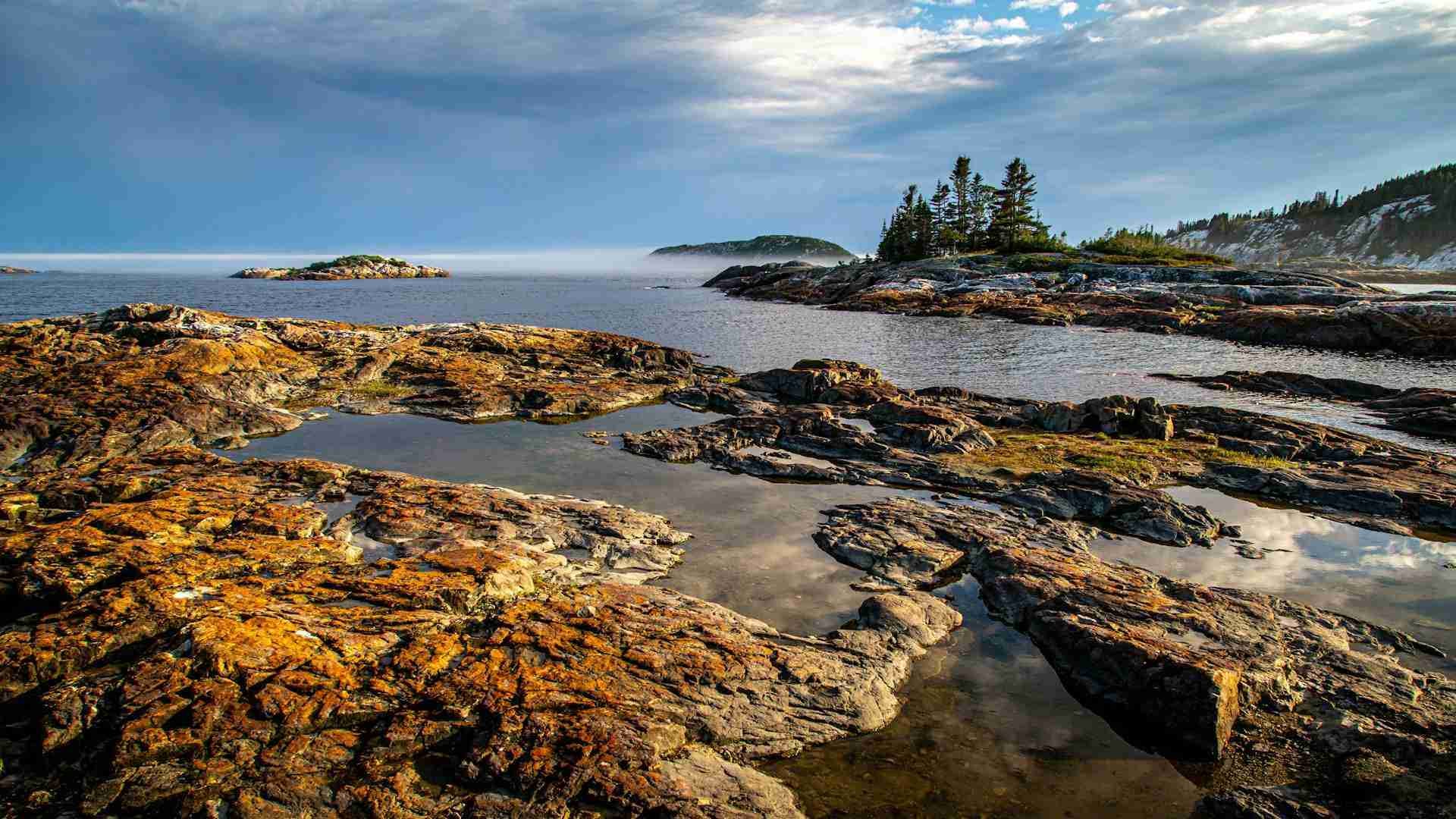
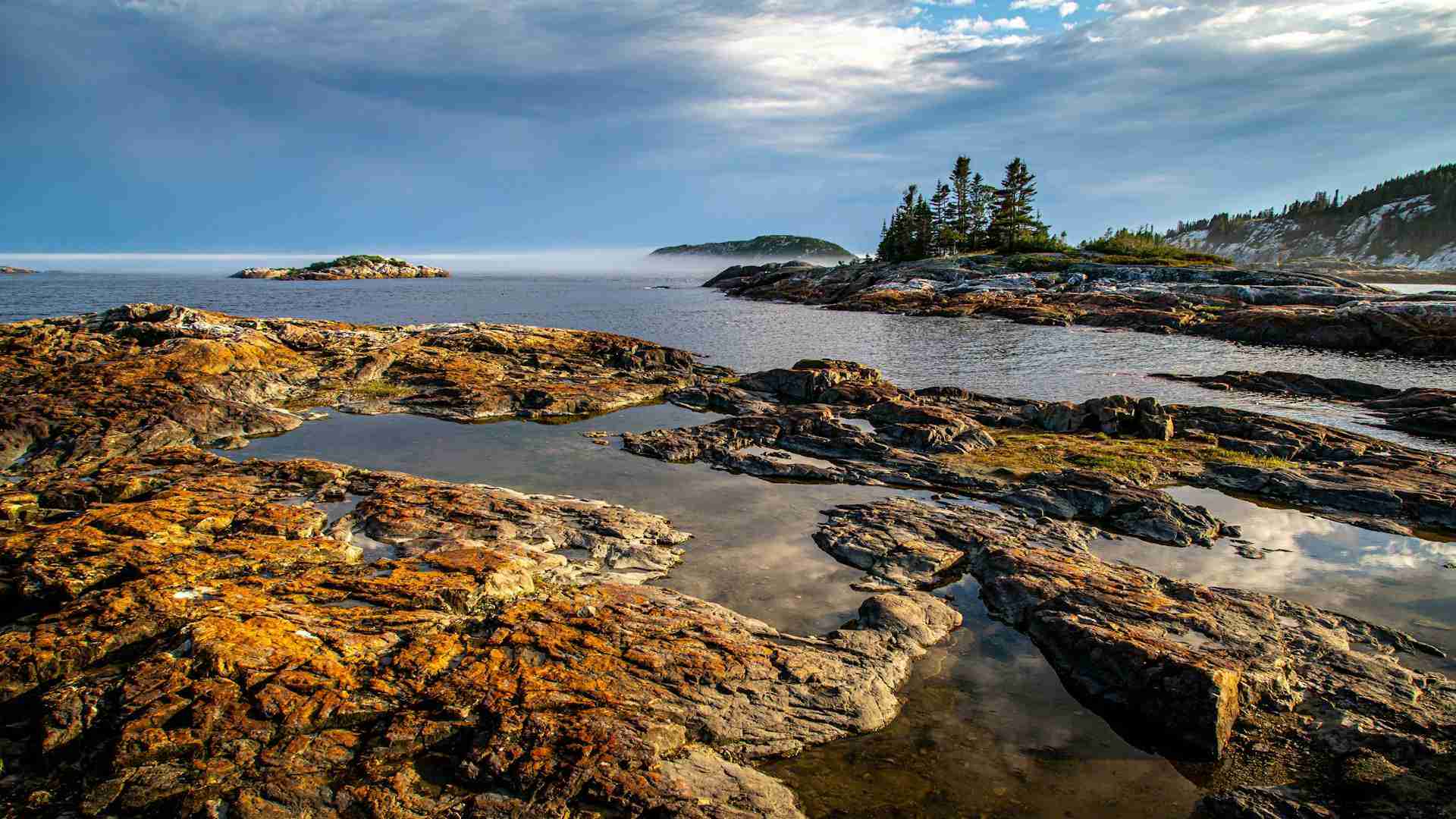
Cap de Ragueneau, located along Quebec's Côte-Nord region near the town of Ragueneau, offers a wide open section of shoreline facing the St. Lawrence River. It's a quiet, low key spot where the landscape is shaped by the tide and wind. The main draw for photographers is the combination of driftwood-covered beaches, flat rocky outcrops, and expansive river views that change throughout the day. Low tide exposes shallow pools and mudflats, while high water pulls everything back into a clean, horizontal line. If you're after minimalist scenes, weathered textures, or slow paced compositions that play with negative space, this location is worth your time.
Best Photography Opportunities
• Driftwood
One of the most prominent features at Cap de Ragueneau is the abundance of driftwood lining the shore. Large branches and twisted trunks are scattered naturally across the beach, creating strong foreground subjects and textural contrast against the smoother river backdrop. These pieces are great for building leading lines or framing elements, especially during golden hour when the light picks up detail in the wood grain. Move slowly and scout for compositions that feel balanced. Low light or overcast skies also work well here, helping emphasize shape and surface over color.
• Tide Pools and Reflections
As the tide recedes, shallow pools form in the uneven rocky and sandy areas near the water's edge. These pools are perfect for reflection photography, especially when the wind is calm and the sky has structure. Reflections of clouds, distant hills, or even nearby trees can be used to add symmetry or layers to your image. Shooting low to the surface with a wide angle lens helps exaggerate these mirrored shapes while including just enough of the surrounding beach for context. Mornings often deliver the calmest water and softest light for this kind of shot.
• Minimalist Seascapes
This part of the St. Lawrence has an open, horizontal feel that lends itself well to minimalist compositions. With a long lens, you can compress the scene and create clean lines between water, sky, and land on the far shore. With a wide angle, you can work from a low point on the beach and include textured foregrounds like wet stones or tide washed sand. Long exposures are especially effective here, smoothing the river's surface and drawing more attention to the sky. Look for moody skies or soft dusk tones to bring out the quiet nature of the scene.
• Low Tide Landscapes
During low tide, the shoreline opens up dramatically, revealing darker sand, smooth rock slabs, and small patches of sea grass. These exposed areas shift in texture and shape depending on recent weather and seasonal changes. It's a great time to explore for abstract compositions, either top down or with tighter framing. The ground itself becomes part of the subject, and shadows from driftwood or small rises in the terrain can add subtle contrast. Low angle light is helpful here to highlight form and give the flat beach more visual depth.
• Birdlife and Environmental Details
While not a major birding hotspot, Cap de Ragueneau still sees regular activity from gulls, sandpipers, and the occasional heron or hawk overhead. These subjects work best as small figures within a larger landscape; think wide shots where a single bird adds life to an otherwise still scene. A telephoto lens will help isolate them or let you compress layers of shoreline and water behind them. You can also shoot wider and let the birds blur slightly to show motion and rhythm in the scene. There's enough open space here to wait and observe without much distraction.
Best Time to Visit
Late spring through mid autumn is the best window for photographing Cap de Ragueneau. During this time, the shoreline is fully accessible, and the surrounding hills across the St. Lawrence pick up seasonal color. Summer brings the most consistent low tide windows, longer shooting days, and generally clearer skies. Mornings offer better conditions for reflections and calmer water, while evenings can produce strong side light across the driftwood and rocks. Autumn adds warmth to the overall scene, especially in the golden hour, though the effect is more subtle than in forested areas.
Tide timing is crucial at this location. Low tide reveals the most interesting terrain, from shallow pools to exposed sand patches and rock shelves. High tide simplifies the scene and works well if you're aiming for cleaner compositions or long exposures with minimal distractions. Be ready for quick changes in wind and weather. The open nature of the site means conditions can shift fast, so pack accordingly if you're planning to stay through multiple lighting setups.
How to Get There
Cap de Ragueneau is located in the municipality of Ragueneau, Quebec, along Route 138 on the north shore of the St. Lawrence River. It's roughly a 45 minute drive west of Baie-Comeau, following the scenic coastal highway. Look for signs for "Cap de Ragueneau" as you enter the town; the turnoff is clearly marked and leads to a small parking area near the water. The access road is paved and suitable for all vehicles, and the walk from the parking lot to the shoreline is short and easy.
There are no fees to access the site, and no permits are required for photography. The location is open to the public year-round, though conditions in late fall and winter can make shoreline access more difficult. There are a few benches and grassy picnic spots nearby, but no restrooms or other facilities. Cell reception is usually available, but can be spotty near the water's edge, so download maps ahead of time if needed.
Recommended Photography Gear
A wide angle lens is essential for working close to driftwood, reflections, or low tide textures while keeping enough of the scene in frame. A 14 to 24 millimeter lens works well for getting low and exaggerating perspective. A midrange zoom like a 24 to 70 gives you flexibility across both wide and detail shots without changing lenses often in windy or sandy conditions. A longer telephoto, especially in the 100 to 400 millimeter range, will help with bird shots or compressing landscape layers along the horizon.
A tripod is important here, especially if you're shooting early or late in the day, or planning long exposures of water and sky. Bring neutral density filters if you want to stretch exposure times in bright light. A polarizer can also help cut glare from the water or boost contrast in sky reflections. Because the terrain can be muddy, slippery, or uneven during low tide, waterproof boots and a stable tripod setup are a good idea. Bring lens cloths, a weather resistant pack, and protective covers in case of fast-moving rain or gusty conditions off the river.
Nearby Photography Locations
About 30 minutes west, this park offers trails through wetlands, forest, and shoreline habitats. It's a great location for bird photography, with observation towers and open sky backdrops that are especially productive during migration seasons. There's also access to quieter beaches where you can shoot wide coastal scenes in soft light.
To the east, Baie-Comeau's waterfront includes a mix of rocky shoreline and urban texture. The city's marina and working waterfront areas give you options for graphic compositions and street-to-landscape crossover work. It's especially good for evening shooting, when lights come on and the sky transitions behind the structures.
This nearby nature area offers peaceful trails, river views, and elevated outlooks. The shoreline is more wooded here, with occasional breaks that let you shoot across the water or frame scenes between tree branches. It's a quick stop for landscape work if you're already in the Baie-Comeau area.
If you're heading farther up the Côte-Nord, this location offers a completely different shoreline feel. The beach is long and sandy, with plenty of space for clean, minimal compositions. The curve of the bay works well for panoramic scenes, and long exposure photography is especially effective here in the evenings.
• Manicouagan Reservoir Rim Views
A detour inland brings you to one of Quebec's more dramatic landscapes; the rim of the ancient Manicouagan impact crater. From various access points, you can shoot massive forest-lined reservoirs with big skies and layered ridges. It's a great shift in subject matter if you're looking to balance coastal and inland environments in one trip.
Cap de Ragueneau is a quiet, thoughtful kind of location. It doesn't overwhelm you with scale, but it gives you room to explore at a slower pace. Between the river light, the texture rich shoreline, and the open framing possibilities, it's a great stop for photographers looking to step off the main route and work with the subtleties of the landscape.
Comments
Loading comments…