
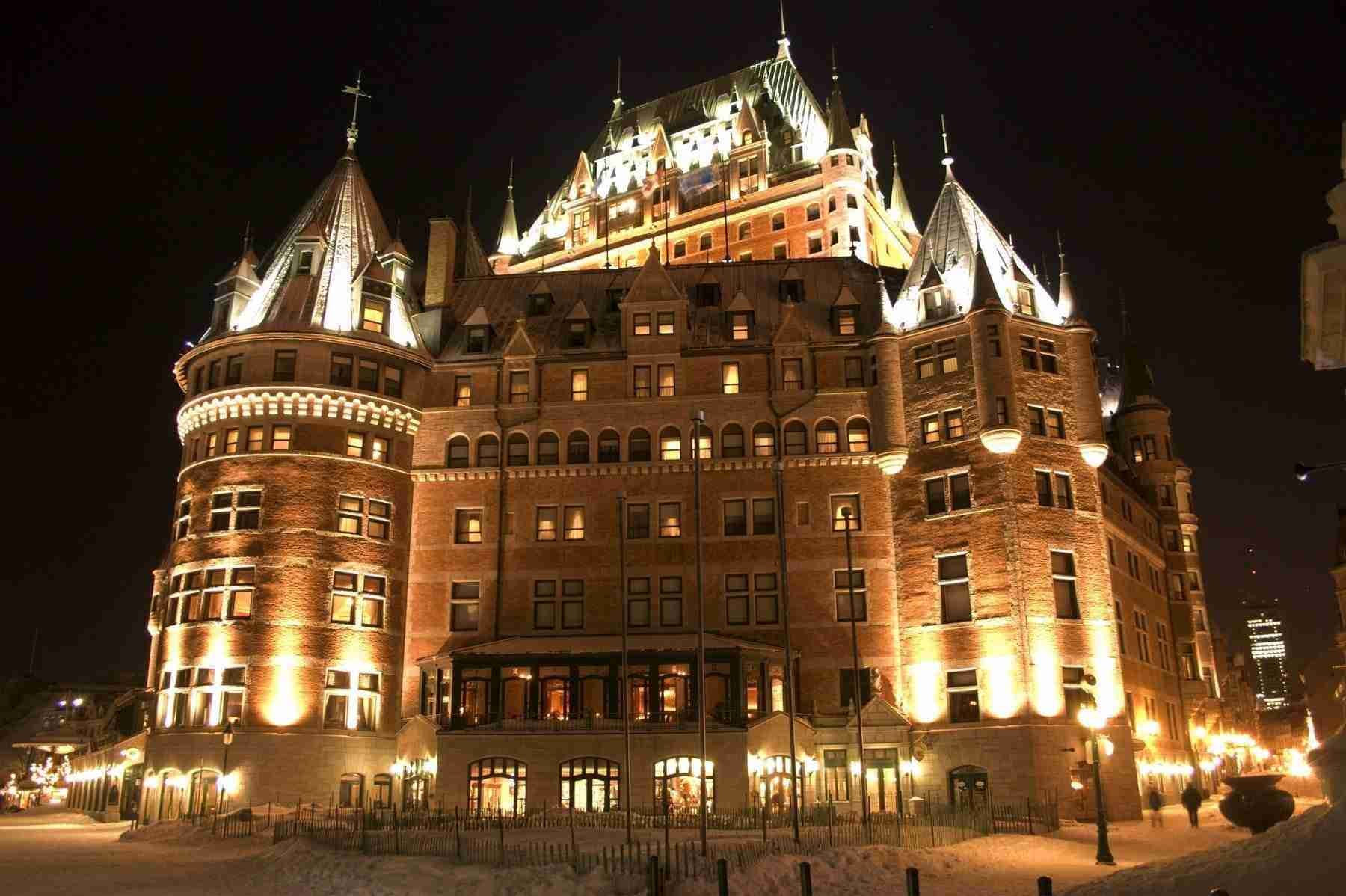
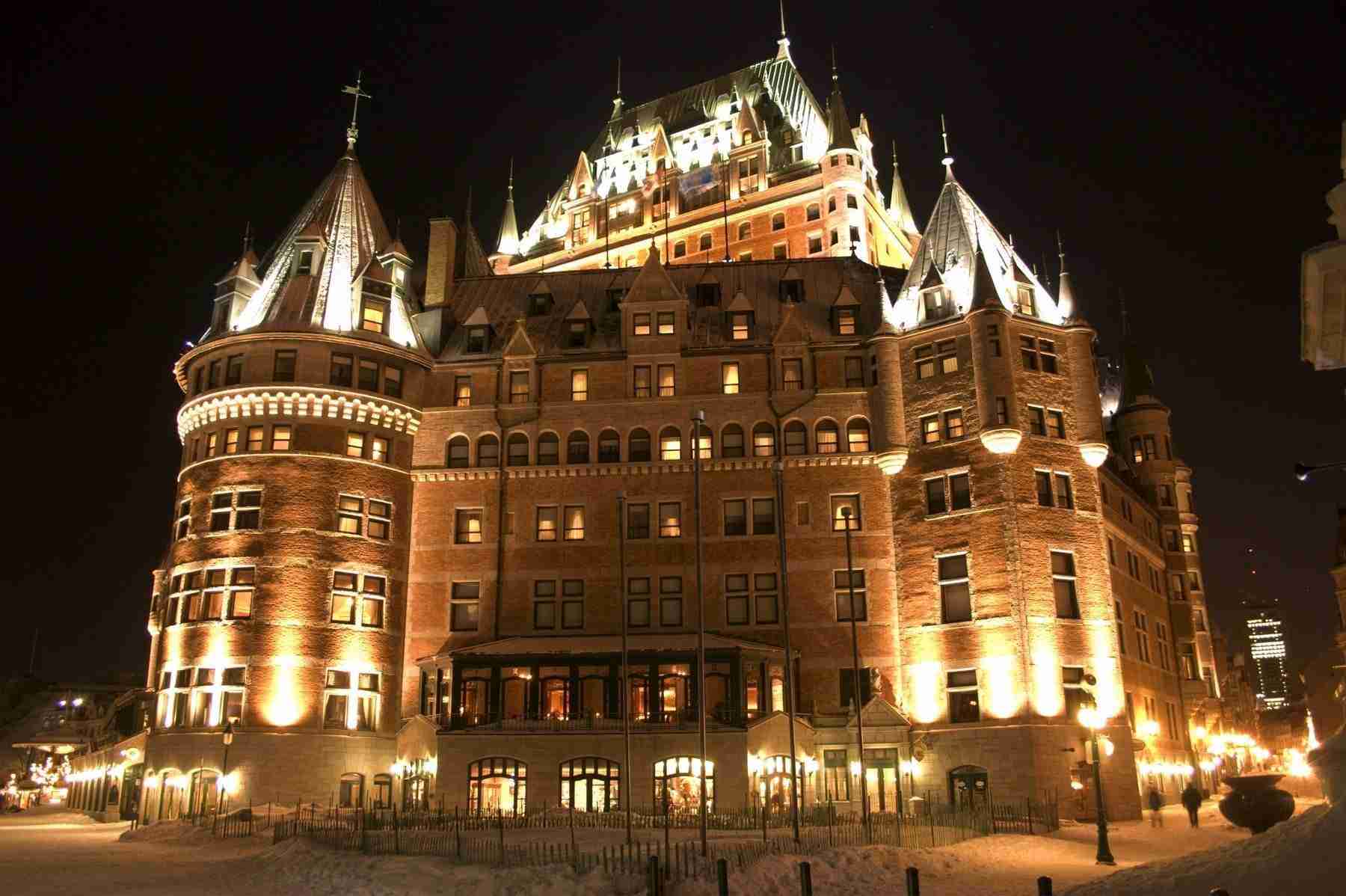
Rising high above the St. Lawrence River and dominating the skyline of Old Quebec, the Château Frontenac is a masterwork of romantic architecture and one of the most photographed hotels in the world. First opened in 1893 with expansions completed by 1924, the hotel embodies both heritage and spectacle—its copper-roofed turrets and castle-like silhouette instantly recognizable to anyone who has walked the streets of Quebec City. As a photographic subject, the Château offers a remarkable blend of scale, symmetry, and changing light, whether captured from the Terrasse Dufferin, the lower town funicular, or the quiet framing of nearby streets like Fort Street. Its presence anchors not just the city's visual identity but its historical imagination, making it an essential stop for any photographer visiting Quebec.
Best Photography Opportunities
• Sunrise compositions from the Terrasse Dufferin
The Terrasse Dufferin, a wide boardwalk skirting the edge of the Upper Town, offers some of the most accessible and versatile perspectives of the Château. Early morning is especially effective here, when the crowds are gone, the stonework is softly lit by the rising sun, and shadows fall gently across the promenade. From this angle, you can capture the full vertical scale of the building with the river and distant south shore falling away in the background. Use a wide-angle lens to frame the turrets and surrounding terraces, and wait for the first golden rays to strike the green copper roof—ideal for warm, storybook-like images.
• Blue hour and illuminated façade from Rue des Carrières
As dusk settles, the Château Frontenac is illuminated by warm architectural lighting that accentuates its turrets, dormers, and intricate brickwork. Standing at the foot of Rue des Carrières or near Place d'Armes provides a clean, upward-facing composition that dramatizes the castle-like façade. The soft blue of the sky during this hour balances perfectly with the golden tones of the building. A tripod and low ISO help preserve detail in both the structure and ambient shadows. This setting is perfect for long exposures, especially in winter when snow and holiday lights add an extra layer of magic.
• Lower Town framing from Rue Sous-le-Fort or the Funicular
Looking up from the Lower Town—either from the base of the Funicular or Rue Sous-le-Fort—you can capture the Château rising imposingly above the cliffside. This angle emphasizes its dominance over the historic Petit-Champlain district and makes excellent use of vertical framing. A mid-range or telephoto lens allows you to compress the steep terrain and isolate the château against the sky. During fall, this composition benefits from color-rich trees that flank the incline; in winter, the barren branches and white snow highlight the Château's clean lines and copper peaks.
• Architectural detail studies along Rue Saint-Louis
Walking the length of Rue Saint-Louis, you can shoot architectural close-ups that highlight the Château's textures—aged brick, patinated copper, and stone tracery. These tight compositions work best on overcast days or in the warm, side-lit glow of late afternoon. A fast prime lens offers shallow depth of field to isolate windows, turrets, or ornate fixtures like wrought iron balconies. These detailed frames complement wider views and help build a visual narrative of the building's design complexity.
• Panoramic skyline views from Lévis or Pierre-Dugua-De-Mons Terrace
For a true postcard panorama, take the ferry to Lévis across the river or hike to the Pierre-Dugua-De-Mons Terrace behind the Citadelle. Both locations offer elevated, sweeping views of Quebec City's skyline, with the Château Frontenac standing proud at its center. Sunset is ideal for catching warm skies behind the building, while early morning offers mist rising from the river for soft, atmospheric shots. A telephoto lens helps compress the scene into layers of water, city, and sky, while a tripod enables panoramic stitching for ultra-wide high-resolution imagery.
Best Time to Visit
Château Frontenac is a year-round subject, with each season offering unique aesthetics and atmospheric conditions.
Spring is ideal for balanced light, cool tones, and fewer crowds. The surrounding gardens and trees begin to bud, adding fresh texture to foregrounds. Early morning and golden hour offer the best directional light across the building's main façade.
Summer brings longer shooting hours and vibrant colors, but also heavier tourist foot traffic. Shoot early or late to avoid crowds and harsh overhead light. Twilight sessions during summer are excellent, especially with colorful skies and the building fully lit at night.
Autumn offers some of the most beautiful conditions—warm light, colorful foliage, and cool, clear air that enhances detail and tonal depth. The historic setting of Old Quebec and the Château framed by turning leaves creates strong narrative contrast between season and stone.
Winter transforms the Château into a fairytale subject. Snow blankets the rooftops and terraces, the warm lighting glows brighter in the early dark, and streetlamps cast golden pools on fresh snowfall. Early morning snowstorms and twilight blue hour sessions yield especially evocative imagery.
How to Get There
The Château Frontenac is centrally located in Old Quebec and dominates the Upper Town skyline. If arriving by foot, it is accessible from nearly all streets in the historic quarter. The Terrasse Dufferin wraps around the south and east of the hotel, providing its most iconic views.
By car, limited parking is available at underground garages in the Upper Town. Street parking is limited and time-restricted. The hotel is also near public transit lines along Rue Saint-Jean and Place d'Armes.
The Funicular connects the Upper and Lower Towns and stops directly below the Château. From the Lower Town, simply ride the elevator up for direct access to the boardwalk.
The area is pedestrian-friendly and open at all hours. Tripods are generally permitted on public walkways, though be mindful of crowds during high season. No permit is required for casual photography of the hotel's exterior.
Recommended Photography Gear
A wide-angle lens (16–35mm) is indispensable for capturing the full height and grandeur of the Château from Terrasse Dufferin, Rue des Carrières, or the base of Fort Street. Use it also for close compositions in tight streets where vertical space is limited.
A mid-range zoom (24–70mm) provides strong framing options for street-level compositions and skyline shots across the river. A telephoto lens (70–200mm) is essential for compressed views from Lévis, rooftop terraces, or long-distance framing.
A tripod is critical for blue hour, nighttime work, or long exposures during snow or fog. A remote shutter or 2-second delay will help ensure sharpness. Use a circular polarizer to enhance sky color and reduce glare on windows or wet pavement.
In winter, bring weather protection for both gear and yourself—snowstorms can develop quickly. In summer, lens cloths and batteries are essential due to humidity and long shooting hours.
Nearby Photography Locations
Offers sweeping river views, clean sightlines to the Château, and dynamic side-lighting at dawn and dusk. Great for establishing context in wide scenes.
• Fort Street (Rue du Fort)
A perfectly aligned, narrow street that draws the eye directly up to the Château. Best for symmetrical, compressed twilight shots with architectural layering.
• Rue du Trésor and Place d'Armes
Great for artistic detail work, street portraits, and layered café scenes with the Château rising in the background. Excellent for golden hour or misty mornings.
• Lévis Waterfront and Ferry Terminal
The best panoramic vantage point of Old Quebec. Ideal for sunrises, skyline reflections on the river, and stitched ultra-wide compositions.
Offers color, texture, and human interest in the city's oldest quarter. Capture the towering Château rising above from the shadowed, cobbled streets below.
Château Frontenac is more than a backdrop—it's a photographic character, always present but never static. Whether you're capturing it in soft morning haze, under a dusting of snow, or rising above the lantern-lit streets of Old Quebec, it rewards photographers who return with patience, timing, and a deep appreciation for architectural storytelling.
Comments
Loading comments…