
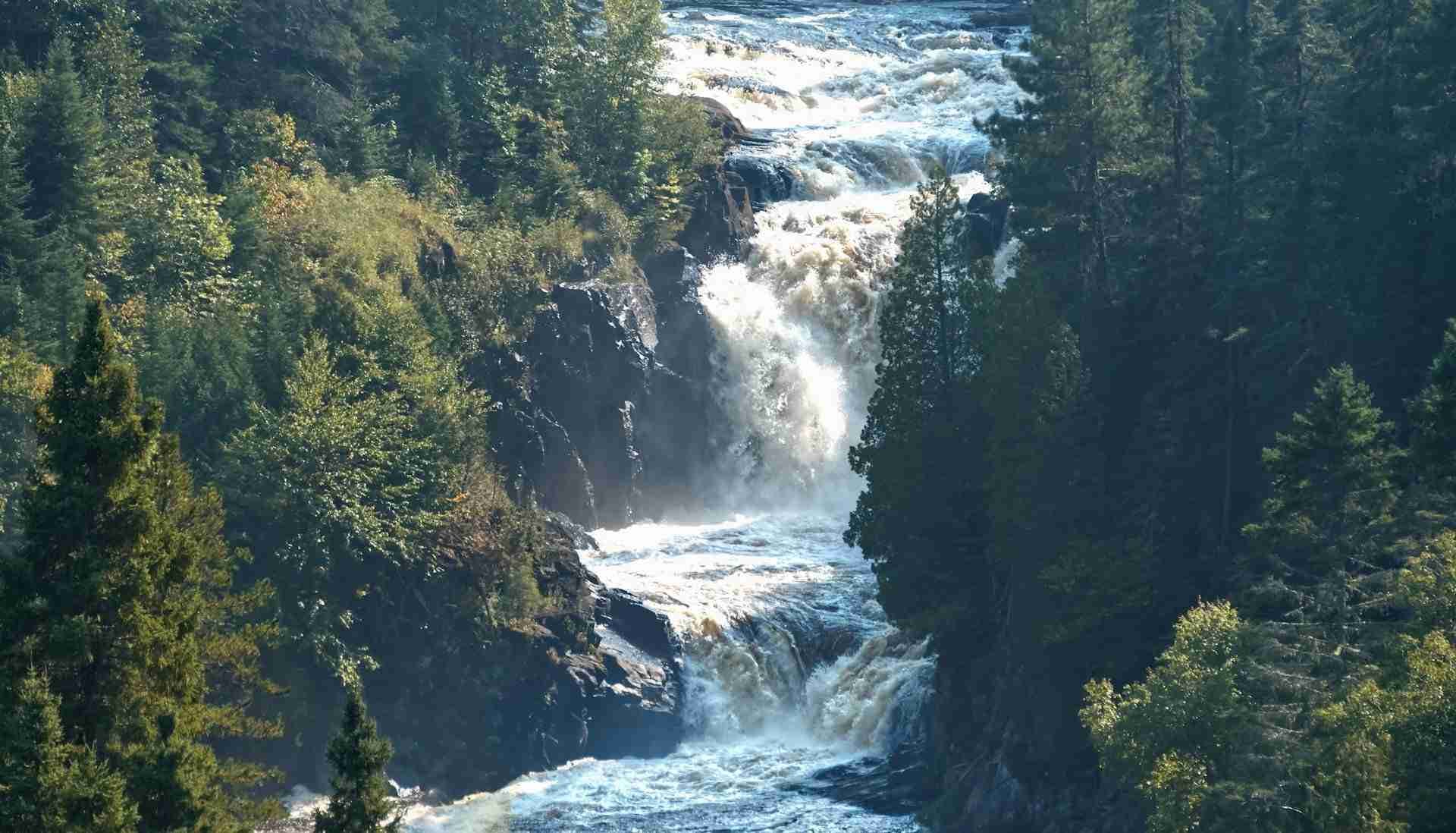
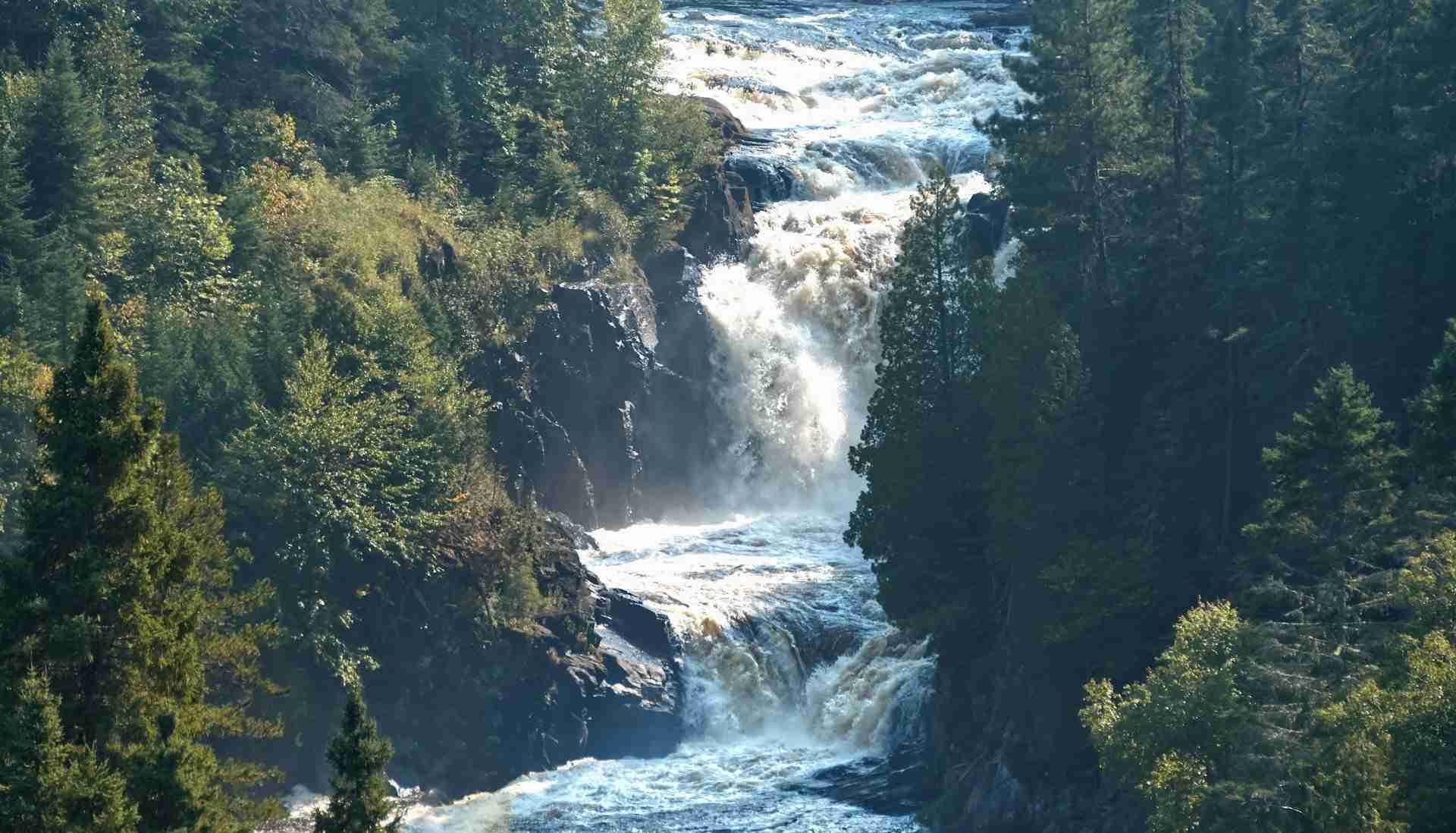
Tumbling from the boreal highlands of Parc de Val-Jalbert, Chute Ouiatchouan is one of Quebec's most powerful and photogenic waterfalls. With a vertical drop of over 70 metres (230 feet), it thunders down into the Saguenay–Lac-Saint-Jean landscape, dominating the ghost town of Val-Jalbert and drawing both history buffs and landscape photographers to its roaring edge. Unlike many wild waterfalls, Chute Ouiatchouan flows within a carefully preserved historical setting, where century-old industrial ruins and wooden boardwalks offer dramatic foregrounds, while dense forest and steep canyon walls frame the cascade in natural grandeur. For photographers, it offers a rare opportunity to blend raw natural power with haunting heritage textures, especially as light and mist play across the falls throughout the day.
Best Photography Opportunities
• Front-Facing Views from the Lower Boardwalk
From the viewing platform at the base of the falls, you'll find a classic head-on perspective that captures the full height and width of the cascade. Use a wide-angle lens to include surrounding canyon walls or zoom in to focus on the water's turbulence and texture. Long exposures here transform the crashing torrent into silky white ribbons, especially effective in overcast conditions.
• Upper Platform and Aerial Overlook
Take the funicular or hike to the top of the falls for an entirely different perspective. From here, you can frame the plunge pool far below, the surrounding forest canopy, and the rooftops of Val-Jalbert's preserved buildings. This is an ideal vantage point for showcasing the scale of the falls and their relationship to the historic village below.
• Industrial Ruins and Misty Atmosphere
Near the base of the falls, the concrete foundations of the old pulp mill and hydro installations create moody, angular foreground elements. Use these structures to anchor your compositions and add historical contrast. On misty mornings or after rain, the rising spray from the falls envelops these ruins in drifting fog—perfect for black-and-white or muted, desaturated tones.
• Side Views from Forested Trails
Several forest trails weave around the falls and offer semi-obscured side angles where the waterfall crashes through rock channels. These tighter compositions benefit from a telephoto lens, especially when isolating layers of spray, rock, and moss. Early morning light filtering through the trees adds atmosphere and depth.
• Drone Photography (Where Permitted)
Aerial photography reveals the entire layout of the falls, canyon, river delta, and historic village in a single sweeping frame. When conditions and park rules allow, drone shots from a moderate elevation can beautifully capture the falls spilling through the boreal canopy with mist trailing in the morning light.
Best Time to Visit
Chute Ouiatchouan is best photographed between late spring and mid-autumn, when the park is fully accessible and the falls flow at their most powerful. May and June offer strong water volume from snowmelt, along with lush, fresh foliage that frames the scene in vivid green. Early morning light adds texture to the rock walls and intensifies the sense of movement in the water.
July through September brings more stable weather and longer shooting windows, particularly around golden hour. Late summer can bring slightly lower water flow, but this exposes more rock detail around the chute and pool. Autumn, especially in late September to early October, transforms the surrounding forest into a tapestry of gold, red, and amber—making the falls pop even more dramatically against their fiery frame.
Overcast days are ideal for long exposure work, reducing harsh contrast and allowing for longer shutter speeds without blown highlights. Mist, fog, or post-rain conditions add mood and diffusion, especially when photographing ruins, wooded trails, or shooting directly into the waterfall's plume.
The falls are closed during winter months due to ice and access limitations, though guided winter tours may offer limited viewpoints for those seeking icy, frozen compositions with snow-covered ruins.
How to Get There
Chute Ouiatchouan is located in Parc de Val-Jalbert, just off Route 169 near Chambord in Le Domaine-du-Roy, Quebec. From the town of Roberval, it's about a 15-minute drive southwest. The park entrance leads directly into the historic village site, where photography access is available via boardwalks, hiking trails, and the park's funicular system.
Access to the falls is included with park admission, which also supports the preservation of Val-Jalbert's historical structures. Visitors can explore both the lower and upper viewing platforms, as well as a number of interpretive paths that circle the site.
Tripods are welcome on the viewing platforms, but be mindful of crowds during peak summer hours. Early arrival or late afternoon visits offer the best chance for uninterrupted shooting. The park operates seasonally from late spring to autumn, so confirm opening dates and trail conditions before visiting.
Exploring the Surrounding Area
Beyond the falls themselves, Val-Jalbert is a living museum of early 20th-century industrial life. Abandoned houses, a convent school, and the shell of the pulp mill offer striking settings for architectural and documentary photography. Many structures are partially restored or left in states of picturesque decay, with soft natural light filtering through broken windows or onto worn timber siding.
The trails along the Ouiatchouan River provide quiet views of the forest, small cascades, and flora typical of Quebec's boreal edge. These are excellent locations for intimate landscape work, macro photography, or slower-paced woodland compositions.
At the top of the funicular, a riverside walkway leads to additional viewpoints and the remnants of hydroelectric structures. This upper section sees fewer visitors and is perfect for long lens work or peaceful, textural studies of water and stone under soft forest light.
Nearby Photography Locations
A short drive north, this expansive inland sea offers dramatic skies, rocky beaches, and golden-hour reflections. Best photographed at sunrise or sunset from natural promontories or piers near Roberval and Saint-Prime.
The entire site is an open-air photography set—Victorian-era homes, rusted railway tracks, and the skeletons of industrial buildings give you a rich blend of texture and history. Best shot in diffused light or during early evening for atmospheric storytelling.
Located along the northern shore of Lac Saint-Jean, this park offers sandy beaches, boreal forest, and long cycle paths. Strong compositions can be made where forest meets water, especially in fog or with backlight.
While primarily a wildlife attraction, this sprawling natural zoo offers semi-wild enclosures with boreal species and dramatic riverbank settings. Ideal for wildlife photography and environmental portraiture of native fauna.
Located in the nearby Indigenous community, this museum and cultural site offers insight into Innu heritage, with traditional structures and crafts that can be documented respectfully with permission.
Chute Ouiatchouan is a rare place where nature's raw power and human history converge—where water carves through stone beside the ruins of a vanished industrial dream. For photographers, it's not just a waterfall but a narrative: of movement, memory, and elemental force. Whether you're chasing misty light through the trees, crafting long-exposure drama from the base, or capturing the quiet stillness of the ghost town nearby, the falls offer a deep, dynamic canvas in the heart of Quebec's boreal wild.
Comments
Loading comments…