
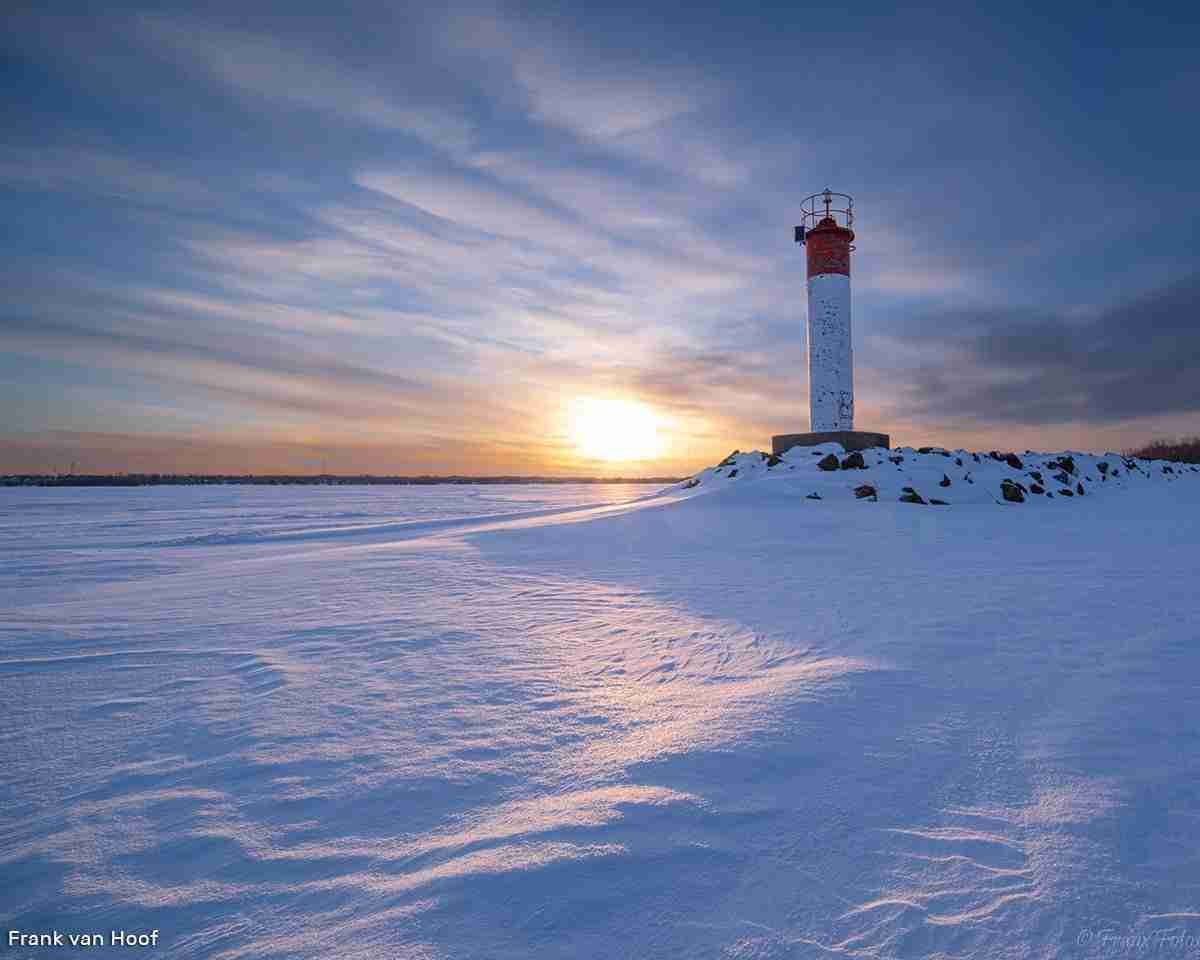
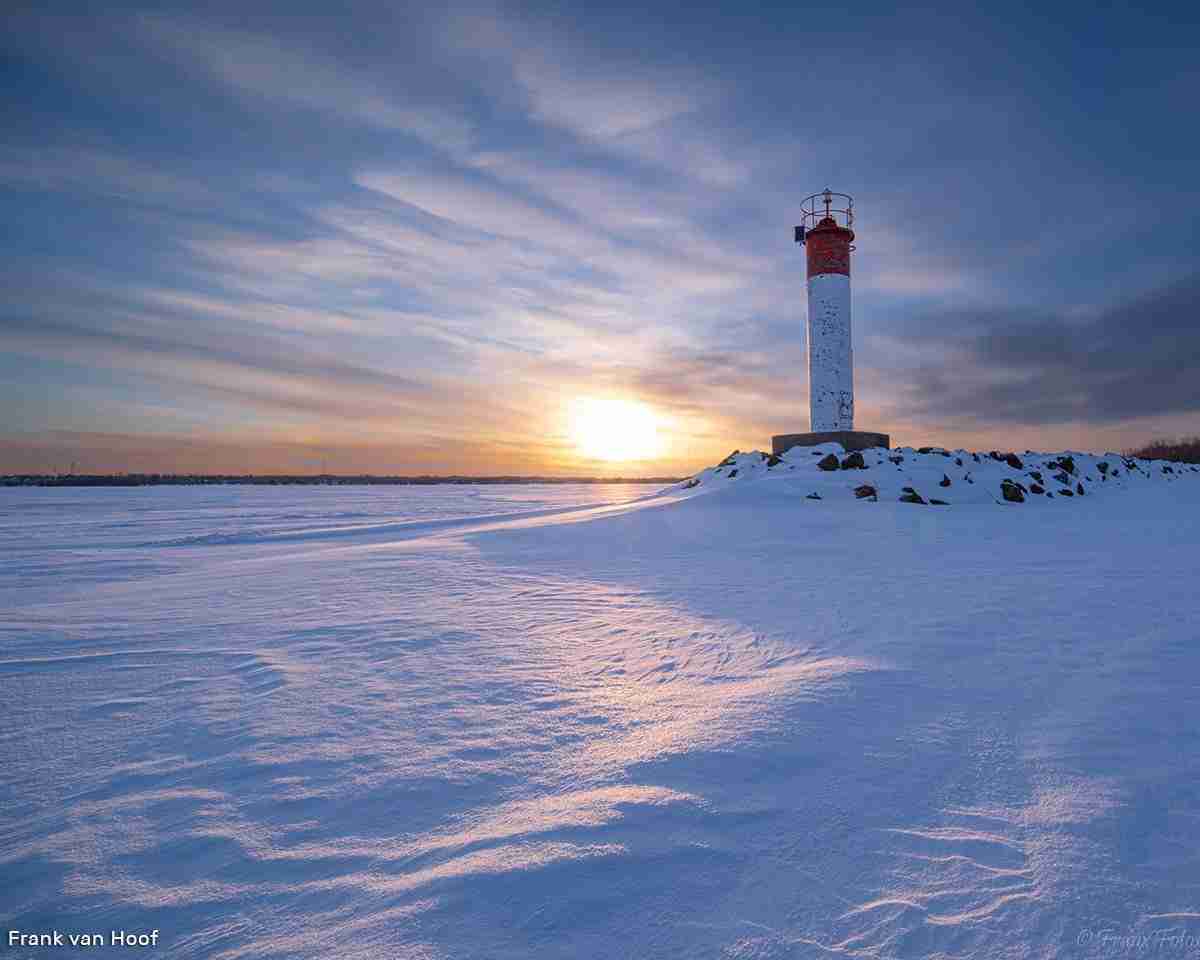
Tucked away at the very end of Chemin Sikorski in Desjardinsville, Quebec, the Desjardinsville Lighthouse is a small but striking riverside landmark perched at the edge of a breakwater on the Ottawa River. Modest in scale yet highly photogenic, this lighthouse features a classic cylindrical white tower topped with a distinctive red lantern that contrasts beautifully against the broad skies and reflective waters of the river. Directly across from Pembroke, Ontario, the location feels removed from any tourist path, offering solitude, clean sightlines, and unspoiled natural surroundings. For photographers, it's a location that rewards precision, patience, and an appreciation for elemental composition—sky, water, stone, and light.
Best Photography Opportunities
• Classic lighthouse compositions from the breakwater approach
The breakwater leading to the lighthouse forms a natural line that draws the eye directly to the subject. Standing on the path of uneven stone, photographers can frame the lighthouse head-on, flanked by water on either side. This linear composition is highly effective at sunrise and sunset when directional light catches both the structure and the river's surface. A wide-angle lens allows you to emphasize the length of the breakwater and include clouds or reflections in the frame. For a tighter, more abstract look, a mid-range zoom helps isolate the red lantern against a moody sky or pastel dawn light.
• Low-angle shoreline shots with strong foreground elements
From the water's edge near the boat launch, you can create compositions that include rocks, driftwood, or grasses in the foreground, with the lighthouse rising in the midground and Pembroke's shoreline faintly visible in the distance. This is particularly effective when shooting during blue hour or after rainfall, when puddles form natural mirrors and foreground stones are saturated with color. Shoot low and wide to accentuate foreground textures, and use a tripod for balanced sharpness from front to back with a smaller aperture.
• Long exposures and minimalist river scenes
The calm waters of the Ottawa River in this area make it ideal for long exposure photography. With an ND filter, you can smooth the water's surface and blur cloud movement to create minimalist compositions that emphasize the lighthouse's geometric simplicity. Positioning the lighthouse off-center works well in these conditions, especially when incorporating empty sky or river expanses into the frame. This technique is particularly suited to overcast or foggy mornings, when the subtle transitions in tone and the stillness of the scene invite a more contemplative aesthetic.
• Evening silhouettes and red lantern details at twilight
As the sun sets behind Pembroke and the sky begins to glow with post-sunset color, the silhouette of the lighthouse becomes a bold graphic form against a gradient sky. Backlighting the tower enhances its clean lines, and the red lantern top stands out vividly even in partial shadow. This is an ideal time to experiment with exposure blending or bracketed shots to capture both the subtle colors in the sky and the detail in the structure. Reflections in the water add further symmetry and balance to the composition.
• Seasonal variations and atmospheric transitions
Each season offers a distinct visual tone for photographing the lighthouse. In spring, high water levels may lap at the breakwater, and soft green hues begin to reappear in the surrounding foliage. Summer brings golden light, glassy river surfaces, and clear horizons—perfect for crisp, high-contrast shots. Autumn transforms the landscape with warm tones along the Quebec shoreline and hazy light over the water, while winter (when accessible) turns the lighthouse into a monochromatic subject surrounded by ice floes and snow-covered rocks. These variations allow photographers to return throughout the year for a completely different take on the same composition.
Best Time to Visit
Photographically, the best times to shoot the Desjardinsville Lighthouse are during the early morning or late evening, when the light is soft and directional. Sunrise brings the best opportunity for front-lit compositions from the breakwater, with the eastern sky often glowing behind the lighthouse and reflecting off the water. Golden hour in the evening is ideal for silhouette work and warm-toned side lighting on the red lantern and white tower.
Summer offers the longest and most consistent light windows, with calm water conditions that favor reflection photography and longer exposure work. Spring and autumn provide more dramatic skies and changing atmospheric conditions, which suit moody, narrative images with layered light and weather. In winter, access may be limited by snow or ice, but if the breakwater remains reachable, the frozen landscape and sharp low light create a powerful visual contrast that transforms the lighthouse into a solitary, sculptural subject.
How to Get There
The Desjardinsville Lighthouse is located at the end of Chemin Sikorski in the small riverside community of Desjardinsville, Quebec. From Pembroke, Ontario, cross the bridge into Quebec and follow regional roads west toward Waltham, then south toward Desjardinsville. The lighthouse sits beside the public boat launch and parking area at the end of the road.
The site is not marked with official signage or maintained as a tourist attraction, which adds to its quiet charm. The breakwater is made of uneven stone and requires careful footing, especially if carrying gear or visiting in low light. There is ample space to park near the boat launch, and from there it is a short, direct walk to the lighthouse.
There are no public facilities nearby, so come prepared with any supplies you may need. Cell reception can be patchy along some sections of the river, and there is little artificial lighting, so plan accordingly if shooting at dusk or dawn.
Recommended Photography Gear
A wide-angle zoom lens (16–35mm) is essential for capturing the lighthouse in its environment—whether you're composing from the breakwater or incorporating dramatic skies and foreground textures from the shoreline. A mid-range zoom (24–70mm) works well for isolating architectural details like the red lantern or compressing the tower against background elements across the river.
A sturdy tripod is crucial for shooting in low light, performing long exposures, or composing carefully balanced wide-angle images. Bring a 6- or 10-stop ND filter for smoothing water or capturing cloud motion, and a circular polarizer to reduce glare from the water's surface or enhance sky contrast.
A fast prime (35mm or 50mm) is ideal for handheld low-light shooting at twilight or for detail work, such as capturing the lighthouse against out-of-focus foliage or architectural studies in subdued lighting. If visiting in colder months, bring weather protection for your gear and extra batteries, as the cold can shorten power life.
Footwear with strong grip is recommended for navigating the breakwater, particularly after rain or in snowy conditions. The uneven rocks make a rolling camera case impractical, so opt for a backpack to carry your kit safely.
Nearby Photography Locations
• Ottawa River Shoreline in Pembroke
Across the river, the Pembroke waterfront offers clean sightlines back toward Desjardinsville and the lighthouse. This is an ideal place to capture compressed compositions with long lenses or to work reflections into broader river scenes.
Located further south near Mansfield-et-Pontefract, this park features dramatic waterfalls, forest trails, and high cliffs—perfect for photographing dynamic water movement, rugged terrain, and seasonal transitions.
• Waltham Marina and Dock
A peaceful spot just east of Desjardinsville with open views of the Ottawa River, wooden docks, and calm water. Ideal for soft sunrise reflections or minimal compositions that complement the more structured lighthouse shots.
Along Quebec's Allumette Island, photographers will find low bluffs, sweeping river views, and occasional boat traffic—perfect for wider landscape compositions or human-nature interaction in quiet settings.
South of the lighthouse near Chichester, this riverside heritage site offers preserved log buildings, historical signage, and water access—ideal for storytelling photography and texture-rich documentary compositions.
The Desjardinsville Lighthouse is a study in balance and quiet strength—a modest structure made powerful by its setting. Framed by open sky, still water, and rough stone, it invites photographers to slow down and compose with intention. For those drawn to minimalism, mood, and small-scale solitude, it's a location that lingers long after the shutter clicks.
Comments
Loading comments…