
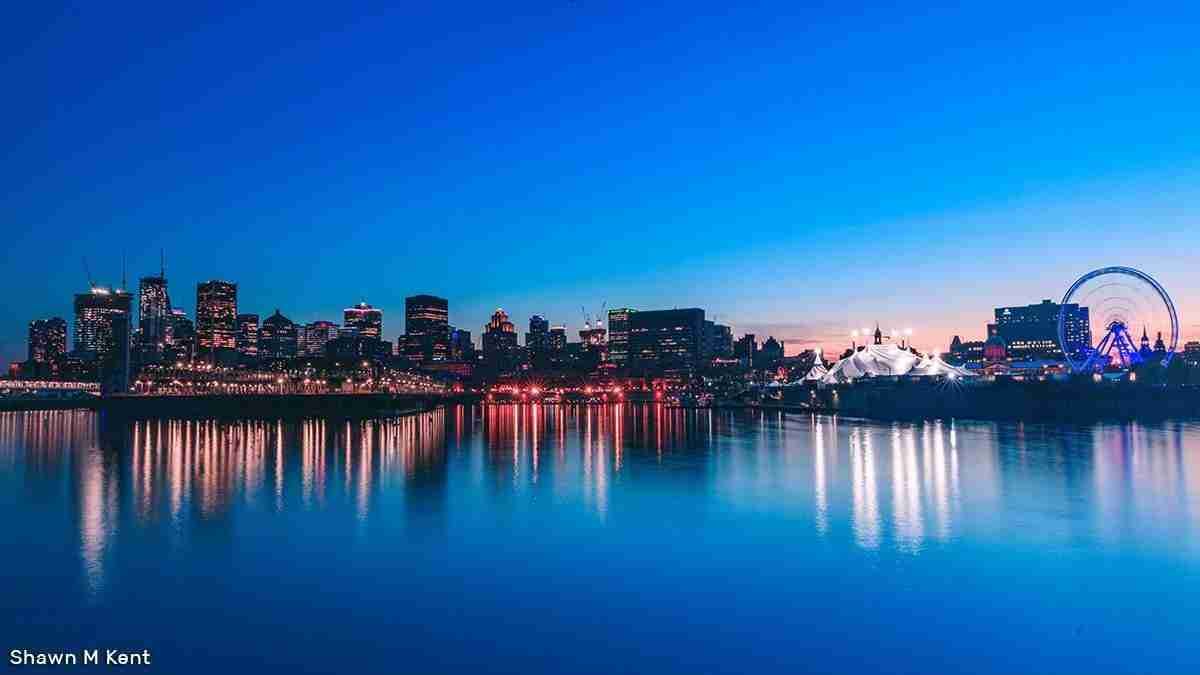
Situated on a slim peninsula that projects gracefully into the St. Lawrence River, Dieppe Park offers one of the clearest and most visually balanced vantage points of Montreal's waterfront skyline. Located at the eastern tip of the Cité du Havre area and just beyond the modernist sprawl of Habitat 67, the park opens onto a panoramic view of downtown Montreal, the Old Port, and the soft curve of the river's southern shoreline. It's an ideal location for photographers who appreciate open space, quiet symmetry, and changing sky. With a clean horizon, minimal visual obstruction, and strong foreground elements along the river's edge, Dieppe Park allows for composed, contemplative images that shift subtly through the seasons.
Best Photography Opportunities
• Downtown skyline compositions from the waterfront path
Dieppe Park's most compelling visual asset is its direct line of sight to the full downtown skyline. From a low stone wall along the river or from one of the elevated grass mounds near the park's edge, you can frame a horizontal composition that includes Montreal's central towers—Place Ville Marie, Tour de la Bourse, and the dome of Bonsecours Market—along with subtle reflections in the water. Using a wide-angle lens helps incorporate the entire skyline and surrounding riverbanks, while a mid-range zoom allows you to isolate architectural clusters or highlight contrasts in building shapes and materials. This perspective works particularly well at sunrise, when the light comes in behind the buildings, creating crisp silhouettes against a warm sky.
• Long exposures of the St. Lawrence with softened water and cloud movement
The open expanse of water in front of Dieppe Park is ideal for long exposure photography. With a tripod and ND filter, you can extend your shutter speed to smooth the surface of the river and blur passing clouds. These exposures produce calm, minimalist frames that emphasize the skyline's geometry and reflectivity. Early mornings with low wind conditions provide the cleanest water surfaces for mirror-like reflections, while blue hour or late evening introduces rich tonal gradients in the sky that deepen the overall mood. Use leading lines from the shoreline or railing to guide the viewer's eye toward the skyline.
• Framing skyline shots with foreground park elements
While Dieppe Park is minimalist by design, it offers several subtle foreground structures—such as curved pathways, metal railings, benches, and occasional tree clusters—that can be used to introduce depth and balance into your compositions. Shooting from ground level and using these elements as lead-ins helps break up the open frame and adds narrative dimension. In summer, wild grasses and native plantings introduce soft texture, while in winter, snow accumulation creates natural shapes and contrast for clean, high-key foregrounds. Foreground framing is especially effective when shot at golden hour, with side light emphasizing texture in grass, concrete, or snow.
• Night photography with skyline reflections and ambient city light
As twilight transitions into night, Dieppe Park remains an excellent base for photographing Montreal's illuminated skyline. Long exposure images during blue hour capture the reflections of building lights in the darkening river, while late-night sessions offer higher contrast with starbursts and architectural highlights. This location benefits from minimal local light pollution, allowing the city's glow to be the dominant light source. Reflections are clearest in early evening, and the north-facing view avoids direct light glare. Use a tripod and low ISO for maximum clarity and detail, and experiment with multiple exposures to balance sky, water, and architecture.
• Seasonal mood and atmosphere in open compositions
Dieppe Park excels at showcasing seasonal transitions in a restrained, refined setting. In spring, soft greens and blooming wildflowers offer a gentle contrast to the grey stone of the downtown skyline. Summer introduces golden hour warmth and high dynamic range scenes perfect for layered city-river-sky compositions. Autumn brings cooler light, variable skies, and an opportunity to contrast the warmth of foliage in the park with the cooler tones of the city beyond. In winter, the park transforms into a snow-covered quiet zone where minimalist compositions—bare branches, ice along the river, snow-dusted railings—create images that feel intimate despite the vastness of the view.
Best Time to Visit
The best time to photograph Dieppe Park depends on the mood and light you're after. For skyline clarity and clean reflection, sunrise offers the most stable conditions. The eastern light backlights the downtown buildings, producing silhouettes in clear weather or layered, soft compositions on overcast mornings. Because the park is slightly elevated and unobstructed, the quality of morning light tends to be consistent across seasons.
Golden hour and blue hour provide the richest tones for wide-angle cityscapes. Evening light warms the buildings and softens the river's surface, making it the best time for balanced compositions with glowing color and subtle atmosphere. Autumn skies in particular tend to be dramatic, with varied cloud formations and strong directional light late in the day. Winter offers the quietest photographic environment, with fewer visitors and a snow-muted palette that emphasizes composition over color. The city lights reflecting off the snow and river after sunset can create rich, moody frames ideal for long exposures and architectural abstracts.
How to Get There
Dieppe Park is located at the eastern tip of Cité du Havre, south of Old Montreal and directly adjacent to Habitat 67. From downtown Montreal, the most direct driving route is via Rue de la Commune and the Pont de la Concorde, following signs to Parc Jean-Drapeau and turning toward Cité du Havre. The road loops along the shoreline and ends near the park entrance.
Street parking is available nearby, and during off-hours there is usually space available close to the park's main path. Cyclists can access Dieppe Park via dedicated bike lanes that connect from the Old Port and the Lachine Canal pathway. The closest Metro station is Jean-Drapeau, which can be paired with a short bike ride or taxi trip.
The park is open year-round with no gates or access restrictions. There are no facilities on-site, so plan accordingly—especially during early morning or evening shoots. The terrain is flat and paved, with multiple areas suitable for tripods or longer setup sessions. Winter visitors should expect packed snow or icy sections along the main paths, but the layout remains easy to navigate.
Recommended Photography Gear
A wide-angle zoom (16–35mm) is essential for skyline panoramas, long exposure river scenes, and capturing the full scope of the waterfront view. This lens also works well for environmental compositions that include foreground elements such as benches, railings, and plantings. A mid-range zoom (24–70mm) allows for more controlled compositions, ideal for isolating architectural clusters or layering the skyline with elements in the park.
A tripod is necessary for all long exposure or low-light work, especially when working at blue hour or with ND filters. A 6- or 10-stop ND filter enables daytime long exposures of the river and sky, while a circular polarizer enhances sky contrast and minimizes glare from water surfaces during daylight hours.
A telephoto lens (70–200mm) is recommended for distant compositions from within the park, especially if you want to compress skyline elements or highlight color and light differences between buildings. In winter, bring extra batteries and protective gear, particularly for working near the river where wind and temperature can change quickly. A weather-sealed backpack is preferable to rolling gear, given the park's gravel paths and seasonal terrain.
Nearby Photography Locations
• Habitat 67
Just west of Dieppe Park, this legendary modular housing complex offers powerful architectural compositions, abstract geometry, and strong contrast under directional light. It's ideal for black-and-white studies or minimalist detail shots.
Across the river, the Old Port's heritage architecture, piers, and promenade offer a mix of street photography, historical textures, and golden hour compositions framed by cobblestone and old brick.
Located along the waterfront in the Old Port, this tower offers strong vertical contrast and works well in juxtaposition with the city skyline when shot from the opposite bank or from directly beneath the structure.
Across the bridge from Cité du Havre, this expansive park provides elevated views back toward downtown Montreal. It's particularly effective for sunrise and sunset skyline compositions and offers opportunities for nature-city contrast.
• Victoria Pier (Quai de l'Horloge)
A straight-on viewpoint to the Dieppe Park shoreline, this pier allows you to reverse your perspective and capture the skyline from across the water. It's a useful counterpoint to Dieppe's wide compositions and excellent for symmetry work during calm conditions.
Dieppe Park is a space for quiet, carefully composed work—where every season and every hour introduces a new variation in light, movement, and balance. For photographers drawn to skyline minimalism, reflective surfaces, and a sense of wide-open calm within the city, it remains one of Montreal's most dependable and versatile locations.
Comments
Loading comments…