
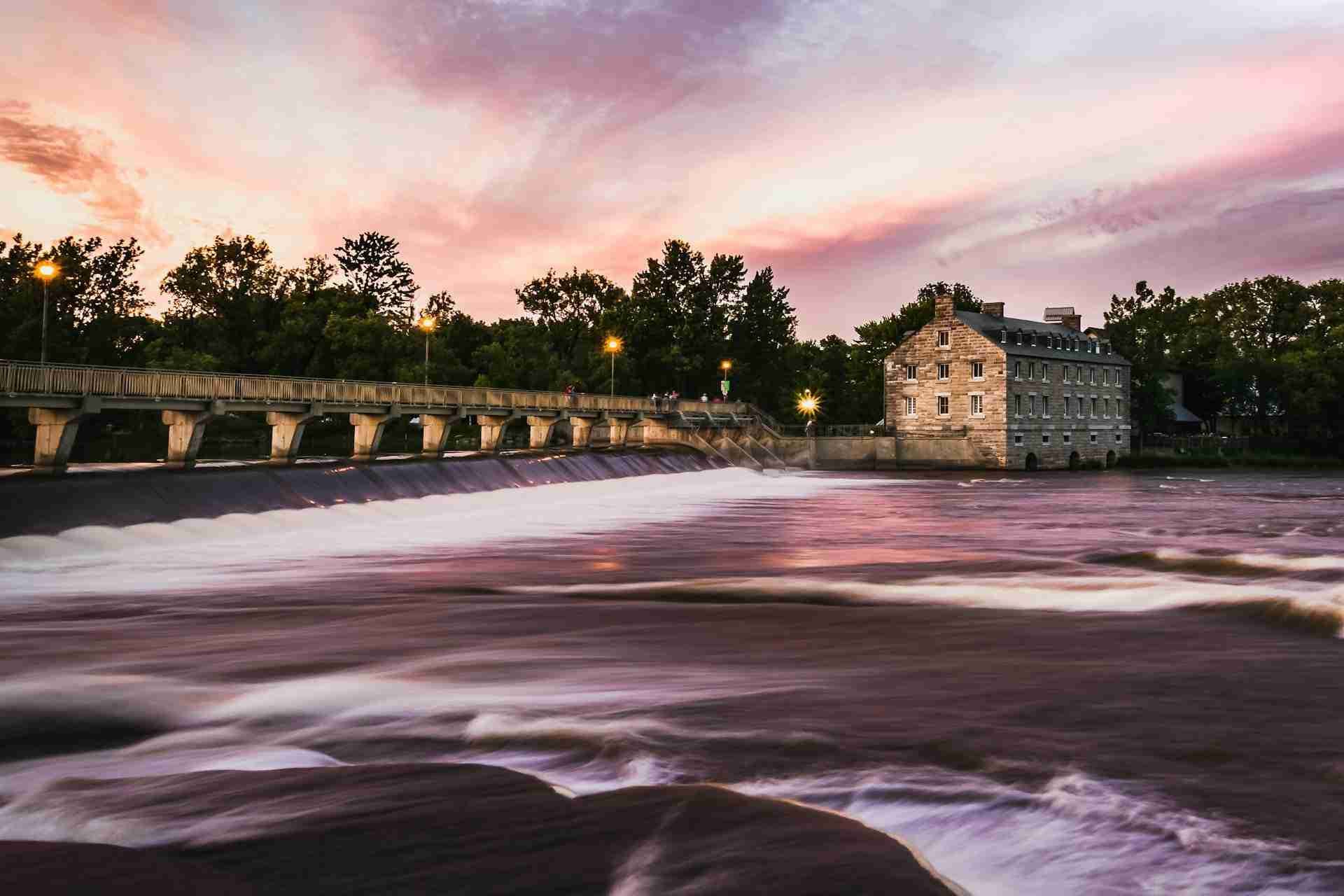
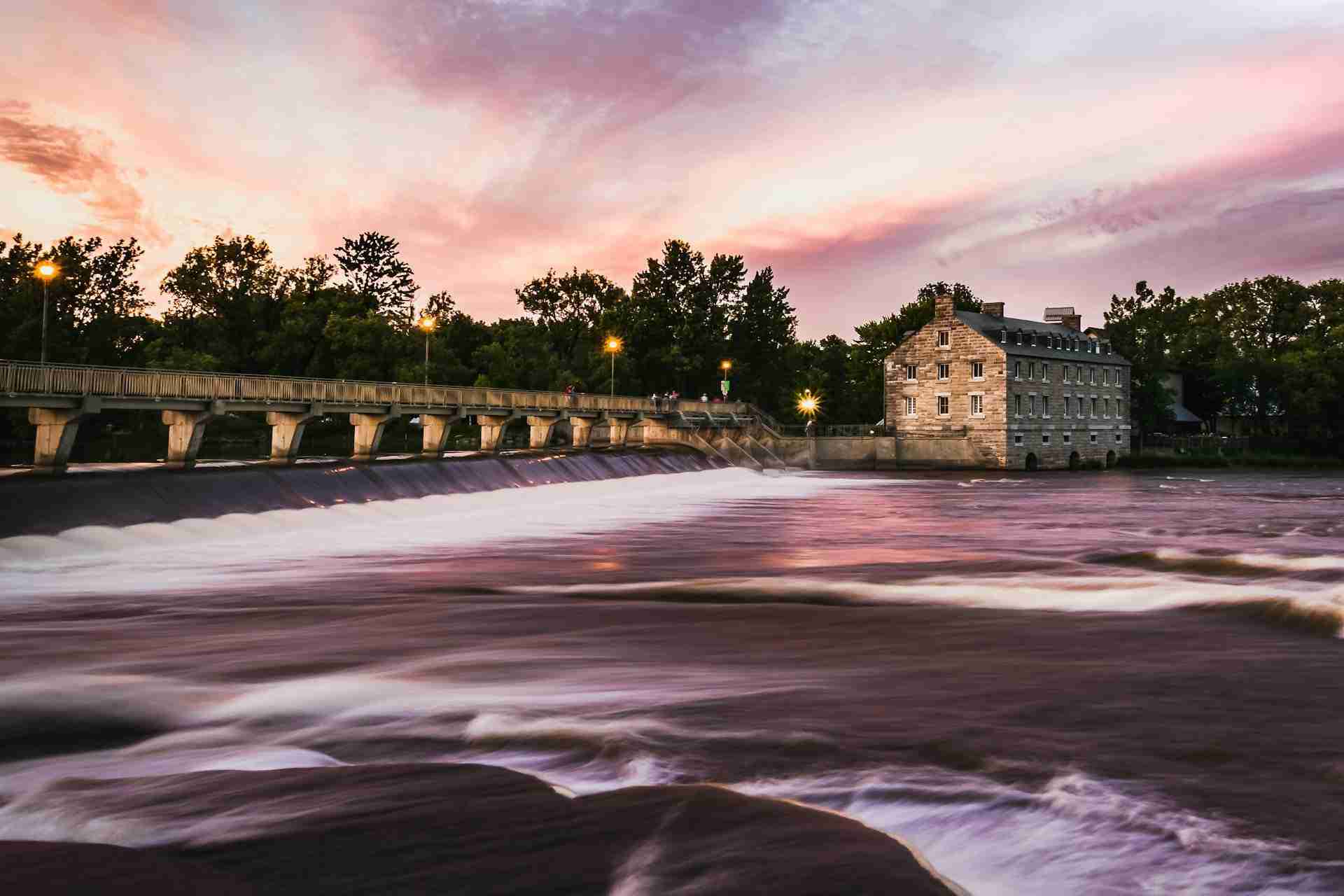
Located in the historic core of Terrebonne along the Rivière des Mille Îles, Île-des-Moulins is one of Quebec's most photogenic heritage sites. This small island is home to a beautifully preserved collection of 18th- and 19th-century stone buildings—including former mills and warehouses—set amidst cobblestone paths, flowing water, and mature trees. Rich in history and atmosphere, the site is a haven for photographers interested in architectural storytelling, seasonal landscape scenes, and quiet river compositions. Whether bathed in morning mist or lit softly during golden hour, Île-des-Moulins offers timeless frames in every direction.
Best Photography Opportunities
• Golden Hour Light on the Stone Mill Buildings
The warm tones of early morning or late afternoon light enhance the textured stonework and wood accents of the old mills and warehouses. Frame wide-angle compositions from across the footbridges or use low angles along the cobbled paths to capture the full façade under soft, directional light. The symmetry and craftsmanship of the architecture shine most when illuminated gently from the side.
• Reflections and Long Exposure Along the Canal
The canal running through the site offers clean, still reflections of the buildings, trees, and sky. Use a tripod and long exposure to smooth the water and isolate subtle movement in the leaves or clouds above. Early morning often brings calm air and mirror-like conditions, especially in autumn when the trees surrounding the canal add rich color.
• Architectural Details and Historic Textures
Focus your lens on the aged shutters, timber beams, stone steps, and weathered signage around the buildings for close-up shots that tell a deeper story of the site's historic function. These detail studies are especially effective in soft overcast light, which minimizes glare and brings out the material depth.
• Street and Lifestyle Photography on Cobblestone Walkways
The island is active but not overly crowded, making it an excellent location for capturing candid moments or lifestyle scenes with a historical backdrop. Photograph visitors walking, reading, or enjoying the space to add scale and life to your compositions. Use depth of field creatively to blend people into the architecture.
• Seasonal and Night Photography Throughout the Island
Île-des-Moulins transforms with the seasons—from snow-covered roofs and icy riverbanks in winter to the golden foliage of fall and lively greenery in summer. At night, warm lighting accents the stone buildings and footpaths, offering a moody but accessible scene for long exposures and architectural silhouettes.
Best Time to Visit
Île-des-Moulins offers year-round photographic appeal, but the most dynamic visuals are found in autumn and spring. In fall (late September to late October), the trees surrounding the site blaze with reds and golds, and the light is typically soft and low. Spring (late April through May) brings blossoms and fresh greens that pair well with the grey stone structures.
Golden hour—both morning and evening—yields the best side lighting for the buildings and water. Overcast days work well for architectural detail and texture-focused shots. Winter brings crisp air, strong contrast, and snow-covered scenes that are excellent for monochrome or minimalist approaches.
The site is also beautiful at night, when it's subtly lit and often deserted—ideal for peaceful long exposure work and experimentation with light and shadow.
How to Get There
Île-des-Moulins is located in the Vieux-Terrebonne (Old Terrebonne) district, northeast of Montreal. From the city, it's about a 30-minute drive via Autoroute 25, with parking available nearby in designated lots throughout the historic district.
The site is pedestrian-friendly, accessible year-round, and connected by footbridges and riverside paths. Once on the island, all major structures are within easy walking distance, and there are benches, interpretive panels, and scenic overlooks throughout. No major hiking or off-path travel is required.
Tripods are welcome and useful for both long exposures and low-light work. Compact kits are best for navigating the tight paths and crowded festival periods, while early mornings and weekdays offer more space and solitude for deliberate compositions.
Exploring the Surrounding Area
Vieux-Terrebonne extends well beyond Île-des-Moulins, offering narrow streets, cafés, heritage churches, and boutiques all arranged in a pedestrian-friendly layout. The surrounding blocks offer strong subjects for street photography and urban detail work, especially in golden hour or after fresh snowfall.
The nearby Théâtre du Vieux-Terrebonne and Maison Bélisle provide further architectural interest and human interaction opportunities. The riverside paths continue north and south of the island, offering quieter nature scenes, bird photography, and reflections along the Rivière des Mille Îles.
Seasonal events, markets, and festivals bring additional energy and storytelling potential to the area, with historic reenactments, artisan fairs, and light installations throughout the year.
Nearby Photography Locations
Just west of the island, this sprawling park includes marshes, boardwalks, and kayak-accessible inlets ideal for wildlife and water photography. Visit in spring and fall for bird migrations and golden light across the wetlands.
The grid of heritage buildings and storefronts just off the island offers atmospheric street scenes, especially during festivals or under light snow. Great for handheld twilight work and detail compositions of signage, façades, and historic doorways.
A short drive west of Montreal, this park features forest trails, wooden walkways, and scenic river views. Ideal for macro, forest compositions, and peaceful water photography in all seasons.
Located closer to downtown, this historic mansion offers Beaux-Arts architecture, garden compositions, and interiors steeped in historic design. Best shot with directional light or during architectural tours.
Located in Montreal's Ahuntsic-Cartierville borough, this riverside park features walking trails, stone ruins, and calm river scenes—perfect for both nature and architectural photography.
Île-des-Moulins offers a rare fusion of cultural heritage, natural beauty, and quiet accessibility. Whether you're capturing the timeless face of stone walls in the morning mist, chasing golden reflections across the canal, or exploring abstract compositions through archways and textures, the island is a place where the past quietly frames the present—waiting for your lens to bring it to life.
Comments
Loading comments…