
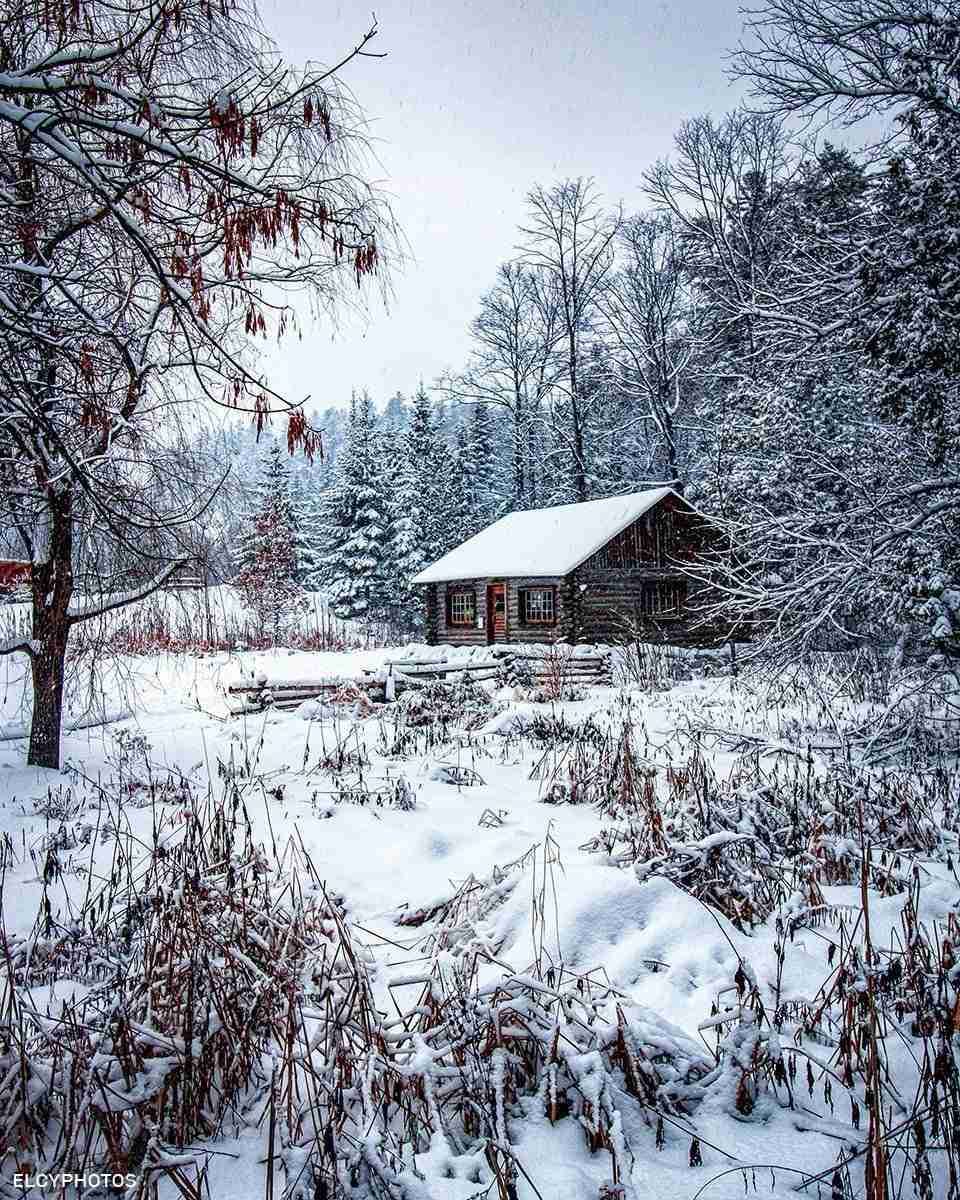
Nestled beside the Fairbairn House Heritage Centre in Wakefield, Quebec, this modest yet evocative log cabin offers a picturesque slice of early Canadian life. With its weathered wooden walls, pitched roof, and simple architectural lines, the cabin sits quietly on the banks of the Gatineau River, surrounded by open lawns and mature trees. Its unassuming form becomes especially compelling in the shifting colors of fall and under the clean brightness of winter snow, when its textures and setting shine most clearly through the lens.
Best Photography Opportunities
• Snow-Draped Winter Compositions
In winter, the log cabin is especially photogenic as it sits blanketed in snow, its warm wood tones contrasting beautifully with the cold blue and white landscape. Early morning light adds long shadows and crisp definition to the cabin's structure, while the afternoon sun brings warmer highlights to the wood grain. Positioning yourself at a low angle allows the untouched snow to fill the foreground, enhancing depth and emphasizing the cabin's grounded simplicity.
• Autumn Color Framing and Foliage Contrast
As leaves begin to turn, the trees around the cabin provide a vibrant backdrop of oranges, reds, and golds. Shooting from the edge of the field, you can frame the cabin with low branches or rising trunks that introduce a natural vignette. Midday overcast light softens the contrast and keeps color saturation high, while golden hour creates a dreamy warmth that suits storytelling and lifestyle-style imagery.
• Architectural Detail Studies
The texture of the hand-hewn logs, the rustic joinery, and the small-paned windows lend themselves well to tight framing and close-up work. These images work particularly well in flat or diffused light, where the fine surface textures stand out without harsh contrast. A macro or standard prime lens can help capture the rich grain of the wood or the frost gathering on windowpanes.
• Historic Context with Fairbairn House and Landscape
Shooting wider, you can place the log cabin in context with the Fairbairn House itself, especially from the riverbank or the approach path. These shots help tell a broader visual story of the site's historical significance, tying together heritage architecture, curated grounds, and seasonal cues like fallen leaves or snow-covered trees. Including signage or historic plaques can subtly inform the frame without distracting.
• Cinematic Mood in Fog, Rain, or Overcast Conditions
Beyond sunny days, the cabin takes on a moodier tone during gray weather. Mist rising from the nearby river in autumn or spring lends a soft, ethereal backdrop, while low clouds and drizzle bring out the darker tones in the wood. Shooting during these conditions can yield atmospheric, painterly results that evoke nostalgia and timelessness.
Best Time to Visit
The log cabin at the Fairbairn House Heritage Centre is accessible year-round, but its visual potential changes dramatically with the seasons. Fall and winter offer the most evocative scenes, with vibrant foliage or snow highlighting the cabin's rich textures and historic character. Late September through October is ideal for autumn color, while January through early March provides reliable snow cover and soft lighting throughout the day.
Spring and summer offer their own charm, with blooming trees, green lawns, and bright skies—though these conditions lean more toward lifestyle or portraiture-style photography. Overcast days in any season enhance the cabin's tones without creating harsh shadow lines, and morning light adds gentle definition to both structure and landscape.
Crowds are rarely an issue, especially if visiting early or late in the day. The cabin is best photographed during golden hour or under soft, diffuse conditions. Early morning frost, evening fog, or just-after-rainlight can all elevate this simple structure into a scene rich with mood and texture.
How to Get There
The log cabin is located on the grounds of the Fairbairn House Heritage Centre in Wakefield, Quebec, near the banks of the Gatineau River. The address is 45 Wakefield Heights Road, and it is just minutes from Wakefield's main village area. Parking is available on-site or nearby, with a short walk across a small field to reach the cabin.
The grounds are open to the public, though visitors should be respectful of the heritage site and any seasonal programming taking place. The site is best accessed on foot, and the terrain is easy to navigate with well-maintained paths. No fee or permit is required to photograph the exterior of the cabin. Tripods are allowed and can be especially helpful in low light or for carefully composed architectural frames.
Recommended Photography Gear
A wide-angle lens (16–35mm) is useful for capturing the cabin within its landscape, particularly during winter or when autumn foliage adds compositional layers. For tighter detail studies of the wood grain, windows, or seasonal elements like frost or leaves, a 50mm prime or macro lens performs well.
A mid-range zoom (24–70mm) offers flexibility when switching between context shots and structural studies, particularly when you're working with changing light or weather conditions. A polarizing filter can deepen sky tones or reduce glare on glass, and a neutral density filter may help smooth cloud movement or passing visitors during longer exposures.
A tripod is essential for blue hour, early morning, or cloudy-day shooting. For winter visits, bring spare batteries and lens cloths to manage condensation and temperature shifts. During autumn, consider using a lens hood to manage flare from low sun angles.
Nearby Photography Locations
Just a short drive or bike ride away, this iconic red-covered bridge spans the Gatineau River and offers dramatic color, strong symmetry, and scenic views in every season.
Numerous elevated viewpoints in nearby Gatineau Park offer panoramic views of rolling hills, lakes, and forested ridges. Best during fall for sweeping foliage shots and at sunrise for moody ridge-top scenes.
A few minutes from the log cabin, the Wakefield Mill Hotel and the adjacent MacLaren Falls offer beautiful compositions of water movement, stonework, and forested surroundings.
• Village of Wakefield
The town itself is full of photographic charm, with local shops, historic houses, and quiet riverfront scenes. It's ideal for street photography, environmental portraits, or architectural detail work.
For a more abstract or nature-focused contrast, this marshland labyrinth just south of Wakefield offers aerial compositions (drone-friendly), reflections, and pattern-driven natural scenes.
Comments
Loading comments…