
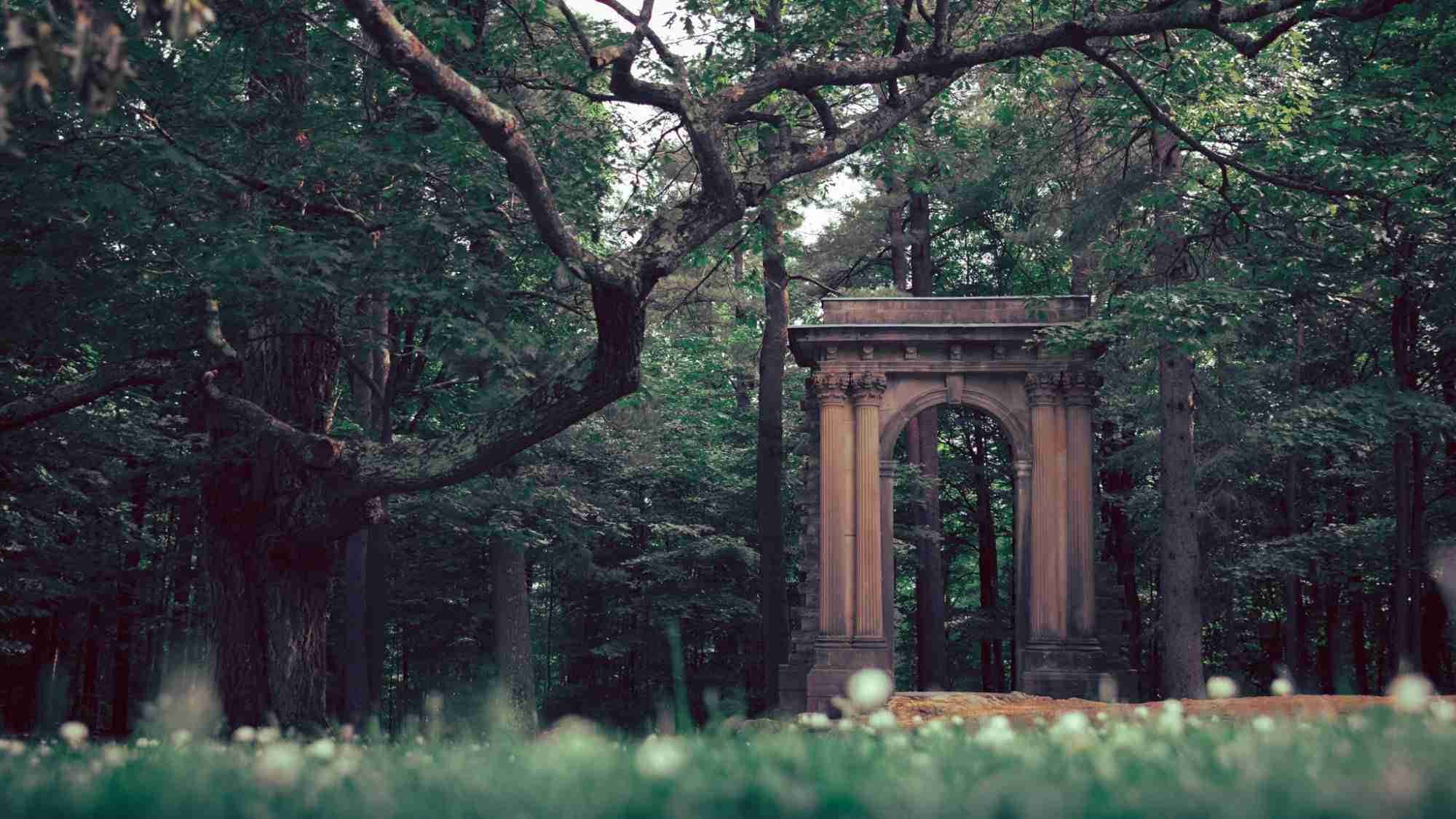
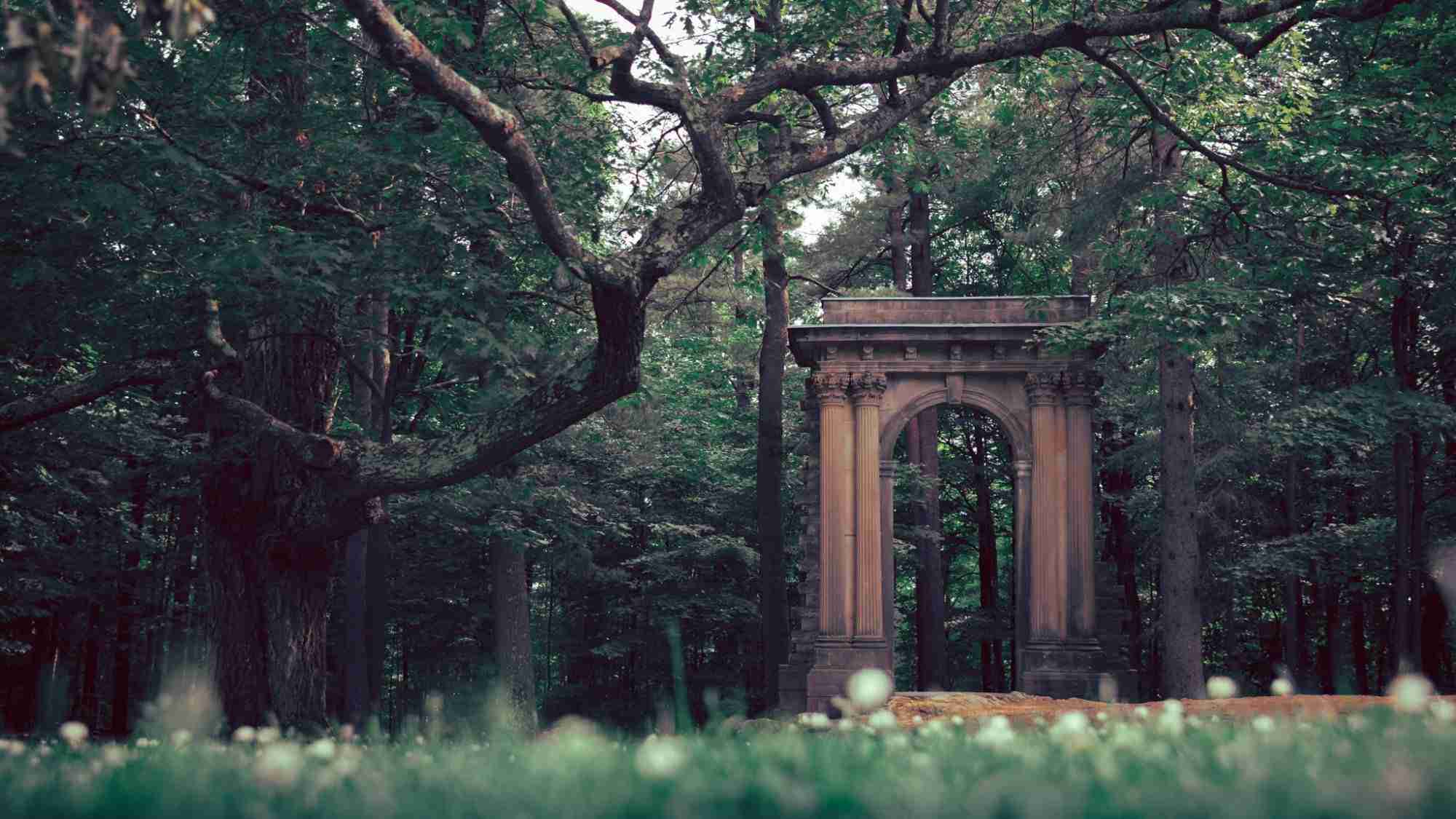
Deep within the forested hills of Gatineau Park lies the MacKenzie King Estate—an evocative blend of pastoral landscape, personal history, and architectural whimsy. Once the summer retreat of William Lyon Mackenzie King, Canada's longest-serving prime minister, the estate spans a peaceful network of gardens, wooded trails, and heritage buildings. What sets it apart for photographers are the carefully curated ruins King imported and reconstructed on the grounds, turning his private sanctuary into a meditative visual experience. The estate invites a slower photographic pace—one that moves between stone columns, vine-draped archways, and forest-filtered light, offering rich opportunities for composition, texture, and historical context in every season.
Best Photography Opportunities
• Architectural ruins amid forest and garden settings
The estate's most unusual feature—and its strongest visual signature—is a scattered collection of classical ruins that Mackenzie King acquired from demolished buildings in Montreal and Ottawa. These include stone archways, Corinthian columns, balustrades, and stair fragments, which he carefully arranged around the estate grounds to form garden monuments and reflective spaces. For photographers, these structures create dynamic opportunities to combine historical form with seasonal change and soft natural light. Wide-angle lenses are excellent for capturing the interplay between ruins and their wooded surroundings, while a mid-range zoom allows you to isolate individual stone features against the backdrop of leaves or sky. Early morning light streams through the trees and plays across these ruins with golden highlights, especially in autumn when color adds a fiery complement to the pale stone. In overcast weather or winter snow, the ruins take on a solemn, sculptural quality that suits both monochrome and muted color treatments.
• Forest paths and trail-based compositions through mixed canopy
A network of trails surrounds and weaves through the estate, offering photographers a chance to work with forest rhythm, filtered light, and the quiet geometry of winding footpaths. These trails are framed by mixed deciduous and coniferous stands, meaning the light shifts subtly throughout the day and across seasons. In spring and summer, dense foliage creates luminous green corridors, ideal for wide, immersive compositions or vertical shots that emphasize tree height and canopy structure. In fall, the trails are buried in color, with overlapping textures from leaf fall and backlit trees. Use a low perspective to enhance depth, incorporating trail curves, roots, and forest floor elements into layered foregrounds. In winter, these same paths are reduced to minimal lines—often bordered by snow-laden branches or undisturbed ground—and create soft vanishing points perfect for simple, contemplative images.
• Historic cottages and architectural storytelling
The estate's two key structures—Kingswood and Moorside—were constructed in the 1920s and 1940s and blend rustic charm with subtle symmetry. These are not grand residences but rather carefully proportioned homes that feel intimately placed within the landscape. Their stone chimneys, gabled roofs, and wooden siding make them ideal subjects for straightforward architectural photography, especially when framed with surrounding gardens or trailing vines. In spring and summer, you can photograph them with colorful flower beds in the foreground or soft shadows playing across the porches and verandas. Use a mid-range lens to frame the building with enough environmental space to include adjacent trees or fences, and consider including interpretive signs or walkways for scale and narrative context. The interiors, when open to the public, offer further opportunities to document historical artifacts under low light conditions—best approached with a fast prime and natural ambient light.
• Garden and landscape elements that shift seasonally
King was deeply involved in the design of the estate's gardens, and although they are modest in size, they are rich in compositional material. Stone steps, flower-lined paths, vine-covered pergolas, and weathered benches are all integrated within the natural forest edge, creating seamless transitions between cultivated and wild. In spring, tulips and early bloomers light up the foreground around garden beds and ruins. Summer offers the fullest foliage and clearest structure, with opportunities to frame human-scale scenes—empty benches under vine arches, pathways disappearing behind hedges. In autumn, the gardens explode with warmth, and in winter, the geometry of paths, hedges, and pergolas becomes more pronounced beneath snow and frost. These garden scenes are ideal for storytelling or compositional studies of balance and contrast.
• Moody weather and atmospheric conditions across ruins and forest
The estate's elevation and location within Gatineau Park create ideal conditions for fog, mist, and diffused weather—particularly in spring and fall. Early morning fog draping through the ruins or hovering above the garden beds adds cinematic mood to otherwise serene structures. Rain-slicked stone gleams under soft cloud cover, and forest canopies drip with saturated color and layered depth. These weather conditions reduce harsh contrast and allow photographers to work throughout the day. Shooting wide allows for a full sense of atmosphere, while longer focal lengths compress the layers of mist or isolate a single column or tree in a shifting visual field. This is one of the few urban-proximate heritage sites where moody, low-light work can be sustained over multiple hours with compelling results.
Best Time to Visit
The MacKenzie King Estate changes character with the seasons, and every period of the year offers something distinct for photographers looking to build thematic or seasonal series.
Spring begins slowly in Gatineau Park, but by late April and May, the trails thaw and the gardens begin to show signs of color. This season is ideal for soft lighting, early morning mist, and images that reflect growth, moisture, and reawakening. It's also one of the quieter times at the estate, offering more freedom to compose shots without foot traffic.
Summer provides the longest shooting windows and the most complete foliage. Gardens are in bloom, forest trails are shaded and green, and the ruins are cleanly framed by high summer light. While mid-day can be harsh, morning and late afternoon produce rich shadows and golden directional lighting through the trees.
Autumn is arguably the most visually intense season at the estate. Peak color typically arrives between late September and mid-October, turning the trails and gardens into fire-toned corridors and surrounding the ruins with a vivid, painterly palette. Fog and morning dew enhance these effects, and early sunlight often produces dynamic contrast between shadowed forest and sunlit stone.
Winter, though stark, provides a different kind of photographic power. Snow transforms the estate into a black-and-white study in form—ruins, tree trunks, and pathways outlined with delicate geometry. Few visitors come in winter, which means complete stillness and a slower, more meditative working environment for photographers comfortable in the cold.
How to Get There
The MacKenzie King Estate is located in Chelsea, Quebec, within Gatineau Park and approximately 20 minutes north of downtown Ottawa. From Ottawa, take the Champlain Bridge and follow signs for Gatineau Park and Kingsmere Road. The entrance to the estate is marked clearly, with a designated parking lot near the Moorside and Kingswood buildings.
During peak seasons (spring through fall), the estate is accessible via the Gatineau Parkway, which is open to vehicles on weekdays but closed to motor traffic on weekends for recreational use. Plan accordingly if you're visiting on a weekend, as you may need to park farther away and walk or cycle in. In winter, roads may be partially closed due to snow, though trails and exterior areas remain accessible.
Public transportation does not serve the estate directly, so visitors must arrive by car, bike, or on foot from nearby access points. Facilities are open seasonally, and it's recommended to check with the National Capital Commission for the most current hours and trail conditions before planning a shoot.
Recommended Photography Gear
A wide-angle zoom (16–35mm) is ideal for shooting the ruins, cottages, and forest scenes where expansive composition is required. For architectural isolation and tighter framing, a mid-range zoom (24–70mm) allows you to adjust quickly between wide views and details, particularly useful when moving between ruins, cottages, and trail scenes.
A fast prime lens (35mm or 50mm) is recommended for low-light interior work, handheld shooting in the forest, or when emphasizing subject separation in the gardens or along the trails. For macro or detail shots of garden textures, moss on stone, or leaf patterns, a dedicated macro lens offers the sharpness and control needed to work close.
A tripod is essential for long exposures, low light, or working with ND filters in conditions like mist or twilight. Use a circular polarizer to reduce glare on stone surfaces and deepen greens or blues in the foliage and sky. For long exposure work with garden paths or slow-moving visitors, a 6-stop ND filter provides creative control over movement and mood.
In winter or wet conditions, bring lens cloths and weather protection, as snow and fog can affect lens clarity. A compact backpack with space for layered clothing will make navigating the trails more comfortable, especially during early morning or shoulder-season sessions.
Nearby Photography Locations
Just a short drive west from the estate, this popular viewpoint offers expansive views across the Eardley Escarpment and the Ottawa Valley. Ideal for golden hour, especially in autumn when foliage patterns stretch across the landscape in bands of color.
A strikingly clear, green-hued lake with a perimeter trail offering elevated and waterside views. Excellent for reflections, forest compositions, and moody fog work early in the morning.
Surrounded by dense forest and rolling hills, this lakeshore location provides soft shoreline reflections, rock textures, and wider open scenes—particularly atmospheric in fog or just after rainfall.
Just minutes from the estate, the village of Chelsea features heritage homes, artisan shops, and pedestrian-friendly lanes—perfect for architectural studies and quiet street photography.
• Luskville Falls Trail
A more rugged option for photographers willing to hike. This trail leads to a dramatic waterfall and panoramic views from the ridge above, contrasting nicely with the estate's manicured grounds.
The MacKenzie King Estate isn't just a historic site—it's a layered composition in itself. Every ruin, path, and building reflects a quiet vision of place, memory, and purpose. For photographers, it's a location that rewards patience and rewards return visits. Whether you're working with ruins in golden hour or snow-covered trails in blue twilight, this estate remains one of Quebec's most poetic, photographer-ready landscapes.
Comments
Loading comments…