
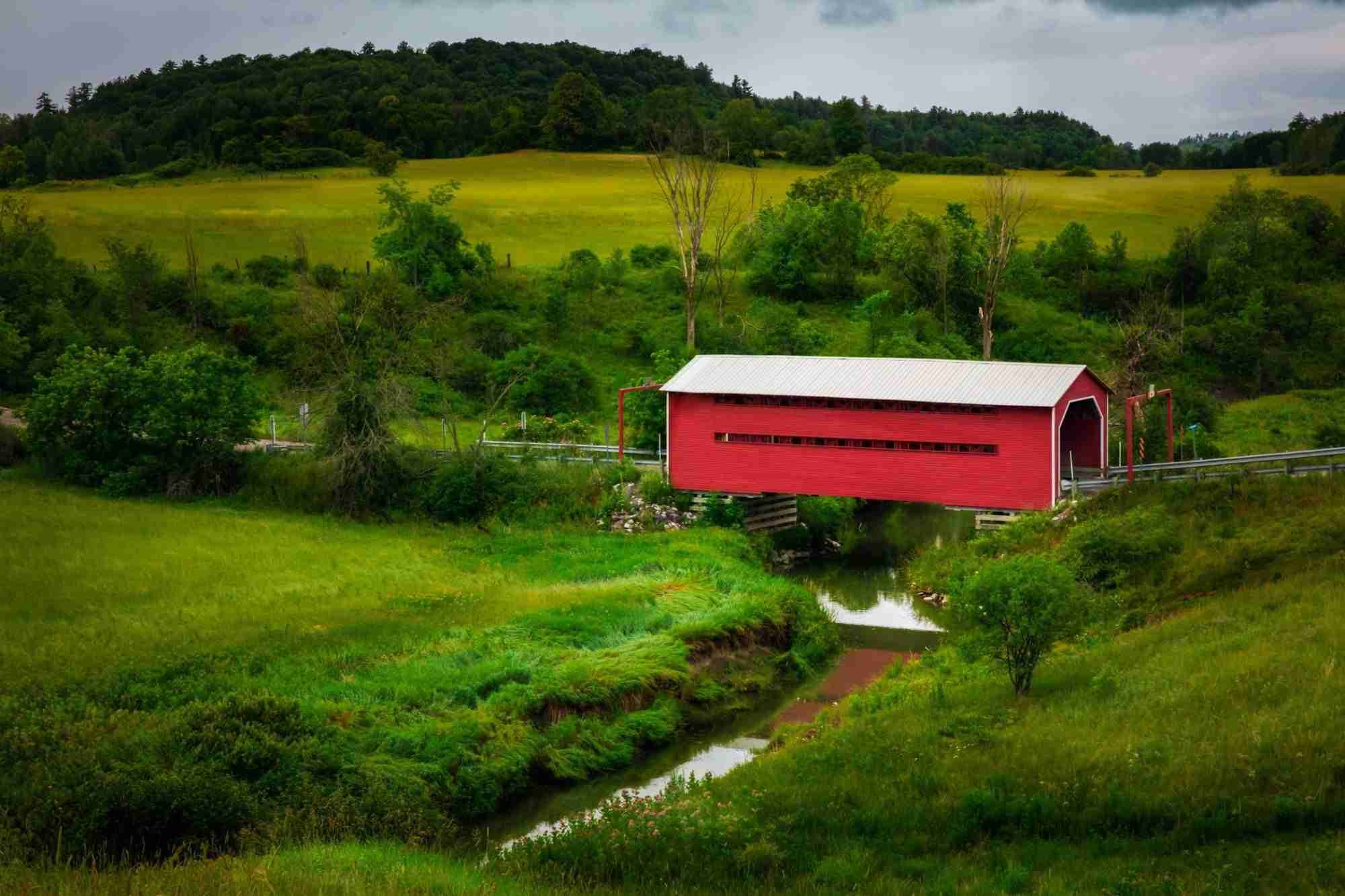
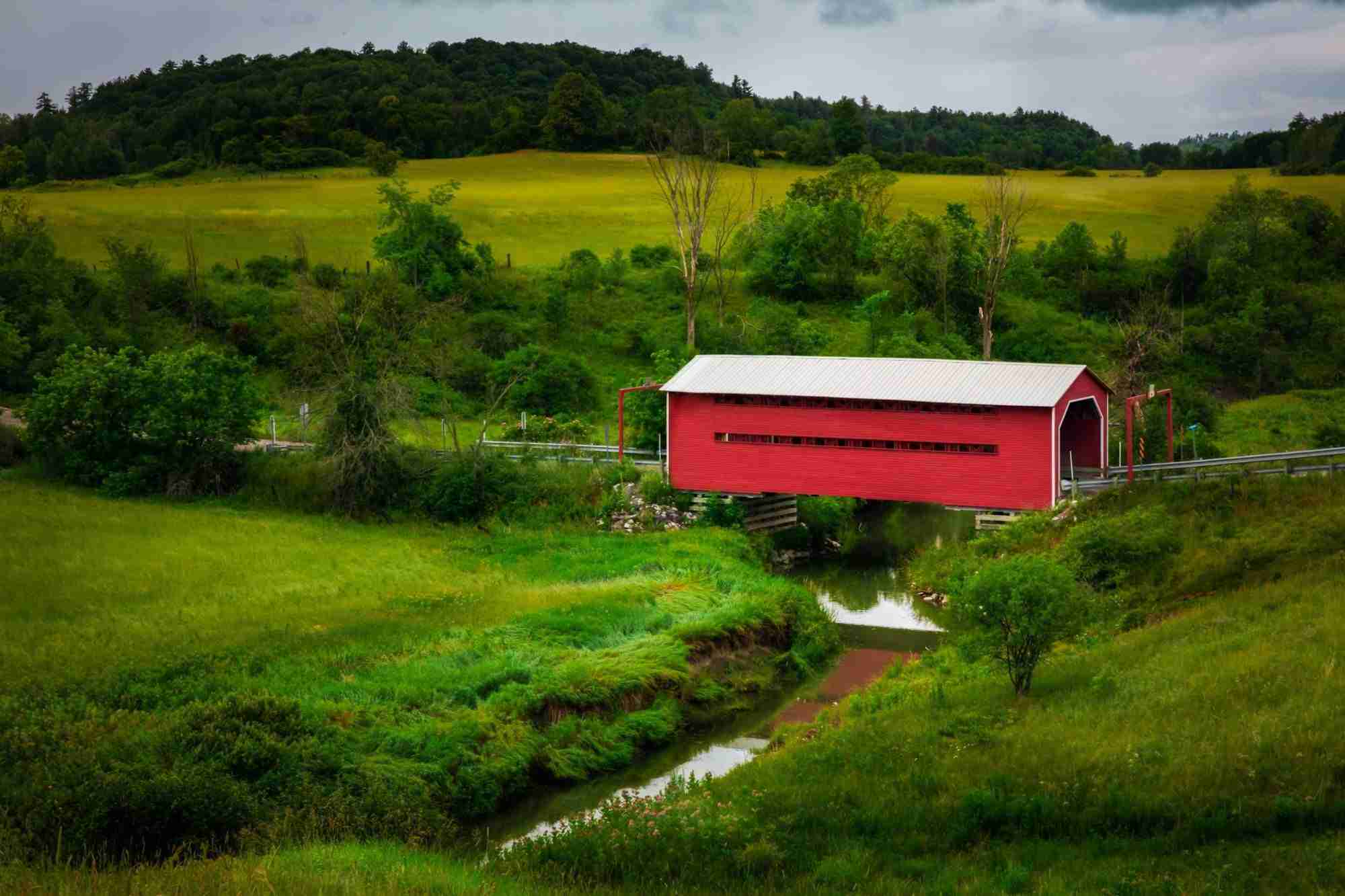
Spanning the pastoral landscape of Gatineau Park in Chelsea, Quebec, the Meech Creek Covered Bridge is a rare and beautifully preserved example of traditional Quebecois engineering. Originally built in 1932 and restored for pedestrian and limited-use traffic, the bridge stands as both a historical artifact and a photographic anchor within an idyllic rural setting. With red painted siding, a wood-truss interior, and scenic fields stretching out on either side, this bridge exudes the kind of quiet, understated charm that landscape photographers crave. Its setting—nestled among winding trails, meadows, and the distant hills of the Gatineau Hills—makes it an essential stop for anyone seeking structure in harmony with nature.
Best Photography Opportunities
• Frontal compositions from the southern approach
The southern entrance to the bridge presents the most classic composition: the red-painted façade framed by open fields and tree lines, often under sweeping skies. Standing just a few meters from the bridge, a wide-angle lens allows you to capture the symmetry of the entrance while including gravel roads, fence lines, or wildflowers as foreground interest. In the early morning or late afternoon, long shadows and golden light enhance the texture of the wood and the saturation of the red paint. This is also an excellent opportunity to shoot vertical compositions that emphasize the arching roofline and clean structure against cloud movement.
• Interior truss and light play from within the bridge
Inside the Meech Creek Bridge, a network of wooden trusses creates a tunnel of intersecting lines and repeating patterns. Light filters through the entrance and side gaps, forming high-contrast bands across the floor and walls—ideal for black-and-white photography or moody abstracts. Use a standard or wide-angle lens and shoot low to emphasize the vanishing point created by the receding structure. On overcast days, the softer light brings out the grain and weathering in the wood without harsh contrast. This location rewards slower shooting with a tripod and mid-range exposures to retain interior shadow detail.
• Side-profile environmental shots from the adjacent field
For wider environmental compositions, move into the open field just west of the bridge. From here, the full profile of the bridge sits within a classic rural landscape—grassy meadows, stands of trees, and the gentle rise of the Gatineau Hills in the distance. A mid-range zoom (24–70mm) or telephoto lens can compress the field and bridge into a clean, centered frame. Golden hour and autumn foliage both bring rich tonal depth to this scene, while fresh snow in winter turns it into a stark, elegant study in red against white. These compositions work especially well for minimalistic storytelling or use in series documenting the seasons.
• Reflections and puddle shots after rainfall
On rainy days or immediately afterward, the gravel path leading to the bridge often develops shallow puddles that mirror the red façade. These reflections add symmetry and foreground interest, especially when framed tightly with a low-angle lens. Use a tripod and polarizing filter to control surface glare, or exploit the reflection distortion for a more abstract effect. These conditions also darken the surrounding foliage and gravel, causing the bridge to stand out even more dramatically in the frame.
• Seasonal walk-through and trail-side views
Several trails lead away from the bridge into nearby fields and woodland, offering angles that incorporate the bridge into a broader natural setting. In spring, trails are lined with early wildflowers; in autumn, fallen leaves blanket the path and frame the bridge in gold and russet tones. These views are ideal for environmental portraits, subtle landscape narratives, or capturing human elements—cyclists, hikers, or lone figures passing through the bridge's shadow. Use a longer focal length to compress trail lines and bring the bridge subtly into the background.
Best Time to Visit
Meech Creek Covered Bridge is photogenic in all seasons, but its mood and color palette change significantly throughout the year.
Spring brings fresh greens, blooming wildflowers, and bright, directional light that enhances both the bridge's color and the surrounding landscape. The air is clear, and shadows are crisp—ideal for high-contrast compositions from multiple angles.
Summer offers long shooting hours and lush vegetation. The bridge is partially shaded during the day by nearby trees, which can create dappled light inside and vibrant color contrasts outside. Mornings and evenings remain the best for soft light and fewer visitors.
Autumn is the most dramatic season for photographers. The surrounding maple and birch trees turn deep red, gold, and orange, creating a vibrant frame around the bridge. The warm tones pair beautifully with the painted red façade, and foggy mornings add atmosphere that softens hard lines and saturates color.
Winter transforms the bridge into a serene, monochrome subject. Snow covers the roof and path, while the red siding becomes a bold graphic element in an otherwise neutral scene. Early morning light on fresh snowfall creates some of the most striking and minimalist compositions possible at the site.
How to Get There
Meech Creek Covered Bridge is located in Chelsea, Quebec, within Gatineau Park, approximately a 25-minute drive from downtown Ottawa. From Highway 5, take exit 21 toward Old Chelsea Road, then turn west onto Chemin Cross Loop and follow signs toward the Gatineau Park entrance. Chemin de Meech Creek leads directly to the bridge.
Parking is available on the roadside near the bridge or at small nearby trail access points. Exercise caution when parking on narrow gravel shoulders, especially in winter or after heavy rain. The site is most easily accessed by car, but cyclists and hikers can also reach the bridge via nearby trails within Gatineau Park.
There is no fee to access the bridge, and it is open to pedestrians, cyclists, and limited vehicle traffic. As it is part of a protected area, photographers are asked to stay on marked paths and respect the natural environment. Tripod use is unrestricted, and there are no permit requirements for personal or non-commercial photography.
Recommended Photography Gear
The bridge's combination of tight interiors and wide natural surroundings calls for a compact but flexible kit. A wide-angle zoom (16–35mm) is essential for capturing the full structure from head-on and for interior tunnel shots that emphasize the depth and geometry of the wooden trusses.
A mid-range zoom (24–70mm) or fast prime (50mm) excels at detail work, environmental frames, and walk-through compositions along the trail. A telephoto lens (70–200mm) can be useful for distant field shots or compressing elements across the landscape—particularly effective in winter and autumn when texture and layering become key.
A tripod is essential for interior low-light work and long exposures at twilight or in poor weather. Pack a circular polarizer for glare control on wet wood or water surfaces, and a microfiber cloth for keeping lenses clean in damp or muddy conditions. In autumn and spring, waterproof boots and a small mat or bag to kneel on are helpful for low-angle shots.
Nearby Photography Locations
Just north of the bridge, this popular lake offers dramatic reflections, dock scenes, and clear water bordered by rock and forest. Best at sunrise or during autumn peak color.
Known for its unusual turquoise water and geological significance, this site offers high vantage points and circular trail compositions ideal for layered landscapes and detail studies.
Just minutes away, the village of Old Chelsea features quaint shops, colorful buildings, and street-level charm. Excellent for café scenes and architectural contrasts in soft light.
A moderate hike leading to panoramic views over the Gatineau Hills. Perfect for sunrise wide-angle landscapes and seasonal foliage photography, particularly in October.
A classic scenic overlook in Gatineau Park, this location offers far-reaching views across the Ottawa River Valley. Ideal for sunrise, misty valley shots, and long-lens layering work.
Meech Creek Covered Bridge is a quiet, resilient structure that seems to exist outside of time. Its strength lies not just in the wood and paint but in the way it stands so naturally within the surrounding fields and trails. For photographers, it offers both subject and setting—an opportunity to frame history in every season, and to slow down long enough to see how a single structure can become part of the land it spans.
Comments
Loading comments…