
Mont Saint-Bruno, located just southeast of Montreal in Montérégie, is a low but visually rewarding peak that anchors one of Quebec's most accessible and photogenic natural parks. While the elevation is modest at just 218 meters, the mountain's dense forest, reflective lakes, and winding trails provide photographers with a broad palette of subject matter—from soft woodland compositions and mist-covered paths to frozen lakes and fiery autumn foliage. This former seigneurial estate is now a protected area within Parc national du Mont-Saint-Bruno, offering photographers structured access, seasonal variation, and rare proximity to Montreal without sacrificing atmosphere or tranquility.
Best Photography Opportunities
• Forest trail compositions through filtered light
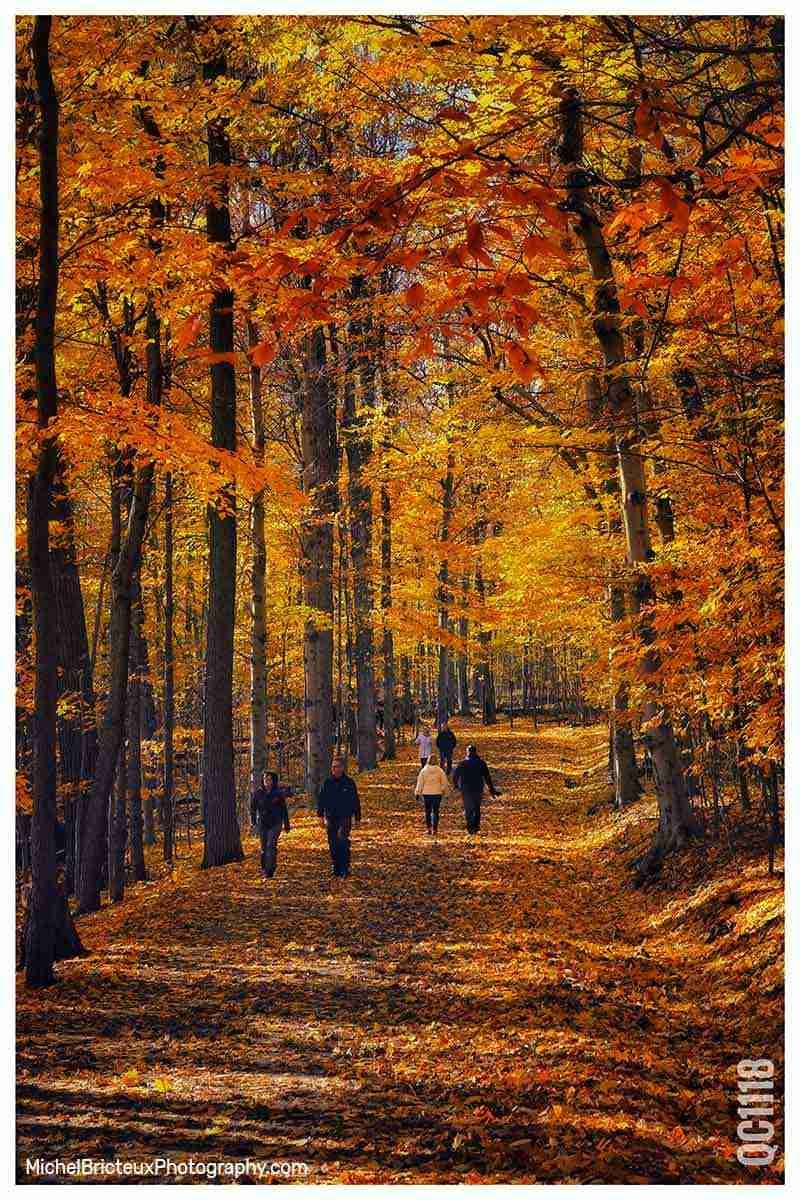
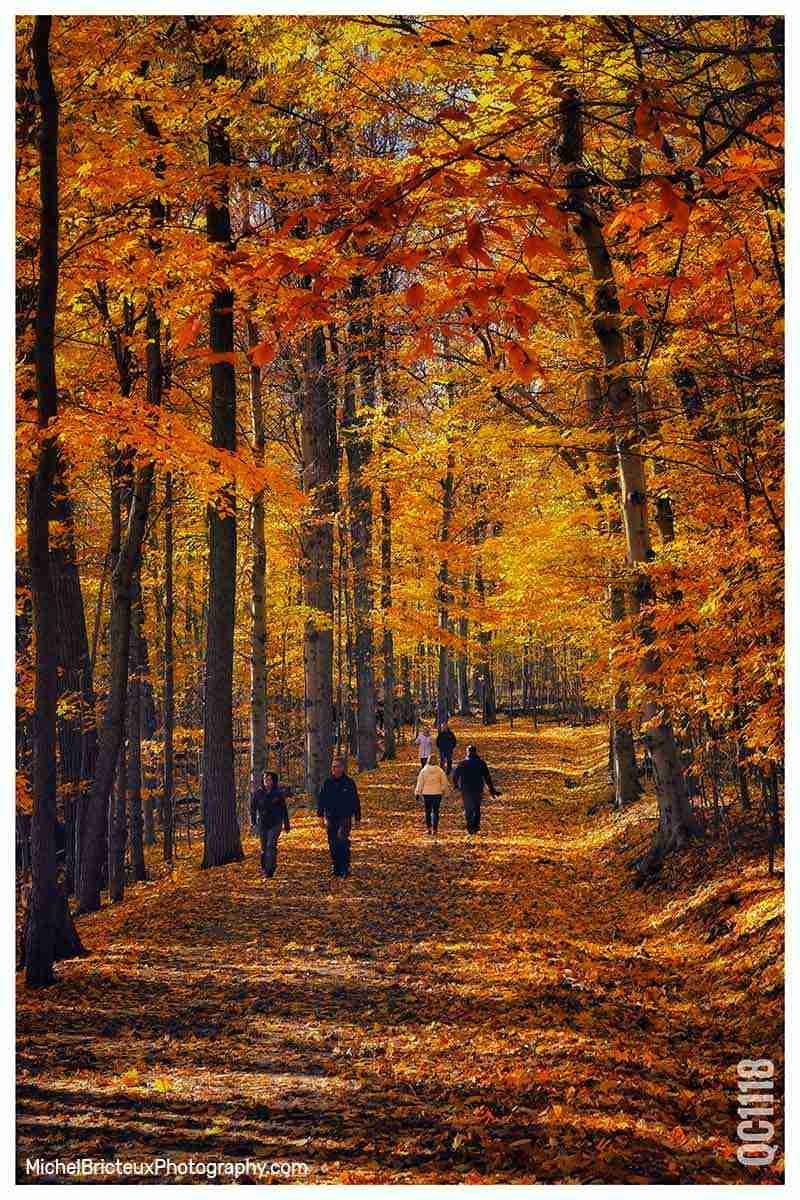
Mont Saint-Bruno's hallmark feature is its woodland trail network, winding through dense stands of maple, oak, birch, and pine. These trails vary in mood and light depending on the season and time of day. In spring and summer, early morning light seeps through the green canopy, creating a tapestry of highlights and soft shadows across the trail bed. In autumn, the paths become tunnels of gold and rust, offering leading lines and color depth. Use a wide-angle lens to emphasize path curvature and include framing elements like tree trunks or moss-covered stumps. These scenes are particularly effective when shot with soft side light, which enhances bark texture and leaf transparency. Take your time to find compositions that balance order and natural chaos—a fallen branch, a narrowing path, or an unexpected beam of light.
• Reflections and shoreline framing at Lac Seigneurial and Lac du Moulin
Two of the most photogenic lakes in the park, Lac Seigneurial and Lac du Moulin, offer reflective calm at daybreak and perfect glassy surfaces after rainfall. From the southern edge of Lac Seigneurial, you can frame long horizontal compositions that capture the mirrored treeline under shifting skies. In autumn, these reflections double the fiery foliage for bold, layered images. The smaller Lac du Moulin provides a more intimate perspective, often framed by reeds and low-hanging branches. Look for symmetrical compositions and use a polarizer to reduce surface glare while enhancing sky and foliage contrast. In winter, these lakes freeze into textured expanses—ideal for graphic, minimal images with a monochrome palette.
• Winter minimalism and high-contrast textures
Snow transforms Mont Saint-Bruno into a stark and contemplative space. Paths become ribboned trails, bare trees draw vertical lines against white backdrops, and stillness settles across the lakes and open clearings. This season favors photographers who embrace simplicity. Use a telephoto lens to compress distance and flatten layers of forest into abstract shapes, or go wide to emphasize isolation and silence. Snowshoeing off the main trails opens access to quieter pockets of the park where the snow remains untouched, creating scenes of pristine, high-contrast calm. Blue hour and overcast light enhance the feeling of depth and soften hard edges, making it a productive time for subtle tonal exploration.
• Fall foliage vistas from upper trails and clearings
While Mont Saint-Bruno's elevation is modest, several upper trails and small clearings near Lac des Bouleaux and Sentier du Grand-Duc provide strong vantage points over the surrounding canopy. During the peak of autumn, usually from late September to mid-October, the forest erupts in color—deep reds, vibrant yellows, and golden light filtering through thinning leaves. These trails are best photographed with a mid-range zoom, allowing you to frame overlapping textures or focus on lone trees lit from behind. Look for breaks in the canopy or slight rises that allow you to shoot horizontally across the forest. Fog often settles into the lower areas during early morning, adding atmosphere and layering to wide scenes.
• Historic estate buildings and orchard symmetry
Near the main park entrance sits the historic Seigneurial estate, a reminder of the land's colonial roots. Beside it, a sprawling apple orchard offers rows of perfectly spaced trees that shift in visual impact through the seasons. Spring blossoms, summer greenery, and autumn fruit all bring unique opportunities for order, color, and repetition. Photographing down the rows of trees creates clean, symmetrical lines, while low-angle perspectives capture the seasonal detail of the undergrowth and ground texture. In autumn, backlighting during golden hour enhances color saturation, while in winter, snow-covered branches form graphic tunnels of white and shadow.
Best Time to Visit
Mont Saint-Bruno provides year-round photographic interest, with seasonal changes offering very different visual character and mood.
Spring is marked by awakening detail—moss returning to life, early leaf buds catching low sunlight, and soft forest floors covered in damp leaf litter. Morning fog is frequent, creating a cinematic quality that works beautifully with narrow depth of field and muted tones. Streams and drainage channels swell with runoff, and ephemeral textures like melting ice or blooming trout lilies emerge for brief windows.
Summer offers longer days and denser foliage. The lakes are calmest early in the morning, before park visitors arrive, and trails are often dappled with light through a thick canopy. It's a good season for detail work, as forest floors teem with ferns, mushrooms, and small wildlife. Because the canopy blocks much of the overhead light, the best light for trail shots typically occurs at the start and end of the day.
Autumn is the visual climax of the park. Foliage color transforms the entire mountain, and the quality of light becomes rich and directional throughout the day. Both wide and intimate scenes benefit from the saturation and tonal separation available during this time. Mist is common in the mornings and trails can be carpeted in multicolored leaves, making every turn in the path an opportunity for new compositions.
Winter redefines the park as a quiet, high-contrast landscape. Snow shapes the structure of the trees and flattens the landscape, making it ideal for minimalist compositions. Golden hour light glows gently off the snowpack, and long shadows stretch across ski and snowshoe trails. The stillness of the season rewards slower, deliberate shooting with a focus on form and line.
How to Get There
Mont Saint-Bruno is located in the Montérégie region, roughly 30 kilometers southeast of downtown Montreal. The most direct access is by car via Autoroute 30, exiting at either Boulevard Seigneurial or Rang des Vingt and following signs to Parc national du Mont-Saint-Bruno. The entrance is located at 330 Rang des Vingt, Saint-Bruno-de-Montarville.
Parking is available year-round at the main lot adjacent to the Visitor and Discovery Centre, where most trailheads originate. From there, trails are clearly marked and loop throughout the park, connecting to lakes, lookouts, and the orchard.
Public transportation options exist but are less direct. Take the Montreal Metro to Longueuil–Université-de-Sherbrooke station, then use RTL bus routes that service the Saint-Bruno area. From the bus stop, expect a 15–20 minute walk to reach the park entrance.
The park is open year-round and managed by the Sépaq network, with a daily access fee or annual pass required for entry. All photography is permitted for personal use, and tripods are allowed throughout the trails. Some trails are limited to snowshoes or skis in winter, so check signage and seasonal maps when planning access.
Recommended Photography Gear
A wide-angle zoom lens (16–35mm) is essential for capturing immersive forest scenes, trail compositions, and overhead canopy light. A mid-range zoom (24–70mm) offers maximum versatility for both landscape and detail shots, making it especially useful along the lakes and in the orchard.
A fast prime lens (35mm or 50mm) is ideal for low-light trail work, close-ups of seasonal textures, and handheld shooting in the early morning or blue hour. For distant foliage layering or compressed forest compositions, a telephoto lens (70–200mm) delivers strong results, especially in autumn and winter.
A tripod is crucial for low-light conditions, long exposures, or compositional precision, particularly when working with reflections on the lakes or during blue hour. A circular polarizer enhances foliage contrast, darkens skies, and reduces glare from water surfaces. A 3- or 6-stop ND filter can be used for long exposures on water or moving clouds.
Seasonal gear is essential in winter—extra batteries, insulated gloves with fingertip access, and lens cloths for moisture management. In summer, insect repellent and a lens hood are helpful, particularly on longer trail sessions.
Nearby Photography Locations
Just across the Richelieu River, Mont Saint-Hilaire offers steeper climbs and broader vistas. The trails are more rugged but lead to sweeping lookouts over the Montérégie plains. A good counterpoint to Mont Saint-Bruno's soft forest compositions.
• Fort Chambly and Chambly Canal
Located about 20 minutes away, this historic riverside fort and canal lock system provide strong geometrical compositions, symmetrical reflections, and architectural context. Best in early morning for water calmness and light control.
This lesser-known conservation area near Longueuil offers marshland, forest corridors, and transitional habitats ideal for wildlife and minimal landscape photography. A quiet place for foggy mornings and abstract woodland scenes.
• Parc de la Cité in Saint-Hubert
A more urban park with a central lake, wooden footbridges, and open sky that complements Mont Saint-Bruno's dense forest. Sunset sessions here can yield vivid color and clean compositions over water.
• Verchères Waterfront
A peaceful stretch of shoreline along the St. Lawrence River, Verchères is excellent for long-exposure seascapes, moody skies, and minimalist river scenes. Particularly atmospheric in winter or during post-rain twilight.
Mont Saint-Bruno is less about dramatic vistas and more about the quiet, unfolding beauty of detail—the curve of a snow-covered trail, the layered reflection of autumn leaves on a still lake, the way early light filters through spring foliage. Its accessibility and seasonal variation make it an ideal location for photographers who prefer contemplative, immersive work over grand statements. Whether you're building a long-term project or seeking a dependable escape from the city, Mont Saint-Bruno offers a forested environment that reveals more with every visit, inviting photographers to slow down and notice what might otherwise be missed.
Comments
Loading comments…