
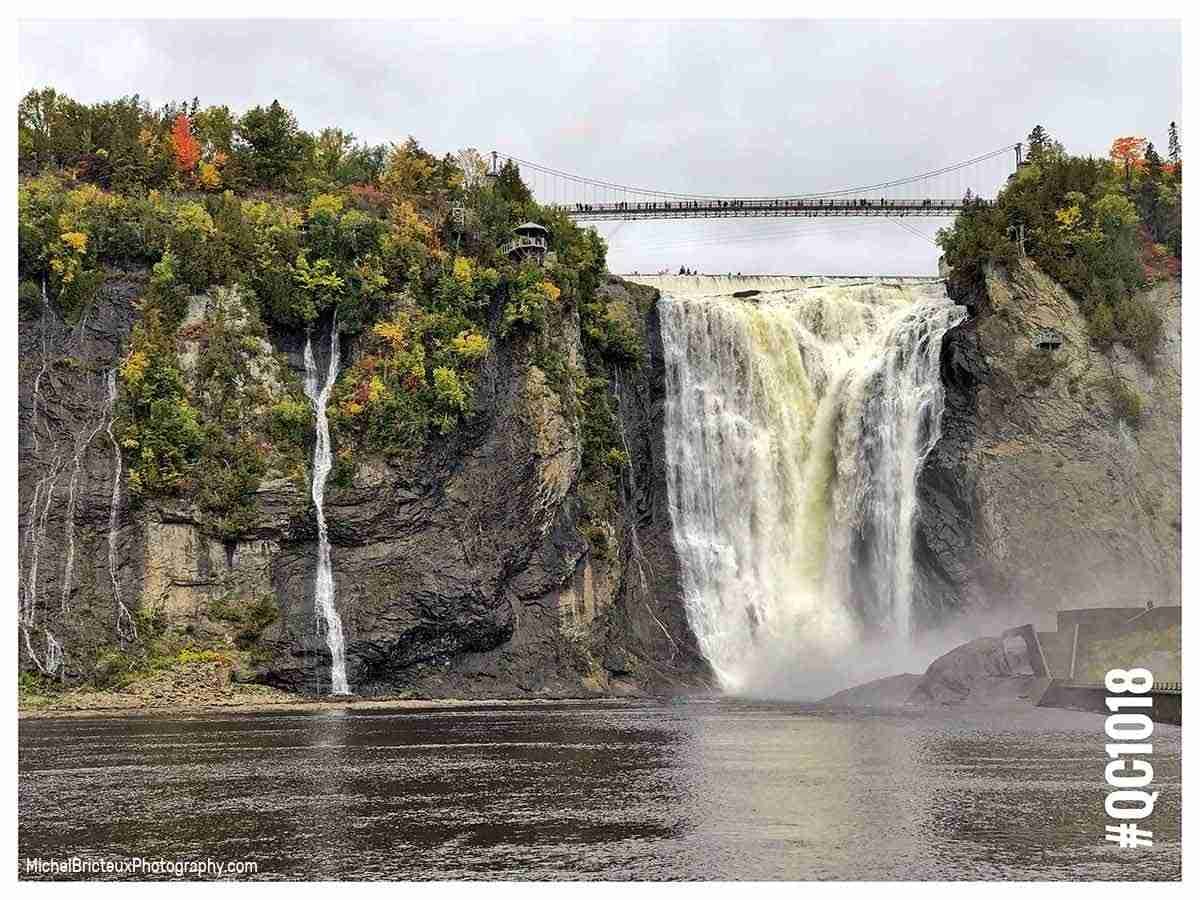
Plunging dramatically from the cliffs where the Montmorency River meets the St. Lawrence, Montmorency Falls stands as one of Canada's most arresting natural landmarks. At 83 meters tall—an impressive 30 meters higher than Niagara Falls—this thunderous cascade is a study in force, scale, and seasonal transformation. Located just 15 minutes from Old Quebec, the falls are set within a provincial park that provides multiple vantage points, including suspension bridges, staircases, and cable cars. For photographers, Montmorency Falls presents an ideal combination of geological grandeur and engineered access, with year-round shooting opportunities that shift from ice-cloaked winter sculptures to mist-drenched summer torrents.
Best Photography Opportunities
• Base-level power shots from Parc de la Chute-Montmorency
At ground level, the best access is through the park entrance at the base of the falls. From here, you can shoot upward into the sheer rock face as the water hammers into the plunge pool below. These compositions emphasize verticality and the raw energy of the cascade. Use a wide-angle lens to include the flanking cliffs and walkways, or a telephoto lens to isolate the rippling water and mist. Early morning and late afternoon light illuminate the face of the cliff with rich shadow definition, especially in autumn when golden tones complement the rocky hues.
• Suspension bridge perspectives from the summit
At the top of the falls, a suspension bridge stretches directly over the rushing water just before it plunges into the gorge. This unique perspective allows you to shoot straight down into the abyss or across to the cliffs, creating a dizzying sense of depth. Use a mid-range zoom to frame the river's curve and the foaming drop. Bracket exposures if shooting into the light, especially during sunset. In winter, snow clings to the bridge's steel supports, and the partially frozen waterfall becomes a textured spectacle ideal for black-and-white or high-contrast rendering.
• Side profile from the panoramic staircase
The cliffside staircase offers one of the most dynamic compositions: a wide lateral view of the full waterfall as it drops from ledge to pool. From these steps, you can create images with a strong diagonal flow, especially effective when paired with the warm light of early evening. This is a prime location for long exposures—use a tripod and neutral density filter to transform the crashing water into a smooth, ethereal ribbon. Composing with the footbridge and lookout points in the background helps convey scale and brings human context into the frame.
• Cable car vistas and seasonal transitions
The Montmorency cable car offers elevated, gliding views of the falls and surrounding cliffs. From inside the cabin or the boarding platforms, you can capture layered views of the falls, the Saint Lawrence River, and the Île d'Orléans beyond. These wide compositions are particularly rich in autumn when the foliage adds vibrant contrast. In winter, use a telephoto lens to frame crystalline ice formations that develop around the spray zone. This is one of the few viewpoints where you can simultaneously shoot the cascade and its environmental setting, making it ideal for storytelling images.
• Winter ice cone and mist patterns
One of Montmorency's most unique features appears only in winter: the enormous ice cone that forms at the base from accumulated mist and frozen spray. This surreal, white structure grows taller and more sculptural as the season progresses, often taking on a cathedral-like presence beneath the dark rock. From below, photograph the cone against the falls for maximum impact, or from above, isolate its texture and shape against the ice-slicked river. These images are perfect for abstract compositions and seasonal portfolios. A polarizer can help cut haze from mist and bring clarity to the surrounding snow and sky.
Best Time to Visit
Montmorency Falls is one of the few locations in Quebec that offers equally compelling photography throughout all four seasons.
Spring brings renewed volume to the river as snowmelt accelerates the flow. The surrounding cliffs are still bare, which helps emphasize the structure and layering of rock and water. This is the time for raw, high-contrast images and powerful close-ups.
Summer allows full park access, including the suspension bridge, panoramic staircases, and trails. Vegetation is lush, and the light stays warm well into the evening. Early mornings offer quieter shooting conditions and subtle mist over the river. Sunset is best for side-lighting across the cliffs.
Autumn is arguably the most photogenic time to visit. The hills explode with red, orange, and gold foliage, creating a multi-tonal frame around the white torrent. The low angle of the sun enhances shadow and contour, making it an ideal season for wide scenic compositions and long exposure work.
Winter transforms the falls into an ice-covered monument. The mist freezes on contact with the air, coating every nearby surface in crystalline texture. The famous ice cone grows at the base, and thick frost clings to tree branches and railings. Blue hour and overcast skies add mood, and snow softens foot traffic for pristine foregrounds.
How to Get There
Montmorency Falls is located roughly 12 kilometers (about 15 minutes) northeast of Old Quebec City. The main entrance is off Route 440 (Autoroute Dufferin-Montmorency), with signage guiding visitors to Parc de la Chute-Montmorency.
Parking is available at both the base and summit of the falls. The lower lot gives access to the base viewpoint, footbridge, and cable car, while the upper lot connects to the suspension bridge, walking trails, and lookout platforms. Cable car rides connect the two levels for convenience.
Public transit is available via the RTC (Réseau de transport de la Capitale) bus system, with several routes serving the falls area during peak seasons. Cyclists can access the park via a paved bike trail that follows the Saint Lawrence River from central Quebec City.
The park is open year-round, though some facilities and paths may be closed in deep winter. Entry is subject to a modest fee, and certain areas—such as the cable car or staircase—may require separate admission. Photography is permitted throughout the park, including with tripods.
Recommended Photography Gear
Photographing Montmorency Falls effectively requires a blend of wide coverage and detail-specific tools. A wide-angle zoom (16–35mm) is essential for base-level and summit views, especially when including cliffs, footbridges, and the river in expansive frames. A mid-range zoom (24–70mm) offers flexibility on the trails and stairs for both landscape and vertical compositions.
A telephoto lens (70–200mm or longer) is valuable for isolating ice formations, focusing on the top or base of the falls, or shooting from the cable car platform. For long exposure work, bring a tripod and ND filters (3-stop and 6-stop recommended) to soften water motion and clouds.
A circular polarizer helps cut through mist and surface glare on wet rocks. Lens cloths are essential, especially in winter and near the base, where airborne spray can coat the front element. In winter, pack insulated gloves with fingertip access, as well as weather protection for both camera and clothing—conditions can change quickly at the summit.
Nearby Photography Locations
Just across the bridge from the falls, this island offers vineyard vistas, old farmsteads, and expansive river views. A great pairing with Montmorency for pastoral scenes and golden hour farmland compositions.
A 15-minute drive away, the historic core provides cobblestone streets, cathedral architecture, and dramatic rooftops—perfect for combining natural and cultural visuals in a single day.
Located along the St. Lawrence closer to the city, this recreational shoreline offers wide views back toward Montmorency and excellent water-level sunset compositions.
About 30 minutes northeast, this bird sanctuary and marshland preserve is ideal for wildlife photography, especially migratory geese in spring and autumn. Great for early morning light and environmental contrast.
A deeper, more rugged counterpart to Montmorency Falls, this gorge includes multiple waterfalls, suspension bridges, and densely forested trails—excellent for multi-angle compositions and dynamic water motion.
Montmorency Falls is not just a waterfall—it's a year-round theater of water, rock, mist, and ice. Few locations offer such a combination of dramatic scale and accessible infrastructure, giving photographers the opportunity to work from multiple elevations, seasons, and moods. Whether you're composing sweeping scenic frames or abstract studies of frozen textures, Montmorency rewards deliberate vision and returning visits.
Comments
Loading comments…